
The Way of Possibilities

START HERE BY READING
The Way of Possibilities
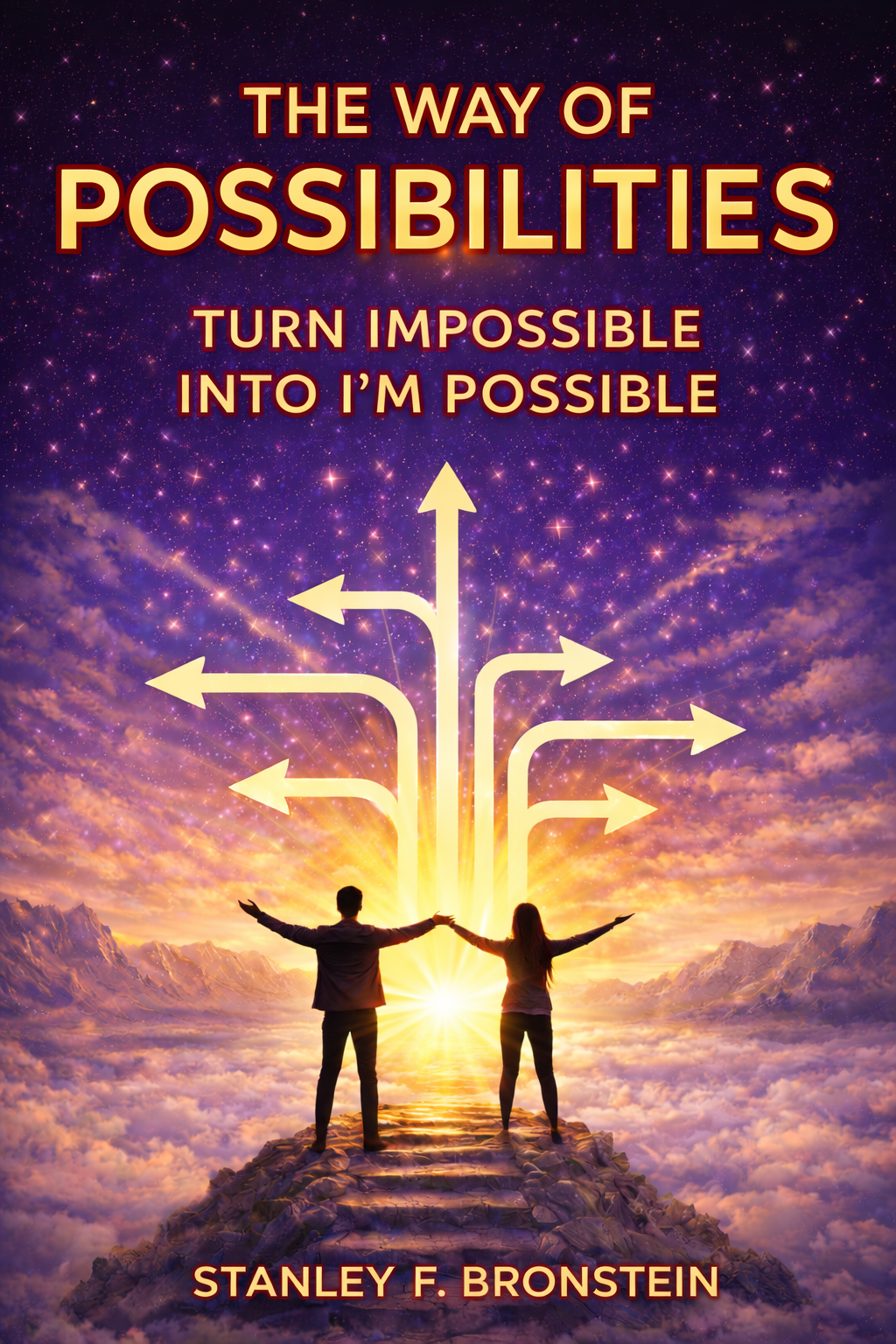
Turn Impossible Into I’m Possible
By Stanley F. Bronstein – Creator of The Way of Excellence System
Click The Tabs Below To Read Each Chapter Of The Book Online
Or
📘 Download Your Free Copy In Your Preferred Format
The Way of Possibilities
by Stanley F. Bronstein
How to use this page:
Click a chapter title to open it then scroll down to read.
When you click the title of the next chapter, the previous one will close.
Take your time.
Read, reflect, and do the experiments and assignments before you move on.
EMPTY ITEM
Foreword - The Door You Forgot Was There
Most people do not live small lives because they are incapable. They live small lives layering because, somewhere along the way, they quietly decided that certain outcomes were not possible for them.
Not for someone with their past.
Not at their age.
Not with their responsibilities.
Not with their body.
Not with their personality.
Not with their history of false starts.
Not with their temperament, their finances, their lack of connections, their lack of time, their lack of confidence, their lack of luck.
So they stop trying.
Or they try halfway, so that if they fail, they can tell themselves they never really went for it anyway.
Or they build a life where they are busy enough to feel productive, but never free enough to actually change.
And over time, something even more painful happens: they forget that possibility is not an abstract idea. It is a door. And doors do not open themselves. They are opened by a person.
This book is about becoming that person.
This book is The Way of Possibilities (TWOP).
Possibility Is Not Wishful Thinking
When I say possibility, I am not talking about fantasy. I am not talking about hype. I am not talking about a temporary rush of motivation.
I am talking about something far more practical, far more grounded, and far more powerful.
Possibility is what becomes available when you raise your standards, tell the truth, and align your actions with the person you are capable of becoming.
That is why the subtitle of this book matters:
Turn Impossible Into I’m Possible.
Not as a cute phrase.
As an identity.
As a decision.
As a way of living.
Because the truth is this: the word impossible is often a story we repeat until it becomes a belief. And beliefs, once installed, quietly run the show. They shape what we attempt, what we tolerate, what we settle for, and what we walk away from before we ever give ourselves a real chance.
The Way of Possibilities (TWOP) exists to challenge that belief at its root and replace it with something stronger.
The Hidden Cage
I have spent decades watching the same pattern repeat in different forms.
People do not usually say, out loud, “My life is limited.”
They say things like:
-
“That is just not me.”
-
“I missed my window.”
-
“I am too far behind.”
-
“I do not have what it takes.”
-
“I have tried before.”
-
“It is too late to change.”
-
“That works for other people.”
Those statements sound reasonable. They even sound responsible.
But they are often nothing more than fear wearing a suit and tie.
And fear has a favorite strategy: it tries to keep you safe by keeping you the same.
The result is predictable. If you live inside those assumptions long enough, they become your identity. And once they become your identity, your life becomes a self-fulfilling prophecy.
The Way of Possibilities (TWOP) is designed to break that cycle.
The Shift That Changes Everything
There is a simple turning point that separates the people who expand their lives from the people who repeat the same year over and over.
The people who expand their lives stop negotiating with their limitations and start building proof of their power.
They stop waiting until they feel ready.
They stop demanding certainty before they act.
They stop looking for the perfect plan.
They start choosing standards.
They start taking consistent action.
They start proving to themselves, day by day, that they are capable of more than they imagined.
And as that proof accumulates, their sense of possibility changes. Their identity changes. Their life changes.
One of the biggest lessons I have learned through deep personal transformation is simple:
We are all more powerful than we ever imagined.
That is not motivational fluff. It is a fact that becomes visible when you finally do the thing you once believed you could not do.
When you do it, you do not just gain the result. You gain something bigger: the realization that your previous limits were not limits at all. They were beliefs.
And once you understand that, a new question appears:
If I am capable of doing this, what else is out there waiting for me to do that I have not done yet?
That is the doorway The Way of Possibilities (TWOP) walks you through.
The Operating System Behind This Book
The Way of Possibilities (TWOP) is built on the foundation of The Way of Excellence (TWOE), a system designed to help a person live at a higher standard across mind, body, and spirit.
The Way of Excellence (TWOE) is not about perfection. It is about excellence.
Excellence is not a finish line. It is a way of living.
Possibilities are not something you wish for. They are something you earn through alignment, integrity, and daily practices.
That is why this book is structured the way it is.
How This Book Is Structured
The Way of Possibilities (TWOP) is organized into four parts and twenty chapters. Each chapter applies one of the twenty core Concepts of The Way of Excellence (TWOE) in order, and each one answers a single, practical question:
How does living this Concept expand what is possible for my life?
You will notice a pattern as you go:
Possibilities expand when you tell the truth.
Possibilities expand when you think long-term.
Possibilities expand when you take responsibility.
Possibilities expand when you embrace change instead of resisting it.
Possibilities expand when you focus on what can be done instead of worshiping what cannot.
Possibilities expand when you shift your perspective.
Possibilities expand when you choose a vision and move toward it.
Possibilities expand when you give first and build trust.
Possibilities expand when you allocate time, energy, and attention wisely.
Possibilities expand when you take consistent action.
Possibilities expand when you persist.
Possibilities expand when you live with integrity.
Possibilities expand when you live with respect.
Possibilities expand when you think win-win.
Possibilities expand when you create balance so your life stays sustainable.
Possibilities expand when you cultivate willingness.
Possibilities expand when you strengthen belief through evidence.
Possibilities expand when you build discipline and realize it is not punishment. It is power.
Possibilities expand when you commit fully.
And in the end, possibilities become a way of being when mind, body, and spirit work together in harmony.
The goal is not to read these chapters and nod.
The goal is to live them.
How To Use The Way of Possibilities (TWOP)
You can read this book straight through. You can also use it as a daily standard book.
If you want the simplest approach, do this:
-
Read one chapter.
-
Choose one Practice.
-
Live it for seven days.
-
Then move on.
Why seven days?
Because seven days is long enough to feel resistance, and short enough that you cannot talk yourself out of it.
Possibility is built by doing what you said you would do, even when you do not feel like it.
That is how you become someone you can trust.
That is how you become someone who can hold bigger outcomes without self-sabotage.
A Quiet Promise
I am not promising you that this will be easy. But if you incorporate The Way of Excellence (TWOE) into your life, it just might be easier than you think.
In fact, if you truly apply what is in The Way of Possibilities (TWOP), it will challenge you.
It will challenge your comfort.
It will challenge your excuses.
It will challenge your old identity.
But it will also give you something most people never experience: the deep, steady confidence that comes from keeping promises to yourself and watching your life expand as a result.
That is what real possibility feels like.
Not a rush.
Not a fantasy.
A grounded inner knowing.
Your Next Door
As you begin, keep one thing in mind.
You do not need to know exactly how your future will unfold.
You do not need to see the entire path.
You do not need permission from anyone.
You only need one thing to start:
A willingness to stop calling your life “impossible” and start proving, through action, that you are possible.
Because the moment you take your power back, even in a small way, something changes.
The door you forgot was there becomes visible again.
And once you see it, you cannot unsee it.
So here is the question I want you to carry with you as you turn the page:
What becomes possible for your life when you stop living as if your past is your ceiling and start living as if your standards are your foundation?
Let us begin.
INTRODUCTION TO PART I - REALITY IS THE STARTING LINE, NOT THE FINISH LINE
Possibilities do not begin with optimism.
They begin with reality.
That may sound backward to people who have been taught that “positive thinking” is the first step to change. But in my experience, the opposite is true. You cannot build a better life on a false story. You cannot turn impossible into I’m possible by pretending things are different than they are.
You turn impossible into I’m possible by doing something far more powerful than wishful thinking.
You start telling the truth.
That is why Part I of The Way of Possibilities (TWOP) is called The Foundations of Possibility. Foundations are not exciting. Foundations are not glamorous. Foundations do not get applause.
But foundations hold the entire structure.
If your foundation is weak, everything you build on top of it eventually cracks.
If your foundation is strong, you can build a life that expands year after year.
Part I is where we install that foundation.
The Most Common Mistake People Make
When people feel stuck, they usually try to fix the stuckness with a burst of emotion.
They try to feel motivated.
They try to feel confident.
They try to feel ready.
And when those feelings do not show up, they conclude that they cannot change.
But feelings are not the foundation.
Standards are the foundation.
This is one of the reasons The Way of Excellence (TWOE) matters so much in this book. The Way of Excellence (TWOE) is an operating system built around standards, not moods. It teaches you how to live in a way that produces results, even when you do not feel like it.
That is the core of possibility.
Possibility is not a feeling.
Possibility is a structure.
Reality First, Then Expansion
The purpose of Part I is to establish five essential elements that make everything else possible:
-
Truth
-
Time
-
Responsibility
-
Change
-
Focus
These five elements are not optional.
They are the ground beneath your feet.
If you skip them, you can still make progress for a little while, but it will not last. You will keep leaking power through denial, impatience, blame, resistance, and distraction.
And you will keep wondering why your life never fully opens.
Part I closes those leaks.
What This Part Will Do For You
By the end of Part I, you will have a stronger internal foundation for possibility because you will be practicing five shifts:
-
You will stop negotiating with the truth and start building on it.
-
You will stop demanding instant results and start thinking long-term.
-
You will stop giving your power away and start taking responsibility.
-
You will stop resisting change and start using change as fuel.
-
You will stop focusing on what cannot be done and start focusing on what can be done.
These shifts are not theoretical. They change what you see. They change what you attempt. They change what you tolerate. They change what you do next.
Most importantly, they change who you believe you are.
And that matters, because the moment you truly understand that we are all more powerful than we ever imagined, the question is no longer “Is this possible?”
The question becomes:
“What am I willing to do to prove it?”
The Foundation of Possibility Is Not Comfortable
Truth is not always comfortable.
Long-term thinking requires patience.
Responsibility removes your excuses.
Change disrupts your routines.
Focus forces you to stop feeding distractions.
So yes, Part I can feel challenging. That is not a flaw. That is the point.
Every expansion of possibility requires a contraction of comfort.
When you feel resistance in these early chapters, do not interpret it as a sign you should stop. Interpret it as a sign that you are finally touching the edge of your old identity.
How To Use Part I
Part I contains Chapters 1 through 5, and each chapter gives you practices you can use immediately.
Here is the simplest way to use this section of The Way of Possibilities (TWOP):
-
Read the chapter.
-
Choose one Practice.
-
Live it for seven days.
-
Then move on.
If you do that, you will not just understand these ideas. You will become them.
And that is where possibility stops being a concept and starts becoming your life.
The Starting Line
Reality is not your enemy.
Reality is your starting line.
Once you accept that, something powerful happens. You stop arguing with the present. You stop fighting the facts. You stop wishing you were somewhere else.
You start building from where you are.
And that is how the door opens.
Part I begins with the most foundational move of all:
Learning to tell it like it is.
Let us continue.
Chapter 1: Learning To Tell It Like It Is - Applying Concept #1
The Way of Possibilities (TWOP) begins with a decision that sounds simple, but changes everything:
You decide to tell it like it is.
Not like you wish it was.
Not like you fear it is.
Not like you need it to be to protect your feelings.
Like it is.
This comes first because possibility is not built on fantasy.
Possibility is built on reality, plus imagination, plus action.
And you cannot build anything real if you refuse to stand on what is real.
Most people do the opposite.
They avoid reality.
They soften it.
They rename it.
They rationalize it.
They distract themselves with short-term comfort.
They build stories that feel better than the truth.
That approach may reduce discomfort in the short-term, but it quietly destroys possibility in the long-term.
Because when you refuse to face reality, you do not remove the problem.
You remove your power to solve it.
The Possibility Lens
Think of reality as the map.
Possibility is the path.
If your map is wrong, your path will be wrong.
If your path is wrong, your effort will be wasted.
And if your effort is wasted long enough, you start telling yourself the most dangerous sentence of all:
“It is impossible.”
Many things are truly difficult. Some things are legitimately out of reach right now. But most of what people call impossible is not actually impossible.
It is unclear.
It is unmeasured.
It is unnamed.
It is unplanned.
It is unattempted.
It is a place they are afraid to look.
Telling it like it is turns on the lights.
It returns you to truth, and truth returns you to power.
When you tell it like it is, you stop wasting energy arguing with reality and start investing energy in changing reality.
This is why learning to tell it like it is is not negative.
It is not pessimistic.
It is not harsh.
It is respectful.
Reality deserves respect because reality is the only place where results are created.
What Most People Do Instead
When people refuse to tell it like it is, they usually do one of three things:
They minimize.
They downplay what is happening so they do not have to face it.
They dramatize.
They exaggerate what is happening so they can feel justified, hopeless, or rescued.
They intellectualize.
They explain everything, analyze everything, and talk about everything, but they never turn truth into action.
All three are forms of avoidance.
All three feel safer than the truth.
All three kill possibility because they disconnect you from the present moment where change actually occurs.
The First Advantage of Truth
When you tell it like it is, something interesting happens.
You feel worse for a moment.
Then you feel better for a long time.
That is the trade.
Truth can sting in the short-term, but it heals in the long-term.
Fantasy can comfort in the short-term, but it injures in the long-term.
Possibility requires you to accept the short-term sting, because you care more about long-term freedom than short-term comfort.
The Second Advantage of Truth
Truth gives you something fantasy can never give you:
A starting point.
You cannot begin a journey from a location you refuse to acknowledge.
You cannot solve a problem you refuse to name.
You cannot improve what you will not measure.
You cannot change what you will not face.
Telling it like it is gives you a clear starting point.
Once you have a clear starting point, you can build a clear path forward.
And the moment you have a clear path forward, the word impossible starts losing its grip.
Because what once felt like a wall starts looking like a process.
And a process can be executed.
This is where the subtitle of this book becomes more than a clever phrase:
Turn Impossible Into I’m Possible.
That shift does not begin with motivation.
It begins with honesty.
Telling It Like It Is Does Not Mean Being Cruel
This matters.
Telling it like it is does not mean you attack yourself.
It does not mean you shame yourself.
It does not mean you speak to yourself with disrespect.
It means you speak to yourself with honesty and precision.
There is a difference between truth and cruelty.
Truth is accurate.
Cruelty is unnecessary.
The Way of Possibilities (TWOP) requires truth.
The Way of Possibilities (TWOP) does not require cruelty.
You can tell the truth firmly, clearly, and compassionately at the same time.
The Possibility Standard
Here is the standard for this chapter:
I tell it like it is so I can deal with reality directly, build a real plan, and create real results.
If you live by that standard, you will make better decisions, faster decisions, and calmer decisions.
Because confusion fades when truth enters the room.
Practices
Practice 1: The Truth Inventory
Once a week, write a short truth inventory in three areas:
Where I am.
Facts only. No excuses. No drama.
What is working.
Keep it honest. Give credit where it is due.
What is not working.
Name it clearly. If you cannot name it, you cannot change it.
The purpose is not to judge yourself.
The purpose is to locate yourself.
Because possibility begins when you know exactly where you are standing.
Practice 2: Facts Before Feelings
When you are upset, discouraged, or uncertain, pause and write:
The facts are…
The story I am telling myself is…
The next best action is…
This separates reality from interpretation.
It returns you to a place where you can choose your response instead of reacting emotionally.
And choice is where possibility lives.
Practice 3: The Mirror Sentence
Use one sentence that you do not negotiate with:
If I want new possibility, I must tell it like it is.
Say it when you want to avoid something.
Say it when you want to rationalize something.
Say it when you want to pretend something is fine when it is not.
This sentence becomes a mental mirror that brings you back to truth.
Why This Chapter Comes First
Because every other concept in this book depends on it.
You cannot think in new possibility if you refuse to see your current reality.
You cannot take responsibility if you refuse to acknowledge what is actually happening.
You cannot embrace change if you are still attached to a fantasy version of the present.
You cannot focus on the possible if you refuse to name the real obstacles and the real opportunities.
Truth is the first door.
Once you walk through it, every other door becomes easier to open.
The Way of Excellence (TWOE) Integration
This chapter is the foundation point in The Way of Excellence (TWOE) because it establishes realistic awareness first, then action.
The core takeaway is simple:
Possibility begins the moment you stop negotiating with reality and start aligning your actions with the truth.
Closing Question
Where in your life are you not fully telling it like it is, and what new possibility becomes available the moment you start?
Chapter 2: Adopting Long-Term Thinking - Applying Concept #2
Most people do not struggle because they are incapable.
They struggle because they are impatient.
They want the result now.
They want the proof now.
They want the payoff now.
And when they do not get it fast enough, they interpret the delay as a verdict.
They tell themselves it is not working.
They tell themselves they are not the kind of person who can do it.
They tell themselves it must not be possible.
That is not a talent problem.
That is a time-horizon problem.
This chapter exists for one reason: to expand your time horizon.
Because when your time horizon expands, your possibilities expand with it.
The Possibility Lens
Long-term thinking does something profound. It turns massive goals into manageable processes.
When you think short-term, you tend to evaluate everything in days and weeks. You measure your effort against immediate results. You want fast feedback. You want certainty. You want proof.
When you think long-term, you evaluate everything in months and years. You measure your effort against direction. You want consistency. You want standards. You want progress, not perfection.
Short-term thinking asks, “Did I win today?”
Long-term thinking asks, “Am I becoming the kind of person who wins over time?”
This is where possibility becomes real.
Because most things worth having take time.
Health takes time.
Trust takes time.
Relationships take time.
Skill takes time.
Mastery takes time.
Financial stability takes time.
A strong mind takes time.
A strong character takes time.
If you want a better life, you are going to need a bigger clock.
That is why long-term thinking is not just a strategy.
It is a requirement.
The Trap of Short-Term Thinking
Short-term thinking creates a specific emotional cycle:
You get excited.
You start strong.
You expect fast change.
You do not get it.
You get discouraged.
You slow down.
You stop.
You repeat the cycle again later.
This is one of the reasons people feel like they are always starting over. They are not building. They are restarting.
Long-term thinking breaks that cycle because it gives you a different expectation:
Progress is supposed to be gradual.
Results are supposed to compound.
There will be plateaus.
There will be delays.
There will be boring weeks where nothing obvious changes.
And if you keep showing up anyway, one day you look back and realize something startling:
You are no longer the same person who started.
That is what compounding does.
It changes your identity quietly, then suddenly.
Long-Term Thinking Turns Impossible Into I’m Possible
The phrase “Turn Impossible Into I’m Possible” is not about pretending.
It is about time.
Because time is the greatest ally you have, if you learn to use it.
Most “impossible” goals are not impossible.
They are just too large to be solved in the short-term.
So what do you do?
You stop trying to solve your entire future in one week.
You stop trying to change your identity in one burst of motivation.
You stop trying to compress a long journey into a short sprint.
You begin thinking long-term.
And then you build the next small step.
And then the next.
And then the next.
That is how possibility becomes reality.
What Long-Term Thinkers Do Differently
Long-term thinkers do not panic when progress is slow.
They do not quit when results are delayed.
They do not interpret discomfort as danger.
They understand something that short-term thinkers forget:
If you want long-term results, you need long-term standards.
They focus on what they control.
They control their daily actions.
They control their habits.
They control their preparation.
They control their integrity.
They control their standards.
They do not control the calendar.
They do not control how quickly the world rewards them.
They do not control the timing of breakthroughs.
But they do control whether they show up.
That is why long-term thinkers are calmer.
Their confidence is not based on what happened today.
It is based on the fact that they are still in the game.
Long-Term Thinking Is Not Passive
Long-term thinking does not mean you sit around and wait.
It means you stop being emotionally hijacked by the short-term and start executing a long-term plan.
Long-term thinking makes you more serious, not less.
It makes you more committed, not less.
It makes you more disciplined, not less.
Because once you realize that time is your ally, you stop wasting time.
You start using time.
The Possibility Standard
Here is the standard for this chapter:
I think long-term so I stop demanding immediate proof and start building inevitable results.
If you adopt that standard, you will become more consistent, more resilient, and more capable.
You will stop quitting during the slow seasons.
You will stop confusing delay with failure.
You will stop treating a temporary plateau like a permanent wall.
Because long-term thinking reminds you that today is not a verdict.
Today is a deposit.
Practices
Practice 1: The Ten-Year Question
Ask yourself this question and answer it in writing:
If I stayed consistent for the next ten years, what would be possible for my life?
Do not answer emotionally. Answer realistically.
Then ask:
What daily standard would make that outcome more likely?
This practice does two things:
It expands your vision.
It shrinks today’s excuses.
Because it is hard to justify quitting when you remember what is at stake.
Practice 2: The Time Horizon Reframe
When you feel discouraged, say this out loud:
I am measuring a long-term goal with a short-term ruler.
Then do three quick steps:
-
Name the long-term goal in one sentence.
-
Name the next small step you can take today.
-
Take it.
This reframe trains your mind to stop panicking and start executing.
Practice 3: The Daily Deposit
Choose one daily deposit that is small enough to be achievable and meaningful enough to matter.
Examples:
-
A 20-minute walk.
-
A simple, healthy meal choice.
-
Ten minutes of planning.
-
One conversation you have been avoiding.
-
One page written.
-
One skill practice session.
Do not make it heroic.
Make it consistent.
Then track it for 30 days.
At the end of 30 days, you will not just have results.
You will have proof.
And proof is one of the strongest builders of belief.
Why This Chapter Comes Second
Because once you tell it like it is, you need a time frame big enough to change it.
Truth gives you the starting point.
Long-term thinking gives you the runway.
Without long-term thinking, you will keep trying to change your life with short-term emotion.
And that always collapses.
With long-term thinking, you stop living inside the mood of the moment and start living inside a plan.
That is how possibility expands.
The Way of Excellence (TWOE) Integration
This chapter aligns with the second Concept of The Way of Excellence (TWOE) because it moves you out of short-term pressure and into long-term construction.
It trains you to stop asking, “How fast can I get this?”
And start asking, “How consistently can I live this?”
Those are two very different questions.
One creates frustration.
The other creates a future.
Closing Question
What goal have you been calling impossible simply because you have not given yourself enough time to make it inevitable?
Chapter 3: Taking Personal Responsibility - Applying Concept #3
There is one move that instantly expands possibility, and it is not complicated.
It is not glamorous.
It does not require a personality change.
It requires one decision:
You take personal responsibility.
Not because life is fair.
Not because other people always do the right thing.
Not because you caused everything that happened to you.
You take personal responsibility because it is the fastest way to get your power back.
And without power, possibility is just a pleasant idea.
With power, possibility becomes a plan.
The Possibility Lens
Responsibility is not a burden.
Responsibility is the doorway to agency.
Agency means you can act.
Agency means you can change.
Agency means you can choose a new direction, even if you did not choose the situation you are in.
This is where many people get stuck.
They confuse responsibility with blame.
They think that if they take responsibility, they are admitting fault.
They think responsibility means saying, “This is all my fault.”
That is not what responsibility means.
Responsibility means:
“This is my life. I am in it. I am responsible for what I do next.”
That sentence changes everything.
Because once you accept that, you stop waiting for rescue.
You stop waiting for permission.
You stop waiting for the world to become easier.
You start creating your way forward.
And the moment you start creating, possibility returns.
The Most Common Way People Give Their Power Away
People give their power away through one habit that feels completely normal:
They blame.
They blame their upbringing.
They blame their partner.
They blame their boss.
They blame the economy.
They blame genetics.
They blame their schedule.
They blame their circumstances.
Some of those things may be real factors.
But blaming them does not solve them.
Blame does one thing very well.
It makes you feel temporarily justified.
And then it hands your power to something outside of you.
That is why blame and possibility cannot coexist.
Blame says, “I cannot.”
Responsibility says, “What can I do?”
Blame keeps you stuck.
Responsibility moves you forward.
Responsibility Creates Options
When you take responsibility, you start seeing options you did not see before.
Because you stop using your energy to argue with reality, and you start using your energy to improve reality.
You stop rehearsing your reasons.
You start building your results.
And that is the moment the subtitle of this book becomes practical:
Turn Impossible Into I’m Possible.
Because one of the fastest ways to turn “impossible” into “I’m possible” is to stop talking about what should have happened and start deciding what you are going to do.
Responsibility Is a Daily Standard
Taking personal responsibility is not a one-time event.
It is a daily standard.
It is how you respond when you do not feel like it.
It is how you respond when you are tired.
It is how you respond when you are discouraged.
It is how you respond when you are tempted to quit.
It is how you respond when life is unfair.
Responsibility is the decision to stay in the driver’s seat.
Even if the road is rough.
Even if you did not build the road.
Even if someone else made a mess on the road.
You are still the one driving.
That is not harsh.
That is empowering.
The Possibility Standard
Here is the standard for this chapter:
I take personal responsibility because it restores my power and gives me options.
If you adopt that standard, you will stop waiting for the perfect conditions.
You will stop needing other people to change first.
You will stop treating your emotions like instructions.
You will start acting like a person who can shape their life.
That is what responsibility creates.
It creates a person with agency.
Practices
Practice 1: The Ownership Sentence
When something is not going the way you want, write this:
My part is…
Do not write what other people did.
Do not write what the world did.
Write your part.
Even if your part is small, it still matters, because your part is the only part you control.
This single practice collapses excuses and expands options.
Because once you name your part, you can change your part.
And when you change your part, your outcomes change.
Practice 2: Replace “Why Me?” With “What Now?”
When something frustrating happens, your mind will want to ask, “Why me?”
That question does not help.
It often leads to self-pity, bitterness, and paralysis.
Replace it with a question that creates motion:
What now?
What now forces you into action.
What now forces you into problem solving.
What now forces you into responsibility.
Write three answers.
Then do the first one.
This is how you train yourself to respond like a builder, not a victim.
Practice 3: The Next Best Action
Every time you feel stuck, do this:
-
Name the situation in one sentence.
-
Name one action that would improve it by 1 percent.
-
Take that action immediately.
Responsibility is not about dramatic changes.
It is about consistent choices.
The next best action is how you keep moving when you do not know the entire path.
And forward motion creates possibility.
Why This Chapter Comes Third
Because once you tell it like it is and adopt long-term thinking, you still need one thing to actually change your life:
Ownership.
Truth without responsibility becomes frustration.
Long-term thinking without responsibility becomes daydreaming.
Responsibility is the bridge between awareness and action.
It is the moment you stop describing your life and start directing your life.
The Way of Excellence (TWOE) Integration
This chapter aligns with the third Concept of The Way of Excellence (TWOE) because it teaches the most empowering truth of all:
Even if you are not responsible for everything that happened to you, you are responsible for what you do with what happened to you.
That is not a burden.
That is your power.
Closing Question
Where are you still blaming, and what becomes possible the moment you take personal responsibility for what you do next?
Chapter 4: Embracing Change - Applying Concept #4
Change is the price of new possibility.
There is no way around that.
If you want the same life, keep the same habits.
If you want a bigger life, you are going to need a bigger self.
That is what change really means.
It is not a disruption of your life.
It is the upgrade of your life.
Most people say they want change, but what they really want is this:
They want the benefits of change without the discomfort of change.
They want the new results without the new standards.
They want a new future while keeping the same identity.
That is why so many people live in the gap between desire and results.
They want possibility, but they fear the transformation that possibility requires.
The Way of Possibilities (TWOP) is here to fix that.
The Possibility Lens
Possibility is not created by wishing things were different.
Possibility is created by becoming different.
This is why change is not optional.
Every new possibility demands a new level of behavior, a new level of courage, and usually, a new level of discipline.
Change is the bridge between who you have been and who you are capable of becoming.
And every bridge has a middle point where you are no longer who you were, but you are not yet who you will be.
That middle point feels uncomfortable.
That is where many people turn back.
They interpret discomfort as danger.
They interpret awkwardness as failure.
They interpret uncertainty as a reason to stop.
But that is the wrong interpretation.
Discomfort is often a sign that change is working.
Awkwardness is often a sign that a new identity is forming.
Uncertainty is often a sign that you have outgrown the old map.
If you can learn to embrace change, you will stop retreating every time life asks you to evolve.
And the doors of possibility start opening.
Why People Resist Change
People resist change for predictable reasons:
They fear discomfort.
They fear judgment.
They fear loss.
They fear failing.
They fear succeeding.
They fear becoming someone unfamiliar, even if that person is better.
But the deepest fear is often this:
If I change, who am I?
That question can feel terrifying, because the old identity, even if it is limiting, is familiar.
Familiar feels safe.
But familiar can also be a prison.
The truth is that you do not lose yourself through change.
You find yourself.
You uncover parts of yourself that were buried under fear, excuses, and low standards.
Change is not a betrayal of who you are.
Change is loyalty to who you can be.
Change and the Subtitle of This Book
Turn Impossible Into I’m Possible is not a slogan.
It is the outcome of embracing change.
Because the moment you embrace change, you stop arguing with the price.
You stop negotiating with the requirement.
You stop insisting that possibility should be free.
You accept the truth:
If I want a new life, I must become a new person.
And once you accept that, your actions change.
Your decisions change.
Your standards change.
And that is when the impossible begins to collapse.
Not because the world became easier.
Because you became stronger.
The Possibility Standard
Here is the standard for this chapter:
I embrace change because change is the price of every new possibility.
If you adopt that standard, you stop treating change like an enemy.
You start treating it like a tool.
You start seeing discomfort as training.
You start seeing challenge as preparation.
You stop fearing the process and start trusting the process.
That is when possibility becomes a lifestyle.
Practices
Practice 1: The Change Reframe
Write down a change you are resisting.
Then complete this sentence:
The reason this change is good for me is…
Write at least five reasons.
If you cannot find five, you are not thinking deeply enough.
This practice trains your mind to stop focusing on the loss and start focusing on the gain.
Because every meaningful change includes both.
You are not just letting go.
You are leveling up.
Practice 2: The Discomfort Permission Slip
Once a day, tell yourself this sentence:
Discomfort is allowed. It means I am growing.
Then take one small action that is slightly uncomfortable, but aligned with your future.
Examples:
-
Have the conversation you have been avoiding.
-
Ask for help.
-
Say no when you normally say yes.
-
Do the workout you do not feel like doing.
-
Apply for the opportunity you keep talking yourself out of.
The purpose is not to be dramatic.
The purpose is to teach your nervous system that growth is survivable.
Because when growth feels survivable, possibility expands.
Practice 3: The Identity Upgrade
Pick one identity statement that matches your future.
Examples:
I am a healthy person.
I am a disciplined person.
I am a calm person.
I am a person who follows through.
I am a person of possibility.
Now prove it with one action today that supports that identity.
Identity is not what you say.
Identity is what you do consistently.
This practice turns change into a daily process, not a vague intention.
Why This Chapter Comes Fourth
Because once you tell it like it is, think long-term, and take responsibility, you arrive at an unavoidable truth:
To get different results, you must do different things.
And to do different things consistently, you must become different.
That is change.
Change is the engine of growth.
Change is the engine of possibility.
Without change, the book stops at awareness.
With change, the book becomes transformation.
The Way of Excellence (TWOE) Integration
This chapter aligns with the fourth Concept of The Way of Excellence (TWOE) because it teaches a core truth:
Your future expands to the extent that you are willing to change.
Not later.
Not someday.
Now.
Because change is not a special event.
Change is a daily standard.
Closing Question
What change are you resisting that is quietly blocking a bigger life, and what becomes possible the moment you stop resisting and start embracing?
Chapter 5: Focusing On The Possible - Applying Concept #5
Your life moves in the direction of your focus.
That is not a motivational phrase. It is a practical law of attention.
What you focus on shapes what you notice.
What you notice shapes what you think about.
What you think about shapes what you feel.
What you feel shapes what you do.
And what you do shapes what becomes possible.
This is why focus is not a small thing.
Focus is a force.
It can build your life.
It can shrink your life.
It can create possibilities.
It can destroy them.
Most people do not realize how much of their daily experience is determined by where their mind automatically goes.
They focus on what is wrong.
They focus on what is missing.
They focus on what cannot be done.
They focus on what other people are doing.
They focus on worst-case scenarios.
They focus on the cost, the risk, the time, the difficulty, the uncertainty.
They focus on the obstacles.
Then they wonder why they feel heavy, discouraged, and stuck.
It is because they are living inside the story their attention is feeding.
The Way of Possibilities (TWOP) teaches you a different skill:
You learn to focus on the possible.
Not because you are naive.
Because you are serious.
The Possibility Lens
Focusing on the possible does not mean pretending problems are not real.
It means refusing to worship problems.
It means refusing to make obstacles your identity.
It means recognizing that every situation contains both constraints and options.
Constraints are real.
Options are real.
But the moment you obsess over constraints, you stop seeing options.
That is how possibility disappears.
The goal is not to deny reality.
The goal is to train your mind to ask better questions.
Most people ask questions that shrink them:
Why is this happening to me?
Why is it so hard?
Why can’t I do this?
What if it never works?
What if I fail?
What if I look stupid?
Those questions produce predictable results:
More fear.
More hesitation.
More paralysis.
People who focus on the possible ask different questions:
What can I do?
What is one step I can take today?
What is within my control?
What is one option I have not considered yet?
What would a person of possibility do next?
Those questions produce different results:
Movement.
Energy.
Creativity.
Hope grounded in action.
And action is where possibility lives.
The Difference Between Negative Focus and Honest Focus
Some people think focusing on the possible means being unrealistic.
It does not.
It means being solution oriented.
Negative focus is not honesty.
Negative focus is fixation.
Honest focus says:
Here is what is real, and here is what can be done.
That is the balance.
That is what this chapter is training you to do.
You already learned to tell it like it is.
Now you learn what to do with the truth.
You learn to aim your attention toward constructive outcomes instead of destructive repetition.
Why Most People Focus on the Negative
Because it is automatic.
The brain is wired to scan for danger. That can keep you alive, but it can also keep you small.
It is also culturally reinforced.
People bond over complaints.
People bond over cynicism.
People bond over what is wrong.
But complaining does not create change.
Cynicism does not create progress.
Obsession with what is wrong does not create a better life.
A person of possibility can acknowledge what is wrong without living there.
This is one of the most important distinctions in The Way of Possibilities (TWOP):
You can face reality without feeding despair.
You can see obstacles without making them the center of your attention.
You can be realistic and optimistic at the same time.
Realism tells the truth.
Optimism builds the future.
The Possibility Standard
Here is the standard for this chapter:
I focus on the possible so my mind becomes a builder instead of a barrier.
If you adopt that standard, you will notice a shift.
You will still have problems.
You will still have setbacks.
You will still have moments of fear.
But you will stop making those things final.
You will stop treating obstacles as destiny.
You will start treating obstacles as puzzles.
And puzzles can be solved.
Practices
Practice 1: The Possibility List
When you feel stuck, write this at the top of a page:
Possible options:
Then write ten options.
Do not judge them while writing.
Do not say, “That would never work.”
Do not say, “That is unrealistic.”
Your job is not to decide yet.
Your job is to generate.
Because the moment you generate options, you are no longer stuck.
You are in motion.
After you write ten, circle the two most realistic options and take one small step on the first one today.
Practice 2: The Reframe Question
Whenever you catch yourself saying, “I can’t,” ask:
What else could be true?
Then ask:
If I could, how would I do it?
Then ask:
What is one small step I could take today that would move me in that direction?
This practice interrupts the mental habit of shutting down.
It forces your mind to open a door.
Even a small door.
And small doors lead to bigger doors.
Practice 3: The Control Shift
Draw two columns.
In the first column write:
Out of my control.
In the second column write:
In my control.
Now list what is bothering you, and place each item in the correct column.
Then do something simple:
Ignore the first column for the rest of the day.
Take one action from the second column.
This is one of the fastest ways to restore energy.
Because possibility expands when you stop leaking energy into what you cannot control and start investing energy into what you can control.
Why This Chapter Comes Fifth
This chapter completes Part I.
Part I has been building a foundation.
Chapter 1 taught you to tell it like it is.
Chapter 2 expanded your time horizon.
Chapter 3 restored your agency through responsibility.
Chapter 4 trained you to embrace change.
Chapter 5 teaches you how to aim your mind.
Because without focus on the possible, everything else collapses.
You can have truth, but no hope.
You can have long-term thinking, but no momentum.
You can have responsibility, but no creativity.
You can embrace change, but still feel stuck.
Focus is what turns these foundations into forward motion.
It is what keeps you from living inside obstacles.
It is what trains you to live inside options.
The Way of Excellence (TWOE) Integration
This chapter aligns with the fifth Concept of The Way of Excellence (TWOE) because it trains your attention toward possibility and teaches you to stop feeding what drains you.
It is one of the most practical skills in the entire book.
Because when your focus improves, your life improves.
Closing Question
Where are you currently focusing on what cannot be done, and what becomes possible the moment you shift your focus to what can be done next?
INTRODUCTION TO PART II - YOU DO NOT FIND POSSIBILITIES - YOU CREATE THEM
Part I built the foundation.
Now we build the structure.
In Part I, you learned five essential truths:
Tell it like it is.
Think long-term.
Take responsibility.
Embrace change.
Focus on the possible.
Those are not inspiring ideas. They are stabilizing ideas.
They pull you out of fantasy.
They pull you out of impatience.
They pull you out of excuse.
They pull you out of resistance.
They pull you out of negative focus.
They establish something far more valuable than temporary motivation:
A platform you can build on.
Now Part II begins the build.
Because once you have a foundation, you still need something else to expand your life:
Direction.
Momentum.
Connection.
Preparation.
Action.
That is what Part II is about.
It teaches you that possibility is not something you stumble upon.
Possibility is something you create.
You create it by changing how you see.
You create it by choosing a future and moving toward it.
You create it by giving first and building trust.
You create it by using your resources wisely.
You create it by showing up consistently.
Part II contains Chapters 6 through 10, and each one adds a key building block.
Change Your Perspective
Your perspective is the meaning you attach to your life.
It is the lens you look through.
If your lens is bitter, everything looks heavy.
If your lens is fearful, everything looks dangerous.
If your lens is entitled, everything looks unfair.
If your lens is empowered, everything looks workable.
Perspective does not change what happened.
Perspective changes what you do with what happened.
And what you do next determines what becomes possible.
Envision a Brighter Future
Possibility expands when you choose a target.
Without a vision, you drift.
You react.
You get pulled into other people’s priorities.
You wake up busy, but not intentional.
A brighter future does not appear by accident.
It is envisioned, chosen, and built.
This is where the subtitle Turn Impossible Into I’m Possible becomes practical.
Because the moment you hold a clear future in your mind, you stop living as if your past is the only story.
You start living as if your future is real.
And then you begin acting accordingly.
Learn To Give First
Many people think possibility is created by taking.
Taking more.
Protecting more.
Holding more.
But in real life, opportunity flows through trust.
Trust flows through value.
Value flows through giving.
Giving first is not weakness.
Giving first is leadership.
Giving first is proof that you are not trapped in scarcity.
And one of the hidden benefits of giving first is this:
It shifts your identity from consumer to contributor.
That shift expands possibility in ways most people never see, because it changes how you show up in the world.
Allocate Your Resources Wisely
Most people do not have an ability problem.
They have a resource management problem.
They are scattered.
They waste time.
They leak energy.
They spend attention on things that do not matter.
Then they wonder why they have no momentum.
Possibility is often a function of how you allocate what you already have.
Time.
Energy.
Attention.
Money.
Relationships.
When you invest those wisely, you become ready for what you used to call impossible.
Take Consistent Action
This is where everything becomes real.
Possibility without action is a daydream.
Vision without action is fantasy.
Perspective without action is philosophy.
Giving without action is intention.
Resource management without action is planning.
Part II ends with consistent action because that is where possibility turns into reality.
Not once.
Not occasionally.
Consistently.
That is how a person becomes someone they can trust.
That is how belief becomes earned.
That is how results begin to compound.
What Part II Will Do For You
By the end of Part II, you will not just think differently.
You will start living differently.
You will stop treating possibility like a rare event and start treating it like something you build.
You will stop waiting for inspiration and start creating conditions for progress.
You will stop calling it impossible and start proving you are possible.
Part I was the foundation.
Part II is the build.
Let us continue.
Chapter 6: Changing Our Perspective - Applying Concept #6
Two people can live through the same event and walk away with completely different lives.
One becomes bitter.
The other becomes better.
One becomes smaller.
The other becomes stronger.
One becomes cynical.
The other becomes wiser.
The difference is not the event.
The difference is the meaning they attach to the event.
That meaning is called perspective.
Perspective is not a small thing.
Perspective is the lens through which you interpret your life.
And that lens determines what you notice, what you believe, how you feel, and what you do next.
That is why changing your perspective is one of the fastest ways to expand possibility.
Because when your perspective changes, your options change.
And when your options change, your future changes.
The Possibility Lens
Your circumstances are real.
But your interpretation of your circumstances is often optional.
This is where many people get trapped.
They do not just experience a hard situation.
They create a story around the situation that locks them into it.
They turn “something happened” into “this is who I am.”
They turn “this is difficult” into “this is impossible.”
They turn “this hurts” into “I am broken.”
They turn “this is unfair” into “life is against me.”
Perspective is the place where those stories are either reinforced or rewritten.
Changing your perspective does not mean pretending pain is not painful.
It does not mean denying injustice.
It does not mean smiling through suffering.
It means refusing to let a single event become the definition of your entire life.
It means choosing an interpretation that makes you more powerful, not less.
Because in The Way of Possibilities (TWOP), the goal is not to be positive.
The goal is to be powerful.
Perspective Is a Choice You Make Repeatedly
Most people think perspective is something you have.
It is not.
Perspective is something you practice.
Your mind will naturally drift toward interpretations that are familiar.
If you grew up around pessimism, your mind will default to pessimism.
If you grew up around worry, your mind will default to worry.
If you grew up around criticism, your mind will default to criticism.
If you have been hurt before, your mind will default to protection.
These defaults are understandable.
But they are not destiny.
The moment you realize perspective is a practice, you get your power back.
Because you can practice a new lens.
And when you practice a new lens, you start living in a new world.
Same life.
New meaning.
New choices.
New outcomes.
The Privilege Shift
There is one perspective shift that changes everything.
It is this:
You begin seeing your life as a privilege.
This does not mean everything in your life is easy.
It means you stop living as if life owes you.
It means you stop living as if you are a victim of the moment.
It means you start recognizing something deeper:
You are here.
You are alive.
You have influence.
You have the ability to make choices.
You have the ability to grow.
You have the ability to help someone.
You have the ability to change your future.
That is not guaranteed.
That is a privilege.
And when you start living from privilege, your life expands.
Because gratitude and responsibility often travel together.
And responsibility is where possibility is built.
Perspective Turns Problems Into Training
A person who changes their perspective does not ask, “Why is this happening to me?”
They ask, “What is this trying to teach me?”
They do not ask, “How can I avoid discomfort?”
They ask, “How can I become stronger through this?”
They do not ask, “How can I get back to easy?”
They ask, “How can I build capacity?”
That shift is everything.
Because problems are part of life.
But suffering is often increased by the story you tell about the problem.
When you change the story, you change your experience.
When you change your experience, you change your actions.
When you change your actions, you change what becomes possible.
The Possibility Standard
Here is the standard for this chapter:
I change my perspective so my life becomes fuel for growth instead of a reason to stay stuck.
If you adopt that standard, you will stop using the past as an anchor.
You will start using it as leverage.
You will stop looking for reasons you cannot.
You will start finding evidence that you can.
You will stop living inside old interpretations.
You will start building new ones.
Practices
Practice 1: The Meaning Upgrade
Write down something in your life that frustrates you.
Now answer this question:
What is a more empowering meaning I can assign to this?
Examples:
-
This setback is training.
-
This delay is building patience.
-
This discomfort is growth.
-
This rejection is redirection.
-
This hardship is forging strength.
The goal is not to lie.
The goal is to choose a meaning that creates forward motion.
Practice 2: The Lesson Extraction
When something goes wrong, write three answers to this:
What is this here to teach me?
Then write one more answer:
What would the best version of me do next?
This practice turns adversity into instruction.
It keeps you from wasting pain.
It transforms experience into wisdom.
Practice 3: The Privilege List
Once a day, write five things that are privileges in your life.
Not vague things.
Real things.
Then write one sentence:
Because this is a privilege, I will honor it by…
Examples:
-
Because my health is a privilege, I will take care of my body today.
-
Because my relationships are a privilege, I will speak with respect today.
-
Because my time is a privilege, I will stop wasting it today.
-
Because my mind is a privilege, I will guard what I allow into it today.
This is how perspective becomes a daily standard, not an occasional mood.
Why This Chapter Comes First In Part II
Part II is about creating possibility.
And the first step in creating possibility is learning to see differently.
If your lens is distorted, your future will be distorted.
If your lens is empowered, your future becomes expandable.
This is why changing your perspective is placed here.
Because once you learn to change your perspective, you stop being controlled by events.
You start shaping your response to events.
And your response is where your power lives.
The Way of Excellence (TWOE) Integration
This chapter aligns with the sixth Concept of The Way of Excellence (TWOE) because it teaches you to deliberately choose a perspective that expands possibility instead of shrinking it.
It is a way of reclaiming your mind.
And when you reclaim your mind, you reclaim your life.
Closing Question
What experience in your life could become fuel for growth if you chose a different perspective today?
Chapter 7: Envisioning A Brighter Future - Applying Concept #7
If you want to expand what is possible, you must give your mind a destination.
Without a destination, you drift.
You react.
You handle what is urgent.
You respond to other people’s priorities.
You stay busy, but you do not build.
And when you live that way long enough, life starts to feel smaller, even if your calendar is full.
A brighter future is not discovered by accident.
A brighter future is envisioned on purpose.
That is why this chapter matters.
Because possibility expands when you stop letting the future happen to you and start choosing the future you want to create.
The Possibility Lens
Your life follows your vision.
If your vision is vague, your actions will be inconsistent.
If your vision is borrowed, your motivation will be unstable.
If your vision is small, your standards will stay small.
But if your vision is clear, chosen, and meaningful, something changes.
You become harder to distract.
You become harder to derail.
You become more willing to endure discomfort, because you know what it is for.
Vision is not fantasy.
Vision is a directional force.
Vision is the ability to see something before it exists and then live in a way that makes it real.
That is how the subtitle of this book becomes practical:
Turn Impossible Into I’m Possible.
Because the moment you hold a brighter future in your mind, you stop treating your current reality as the final story.
You start treating it as the starting point.
And then you begin building.
Why Many People Avoid Vision
Some people avoid vision because they think it is unrealistic.
Others avoid vision because they are afraid of disappointment.
Others avoid vision because they feel guilty wanting more.
And many avoid vision for the simplest reason of all:
If I clearly envision a brighter future, I will have to change.
A clear vision is confrontational.
It confronts your current standards.
It confronts your excuses.
It confronts your comfort.
It confronts the gap between what you want and what you are currently doing.
That is why people keep vision vague.
Vague vision allows vague effort.
Vague vision allows you to stay the same.
But vague vision also keeps you stuck.
If you want new possibility, you need clear vision.
The Difference Between Dreams and Vision
A dream is an image you enjoy.
A vision is an image you commit to.
Dreams make you feel something.
Vision makes you do something.
Vision is not just a picture of the future.
Vision is a decision about who you are becoming.
That is why the question is not simply, “What do I want?”
The deeper question is:
Who must I become to live that future?
Because possibility is not just about what you achieve.
It is about what you become.
Vision Requires Standards
A vision without standards becomes a fantasy.
A vision with standards becomes a plan.
Standards are what connect the future to the present.
If you want a brighter future, you must decide what you will do consistently to earn it.
Not occasionally.
Not when you feel like it.
Consistently.
This is where The Way of Excellence (TWOE) matters again.
The Way of Excellence (TWOE) is not built on wishful thinking.
It is built on daily standards that produce long-term results.
Vision gives you the direction.
Standards give you the path.
The Possibility Standard
Here is the standard for this chapter:
I envision a brighter future so I can live with direction, raise my standards, and build what I truly want.
If you adopt that standard, you will stop drifting.
You will stop letting life be random.
You will start filtering decisions through your future.
And the moment you do that, your world expands.
Because you are no longer just reacting.
You are creating.
Practices
Practice 1: The Future Finished Page
Write one page describing your life as if your brighter future is already real.
Write it in present tense.
Be specific.
Include the details that matter:
-
How you feel when you wake up
-
What your days look like
-
What habits you live by
-
What kind of person you are
-
What you contribute
-
What you no longer tolerate
-
What you have proven to yourself
The goal is not to impress anyone.
The goal is to clarify your destination.
Because clarity creates power.
Practice 2: The Identity Statement
Write this sentence:
In my brighter future, I am the kind of person who…
Finish the sentence ten times.
Examples:
-
I am the kind of person who follows through.
-
I am the kind of person who takes care of my health.
-
I am the kind of person who thinks long-term.
-
I am the kind of person who tells it like it is.
-
I am the kind of person who uses discipline as power.
Then choose one and prove it today with one action.
Identity is not declared.
Identity is demonstrated.
Practice 3: The Vision Filter
For the next seven days, ask this question before important choices:
Does this move me toward my brighter future or away from it?
Then choose accordingly.
This practice is simple, but it is powerful.
Because most people do not lack talent.
They lack a filter.
A vision creates a filter.
A filter creates consistent decisions.
Consistent decisions create results.
Why This Chapter Comes Here
Part II is about creating possibility.
And possibility requires direction.
You cannot create what you cannot see.
You cannot build what you have not chosen.
You cannot consistently endure discomfort without knowing what it is for.
Vision solves all three problems.
Vision creates a destination.
Destination creates meaning.
Meaning creates perseverance.
That is how you stop calling it impossible.
That is how you start proving you are possible.
The Way of Excellence (TWOE) Integration
This chapter aligns with the seventh Concept of The Way of Excellence (TWOE) because it teaches you to deliberately envision a brighter future and then live as the person who can create it.
Your vision becomes your compass.
Your standards become your method.
Your consistency becomes your proof.
Closing Question
What brighter future have you been afraid to envision clearly, and what becomes possible the moment you choose it and start living toward it?
Chapter 8: Learning To Give First - Applying Concept #8
Most people think possibility expands when they get more.
More money.
More recognition.
More connections.
More opportunities.
More time.
More support.
They live as if life is a negotiation, and their job is to collect as much as they can.
But that is not how possibility works in the real world.
In the real world, possibility expands when you become a giver.
Because giving builds trust.
Trust builds relationships.
Relationships create opportunity.
Opportunity expands what is possible.
This is why learning to give first is not just a moral idea.
It is a strategic idea.
It is how you build a life that keeps opening.
The Possibility Lens
Giving first means you stop living from scarcity.
Scarcity says, “If I give, I will have less.”
Giving first says, “If I give, I will become more.”
Not more in ego.
More in capacity.
More in influence.
More in credibility.
More in leadership.
Giving first is a declaration that you are not trapped.
It is a declaration that you are not waiting for the world to prove itself before you show up with value.
It is a declaration that you can contribute now, with what you have now.
And that mindset changes how you move through the world.
Because a person who gives first is not desperate.
A person who gives first is not transactional.
A person who gives first is not needy.
They are solid.
They are grounded.
They are valuable.
And valuable people attract opportunity.
This is one of the most underappreciated truths in personal development:
The fastest way to expand your possibilities is to become useful.
Giving First Does Not Mean Being Naive
This is important.
Giving first does not mean letting people use you.
Giving first does not mean saying yes to everything.
Giving first does not mean abandoning standards.
Giving first means you lead with value, not with demand.
It means you do not approach the world with a hand out.
You approach the world with a hand open.
There is a big difference.
And the difference is identity.
A giver says, “What can I contribute?”
A taker says, “What can I get?”
A giver builds.
A taker consumes.
Over time, one creates expansion.
The other creates limitation.
Giving First Creates a Better Version of You
When you give first, you become someone you can respect.
You become someone you trust.
You build a stronger character.
You build a stronger reputation.
You build a stronger network.
You build a stronger life.
This is one of the hidden benefits of giving first:
It upgrades your identity.
And identity is everything.
Because you do not rise to the level of your hopes.
You rise to the level of your standards.
Giving first is a standard.
And standards create possibilities.
Giving First and the Subtitle of This Book
Turn Impossible Into I’m Possible is not only about personal achievement.
It is also about becoming the kind of person who lifts others.
Because one of the fastest ways to feel powerful is to help someone else become powerful.
Helping others expands you.
Serving others refines you.
Contributing keeps you from drowning in your own problems.
It shifts your attention outward.
It strengthens your sense of meaning.
It creates momentum.
And momentum changes what feels possible.
The Possibility Standard
Here is the standard for this chapter:
I give first because giving builds trust, expands relationships, and opens doors that taking cannot open.
If you adopt that standard, you stop waiting to be chosen.
You start showing up as someone worth choosing.
You stop trying to force opportunity.
You start attracting opportunity.
Because you become the kind of person people want around.
Practices
Practice 1: The Daily Give
Every day for the next seven days, give something that costs you little but means something to someone else.
Examples:
-
A genuine compliment.
-
A helpful introduction.
-
A resource or recommendation.
-
Encouragement.
-
Feedback that helps someone improve.
-
A small act of service.
Do not announce it.
Do not keep score.
Just give.
Then notice what happens inside you.
You will feel stronger.
Not because you took something.
Because you contributed something.
Practice 2: Value Before Reward
Before you ask anyone for anything, ask yourself:
What value can I offer first?
Then offer it.
This practice trains you to lead with contribution.
It also protects you from neediness, because you stop approaching people from lack.
You approach them from strength.
And strength expands possibility.
Practice 3: The Service Lens
Once a day, ask this question:
Who can I help today?
Then do one thing to help.
Make it simple.
Make it practical.
Make it real.
This practice shifts your identity from consumer to contributor.
It also reminds you that you are not powerless.
You have value to offer right now.
That is the mindset of possibility.
Why This Chapter Comes Here
Part II is about creating possibility in the real world.
And the real world runs on relationships.
Relationships run on trust.
Trust is built through value.
And value is demonstrated through giving.
This is why learning to give first expands possibility so quickly.
It makes you a builder.
It makes you a leader.
It makes you someone people want to work with.
And when people want to work with you, doors open.
The Way of Excellence (TWOE) Integration
This chapter aligns with the eighth Concept of The Way of Excellence (TWOE) because it teaches you to lead with contribution and to recognize the practical power of giving first.
Giving is not weakness.
Giving is strength.
Giving is a standard.
And when your standard becomes contribution, your life becomes opportunity.
Closing Question
Where have you been waiting to receive, and what becomes possible the moment you decide to give first instead?
Chapter 9: Allocating Our Resources Wisely - Applying Concept #9
Most people do not have a problem with a lack of potential.
They have a resource problem.
Not because they lack resources, but because they waste them.
They waste time.
They waste energy.
They waste attention.
They waste money.
They waste emotional bandwidth.
They waste their best hours on low value activities, then wonder why their dreams never happen.
If you want to expand possibility, you must become a wise allocator.
Because possibility is not only created by what you want.
Possibility is created by what you consistently invest in.
Your life is the result of your investments.
And every day, whether you realize it or not, you are investing.
The Possibility Lens
Resources are not just what you have.
Resources are what you can apply.
Time is a resource.
Energy is a resource.
Attention is a resource.
Your environment is a resource.
Your relationships are a resource.
Your health is a resource.
Your mind is a resource.
And the most important truth about resources is this:
If you allocate them poorly, you will feel stuck even if you have talent.
If you allocate them wisely, you can build a life that looks impossible to other people.
This is where possibility becomes practical.
Because when people say, “I don’t have time,” what they often mean is:
“I am spending my time on things that do not match my future.”
When people say, “I don’t have energy,” what they often mean is:
“I am leaking energy into things that drain me.”
When people say, “I don’t know what to do,” what they often mean is:
“I have too many inputs and no clear filter.”
Wise allocation creates clarity.
Clarity creates action.
Action creates results.
Results expand possibility.
The Cost of Poor Allocation
Poor allocation creates a specific kind of frustration.
You feel busy.
But you do not feel progress.
You feel tired.
But you do not feel accomplished.
You feel overwhelmed.
But you do not feel purposeful.
That frustration often leads to one of two outcomes:
You quit.
Or you keep going, but you harden into resignation.
Neither outcome is acceptable in The Way of Possibilities (TWOP).
Because both outcomes shrink your life.
Wise allocation is how you stop living in reaction mode and start living in creation mode.
The Three Most Misallocated Resources
Most people misallocate three things more than anything else.
Time
They spend time on what is urgent instead of what is important.
They spend time reacting, scrolling, worrying, and consuming.
They delay the hard, meaningful work that would actually change their life.
Energy
They spend energy on conflict, drama, regret, rumination, and avoidance.
They drain themselves with poor sleep, poor inputs, and poor habits.
Then they expect themselves to perform at a high level.
Attention
They give attention to everything except what matters most.
They allow distractions to steal their best thinking.
They let other people’s priorities fill their mind.
They become mentally scattered.
Scattered attention creates scattered results.
And scattered results create a scattered life.
This chapter is about reversing that.
Wise Allocation Creates Readiness
Possibility often shows up as an opportunity.
But opportunity favors the prepared.
If you are allocating wisely, you become ready.
You have bandwidth.
You have clarity.
You have momentum.
You have the capacity to say yes to the right things.
If you are allocating poorly, you are always behind.
You are always tired.
You are always overwhelmed.
You are always saying, “Not now.”
Wise allocation turns “not now” into “I’m ready.”
The Possibility Standard
Here is the standard for this chapter:
I allocate my resources wisely because what I invest in determines what becomes possible.
If you adopt that standard, you stop waiting for more resources.
You start using what you already have.
And that shift alone expands your life.
Because most people are not limited by resources.
They are limited by decisions.
Practices
Practice 1: The Resource Audit
Once a week, do a simple audit.
Write three lists:
What is giving me energy?
What is draining my energy?
What is wasting my time?
Be honest.
Then choose one item from the draining or wasting lists and reduce it.
Not forever.
Just this week.
Wise allocation is built by small, repeated improvements.
Practice 2: The One Priority Block
Every day, schedule one block of time for your most important priority.
Not what is urgent.
What is important.
Even 30 minutes is enough to start.
During that block:
No phone.
No email.
No multitasking.
One focus.
This practice trains you to live with intention instead of reaction.
And intention creates possibility.
Practice 3: The Attention Filter
Before you consume information, ask:
Is this input improving my life or cluttering my mind?
Then choose accordingly.
Your mind is a garden.
If you fill it with weeds, you will not get fruit.
If you fill it with quality inputs, you will produce quality outputs.
Possibility expands when your inputs improve.
Why This Chapter Comes Here
Part II is about creating possibility.
But possibility requires readiness.
Readiness requires capacity.
Capacity is created by wise allocation.
If you waste your resources, you will never have the bandwidth to build the life you want.
If you invest your resources wisely, you become dangerous in the best way.
Not because you are frantic.
Because you are focused.
Because you are prepared.
Because you are consistent.
The Way of Excellence (TWOE) Integration
This chapter aligns with the ninth Concept of The Way of Excellence (TWOE) because it teaches you to allocate your resources in a way that supports excellence, not exhaustion.
You do not need a perfect schedule.
You need a wise one.
You do not need unlimited energy.
You need better habits.
You do not need more time.
You need better choices.
Closing Question
Where are you currently wasting time, energy, or attention, and what becomes possible when you begin investing those resources wisely instead?
Chapter 10: Taking Consistent Action - Applying Concept #10
Possibility does not reward intention.
Possibility rewards execution.
Most people do not fail because they lack intelligence.
They fail because they do not follow through.
They start.
They stop.
They get inspired.
They drift.
They make plans.
They do not act.
They wait for motivation, confidence, clarity, or the perfect time.
And while they wait, nothing changes.
The Way of Possibilities (TWOP) is not about waiting.
It is about becoming the kind of person who acts consistently.
Because consistent action is the bridge between what you want and what becomes real.
The Possibility Lens
Consistent action is what turns a goal into a result.
Not dramatic action.
Not occasional bursts of effort.
Not once in a while.
Consistent Action.
That word consistent matters because it is the difference between a life that changes and a life that repeats.
Consistency is what builds momentum.
Momentum is what builds belief.
Belief is what builds courage.
Courage is what expands possibility.
This is how impossible becomes I’m possible.
Not by wishing.
Not by waiting.
By doing.
Again.
And again.
And again.
Why People Avoid Consistent Action
People avoid consistent action for predictable reasons:
They want certainty before they act.
They want to feel ready before they act.
They want to know the whole path before they take the first step.
They want to avoid discomfort.
They want to avoid judgment.
They want to avoid failure.
But the truth is simple:
You do not get clarity before action.
You get clarity through action.
You do not build confidence first and then act.
You act and then confidence follows.
You do not wait for the perfect time.
You create a time by building a standard.
This is why consistent action is a mindset shift.
It is the shift from mood-based living to standard-based living.
The Difference Between Motivation and Standards
Motivation is unreliable.
It comes and goes.
It is influenced by sleep, stress, weather, emotions, and circumstances.
Standards are reliable.
Standards are what you do because that is who you are.
Standards are how you behave when motivation is absent.
This is why The Way of Excellence (TWOE) matters inside The Way of Possibilities (TWOP).
The Way of Excellence (TWOE) is an operating system built on standards.
Standards create consistent action.
Consistent action creates results.
Results expand possibility.
Consistency Is Small Done Daily
Many people think consistent action requires big effort.
It does not.
It requires small effort done daily.
Small done daily is how habits are built.
Small done daily is how skill is built.
Small done daily is how health is built.
Small done daily is how a life is built.
This is why so many people fail.
They think they need to do something huge.
They do something huge for a week.
Then they collapse.
Then they call it impossible.
The truth is that huge is not the answer.
Consistent is the answer.
The most powerful question is not:
What is the biggest thing I can do?
It is:
What is the smallest thing I can do consistently that will still matter?
That is the key.
Because consistency is what compounds.
And compounding changes everything.
The Possibility Standard
Here is the standard for this chapter:
I take consistent action because consistent action turns possibility into reality.
If you adopt that standard, you stop negotiating with your future.
You stop waiting for the feeling.
You stop letting circumstances control you.
You start acting like the person you want to become.
And that is when things start changing fast, even if the actions themselves are small.
Because small actions, repeated, become identity.
And identity becomes destiny.
Practices
Practice 1: The Non-Negotiable Daily
Choose one daily action that is non-negotiable for the next 30 days.
It must be:
Small enough to be achievable.
Clear enough to measure.
Meaningful enough to matter.
Examples:
-
Walk 20 minutes.
-
Write one page.
-
Eat one clean meal.
-
Make one important phone call.
-
Practice one skill for 15 minutes.
-
Plan tomorrow in 10 minutes.
Then track it.
Not perfectly.
Honestly.
The goal is not to impress anyone.
The goal is to build evidence that you follow through.
Evidence builds belief.
Belief expands possibility.
Practice 2: The Two-Day Rule
You are allowed to miss one day.
You are not allowed to miss two days in a row.
This rule is simple, but it prevents the collapse.
Because the biggest danger is not a missed day.
The biggest danger is the identity story that follows:
“I guess I’m not consistent.”
The two-day rule prevents that story from forming.
It protects momentum.
Practice 3: Action Before Emotion
When you do not feel like doing something, use this sentence:
I do not need to feel like it. I just need to do it.
Then take the smallest version of the action and start.
Start is everything.
Starting reduces resistance.
Starting creates motion.
Motion creates energy.
Energy creates follow through.
This is how you train yourself to act regardless of mood.
Why This Chapter Closes Part II
Part II is about creating possibility in the real world.
Perspective helps you see differently.
Vision gives you direction.
Giving builds relationships and opportunity.
Wise allocation creates readiness.
But none of it matters without action.
This chapter is placed here because it is the conversion point.
It is where ideas become behavior.
It is where behavior becomes results.
It is where results become proof.
And proof is one of the greatest builders of belief.
When you build belief, you stop calling it impossible.
You start proving you are possible.
The Way of Excellence (TWOE) Integration
This chapter aligns with the tenth Concept of The Way of Excellence (TWOE) because it trains you to live by standards and take consistent action.
It teaches you to stop depending on motivation and start depending on identity.
You become a person who follows through.
And once you become that person, your possibilities expand automatically.
Closing Question
What is one small action you can commit to daily that, over time, would turn the impossible into I’m possible?
INTRODUCTION TO PART III - YOUR LIFE WILL NOT RISE ABOVE YOUR CHARACTER
Part I built the foundation.
Part II built momentum.
Now we move into something deeper.
Because as your life expands, you eventually run into a truth that cannot be avoided:
Your outcomes will not rise above your character.
You can have a vision.
You can take action.
You can gain traction.
You can even achieve a breakthrough.
But if your character cannot hold what you are building, you will eventually lose it, sabotage it, or damage yourself while trying to maintain it.
This is why Part III of The Way of Possibilities (TWOP) matters so much.
Possibility is not only about creating more.
Possibility is about becoming someone who can sustain more.
Sustain more success.
Sustain more responsibility.
Sustain more attention.
Sustain more pressure.
Sustain more growth.
Sustain more freedom.
That requires character.
Character is who you are when no one is watching.
Character is what you do when it is inconvenient.
Character is how you respond when you are tired, stressed, tempted, or frustrated.
Character is not a personality trait.
Character is a standard.
And standards determine what becomes possible.
Part III contains Chapters 11 through 15, and each chapter strengthens a trait that holds bigger possibilities.
Persistence
Possibility requires staying power.
Many people start.
Few persist.
Persistence is the difference between people who change their lives and people who keep talking about changing their lives.
Integrity
Possibility requires trust.
Trust begins with self-trust.
Integrity is how you become someone you can rely on.
It is how you eliminate the inner division between what you say and what you do.
Respect
Possibility requires strong relationships.
Strong relationships require respect.
And respect begins with how you treat yourself, then flows outward into how you treat others.
Win-Win Thinking
Possibility expands faster when you stop living in competition with everyone and start living in collaboration with others.
Win-win thinking creates opportunity because it creates partnership instead of friction.
Balance
Possibility is not a sprint.
It is a life.
If you build a future by burning yourself out, you did not create possibility, you created a new form of imprisonment.
Balance is what makes growth sustainable.
This part of the book is about building the kind of person who can hold the kind of life you want.
This is where possibility becomes stable.
This is where it becomes durable.
This is where it becomes a way of living.
Let us continue.
Chapter 11: The Power Of Persistence - Applying Concept #11
Talent starts a journey.
Persistence finishes it.
Most people do not fail because they are weak.
They fail because they stop.
They stop when progress is slow.
They stop when results are delayed.
They stop when it gets boring.
They stop when it gets uncomfortable.
They stop when it stops being exciting.
They stop when they make a mistake.
They stop when they have a bad day.
And then they tell themselves the goal was impossible.
But the truth is this:
Many things are only impossible for the person who quits.
Persistence is the ability to keep going.
Not perfectly.
Not heroically.
But consistently.
And in The Way of Possibilities (TWOP), persistence is not optional, because the life you want will require you to outlast the parts of yourself that want to retreat.
The Possibility Lens
Persistence is how you earn the right to your future.
Every meaningful result has a delay built into it.
You plant a seed, and there is a season where nothing visible happens.
Underground, roots are forming.
Above ground, it looks like nothing.
That is where most people quit.
They quit in the invisible season.
They quit because they confuse “not yet” with “never.”
They quit because they demand proof too early.
Persistence is the refusal to make that mistake.
Persistence is the decision to keep showing up long enough for the results to arrive.
This is why persistence expands possibility.
Because most people will not do what you are willing to do when it gets hard, slow, or boring.
If you persist, you separate yourself.
You become rare.
And rarity creates opportunity.
Why Persistence Is Difficult
Persistence is difficult for three main reasons.
The Emotional Dip
Progress is not linear.
You will have good days and bad days.
You will have weeks where things click and weeks where nothing makes sense.
If your commitment is emotional, you will quit in the dip.
If your commitment is based on standards, you will continue.
The Comfort Pull
Comfort is persuasive.
Comfort whispers:
Skip today.
Start tomorrow.
You deserve a break.
It is not that serious.
Comfort is not evil.
But comfort is often the enemy of transformation.
Persistence is what keeps you from being ruled by comfort.
The Identity Lag
Your results lag behind your behavior.
That means you may be doing the right things before you see the evidence.
Your mind will be tempted to say:
This is not working.
But the truth is:
The work is working.
The results are just not visible yet.
Persistence is your ability to keep acting like the person you want to become before you have full proof.
And that is exactly how you become that person.
Persistence Is Not Intensity
Many people confuse persistence with intensity.
Intensity is a burst.
Persistence is a standard.
Intensity tries to overwhelm the challenge.
Persistence outlasts the challenge.
Intensity burns hot and then burns out.
Persistence burns steady and keeps going.
In The Way of Possibilities (TWOP), you do not need to be intense.
You need to be consistent.
That is how you build a life that lasts.
The Possibility Standard
Here is the standard for this chapter:
I persist because the future I want is worth outlasting discomfort, delay, and doubt.
If you adopt that standard, you stop treating obstacles as stop signs.
You start treating them as training.
You stop needing the journey to feel good.
You focus on the journey being effective.
And effectiveness is what turns possibility into reality.
Practices
Practice 1: The Persistence Plan
Choose one goal you are working on.
Now answer three questions:
What will make me want to quit?
What is my plan when that happens?
Who can hold me accountable?
Write your answers.
This practice removes surprise.
Because quitting often happens when resistance feels unexpected.
If you plan for resistance, you persist through it.
Practice 2: The Boring Day Standard
Pick one small action you will do even on boring days.
Even on tired days.
Even on stressful days.
Even on emotionally flat days.
Examples:
-
Walk 20 minutes.
-
Write 100 words.
-
Eat one clean meal.
-
Do 10 minutes of planning.
-
Make one call.
This practice trains you to keep moving when the journey is not exciting.
And boring days are where most people lose their future.
Practice 3: The “Not Yet” Reframe
When you feel discouraged, say:
Not yet.
Then ask:
What would persistence look like today?
Then do one small thing.
This practice interrupts the mental habit of turning delay into despair.
It brings you back to action.
Action keeps you in the game.
Why This Chapter Comes First In Part III
Part III is about character.
And persistence is the character trait that makes all other traits usable.
Integrity requires persistence.
Respect requires persistence.
Win-win thinking requires persistence.
Balance requires persistence.
Persistence is how you stop being a person who starts and becomes a person who finishes.
That is the foundation of strong character.
The Way of Excellence (TWOE) Integration
This chapter aligns with the eleventh Concept of The Way of Excellence (TWOE) because it teaches you to keep going long enough for excellence to become real.
The future does not belong to the most talented.
It belongs to the most persistent.
Closing Question
Where have you been quitting too early, and what becomes possible when you decide to persist long enough for the results to show up?
Chapter 12: Living With Integrity - Applying Concept #12
If persistence is what keeps you moving, integrity is what keeps you aligned.
Because you can be persistent in the wrong direction.
You can be consistent on the outside and still be inconsistent inside.
You can look successful on the outside and feel fragmented on the inside.
Integrity is what prevents that.
Integrity is the standard that says:
My words and my actions match.
My values and my behavior match.
My private life and my public life match.
And when those things match, something powerful happens:
You become someone you can trust.
That is not a small benefit.
Self-trust is one of the greatest multipliers of possibility.
Because when you trust yourself, you take bigger steps.
You take cleaner risks.
You stop negotiating with your own standards.
You stop making promises you do not keep.
You stop living in a way that creates quiet guilt.
And guilt is a heavy anchor.
Integrity cuts the anchor.
The Possibility Lens
Most people think integrity is mainly about being honest with others.
It is.
But it starts earlier than that.
Integrity starts with honesty with yourself.
If you lie to yourself, you will build a life on unstable ground.
If you tell yourself the truth and live the truth, you build on rock.
This is why integrity expands possibility:
Integrity reduces inner friction.
When you lack integrity, you leak energy.
You think one thing and do another.
You say one thing and do another.
You value one thing and act against it.
That split creates stress.
It creates self-doubt.
It creates inconsistency.
It creates the exact conditions that lead to self-sabotage.
Integrity does the opposite.
Integrity integrates you.
And an integrated person is powerful.
An integrated person does not waste emotional energy managing contradictions.
They have more clarity.
More focus.
More calm.
More capacity.
And capacity is what holds a bigger life.
The Hidden Cost of Living Out of Integrity
When people live out of integrity, they usually pay in three ways.
They Carry Guilt and Shame
Guilt says, “I did something wrong.”
Shame says, “There is something wrong with me.”
Both are heavy.
Both drain energy.
Both shrink possibility.
When you live out of integrity, you create experiences you then have to emotionally carry.
You begin living with a low-grade discomfort in the background.
Not always loud.
But always present.
Integrity removes that burden.
It gives you the clean feeling of knowing you are facing reality and doing what you said you would do.
They Lose Trust
Trust is hard to build and easy to lose.
This includes trust with other people, but it also includes self-trust.
If you repeatedly break your own word, your subconscious starts to believe you are unreliable.
Then when it is time to do something hard, you hesitate.
Not because you cannot do it.
Because you do not trust yourself to follow through.
They Become Fragmented
Fragmentation is exhausting.
It is living in pieces.
It is the feeling of being pulled in different directions.
It is knowing what you should do, but repeatedly not doing it.
Integrity ends fragmentation.
Integrity creates wholeness.
Integrity Is Not Perfection
Integrity is not never making mistakes.
Integrity is what you do after you make a mistake.
Do you tell the truth?
Do you take responsibility?
Do you make it right?
Do you correct your course?
A person of integrity is not a person who never falls.
A person of integrity is a person who does not lie about the fall and does not stay down.
They learn.
They adjust.
They continue.
That is why integrity supports long-term growth.
It keeps you clean.
It keeps you moving.
It keeps you real.
The Possibility Standard
Here is the standard for this chapter:
I live with integrity because alignment creates self-trust, and self-trust expands what is possible.
If you adopt that standard, you stop trying to manage appearances.
You start building character.
And character is what holds the future you are trying to create.
Practices
Practice 1: The Integrity Audit
Once a week, write three short lists:
Where my words match my actions.
Where my words do not match my actions.
One specific adjustment I will make this week.
Keep it factual.
No self-attack.
No drama.
Just truth.
Integrity is built through awareness, then correction.
Practice 2: The Promise Filter
Before you promise anything, pause and ask:
Am I willing to do what I am about to say?
If yes, say it and do it.
If no, do not say it.
A person of integrity is careful with their word.
This practice will immediately improve your credibility with others and your trust in yourself.
Practice 3: The One Hard Alignment
Choose one thing you have been avoiding because it is uncomfortable.
A conversation.
A decision.
A boundary.
A habit you keep breaking.
Then take one action today that aligns with what you know is right.
Integrity is not built in the easy moments.
Integrity is built in the hard moments.
One hard alignment today creates a stronger you tomorrow.
Why This Chapter Comes Here
Part III is about character, because character is what sustains possibility.
Persistence keeps you in motion.
Integrity keeps your motion clean.
It ensures that as your life expands, you do not become unstable.
It ensures that the future you are building does not collapse under the weight of inconsistency.
Integrity is how you become someone who can be trusted with more.
The Way of Excellence (TWOE) Integration
This chapter aligns with Concept #12 of The Way of Excellence (TWOE) because it reinforces the core requirement for excellence: internal alignment.
When you live in alignment, you stop leaking power.
And when you stop leaking power, possibility expands.
Closing Question
Where in your life do your words and actions need to come back into alignment, and what becomes possible when you restore your integrity there?
Chapter 13: Treating Everyone And Everything With Respect - Applying Concept #13
Respect is not manners.
Respect is not politeness.
Respect is not a social performance.
Respect is a standard.
It is how you treat yourself.
It is how you treat other people and other things.
It is how you speak when you are frustrated.
It is how you act when you have power.
It is how you respond when someone disagrees with you.
In The Way of Possibilities (TWOP), respect matters because possibility is built through relationships, and relationships collapse without respect.
But there is an even deeper reason respect matters:
Respect shapes identity.
How you treat people is not just about them.
It is about who you are becoming.
And this must be stated clearly:
Your respect for others is a measure of your character, not a measure of theirs.
The Possibility Lens
A disrespectful person shrinks their world.
They may not see it at first, but it happens.
Disrespect creates friction.
Friction creates conflict.
Conflict breaks trust.
Broken trust closes doors.
Respect does the opposite.
Respect creates safety.
Safety builds trust.
Trust strengthens relationships.
Strong relationships create opportunity.
Opportunity expands possibility.
This is not theoretical.
It is practical.
If you want a life with more possibility, you must become someone people trust.
If you want to become someone people trust, respect cannot be optional.
Respect must be a standard.
Respect Starts With Self-Respect
You cannot consistently treat others with respect if you treat yourself with contempt.
Self-respect is the foundation.
Self-respect does not mean arrogance.
Self-respect means you hold yourself to a standard.
You keep your word.
You tell yourself the truth.
You take responsibility.
You correct your course.
You choose discipline because it protects your future.
You stop betraying yourself in small ways.
Because small betrayals create something that quietly destroys possibility:
Shame.
Shame says, “There is something wrong with me.”
It is different than guilt.
Guilt can guide you back to integrity.
Shame tries to convince you that you are unworthy of change.
Shame makes people hide.
Shame makes people quit.
Shame makes people settle.
Self-respect is one of the most powerful antidotes to shame, because self-respect is built through alignment.
When your actions match your values, shame loses its grip.
And when shame loses its grip, possibility expands.
Respect Is How You Handle Power
Anyone can be respectful when things are easy.
The real test is how you act when you have leverage.
When you are angry.
When you are stressed.
When you feel superior.
When you feel justified.
That is where respect becomes character.
Respect means you do not use your power to belittle.
You do not use your words to wound.
You do not use your position to humiliate.
You remain a person of standards.
Because the way you treat people when you have power reveals the kind of person you are.
And the kind of person you are determines the kind of life you will have.
Respect Is Not Agreement
This is important.
Respect does not mean you agree with everyone.
Respect does not mean you tolerate bad behavior.
Respect does not mean you abandon boundaries.
Respect means you maintain dignity, even when you disagree.
You can say no with respect.
You can enforce a boundary with respect.
You can walk away with respect.
Respect is not weakness.
Respect is strength under control.
And strength under control is one of the most attractive qualities a person can have, because it builds trust.
The Possibility Standard
Here is the standard for this chapter:
I treat everyone with respect because respect builds trust, strengthens relationships, and expands possibility.
If you adopt that standard, you will notice something.
Your life becomes calmer.
Your relationships become cleaner.
Your communication becomes more effective.
Your reputation becomes stronger.
And when your reputation becomes stronger, doors open.
Because people want to work with people they respect.
People want to help people they respect.
People want to trust people who consistently demonstrate respect.
Practices
Practice 1: The Respect Check
Once a day, ask:
Was I respectful today in my words, my tone, and my actions?
If the answer is no, ask:
Where did I slip?
Then ask:
What is one correction I will make tomorrow?
Respect is built through awareness and correction.
Not through perfection.
Through practice.
Practice 2: The Dignity Script
When you need to say something difficult, use a simple structure:
Here is what I see.
Here is what I need.
Here is what I am willing to do next.
This practice prevents emotional chaos.
It keeps you grounded.
It allows you to be firm without being disrespectful.
It also helps you set boundaries without turning boundaries into battles.
Practice 3: The Self-Respect Deposit
Every day, do one small thing that builds self-respect.
Examples:
-
Do the thing you said you would do.
-
Tell the truth about something you have been avoiding.
-
Clean up a loose end.
-
Keep a boundary.
-
Choose a healthy habit.
-
Apologize quickly if you were disrespectful.
Self-respect is built through small deposits.
Small deposits compound.
And when self-respect rises, shame fades.
When shame fades, possibility expands.
Why This Chapter Comes Here
Part III is about character.
Character determines what your life can hold.
Integrity aligns you.
Respect dignifies you.
Respect is the social expression of inner strength.
It is how you carry yourself.
It is how you carry conflict.
It is how you carry success.
And the way you carry success matters, because success without respect often destroys the very life you were trying to build.
The Way of Excellence (TWOE) Integration
This chapter aligns with Concept #13 of The Way of Excellence (TWOE) because it makes respect a daily standard, not a mood.
Respect is not about whether someone deserves it.
Respect reflects your character.
And your character determines your possibilities.
Closing Question
Where in your life do you need to raise your standard of respect, and what new possibilities open when you do?
Chapter 14: Learning To Think Win-Win - Applying Concept #14
Most people have been trained to see life as a competition.
If I win, you lose.
If you win, I lose.
If there is limited opportunity, I need to protect mine.
If there is limited attention, I need to fight for mine.
That mindset shrinks possibility because it shrinks relationships.
It turns people into threats.
It turns collaboration into suspicion.
It turns success into isolation.
Win-win thinking is different.
Win-win thinking is the standard that says:
I can pursue what I want while also caring about what is good for others.
I can build my future without stepping on people.
I can be strong without being selfish.
And when you live that way, possibilities multiply.
Because relationships become partnerships.
And partnerships expand what is possible faster than solo effort ever will.
The Possibility Lens
Win-win thinking is not being nice.
Win-win thinking is being wise.
It is understanding that life is not only about what you can take.
Life is about what you can build.
And the biggest things you will ever build will require other people.
No one builds a great life alone.
Even if you are fiercely independent, you still rely on others:
People who taught you.
People who encouraged you.
People who opened doors.
People who supported you.
People who challenged you.
People who collaborated.
Win-win thinking recognizes that relationships are not a distraction from your goals.
They are a pathway to your goals.
And if you learn to create mutual benefit, you become the kind of person others want to align with.
That is a major advantage in life.
The Cost of Win-Lose Thinking
Win-lose thinking creates short-term gains and long-term losses.
You might “win” an argument, but you lose trust.
You might “win” a negotiation, but you lose goodwill.
You might “win” by taking more than you should, but you lose reputation.
You might “win” by being aggressive, but you lose relationships.
Over time, win-lose thinkers become lonely, defensive, and limited.
They may still get results, but they often pay with their peace.
And peace is part of possibility.
Because a chaotic mind cannot build a great future.
Win-Win Is Built on Two Standards
Win-win thinking is not vague.
It is built on two clear standards.
Standard One: I Will Not Harm to Win
You do not need to destroy people to succeed.
You do not need to betray values to get ahead.
You do not need to become someone you dislike in order to build the life you want.
Win-win thinkers do not treat other people as tools.
They treat them as humans.
And that keeps their life clean.
Standard Two: I Will Create Value
Win-win thinking is proactive.
It asks:
How can I make this better for everyone involved?
How can I create a solution that respects both sides?
How can I bring value first?
How can I build something that lasts?
This is how you become a builder, not a taker.
Builders attract opportunity.
Takers create resistance.
Win-Win Does Not Mean You Always Get What You Want
Win-win thinking does not mean every situation ends with agreement.
Some people are not willing to be fair.
Some people are not willing to collaborate.
Some people are committed to win-lose.
In those situations, win-win thinking still helps you.
Because it keeps your character intact.
It keeps you from becoming bitter.
It keeps you from playing dirty.
It allows you to walk away with dignity and clarity.
Win-win thinking is not about controlling other people.
It is about controlling your standard.
And your standard determines your future.
The Possibility Standard
Here is the standard for this chapter:
I think win-win because mutual benefit creates trust, partnerships, and expanded possibility.
If you adopt that standard, you stop seeing people as obstacles.
You start seeing them as allies.
You stop trying to extract.
You start trying to create.
And when you become a creator, opportunities appear.
Because creators are rare.
Practices
Practice 1: The Win-Win Question
Before a difficult conversation or decision, ask:
What would win-win look like here?
Then write two answers:
What do I want?
What might they want?
Now ask:
What is a solution that respects both?
This practice trains your mind to seek partnership instead of conflict.
Practice 2: The Value Offer
Once a week, reach out to someone and offer value with no request attached.
A helpful idea.
A resource.
A connection.
A recommendation.
Encouragement.
This practice builds relationships the right way.
It also reinforces the identity of being a contributor, not an extractor.
Practice 3: The Boundary With Respect
Win-win includes boundaries.
Choose one boundary you need to set.
Then communicate it using clarity and respect:
Here is what I can do.
Here is what I cannot do.
Here is what I suggest next.
This practice helps you stay fair without being weak, and strong without being disrespectful.
Why This Chapter Comes Here
Part III is about character, and win-win thinking is character expressed in relationships.
You can have persistence and integrity and respect, but if you treat life like a competition, you will eventually damage relationships that could have expanded your life.
Win-win thinking protects your future because it builds alliances instead of enemies.
And alliances create possibilities you cannot create alone.
The Way of Excellence (TWOE) Integration
This chapter aligns with Concept #14 of The Way of Excellence (TWOE) because it teaches you to seek outcomes that strengthen relationships and create lasting value.
It reminds you that excellence is not just about results.
Excellence is also about how results are achieved.
Closing Question
Where in your life have you been thinking win-lose, and what new possibilities open when you shift to win-win instead?
Chapter 15: Building A Balanced Life - Applying Concept #15
Most people say they want balance.
But what they often mean is that they want life to stop pulling on them.
They want fewer demands.
They want fewer problems.
They want less pressure.
They want things to calm down so they can finally feel steady.
That is understandable.
But it is also unrealistic.
Life will always pull.
There will always be demands.
There will always be seasons.
There will always be unexpected challenges.
That is why this chapter is so important:
A balanced life is not something you find.
A balanced life is something you create.
Something you intentionally and consciously choose to create.
Balance is not a location.
Balance is a standard.
It is a way you choose to live.
The Possibility Lens
Balance is not the absence of work.
Balance is the presence of alignment.
Balance is what happens when the key parts of your life support each other instead of competing with each other.
When your health supports your goals.
When your relationships support your growth.
When your work supports your values.
When your routines support your peace.
When your mind supports your future instead of sabotaging it.
Without balance, success becomes unstable.
You can build impressive results and still live exhausted.
You can achieve goals and still feel empty.
You can grow externally while collapsing internally.
That is not possibility.
That is a trap.
A balanced life is what makes possibility sustainable.
Because sustainability is part of excellence.
Why People Lose Balance
People lose balance for predictable reasons.
They chase short-term rewards.
They overcommit.
They say yes when they should say no.
They neglect health.
They neglect relationships.
They neglect rest.
They neglect reflection.
They live in reaction mode.
They confuse busy with meaningful.
They confuse intensity with progress.
Then they wake up one day and realize they are succeeding in some areas while failing in others.
That split creates stress.
It creates resentment.
It creates burnout.
Burnout does not just drain energy.
Burnout shrinks possibility.
Because a depleted person cannot build a great future.
Balance Requires Boundaries
Balance is not created by hoping.
Balance is created by boundaries.
A boundary is simply a decision that protects what matters.
If you do not protect what matters, it will be consumed by what is loud.
Urgency will eat importance.
Other people’s priorities will fill your schedule.
Distractions will take your attention.
Comfort will steal your discipline.
That is why balance must be intentional.
You decide what matters most.
Then you protect it.
This is not selfish.
This is wise.
Because when you protect what matters most, you become more capable of serving others and building a better life.
Balance Is Built Through Seasons
Balance does not mean every day looks the same.
Life has seasons.
There are seasons of building.
There are seasons of recovery.
There are seasons of growth.
There are seasons of maintenance.
Balance means you recognize the season you are in and you adjust accordingly.
A balanced person does not demand that every week feel perfect.
A balanced person stays aware, stays aligned, and keeps making corrections.
This is a key idea:
Balance is not a one-time achievement.
Balance is ongoing calibration.
The Possibility Standard
Here is the standard for this chapter:
I build a balanced life intentionally and consciously, because balance makes possibility sustainable.
If you adopt that standard, you stop waiting for life to get easier.
You start creating stability inside whatever life brings.
You stop being controlled by the loudest demands.
You start being guided by your highest values.
That is how balance becomes real.
Practices
Practice 1: The Balance Audit
Once a week, rate these areas from 1 to 10:
Health
Relationships
Work
Rest
Personal Growth
Peace of Mind
Then answer two questions:
What area is most neglected?
What is one action I will take this week to improve it?
Balance is built through honest assessment and small correction.
Practice 2: The Non-Negotiables
Choose three non-negotiables that protect balance.
Examples:
-
Walk 20 minutes a day.
-
Eat in a way that supports health.
-
Go to bed at a consistent time.
-
Have one protected hour with family.
-
Schedule quiet time for reflection.
Do not choose ten.
Choose three.
Then live them.
Non-negotiables create stability.
Stability creates resilience.
Resilience expands possibility.
Practice 3: The Intentional Yes and No
For the next seven days, before you say yes to anything, pause and ask:
Does this support my balanced life or sabotage it?
If it supports it, say yes.
If it sabotages it, say no.
Or renegotiate.
This practice teaches you that balance is built decision by decision.
Not found.
Created.
Intentionally and consciously.
Why This Chapter Closes Part III
Part III is about character.
Character determines what your life can hold.
Persistence keeps you going.
Integrity keeps you aligned.
Respect keeps relationships clean.
Win-win thinking builds partnership.
Balance makes it sustainable.
This chapter closes Part III because without balance, the other concepts can become distorted.
Persistence can become obsession.
Integrity can become rigidity.
Respect can be forgotten under stress.
Win-win can be replaced by survival mode.
Balance protects the whole system.
It ensures you can keep growing without breaking yourself.
The Way of Excellence (TWOE) Integration
This chapter aligns with Concept #15 of The Way of Excellence (TWOE) because it reinforces that excellence is not one area of life at the expense of the rest.
Excellence is a whole-life standard.
Balance is how you live that standard over time.
Closing Question
Where is your life out of balance right now, and what intentional, conscious choice could you make today to begin restoring it?
INTRODUCTION TO PART IV - THE FOUR INNER FORCES THAT TURN POSSIBILITY INTO REALITY
Part I built the foundation.
Part II built momentum.
Part III strengthened character.
Now Part IV brings you to the core.
Because after all the perspective shifts, planning, and progress, you eventually face the question that decides everything:
Will you actually live this?
The truth is that possibility does not collapse because people lack information.
Possibility collapses because people do not sustain the inner forces required to follow through.
That is why Part IV focuses on the four inner forces that turn possibility into reality:
Willingness.
Belief.
Discipline.
Commitment.
These are not abstract ideas.
They are daily decisions.
They are the difference between people who change and people who stay the same while hoping things will change.
In The Way of Possibilities (TWOP), these four forces are what make the subtitle real:
Turn Impossible Into I’m Possible.
Not as a slogan.
As a way of living.
Willingness
Willingness is your ability to face what is true and do what is required, even when it is uncomfortable.
Willingness is the moment you stop negotiating with reality and start working with reality.
If you have willingness, you can change.
If you do not, you will stay stuck while telling yourself you are trying.
Belief
Belief is the internal permission to move forward.
It is not blind optimism.
It is the decision to trust that growth is possible and that you are capable of it.
Belief is what keeps you from quitting in the slow season.
It is what keeps you from calling a delay a defeat.
Discipline
Discipline is not punishment.
Discipline is power.
Discipline is the ability to do what matters most, regardless of mood, distraction, or resistance.
Discipline is the bridge between vision and execution.
Without discipline, possibility stays theoretical.
With discipline, possibility becomes predictable.
Commitment
Commitment is the decision that you do not quit.
You adjust.
You learn.
You correct course.
You persist.
Commitment is what makes your standards real, because it removes the exit door.
When commitment becomes a standard, the impossible begins to shrink.
Where This Part Is Taking You
Part IV contains Chapters 16 through 20, and it is designed to do one thing:
Turn you into a person who can hold the life you want.
Not for a week.
Not for a season.
For the rest of your life.
Chapter 20 will bring everything together through the Integration Standard, so the book does not end with ideas, it ends with wholeness.
Let us continue.
Chapter 16: Are You Willing? - Applying Concept #16
I used to think the three most important words in the English language were “I love you.”
I have since changed my mind.
Now I think the three most important words in the English language are:
Are you willing.
Because if you are willing, just about anything is possible.
And if you are not willing, then almost everything is impossible.
The choice is up to you.
Willingness is where possibility begins.
Not intention.
Not desire.
Not wishful thinking.
Willingness.
Willingness is the internal decision that says, I will do what is required.
Even when it is uncomfortable.
Even when it is inconvenient.
Even when I do not feel like it.
Even when I am afraid.
Even when progress is slow.
This is why willingness is one of the most powerful forces in The Way of Possibilities (TWOP).
It is the difference between people who change and people who keep saying they want to change.
The Possibility Lens
Willingness is not a feeling.
Willingness is a decision.
It is the decision to face what is true and do what is necessary.
Willingness means you stop negotiating with reality.
You stop demanding that the path be easy.
You stop insisting that you must feel ready before you start.
You stop waiting for motivation to rescue you.
You become willing to do the work.
And when you become willing, you stop living in fantasy.
You enter the real world of results.
The world of results is not complicated.
It is demanding.
It demands willingness.
Why People Are Unwilling
People are unwilling for predictable reasons.
They do not want discomfort.
They do not want to be judged.
They do not want to fail.
They do not want to change their habits.
They do not want to give up their excuses.
They do not want to be accountable.
They do not want to face the truth.
And underneath all of it is often a deeper issue:
They want the outcome, but they are not willing to become the person who can produce the outcome.
That is the real barrier.
Because every meaningful result requires a matching identity.
If you want a better life, you must become a better version of yourself.
Willingness is the doorway to that transformation.
Willingness Makes Pain Useful
There are two kinds of pain.
There is pain that breaks you.
And there is pain that builds you.
The difference is willingness.
If you are willing to learn, pain becomes instruction.
If you are willing to grow, pain becomes training.
If you are willing to change, pain becomes a turning point.
But if you are unwilling, pain becomes a story.
A story you repeat.
A story you use to justify staying the same.
Willingness turns pain into progress.
Willingness Is the End of Excuses
Excuses are not explanations.
Excuses are escape routes.
They allow you to avoid the discomfort of responsibility.
They allow you to protect your ego.
They allow you to delay action while still feeling justified.
Willingness closes the escape routes.
Willingness says:
No more hiding.
No more waiting.
No more pretending.
What is required, and am I willing to do it?
This is why willingness is so powerful.
It brings clarity.
It removes confusion.
It exposes what is real.
Because when you ask, are you willing, you stop arguing with the situation and start dealing with it.
The Possibility Standard
Here is the standard for this chapter:
I choose willingness because willingness turns possibility into reality.
If you adopt that standard, you stop treating your future like a wish.
You start treating it like a responsibility.
And responsibility is where power lives.
Practices
Practice 1: The Willingness Question
Write down one goal you want.
Now ask:
What am I currently unwilling to do that this goal requires?
Be honest.
Then ask:
Am I willing to do that now?
If yes, choose one action and do it today.
If no, tell the truth:
Then I am not willing to have that goal.
This practice is not meant to shame you.
It is meant to clarify you.
Because clarity creates power.
Practice 2: The Discomfort Reframe
Once a day, say:
Discomfort is the price of my future.
Then do one thing you have been avoiding that would move you forward.
Willingness is built by choosing discomfort intentionally.
Not because you enjoy discomfort.
Because you value your future more than your comfort.
Practice 3: The Willingness Contract
Write one sentence and sign it:
I am willing to do what is required, even when it is uncomfortable.
Then list three actions you are willing to do for the next seven days.
Keep them achievable.
Keep them clear.
Then follow through.
Willingness without action is a word.
Willingness with action is a turning point.
Why This Chapter Comes First In Part IV
Part IV is about the four inner forces that turn possibility into reality.
Willingness comes first because without willingness, nothing else matters.
Without willingness, belief is fragile.
Without willingness, discipline feels impossible.
Without willingness, commitment collapses under pressure.
Willingness is the starting point.
It is the moment you stop asking for a different life and start choosing to build it.
The Way of Excellence (TWOE) Integration
This chapter aligns with Concept #16 of The Way of Excellence (TWOE) because it establishes the first inner force that makes excellence possible: willingness.
Are you willing to live by higher standards?
Are you willing to do the work?
Are you willing to keep going?
That one question can change your entire life.
Closing Question
What are you currently unwilling to do that is keeping your life smaller than it needs to be, and what becomes possible the moment you choose willingness instead?
Chapter 17: Strengthening Your Belief - Applying Concept #17
Belief is the engine of possibility.
Not wishful belief.
Not loud belief.
Not belief that depends on a perfect mood.
Real belief.
The kind of belief that holds when you are tired.
The kind of belief that holds when progress is slow.
The kind of belief that holds when you make a mistake.
The kind of belief that keeps you moving forward anyway.
In The Way of Possibilities (TWOP), belief is not about pretending.
Belief is about choosing to live as if growth is possible and you are capable of it.
Because that choice changes how you act.
And how you act determines what becomes possible.
You Are More Powerful Than You Ever Imagined
This is one of the most important truths I can share with you:
You are more powerful than you ever imagined.
And now that you know this, the question becomes:
What are you going to do with that knowledge?
Because knowledge that is not applied is not power.
It is potential.
And potential must be converted into action.
That is what belief helps you do.
Belief is what turns a truth into a lifestyle.
The Possibility Lens
Belief is not a feeling.
Belief is a lens.
If you believe you can, you look for options.
If you believe you cannot, you look for excuses.
If you believe your future is expandable, you take steps.
If you believe your future is fixed, you settle.
Belief shapes behavior.
Behavior shapes results.
Results reinforce belief.
This is why belief is so important.
It is the starting point of a compounding cycle.
And the cycle can move in either direction.
Strong belief creates upward momentum.
Weak belief creates downward drift.
This chapter is about choosing the upward cycle.
Where Belief Breaks Down
Belief breaks down in predictable places.
Past Failure
Many people treat the past as proof of the future.
They failed before, so they assume they will fail again.
But past failure is not destiny.
Past failure is data.
Belief grows when you use the past as information, not as identity.
Comparison
Comparison is one of the fastest ways to destroy belief.
You compare your behind the scenes to someone else’s highlight reel.
You compare your beginning to someone else’s middle.
You compare your struggle to someone else’s success.
Then you conclude you are not enough.
Belief grows when you compare yourself to your own potential, not to someone else’s path.
Waiting for Confidence
Many people think confidence must come first.
It does not.
Action comes first.
Confidence is often the reward for showing up consistently.
Belief is built through evidence.
Evidence is built through action.
This is why belief and discipline are connected.
Belief is not just something you think.
Belief is something you earn.
How Belief Is Built
Belief is built through three things.
Truth
You tell it like it is.
You stop lying to yourself.
You stop pretending you do not know what you need to do.
Truth creates a stable foundation for belief.
Because belief built on fantasy collapses.
Belief built on truth strengthens.
Evidence
Every time you do what you said you would do, you create evidence.
Evidence builds self-trust.
Self-trust builds belief.
This is why small consistent actions matter so much.
They are not just actions.
They are votes for a stronger identity.
Meaning
Belief grows when you connect your actions to something bigger than comfort.
To your health.
To your family.
To your purpose.
To your contribution.
When your actions have meaning, you persist.
When you persist, you build evidence.
When you build evidence, belief rises.
The Possibility Standard
Here is the standard for this chapter:
I strengthen my belief because belief directs my actions, and my actions determine what becomes possible.
If you adopt that standard, you stop waiting for belief to magically appear.
You start building it.
One decision at a time.
One action at a time.
One follow through at a time.
Practices
Practice 1: The Belief Inventory
Write down three areas where your belief is strong.
Then write down one area where your belief is weak.
Now ask:
What is one small action I can take today that would create evidence in that weak area?
Then do it.
Belief does not grow through thinking alone.
Belief grows through proof.
Practice 2: The “More Powerful” Reminder
Once a day, repeat this sentence:
I am more powerful than I ever imagined.
Then answer:
What is one action a powerful person would take today?
Do not overthink it.
Do something simple.
Something real.
This practice trains your identity.
It helps you live from strength instead of from fear.
Practice 3: The Micro-Promise
Make one small promise to yourself every day and keep it.
Examples:
-
Walk 20 minutes.
-
Drink water first.
-
Write for 15 minutes.
-
Make one important call.
-
Plan tomorrow in 10 minutes.
Then track it for seven days.
The purpose is not the action itself.
The purpose is the evidence you create.
Evidence builds belief.
Belief expands possibility.
Why This Chapter Comes Here
Part IV is about the four inner forces that turn possibility into reality.
Willingness opens the door.
Belief keeps you walking through it.
Because once you decide you are willing, you still need to trust that your effort matters.
You need to trust that growth is possible.
You need to trust that you can become more.
Belief gives you that trust.
And once belief is strong, discipline becomes achievable.
The Way of Excellence (TWOE) Integration
This chapter aligns with Concept #17 of The Way of Excellence (TWOE) because it teaches you to strengthen belief as a daily practice.
Belief is not inherited.
Belief is built.
And when belief is built, the impossible begins to shrink.
Closing Question
You are more powerful than you ever imagined. Now that you know this, what are you going to do with that knowledge today?
Chapter 18: Building Self-Discipline - Applying Concept #18
Discipline is one of the most misunderstood words in personal development.
Many people hear the word discipline and think of punishment.
Restriction.
Deprivation.
Harshness.
Being forced to do something you hate.
That is not what discipline is.
Discipline is not punishment.
It is discipline of the self.
When you build and exercise self-discipline, that is when you become truly powerful.
Because self-discipline is the ability to direct your own life.
It is the ability to choose what matters most over what feels easiest.
It is the ability to live by standards instead of by moods.
And that is power.
The Possibility Lens
Possibility expands when you become a person of reliability.
Reliability is not a personality trait.
Reliability is a result of self-discipline.
A disciplined person does what they said they would do.
A disciplined person follows through.
A disciplined person makes decisions that protect their future.
A disciplined person is not constantly negotiating with their own impulses.
This is why discipline expands possibility.
Because it makes your results predictable.
Most people live in unpredictability.
They do not know what they will do tomorrow.
They do not know if they will follow through.
They do not know if they will sabotage themselves.
Self-discipline ends that uncertainty.
It turns your life into something you can trust.
What Self-Discipline Really Is
Self-discipline is not one big heroic moment.
Self-discipline is a daily pattern.
Self-discipline is the reduction or elimination of your bad habits and the creation of new, positive habits to replace them.
It is learning to stop doing what harms you.
It is learning to start doing what helps you.
It is learning to choose what is aligned with your future, even when your present feelings want something else.
This is why self-discipline is not about being perfect.
It is about becoming consistent.
Because consistency is what compounds.
And compounding is what turns possibility into reality.
Why People Resist Discipline
People resist discipline for predictable reasons.
They confuse discipline with suffering.
They think discipline means they will lose freedom.
They think discipline means life will become boring.
They think discipline means they will never get to enjoy themselves.
But the truth is the opposite.
Lack of discipline is what removes freedom.
Bad habits create dependence.
Bad habits create limitation.
Bad habits create regret.
Bad habits create health problems.
Bad habits create financial stress.
Bad habits create broken relationships.
Discipline creates freedom because discipline removes what traps you.
Discipline is not the cage.
Discipline is the key.
Discipline Is Identity, Not Willpower
Many people try to build discipline through willpower alone.
That rarely works long-term.
Because willpower is a limited resource.
Self-discipline is stronger than willpower because it becomes identity.
Identity says:
This is who I am.
This is what I do.
This is what I do not do.
When discipline becomes identity, it stops being a fight.
It becomes a standard.
You do not debate your standards every day.
You live them.
This is why self-discipline makes you powerful.
It removes inner argument.
It creates inner alignment.
It creates forward motion.
The Possibility Standard
Here is the standard for this chapter:
I build self-discipline because self-discipline makes me powerful, and power expands what is possible.
If you adopt that standard, you stop thinking of discipline as something you have to do.
You start thinking of discipline as something you get to build.
Because building discipline is building yourself.
And building yourself is building your future.
Practices
Practice 1: The Habit Swap
Choose one bad habit you want to reduce or eliminate.
Now choose one positive habit that can replace it.
Examples:
-
Replace late-night scrolling with reading.
-
Replace snacking with herbal tea or fruit.
-
Replace avoidance with a 10-minute start.
-
Replace self-criticism with truth and correction.
Then make it specific:
When I feel the urge to do the bad habit, I will do the positive habit for five minutes.
This practice trains replacement, not deprivation.
And replacement is the sustainable path to discipline.
Practice 2: The Daily Discipline Reps
Choose one small discipline action and do it every day for 30 days.
Examples:
-
Walk 20 minutes.
-
Plan your day in 10 minutes.
-
Do 20 minutes of focused work.
-
Clean up one loose end.
-
Stop eating after a certain time.
Do not make it huge.
Make it consistent.
Because discipline is built like a muscle.
Repetition creates strength.
Practice 3: The Two-List Discipline Audit
Write two short lists:
Habits that weaken me.
Habits that strengthen me.
Now choose one weakening habit to reduce this week and one strengthening habit to increase this week.
Do not try to change everything at once.
Self-discipline grows through focused improvement.
Small wins compound.
Why This Chapter Comes Here
Part IV is about the four inner forces that turn possibility into reality.
Willingness opens the door.
Belief keeps you moving through it.
Discipline is what turns movement into structure.
It turns hope into habit.
It turns vision into routine.
And routine is where real change happens.
Without discipline, possibility stays emotional.
With discipline, possibility becomes practical.
The Way of Excellence (TWOE) Integration
This chapter aligns with Concept #18 of The Way of Excellence (TWOE) because it teaches you to build self-discipline as a pathway to true power.
Discipline is not punishment.
It is power.
And when you become disciplined, you become capable of creating possibilities that used to feel out of reach.
Closing Question
What bad habit has been shrinking your life, and what positive habit could you begin building today that would make you more powerful?
Chapter 19: Living With Commitment - Applying Concept #19
Most people think commitment makes life harder.
They think commitment means pressure.
Restriction.
Sacrifice.
They think it means losing freedom.
But the truth is the opposite.
Commitment is what makes things easier.
Much easier.
Because when you are 100% committed to something, it takes away the need to make constant decisions.
Should I do this thing that I know is good for me, even if I might not feel like it?
If you are 100% committed, the answer is always yes.
And if you know the answer is always yes, then you do not even need to ask the question.
That is the hidden power of commitment.
Commitment reduces decision fatigue.
Commitment reduces inner debate.
Commitment removes the exit door.
And when the exit door is gone, forward motion becomes your normal.
The Possibility Lens
Possibility expands when your life becomes stable.
Stability is built through standards.
Commitment is the force that locks standards in place.
Without commitment, standards become optional.
Optional standards become inconsistent.
Inconsistency creates frustration.
Frustration creates quitting.
Commitment ends that cycle.
Commitment says:
This is who I am.
This is what I do.
This is how I live.
Not when it is easy.
All the time.
And when you reach that level of commitment, you stop depending on motivation.
You stop depending on mood.
You stop depending on perfect circumstances.
You become dependable.
And a dependable person can build a dependable future.
That is possibility.
Commitment Is Identity
The strongest form of commitment is identity commitment.
It is not just committing to an outcome.
It is committing to being the kind of person who produces the outcome.
When you commit at the identity level, your choices become simple.
This is what you described perfectly.
You are 100% committed to always eating healthy.
Whenever someone presents you with a food choice that you know is not good for you, you already know you are not going to eat that food.
No decision is necessary.
Quite simple, you are a person who only eats healthy food, so eating the unhealthy food presented to you is not even an option.
This is how commitment makes life easier.
You do not live in constant negotiation.
You do not live in constant temptation.
You do not live in constant decision fatigue.
You live in alignment.
And alignment creates peace.
Why 99% Commitment Fails
This is a hard truth, but it is an important one.
Many people think they are committed.
But they are 99% committed.
They leave a small exit door open.
They leave themselves an exception.
They leave themselves a future excuse.
And that exit door becomes the pathway to quitting.
99% commitment means you keep asking the question:
Should I do it today?
And some days, the answer becomes no.
100% commitment removes the question.
The standard is already decided.
This does not mean you become rigid in execution.
It means you become firm in the commitment.
You can adjust your methods.
You can adapt your schedule.
You can learn and improve.
But you do not quit.
That is the difference.
Commitment Creates Ease Through Simplicity
When you commit fully, your life gets simpler.
Your mind gets quieter.
Your actions become more consistent.
Your results become more predictable.
Because you stop living in a constant state of choice.
You begin living in a constant state of alignment.
This is why commitment does not reduce freedom.
Commitment increases freedom.
Because it frees you from inner chaos.
It frees you from endless decision-making.
It frees you from living in contradiction.
It frees you from being controlled by the moment.
Commitment gives you the freedom of certainty.
The Possibility Standard
Here is the standard for this chapter:
I live with 100% commitment because commitment eliminates inner debate and makes consistent action easier.
If you adopt that standard, you stop making the same decision repeatedly.
You make it once.
Then you live it.
That is how you build power.
That is how you build peace.
That is how you build a life that keeps expanding.
Practices
Practice 1: The 100% List
Write down three areas of your life where you want to be 100% committed.
Then for each area, complete this sentence:
I am the kind of person who…
Examples:
-
I am the kind of person who eats healthy.
-
I am the kind of person who walks every day.
-
I am the kind of person who tells the truth.
-
I am the kind of person who keeps my word.
Identity statements create clarity.
Clarity creates commitment.
Practice 2: Remove the Exit Door
Choose one commitment you keep breaking.
Now identify the exit door.
What is the exception you allow?
What is the loophole?
What is the rationalization?
Write it down.
Then remove it.
Replace it with a clear standard.
This practice is uncomfortable, but it is powerful.
Because most people are not held back by lack of knowledge.
They are held back by exit doors.
Practice 3: The Pre-Decided Answer
Choose one decision that drains you because you keep making it over and over.
Diet.
Sleep.
Exercise.
Work habits.
Boundaries.
Now decide the answer in advance.
Make it a standard.
When that situation appears, you do not debate.
You execute.
This is how commitment becomes easier.
You do not live in constant choice.
You live in constant alignment.
Why This Chapter Comes Here
Part IV is about the four inner forces that turn possibility into reality.
Willingness opens the door.
Belief gives you the courage to step through.
Discipline builds the habits that create strength.
Commitment locks the habits in place so they become your life.
Commitment is the stabilizer.
It is how your growth becomes permanent.
And permanent growth is the real definition of possibility.
The Way of Excellence (TWOE) Integration
This chapter aligns with Concept #19 of The Way of Excellence (TWOE) because it emphasizes that excellence is not achieved by occasional effort.
Excellence is achieved by committed standards.
Standards remove debate.
Standards create consistency.
Consistency creates results.
Closing Question
Where in your life are you still operating at 99%, and what becomes possible when you remove the exit door and commit 100%?
Chapter 20: Conclusion - Applying Concept #20
You have made it to the end of The Way of Possibilities (TWOP), but this is not an ending. It is an integration point.
Because possibility is not a concept to be agreed with.
Possibility is a way you live.
And the only way you live it long-term is by becoming an integrated person – not fragmented, not inconsistent, not divided.
This is where The Way of Excellence (TWOE) becomes your operating system, and TWOP becomes your Possibility Lens for how you move through the world.
You have learned how to see possibility.
You have learned how to create possibility.
Now you must learn how to hold possibility.
That is what this conclusion is about.
Mind, Body & Spirit – The Integration Standard
To live in an excellent, integrated way, you must bring Mind, Body, and Spirit into alignment – because you are always functioning like an operating system.
Every day, you:
-
process inputs (what you see, hear, read, eat, and allow into your mind and environment),
-
choose outputs (your words, actions, habits, and decisions),
-
allocate attention (what you focus on, ignore, or obsess over),
-
follow rules/standards (whether consciously chosen or unconsciously inherited), and
-
either stay integrated or become fragmented and inconsistent (when your beliefs, behaviors, and values stop matching).
Integration means your thinking, your health practices, and your inner values support each other. Fragmentation means one part of you is moving in a different direction than the others – and that is where confusion, self-sabotage, and regret are born.
The goal is simple: live as one whole person – equal parts mind, body, and spirit – working together in harmony.
The Possibility Lens
When you live integrated, your life gets simpler.
Not easier in the sense of effortless.
Easier in the sense of cleaner.
You stop arguing with yourself.
You stop making the same decisions over and over.
You stop living in internal contradiction.
You replace chaos with standards.
And standards create freedom.
This is what the entire book has been pointing toward.
-
Willingness opens the door.
-
Belief keeps you walking through it.
-
Discipline builds the habits that create strength.
-
Commitment locks those habits into identity, so the questions stop.
And when the questions stop, action becomes automatic.
That is when “Turn Impossible Into I’m Possible” stops being a subtitle and becomes a description of your life.
The Standards That Keep You Integrated
Below are standards you can adopt to keep your operating system clean and aligned. Do not try to do all of them at once. Choose them consciously. Build them steadily. Live them long-term.
Mind Standards
-
Tell the truth to yourself first – no denial, no excuses.
-
Own your choices – responsibility over blame.
-
Protect your focus – fewer distractions, more presence.
-
Learn every day – read, study, practice, improve.
-
Manage emotions instead of being managed by them – pause, breathe, choose.
-
Think long-term – trade short-term impulses for long-term results.
-
Use your words with care – speak clearly, listen deeply, communicate respectfully.
Body Standards
-
Eat for health – choose foods that strengthen you, not weaken you.
-
Keep it mostly whole foods – minimize ultra-processed foods.
-
Follow a simple eating structure – consistent meals, fewer “random bites.”
-
Move every day – walking is the minimum standard (aim for at least 20 minutes daily).
-
Build strength and mobility – a little, consistently.
-
Sleep and recover – protect rest like it’s training.
-
Monitor and maintain – basic checkups, labs, injury prevention, course-correct early.
Spirit Standards
-
Live by values – integrity is the standard, not the exception.
-
Act with respect – for yourself and others, always.
-
Practice gratitude daily – recognize what’s good and what’s working.
-
Serve something bigger than yourself – contribution as a way of life.
-
Practice stillness – reflection, meditation, prayer, or quiet time.
-
Forgive quickly – release resentment before it hardens.
-
Stay connected to meaning – remember why you’re here and how you want to live.
Why Standards Create Possibility
Standards do something that goals cannot do.
Goals are directional.
Standards are behavioral.
A goal tells you what you want.
A standard tells you who you are.
And when standards become identity, you stop negotiating with yourself.
That is when life becomes easier – much easier.
Not because life stops challenging you, but because you stop being divided.
You become one person.
One direction.
One operating system.
Practices
Practice 1: The Daily Alignment Check
At the end of each day, ask three questions:
-
Did I live my Mind standards today?
-
Did I live my Body standards today?
-
Did I live my Spirit standards today?
No shame. No drama. Just truth and course correction.
Practice 2: One Standard Per Week
For the next 12 weeks, choose one standard per week and focus on it.
Not all of them.
One.
Build it until it starts to feel natural.
Then move to the next.
This is how you create a life of excellence – one standard at a time.
Practice 3: The Possibility Decision
When you feel stuck, ask:
What would an integrated person do next?
Then do the next right thing.
Small.
Clear.
Real.
That is how possibility is built.
Final Reminder
You do not need a perfect life.
You need an integrated life.
You do not need to be flawless.
You need to be aligned.
And you do not need to wait for life to become easier before you begin.
You begin, and then it becomes easier than you think – because you are no longer living as a divided person.
Turn Impossible Into I’m Possible by living as one whole person – mind, body, and spirit – working together in harmony.