
The Way of Unity

START HERE BY READING
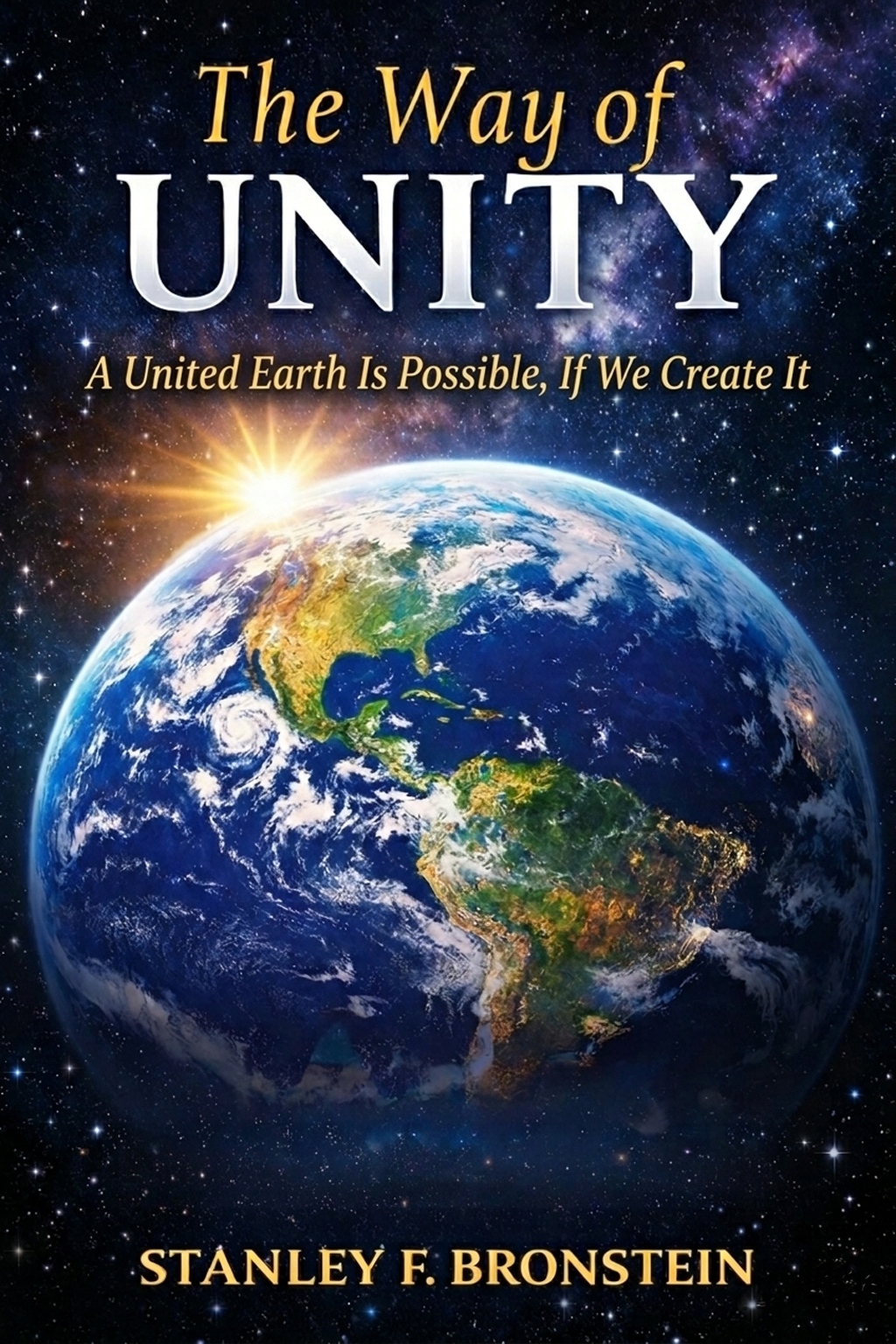
The Way of Unity
A United Earth Is Possible,
If We Create It
By Stanley F. Bronstein – Creator of The Way of Excellence System
Click The Tabs Below To Read Each Chapter Of The Book Online
Or
📘 Download Your Free Copy In Your Preferred Format
The Way of Unity
by Stanley F. Bronstein
How to use this page:
Click a chapter title to open it then scroll down to read.
When you click the title of the next chapter, the previous one will close.
Take your time.
Read, reflect, and do the experiments and assignments before you move on.
EMPTY ITEM
Foreword - A Vision Of Our Future
Most people want the same things.
They want to be safe. They want to be free. They want to be treated with respect. They want to have enough. They want a future that feels possible for themselves, for the people they love, and for the generations that come after them.
And yet, if you look at the world honestly, it is hard to miss the rising sense of division. The gaps between people are widening. The tone is hardening. Trust is eroding. Many of us have begun to expect the worst from those who think differently, vote differently, worship differently, or live differently. We have become quick to label and slow to listen. We have become experts at arguing our point and beginners at understanding one another.
This book is my attempt to point to something better, and to make it practical.
The core message behind this book is simple.
You are more powerful than you ever imagined.
We are all more powerful than we ever imagined.
Collectively, we have the power to consciously and intentionally create the type of world we all want to live in – a United Earth.
A United Earth is not a fantasy. It is a choice. It is something that can be built. Not by force. Not by wishful thinking. Not by waiting for leaders to become wiser or institutions to become purer. It will be built by people. By individuals. By millions, and then billions, making better choices – consistently – and doing it in a way that compounds.
If that sounds too simple, it is only because most of us have been trained to look for solutions that are dramatic, complicated, and centralized. We assume that unity requires everyone to agree. It does not. We assume that unity requires the elimination of conflict. It does not. We assume that unity requires some perfect system designed at the top and enforced at the bottom. It does not.
What unity actually requires is something far more realistic, and far more powerful.
It requires principles.
It requires character.
It requires personal responsibility.
It requires people who are willing to do what is right even when it is hard, inconvenient, or unpopular.
It requires a shared operating system.
That is the idea behind this book.
The way to unify the people of the Earth is for all of us to start running the same operating system. That operating system is The Way of Excellence (TWOE).
I am not asking you to adopt a political ideology. I am not asking you to join a movement. I am not asking you to convert to a belief system. I am asking you to consider something far more practical.
What if unity is created when enough people commit to the same set of internal standards?
What if peace becomes possible when enough people choose understanding over force?
What if the future changes when enough people stop waiting for the world to change, and start becoming the kind of people who can change it?
This book is designed to make that approach simple to understand and easy to apply. Each chapter takes one Concept from The Way of Excellence (TWOE) system, in the exact sequence from Concept 1 through Concept 20, and shows how that Concept supports the creation of a United Earth. Along the way, you will also learn the matching Until, Law, and Benefit from the system. The goal is not just to inspire you. The goal is to give you a way of thinking, a way of living, and a way of acting that can be practiced daily.
The chapters are simple by design. They are meant to be read, understood, and applied. Every chapter ends with an Assignment, because ideas that are not applied remain entertainment. A United Earth will not be created by good intentions. It will be created through intentional, conscious, and disciplined action.
You will also notice that this book does not ask you to wait for perfect circumstances. It does not ask you to pretend that there are no serious problems. It does not ask you to ignore the reality of greed, fear, tribalism, propaganda, and hatred. Those are real forces, and they do real damage.
But there is something else that is also real.
There is an army of principles that can penetrate where an army of soldiers cannot.
There is courage that allows people to stand up and speak, and courage that allows people to sit down and listen.
There is a time that is always right to do what is right.
There is a truth that peace cannot be kept by force, and can only be achieved by understanding.
There is a reality that we inhabit a universe characterized by diversity, and that diversity is not a problem to be solved – it is a fact to be respected and accepted.
There is a responsibility that comes with being alive. Service is the rent we pay for room on this earth.
And there is a consequence that shows up throughout human history, whether we acknowledge it or not: when humans live out of alignment with responsibilities to each other and the natural world, suffering follows – and a different choice is always available.
That last line is not meant to frighten you. It is meant to sober you. It is meant to remind you that this is not theoretical. This is not an academic exercise. This is about the kind of world we are making – through our choices, our priorities, and our standards.
The good news is that the same power that creates division can also create unity. The same human mind that invents excuses can also invent solutions. The same human heart that learns fear can learn compassion. The same people who can destroy can also build. And if we are willing to do the inner work required – awareness, long-term thinking, responsibility, change, possibility, perspective, vision, giving, wise allocation of resources, action, persistence, integrity, respect, win-win thinking, balance, willingness, belief, discipline, commitment, and alignment – then unity stops being a dream and becomes a project.
This book is an invitation to that project.
Not tomorrow.
Not when conditions are perfect.
Now.
Because things do not happen. Things are made to happen.
And if a United Earth is possible, it will happen because we created it.
INTRODUCTION TO PART I - THE FOUNDATIONAL CONCEPTS
A United Earth is possible, but it will not happen by accident.
It will not happen because we finally find the perfect leader, the perfect political system, or the perfect set of policies. Those things matter, but they are not the foundation. The foundation is people. The foundation is what people believe, how people think, how people act, and what people are willing to tolerate in themselves and in society.
That is why this book begins with foundations.
Before we can build unity between nations, cultures, and communities, we have to build unity within the human being. That does not mean everyone becomes the same. It means that enough people begin to live by the same internal standards that make peaceful cooperation possible.
The purpose of Part I is to establish the baseline principles that must exist before any larger vision can be sustained. These are the Concepts that determine how we see reality, how we think about time, how we handle responsibility, how we respond to change, and whether we focus on what is possible or surrender to cynicism.
These Concepts are not abstract ideals. They are practical tools. They shape decisions. They shape behavior. They shape outcomes. And because they do, they also shape the world.
If we want a world that is more united, we need people who are more united inside themselves.
That starts with awareness. A person who is not aware cannot be responsible. A person who is not responsible cannot be trusted. And a society that cannot trust itself cannot stay together.
It continues with long-term thinking. Many of the problems we face were created by short-term thinking. Unity requires us to care not only about today, but about what today produces. It requires us to think like good ancestors.
It requires personal responsibility. The future is not created by people who blame. The future is created by people who choose ownership. Ownership is not guilt. Ownership is power.
It requires embracing change. The world is changing whether we like it or not. A United Earth requires people who can adapt without losing their values, and who can evolve without becoming unstable.
And it requires focusing on the possible. Unity will never be built by people who have already decided it cannot be done. A United Earth requires belief, but belief is not enough. It requires the willingness to do what works, day after day, until the results begin to show.
This is also where the larger framework of this book becomes important.
The way to unify the people of the Earth is for all of us to start running the same operating system. That operating system is The Way of Excellence (TWOE). It is a system of principles that strengthens the individual and, by doing so, strengthens society. It is not a political system. It is not a religion. It is an internal standard for how to think, how to act, and how to live.
In each chapter, you will learn one Concept and how it relates to the creation of a United Earth. You will also learn the matching Until, Law, and Benefit from the system. Together, they provide a clear path from personal excellence to collective possibility.
There is an old truth that an army of principles can penetrate where an army of soldiers cannot. That is because force can control behavior, but it cannot create character. Principles create character. Character creates trust. Trust makes cooperation possible. And cooperation, practiced at scale, is what creates unity.
Part I is where we lay that foundation.
If you apply these Concepts, you will not just become a better person. You will become a more powerful person. And the more powerful you become, the more you can contribute to the world you want to live in.
You are more powerful than you ever imagined.
We are all more powerful than we ever imagined.
And a United Earth is possible, if we create it.
Chapter 1: United Awareness
Why Awareness Comes First
A United Earth is not created by slogans. It is created by people who can see clearly, think clearly, and act clearly – especially when it is uncomfortable.
That is why the first Concept is awareness.
Before we talk about unity between nations, cultures, and communities, we have to talk about unity inside the individual. If a person is divided inside – if they are unwilling to face reality – they will bring that division into every conversation, every relationship, every community, and every cause they touch.
United Awareness is not about everyone agreeing. It is about everyone respecting the same starting point – reality.
Telling It Like It Is
Most people believe they are living in the real world. But what they are often living in is a story about the world.
A story shaped by habit.
A story shaped by fear.
A story shaped by what they want to be true.
A story shaped by who they consider “us” and who they consider “them.”
The Way of Excellence (TWOE) begins here for a reason. The first Concept in the system is:
“Concept #1 – Learning To Tell It Like It Is”
That line is not a slogan. It is a discipline. It is the willingness to see what is true, name it honestly, and stop negotiating with reality.
The reason this matters is equally direct. Until #1 says:
“Until we start “telling it like it is” and then begin adjusting our actions accordingly, we will never achieve our maximum potential and evolve as a species.”
Read that again and notice what it does not say.
It does not say we must agree on everything.
It does not say we must be perfect.
It says we must tell it like it is, and then adjust our actions accordingly.
That is how individuals grow.
That is how families heal.
That is how communities improve.
That is how nations evolve.
And that is how a United Earth becomes possible.
The Law That Makes Everything Else Possible
Awareness is not just a preference. It is a requirement. That is why Law #1 is stated as clearly as it is:
“No living person or system can remain in existence for very long without first having arrived at a level of full, realistic awareness of their own existence, sensations, thoughts and surroundings and then responding accordingly after having done so.”
This is not philosophy. This is reality.
A person who does not see what is happening cannot respond appropriately.
A family that does not acknowledge what is happening cannot heal.
A society that refuses to face what is happening cannot correct course.
And a world that avoids reality cannot unify, because unity requires trust, and trust requires truth.
This is where the conversation becomes bigger than personal growth. Law #1 applies to systems as much as it applies to individuals. When people refuse awareness, they do not eliminate reality. They only eliminate their ability to respond to reality. That is how problems grow in the dark.
Unawareness at Scale Creates Division
When people are not telling it like it is, a predictable pattern takes over.
They assume instead of verify.
They react instead of reflect.
They defend what should be questioned.
They attack what should be understood.
They follow narratives that feel good rather than facts that are true.
This is how division becomes normal.
This is how people begin to live in different realities – and once that happens, cooperation becomes nearly impossible. You cannot build a United Earth when people cannot even agree on what is happening. The starting point must be a shared understanding of reality.
That is why awareness is not optional. It is foundational.
Living in the Real World
Benefit #1 is not “feeling better” or “having a nicer attitude.” It is something far more practical:
“By incorporating Law #1 The Law of Actuality into our lives, we will be creating a society where its members truthfully and accurately assess and acknowledge their situation, and as a result, begin acting appropriately.”
There are two key ideas in that sentence.
First, awareness is truth-based. People “truthfully and accurately assess and acknowledge their situation.”
Second, awareness is action-based. “As a result, begin acting appropriately.”
This is what United Awareness is about. It is not awareness as observation. It is awareness as a trigger for appropriate action.
The question is never, “Am I aware?” The real question is, “Am I aware enough to act appropriately?”
Principles Over Force
This is also why unity cannot be forced.
Force can control behavior for a while, but it cannot create trust. It cannot create understanding. It cannot create cooperation. It can suppress conflict, but it cannot build unity.
Unity is built by shared principles, practiced at scale.
An army of principles can penetrate where an army of soldiers cannot.
Principles move through people, not through weapons. Principles move through example. Through consistency. Through character. Through individuals who are willing to live by standards even when it costs them something.
United Awareness is the first principle in that army, because it is the one that makes every other principle possible.
The Courage to See and the Courage to Listen
Awareness requires courage, because reality does not always confirm what we want to believe.
Sometimes awareness tells us we are wrong.
Sometimes it tells us we have been avoiding something.
Sometimes it tells us we have been blaming others to avoid our own responsibility.
Sometimes it tells us our side is not as pure as we thought.
Sometimes it tells us the other side is more human than we wanted to admit.
That is why courage matters.
Courage is what it takes to stand up and speak. Courage is also what it takes to sit down and listen.
United Awareness is both.
It is the courage to speak truthfully without cruelty.
It is the courage to listen without defensiveness.
It is the courage to accept responsibility when it is yours.
It is the courage to adjust your actions according to reality, instead of demanding that reality adjust itself to you.
United Awareness and a United Earth
A United Earth begins when enough people make a simple shift:
They stop demanding agreement, and start demanding reality.
They stop treating feelings as facts.
They stop choosing comforting stories over uncomfortable truth.
They stop using information as a weapon and start using it as a tool.
They begin asking better questions, such as:
What is actually true?
What part am I playing in what is happening?
What would appropriate action look like from here?
When people do that at scale, the world begins to change.
Not because everyone agrees on everything.
But because enough people agree on the starting point – reality.
Assignment: United Awareness Audit
Purpose
This assignment will strengthen your ability to tell it like it is and then adjust your actions accordingly.
Step 1 – Tell It Like It Is
Write a clear, honest paragraph answering this question:
What is one area of my life where I am not fully telling it like it is?
No explanations. No justifications. Just reality.
Step 2 – Identify the Cost of Avoidance
List three costs of staying unaware in this area.
Costs can include stress, wasted time, damaged trust, poor health, or lost opportunities.
Step 3 – Choose Appropriate Action
Write down one action you can take in the next 24 hours that matches reality.
Make it small enough that you will do it.
Step 4 – Practice Listening
Have one conversation this week where your only goal is understanding.
Ask questions. Reflect back what you heard. Resist the urge to correct, defend, or win.
Reflection Question
If I consistently told it like it is, and then adjusted my actions accordingly, what would begin to change in my life – and how might that change ripple outward into the world around me?
Chapter 2: United Long-Term Thinking
Why Unity Requires Time
A United Earth will not be built in a day, and it will not be built by people who only think in days.
Most of the problems that divide humanity were not created overnight. They were created slowly – by short-term decisions repeated long enough to become “normal.” Those decisions may have seemed small at the time. Convenient. Profitable. Justified. Harmless.
But time has a way of revealing what short-term thinking hides.
United Long-Term Thinking is the decision to live as if the future matters. Not only your future, but the future of your family, your community, your country, and the world.
Adopting Long-Term Thinking
The Way of Excellence (TWOE) names the second Concept plainly:
“Concept #2 Adopting Long-Term Thinking”
The word adopting matters. This is not something you understand once and then move on. This is something you decide to live by. It becomes a standard.
Until #2 tells us exactly what is at stake:
“Until we adopt long-term thinking and start focusing less on short-term gratification, we will never achieve our maximum potential and evolve as a species.”
That is true for individuals, and it is true for humanity. Short-term gratification is seductive. It feels good now. It often looks good now. It is also one of the fastest paths to long-term regret.
If we want unity, we have to stop trading tomorrow for today.
The Law Of The Long-Term
Short-term thinkers tend to live as if the future will magically work out. Long-term thinkers live as if the future is built.
Law #2 is the foundation:
“Repeated short-term discipline brings long-term rewards. Consequently, one must place reasonable limits on short-term pleasures, with the understanding long-term benefits will be the result.”
This is one of the simplest and most powerful truths in the entire system.
Repeated short-term discipline.
Long-term rewards.
The result is not luck. The result is math. It is cause and effect, repeated over time.
This Law applies everywhere.
It applies to health.
It applies to relationships.
It applies to finances.
It applies to integrity.
It applies to the health of nations.
It applies to the future of the Earth.
A United Earth requires people who can place reasonable limits on short-term pleasures. Not because pleasure is wrong, but because unchecked appetite becomes a weapon against the future.
The World We Live In Is a Result of the Past
Take a moment and look around your life.
The relationships you have. The health you have. The skills you have. The stability you have. The stress you have. The opportunities you have.
Much of it did not happen randomly. Much of it is the result of what you did repeatedly – and what you failed to do repeatedly – over time.
The same is true of societies. When you zoom out far enough, you begin to see that nations and cultures are shaped by compounding choices. The only difference is scale.
This is why long-term thinking is not a luxury. It is a survival skill.
“We shall require a substantially new manner of thinking if mankind is to survive.”
That “new manner of thinking” does not require genius. It requires discipline. It requires restraint. It requires the willingness to accept short-term discomfort in exchange for long-term stability.
“There are risks and costs to action. But they are far less than the long range risks of comfortable inaction.”
Comfortable inaction is simply another form of short-term gratification. It is the pleasure of avoiding the hard thing. It is the relief of postponing responsibility. It feels good now. It costs later.
Living In A Sustainable World
If enough individuals live by Law #2, the world changes. Benefit #2 describes the direction:
“By incorporating Law #2 The Law of the Long-Term into our lives, we will be creating a society based upon principles that are sustainable over the long-term, as opposed to an unsustainable society that cannot hope to last.”
A United Earth must be sustainable. That includes how we treat each other and how we treat the natural world.
Short-term thinking creates unsustainable systems. It creates extraction. It creates waste. It creates fear-based politics. It creates win-now behavior. It creates a culture that is constantly surprised by consequences.
Long-term thinking creates a different kind of person, and a different kind of society.
It creates people who are harder to manipulate.
It creates people who are less addicted to outrage.
It creates people who can delay gratification and keep commitments.
It creates people who are willing to do what is right, not only what is popular.
Thinking Like an Ancestor
Long-term thinking also does something else. It expands identity.
“You are the dream of many ancestors.”
That idea, taken seriously, changes what you tolerate in yourself. It changes how you define success. It changes how you think about responsibility.
Long-term thinking asks a question most people avoid:
What kind of ancestor will I be?
Not in a poetic sense. In a practical sense.
Will the people who come after us inherit better habits or worse habits?
Better systems or worse systems?
More stability or more chaos?
More unity or more division?
A United Earth will not be created by people who are obsessed with winning the next argument. It will be created by people who are committed to building the next century.
United Long-Term Thinking Creates Unity
People divide when they feel threatened, desperate, and short-sighted.
They unite when they feel stable, purposeful, and future-focused.
Long-term thinking does not eliminate conflict, but it changes how conflict is handled.
It reduces impulsive aggression.
It reduces the need to win now at any cost.
It increases the willingness to negotiate.
It increases the willingness to compromise without surrendering principles.
And it increases the willingness to place reasonable limits on short-term pleasures, with the understanding long-term benefits will be the result.
That is unity thinking.
Not just harmony today, but sustainability tomorrow.
Assignment: The 10-Year United Earth Letter
Purpose
This assignment strengthens your ability to think beyond the moment and choose actions today that build a better future.
Step 1 – Write Your 10-Year Letter
Write a letter dated ten years from today. In the letter, describe the world you want to be living in.
Be specific.
What does a more united world look like in daily life?
How do people treat each other?
What has improved?
What has been reduced?
What do you see more of?
What do you see less of?
Step 2 – Identify the Short-Term Gratification Trade
List three ways you personally tend to choose short-term gratification over long-term benefit.
Then write one reasonable limit you could place on each one.
Step 3 – Choose One Repeated Short-Term Discipline
Choose one small discipline you will practice daily for the next 14 days.
Make it measurable and realistic.
Examples: a daily walk, a daily reading block, a daily time limit on news or social media, a daily difficult conversation you have been avoiding.
Step 4 – Think Like an Ancestor
Answer this question in writing:
If I lived as if I were accountable to the people who come after me, what would I change first?
Reflection Question
If repeated short-term discipline truly brings long-term rewards, what is one discipline I am willing to repeat until it becomes part of who I am?
Chapter 3: United Personal Responsibility
Why Unity Requires Responsibility
A United Earth cannot be built by people who are waiting to be rescued.
It cannot be built by people who believe the problem is always “out there” – and the solution is always someone else.
Unity is created by people who take ownership. Not ownership of everything, and not ownership of what they cannot control. Ownership of what they can control – their choices, their actions, their responses, and their standards.
That is why personal responsibility is not just a personal virtue. It is a global necessity.
When personal responsibility is rare, blame becomes a culture. And a culture of blame cannot unify, because it spends its energy accusing, attacking, excusing, and defending. It does not spend its energy fixing.
Taking Personal Responsibility
The Way of Excellence (TWOE) is direct about the third Concept:
“Concept #3 Taking Personal Responsibility”
This Concept is not about guilt. It is not about shame. It is not about beating yourself up.
It is about power.
Because personal responsibility is the moment you stop being a spectator and become a creator.
Until #3 tells the truth in plain language:
“Blame is irrelevant. Until we stop blaming others (and ourselves for that matter) and start fixing our problems, we will never achieve our maximum potential and evolve as a species.”
That is not just a motivational line. It is a description of what happens in real life.
Blame delays action.
Blame justifies inaction.
Blame consumes energy.
Blame keeps people stuck.
And when blame becomes normal, society becomes a machine that produces frustration instead of solutions.
Blame Is a Dead-End
Blame feels like progress, but it is not.
It feels like clarity, but it is not.
It feels like strength, but it is not.
Blame is a way of staying emotionally active while avoiding practical responsibility.
It is also a way of staying morally superior while doing nothing.
That is why blame is so addictive. It gives the illusion of power without requiring the discipline of action.
But the moment you trade blame for responsibility, you regain real power.
You stop asking, “Who did this?”
You start asking, “What can I do to fix it?”
This is one of the reasons a United Earth is possible. Because when enough people ask the second question, outcomes begin to change.
Things do not happen. Things are made to happen.
Law #3 and the Shift From Complaining to Fixing
Law #3 is blunt for a reason:
“One must stop blaming others for anything wrong in their life. In fact, one must also stop blaming themselves. BLAME IS IRRELEVANT. All that matters is what are you going to do to fix the problem?”
That is the entire shift.
Stop blaming others.
Stop blaming yourself.
Fix the problem.
This is not about ignoring injustice or pretending harm did not occur. It is about choosing the only path that produces forward movement.
Blame keeps the mind trapped in the past.
Responsibility moves the mind into the present.
And the present is where change is created.
Personal Responsibility at a Global Scale
A United Earth requires cooperation between people who are different.
Different cultures.
Different values.
Different histories.
Different priorities.
Cooperation does not require everyone to agree on everything. Cooperation requires enough people to be solution-oriented.
That is what personal responsibility produces.
When personal responsibility becomes normal, people become harder to manipulate. They become less reactive. They become less addicted to outrage. They stop feeding division for entertainment.
They begin asking better questions:
What is the real problem?
What is the next useful step?
What can I do today?
What can we do together?
If you want peace, you don’t talk to your friends. You talk to your enemies.
That requires personal responsibility. Because talking to an enemy means you are willing to risk discomfort for the sake of progress. You are willing to do something that might not be rewarded in the moment, but that could create a better future.
That is unity thinking.
Benefit #3 and the World We Actually Need
Benefit #3 describes the kind of world that becomes possible when Law #3 is lived:
“By incorporating Law #3 The Law of Personal Response-Ability into our lives, we will be creating a society where people are encouraged to become problem solvers, as opposed to being complainers who either do nothing or possibly make the situation worse.”
That is exactly what the world needs.
More problem solvers.
Fewer complainers.
More people who fix what they can fix, instead of endlessly describing what is wrong.
More people who take action, instead of demanding perfection from others.
More people who understand that responsibility is not a burden – it is access to power.
Ask not what your world can do for you, ask what you can do for your world.
That is another way of saying the same thing. Unity is not something you demand. Unity is something you contribute to.
United Personal Responsibility
United Personal Responsibility does not mean you carry the world on your back. It means you carry your part.
It means you stop wasting time on blame.
It means you stop excusing yourself.
It means you stop telling stories about why you cannot act.
It means you begin fixing what you can fix – and you do it consistently.
That is how personal responsibility becomes contagious. People respect it. People trust it. People follow it. Not because it is loud, but because it works.
When enough people live this way, the world begins to change. Not magically. Mechanically. The way all real change happens.
Through action.
Through ownership.
Through problem solving.
Through people deciding to become the kind of person who creates the kind of world they want to live in.
Assignment: Responsibility Without Excuses
Purpose
This assignment will train you to replace blame with responsibility and move directly into problem solving.
Step 1 – Identify One Problem You Keep Talking About
Write down one problem in your life that you complain about, worry about, or replay in your mind.
Keep it specific.
Step 2 – Remove Blame From the Equation
Write this sentence at the top of a page and complete it honestly:
BLAME IS IRRELEVANT. What matters is what I am going to do to fix the problem.
Then list three actions you could take that would move the situation forward, even slightly.
Step 3 – Choose the First Fix
Circle one action that can be done within the next 24 hours.
Do it.
No preparation. No perfect timing. Just action.
Step 4 – Create a Simple Responsibility Rule
Write one rule you will live by for the next seven days, such as:
-
I do not complain unless I also propose a solution.
-
If I identify a problem, I take one step toward fixing it the same day.
-
I stop blaming others and stop blaming myself – then I fix what I can fix.
Choose one and commit.
Reflection Question
If I stopped blaming others and stopped blaming myself, what problem would I fix first – and what would become possible after that?
Chapter 4: United Embracing of Change
Why Unity Requires Change
A United Earth is possible, but it will require change.
Not just change in governments, policies, and institutions, but change in people. Change in what we tolerate. Change in what we reward. Change in what we normalize. Change in what we believe is possible.
Many people say they want a better world, but they want it without changing themselves. That cannot work, because the world is not separate from the people in it. The world is an extension of what people choose, day after day.
If we want unity, we have to become people who can change without falling apart.
Embracing Change
The Way of Excellence (TWOE) is direct about this Concept:
“Concept #4 Embracing Change”
That word embracing matters. It does not mean tolerating change. It does not mean enduring change. It means accepting change as part of life, and learning how to work with it rather than fighting it.
Until #4 describes the trap that keeps people stuck:
“Until we stop fearing change and start embracing it, we will never achieve our maximum potential and evolve as a species.”
Fear of change is one of the most expensive habits a person can have, and one of the most dangerous habits a society can normalize. It keeps people clinging to what is familiar, even when what is familiar is clearly not working.
Law #4 and the Truth About Change
Most people say they want change. In reality, many people want other people to change.
Law #4 says it clearly:
“Everyone wants change, but few are willing to change. That’s not the way it works. Change requires work. If one wants to see changes in their life and in their world, they are going to have to change first. Change starts with you.”
This Law is not gentle, and that is the point. It removes the fantasy that unity can be created while everyone stays the same.
A United Earth cannot be created by people who insist that the world must change, while refusing to change themselves.
Change starts with you.
That is where unity begins, because unity requires millions of people choosing the same direction at the same time.
Change Requires Work
Change requires work because it requires replacing old habits with new ones.
Old habits are automatic.
New habits are deliberate.
Old habits are familiar.
New habits are uncomfortable at first.
Old habits feel like identity.
New habits feel like risk.
That is why so many people avoid change. Not because they are lazy, but because they are afraid. Fear creates resistance, and resistance creates stagnation.
But stagnation is not stable. Stagnation is decay.
A United Earth requires growth, and growth requires change.
We shall require a substantially new manner of thinking if mankind is to survive.
That new manner of thinking includes a willingness to change, even when it is inconvenient, uncomfortable, and unpopular.
The Cost of Not Changing
Resisting change does not stop change. It only delays it, and makes the eventual price higher.
When we avoid change, we create a predictable cycle:
We tolerate what we should correct.
We normalize what we should challenge.
We delay what we should address.
Then we act surprised by the consequences.
There are risks and costs to action. But they are far less than the long range risks of comfortable inaction.
Comfortable inaction is what happens when we know change is needed, but we keep postponing it because we want the comfort of the familiar.
A United Earth will not be built through postponement. It will be built through deliberate change.
Benefit #4 and the World We Want to Live In
Unity is not only about ending conflict. Unity is also about creating improvement.
Benefit #4 describes what becomes possible when people live by Law #4:
“By incorporating Law #4 The Law of Change into our lives, we will be creating a society that encourages constant and never-ending improvement, as opposed to one that fears it or discourages it.”
That is the world we need.
A world that encourages constant and never-ending improvement.
A world that does not punish growth.
A world that does not shame people for evolving.
A world that does not treat change as betrayal.
Because if we want a United Earth, we must be willing to improve ourselves and our systems, constantly.
Change and Peace
Peace cannot be kept by force. It can only be achieved by understanding.
Understanding often requires change.
Changing how we listen.
Changing how we speak.
Changing how we assume.
Changing how we respond.
Changing how we treat people we disagree with.
If you want peace, you don’t talk to your friends. You talk to your enemies.
That requires a change in perspective and a change in approach. It requires a willingness to step into discomfort for the sake of a better outcome.
Courage is what it takes to stand up and speak, and courage is also what it takes to sit down and listen.
That kind of courage is also a form of embracing change, because it changes your default behavior from reaction to understanding.
United Embracing of Change Creates a United Earth
A United Earth is possible, but it will not appear by wishful thinking.
It will be built by people who stop fearing change and start embracing it.
It will be built by people who understand that change requires work.
It will be built by people who accept that if they want to see changes in their life and in their world, they are going to have to change first.
Because change starts with you.
And when enough people change in the right direction, the world changes with them.
Assignment: One Change That Changes Everything
Purpose
This assignment will help you stop fearing change and start embracing it.
Step 1 – Identify One Change You Have Been Avoiding
Write down one change you know you need to make, but have been delaying.
Keep it specific.
Step 2 – Name the Fear
Write one sentence that begins with:
I have been fearing this change because…
Tell the truth.
Step 3 – Name the Work
Law #4 says, “Change requires work.” Write down three specific actions that represent the work of this change. Make them practical and measurable.
Step 4 – Change First
Choose one action you can take in the next 24 hours and do it.
No perfect timing. No overthinking. Action.
Step 5 – Create a 7-Day Improvement Practice
Choose one daily practice you will do for seven days that supports constant and never-ending improvement in this area.
Reflection Question
If change starts with me, what would the world around me begin to look like if I embraced the work of change instead of fearing it?
Chapter 5: United Focus on the Possible
Why Unity Requires Possibility
A United Earth will never be created by people who have already decided it cannot happen.
That does not mean we ignore the problems. It does not mean we pretend the world is fine. It means we refuse to accept hopelessness as “realism.” Hopelessness is not realism. It is surrender.
Unity requires a different starting point.
It requires the belief that something better can be built, and the willingness to do what it takes to build it.
If you remove possibility, you remove effort. If you remove effort, you remove progress. If you remove progress, division grows by default.
United Focus on the Possible is the refusal to accept “this is just the way it is” as a final answer.
Focus on the Possible
The Way of Excellence (TWOE) defines the fifth Concept in the simplest possible way:
“Concept #5 Focusing On The Possible”
This is not positive thinking. This is productive thinking.
There is always something that can be done.
There is always a next step.
There is always a better way to respond.
There is always a way to reduce harm and increase good, even if it is small at first.
Until #5 names the shift directly:
“Until we start focusing on the wonderful things that are possible and stop focusing on the negative things that are holding us back, we will never achieve our maximum potential and evolve as a species.”
Focusing on what is wrong has its place. It can create awareness. It can expose problems. It can highlight injustice. But if it never turns into possibility, it becomes a trap. It becomes a loop of complaint, outrage, and despair.
Possibility is where problem solving begins.
Possibility is where action begins.
Possibility is where unity begins.
Law #5 and the Mind That Builds
Law #5 explains why focus is not optional:
“Whatever we focus our attention on expands in our lives. If one focuses on positives, then positives will occur in their life. If one focuses on negatives, then negatives will occur in one’s life. Consequently, the ability to positively focus on the most important task at hand is the key to success.”
This Law does not say to ignore reality. It says your focus expands what you experience and what you create.
If you train your mind to focus on negatives, you will find more negatives, talk about more negatives, and feel more powerless. You will also become easier to manipulate, because fear-based attention is easy to direct.
If you train your mind to focus on positives, you will see more opportunities, take more constructive action, and become more capable.
A United Earth requires capable people.
It requires people who can “positively focus on the most important task at hand.”
And the most important task at hand is not winning the next argument. It is building a better world.
The Difference Between Denial and Possibility
Some people hear “focus on the possible” and assume it means denial. It does not.
Denial avoids reality.
Possibility faces reality and asks, “Now what?”
United Focus on the Possible includes awareness of what is wrong. It just refuses to stop there.
It refuses to make misery a hobby.
It refuses to make outrage an identity.
It refuses to confuse describing the problem with solving the problem.
There is a time that is always right to do what is right.
Doing what is right is often the first possible step.
It may not solve everything. It may not be dramatic. But it is real, and it moves the world.
Benefit #5 and the Culture We Choose to Create
Benefit #5 describes what happens when people start living by Law #5:
“By incorporating Law #5 The Law of Focus into our lives, we will be creating a society that focuses on the positive things that are possible and one that stops focusing on the negative things that hold us back.”
That is not naive. That is strategic.
A society that focuses on what is possible becomes a society that builds.
A society that focuses on what is negative becomes a society that fractures.
This is why focus matters. Focus becomes culture. Culture becomes outcomes.
A United Earth is not created by a single breakthrough. It is created by a cultural shift – from fixation on what is wrong to disciplined focus on what can be done.
The Power of Small Improvements at Scale
A United Earth does not require every person to do heroic things. It requires enough people to do consistent things.
Small improvements, repeated, compound.
A single person choosing to listen instead of attack.
A single person choosing to solve instead of complain.
A single person choosing to serve instead of extract.
A single person choosing to take responsibility instead of blame.
Those are small actions. They are also the building blocks of unity.
An army of principles can penetrate where an army of soldiers cannot.
Focusing on the possible is one of those principles. It penetrates cynicism. It penetrates despair. It penetrates paralysis.
It turns people into builders.
The Cost of Comfortable Inaction
Possibility requires action, and action always has a cost. It costs comfort. It costs time. It costs energy. It costs pride.
There are risks and costs to action. But they are far less than the long range risks of comfortable inaction.
Comfortable inaction is what happens when people decide nothing can be done. It is what happens when people confuse pessimism with wisdom. It is what happens when people keep focusing on negatives until they no longer believe in positives.
United Focus on the Possible is the refusal to drift.
It is the decision to focus on what matters most, and then act accordingly.
United Focus on the Possible Creates a United Earth
A United Earth is possible, but it is not guaranteed.
It will be created by people who choose to focus on the positive things that are possible, and who stop focusing on the negative things that hold us back.
It will be created by people who insist on a better future, and then act like it is their job to build it.
It will be created through intentional, conscious, and disciplined action.
And it will be created one possible step at a time.
Assignment: Possibility Map
Purpose
This assignment will train you to move from problem focus to possibility focus, and then into action.
Step 1 – Name the Problem
Write down one problem in your life or in the world that makes you feel discouraged.
Be specific.
Step 2 – Write What Is Wrong in One Paragraph
Keep it short. This is not a rant. This is clarity.
Step 3 – List 10 Possible Actions
List ten actions that could improve the situation.
They can be small.
They can be personal.
They can be relational.
They can be practical.
The only rule is that they must be possible.
Step 4 – Choose the Best Next Step
Circle one action that you can do within the next 72 hours.
Schedule it. Do it.
Reflection Question
If I made focusing on the wonderful things that are possible a daily habit, what would improve first – my life, my relationships, my community, or my mindset?
INTRODUCTION TO PART II - A UNITED WAY OF LOOKING AT THINGS
Unity is not created by pretending we are the same.
Unity is created when we learn how to see.
When we can look at the world and recognize that different does not mean dangerous, and that disagreement does not require hatred.
Part I established the foundation. It began with awareness, then long-term thinking, then personal responsibility, then embracing change, and then focusing on what is possible. Those five Concepts strengthen the individual from the inside out. They create stability. They create clarity. They create strength. And without those qualities, perspective collapses into opinion and vision collapses into fantasy.
Part II builds on that foundation by changing how we look at things.
A United Earth will not be created by one culture conquering another. It will not be created by forcing uniformity. It will not be created by shutting down differences. We inhabit a universe that is characterized by diversity. Diversity is not a problem to be solved – it is a fact to be respected and accepted.
A United Earth requires people who can hold that truth without becoming confused, threatened, or defensive.
That starts with perspective.
Perspective is the ability to step outside your own assumptions and see through someone else’s eyes, even if you do not agree with them. Perspective allows you to understand where another person is coming from. Without perspective, people reduce each other to labels. They assume motives. They project intentions. They create enemies out of strangers.
Perspective does not mean you abandon your values. It means you expand your understanding.
It continues with vision.
Vision is what happens when people stop obsessing over the next argument and start focusing on the next decade. Vision creates direction. Vision creates priorities. Vision creates unity of effort. Without vision, people drift. With vision, people move.
It also includes giving to each other.
Most division is fueled by extraction. People taking more than they give. People hoarding. People building lives that require others to suffer. A United Earth cannot be created through extraction. It can only be created through contribution. Service is the rent that you pay for room on this earth.
Then comes the allocation of resources.
When people say there is not enough, what they often mean is that resources are being allocated poorly. There is enough for everybody’s need but not everybody’s greed. Unity requires better priorities and better distribution – of money, time, attention, and human energy.
Finally, Part II ends with action.
Vision without action is fantasy. Perspective without action is academic. Giving without action is intention. Allocation without action is theory. A United Earth is not a belief. It is behavior. It is built by what people repeatedly do.
There is a truth that peace cannot be kept by force – it can only be achieved by understanding. That understanding begins with how we look at the world, how we look at each other, and how we look at our role in what happens next.
Part II will train you to look differently.
Not so you can win arguments.
So you can build unity.
So you can become the kind of person who makes a United Earth more likely.
Because the time is always right to do what is right.
And because a United Earth is possible, if we create it.
Chapter 6: United Perspective
Why Perspective Is a Unity Skill
Unity does not begin with agreement. It begins with understanding.
When people cannot understand each other, they stop seeing each other as human. They start seeing each other as categories, stereotypes, threats, and enemies. At that point, division becomes easy, and peace becomes fragile.
Perspective is one of the most practical skills a person can develop. It is the ability to step outside your own assumptions, emotions, and experiences long enough to see what another person may be seeing.
You do not have to agree with someone to understand them.
You do have to understand them if you want to live with them.
Changing Our Perspective
The Way of Excellence (TWOE) names this Concept plainly:
“Concept #6 Changing Our Perspective”
Changing is the key word. A perspective is not something you simply have – it is something you can update. You can widen it. You can correct it. You can mature it.
Until #6 tells us exactly what is at stake:
“Until we change our perspective and realize that everything we give and everything we receive in life is a privilege, we will never achieve our maximum potential and evolve as a species.”
That sentence can change the tone of a life.
When you see everything you give as a privilege, you stop acting like service is beneath you.
When you see everything you receive as a privilege, you stop acting like the world owes you something.
And when enough people see life that way, unity stops being a moral argument and starts becoming a natural outcome.
Law #6 and the Power of Moving On
A huge amount of division is fueled by people who are stuck.
Stuck in resentment.
Stuck in grievance.
Stuck in replaying past pain.
Stuck in a story where the past is a prison.
Law #6 addresses that directly:
“Sometimes life requires a change in perspective. One’s previous life challenges have made them into the person they are today and given them the potential to develop a fuller perspective as a result, provided they learn from said experiences and move on, as opposed to dwelling on them and looking back.”
This Law does not minimize pain. It simply refuses to let pain become a permanent identity.
It says your previous life challenges can give you a fuller perspective, but only if you learn from them and move on.
That is a unity skill.
Because a United Earth will not be created by people who keep looking back and dwelling. It will be created by people who learn, grow, and move forward.
From Obligation to Privilege
One of the quiet sources of conflict is the mindset of obligation.
I have to.
I must.
I am forced.
I am trapped.
That mindset creates resentment. Resentment creates hostility. Hostility creates division.
Benefit #6 describes a different kind of society:
“By incorporating Law #6 The Law of Perspective into our lives, we will be creating a society where everything becomes a privilege and nothing is an obligation. We will be creating a society where everyone is encouraged to help each other and to care for each other.”
Read that carefully.
Everything becomes a privilege and nothing is an obligation.
That does not mean there are no responsibilities. It means we stop approaching responsibility with resentment. It means we stop acting like caring is weakness. It means we stop treating service as punishment.
Service is the rent that you pay for room on this earth.
When you see service as privilege, it becomes natural to help. And when it becomes natural to help, unity becomes possible.
Perspective Turns Enemies Into Humans
The fastest way to create division is to assume motives.
To assume the other person is evil.
To assume the other side is stupid.
To assume the other group is dangerous.
Once you do that, you can justify almost anything.
Changing your perspective interrupts that pattern. It forces a different set of questions:
What might I be missing?
What experience might be shaping what I am seeing?
What experience might be shaping what they are seeing?
What would a fuller perspective require here?
A fuller perspective does not mean you accept everything. It means you see more clearly and respond more wisely.
Peace cannot be kept by force. It can only be achieved by understanding.
Understanding begins with perspective.
United Perspective Creates a United Earth
A United Earth requires millions of people who can do something very simple and very rare:
Hold two truths at the same time.
I have a perspective.
Other people also have perspectives.
Both perspectives may contain truth.
Both perspectives may contain blind spots.
And sometimes life requires a change in perspective.
When people develop that habit, they become harder to manipulate. They become less reactive. They become more willing to help each other and care for each other.
That is what unity looks like in real life.
Not perfection.
Not uniformity.
A shared willingness to see more clearly, learn from experience, and move forward together.
Assignment: Perspective Expansion Practice
Purpose
This assignment will train you to change your perspective in a practical way and treat both giving and receiving as privilege.
Step 1 – Identify One Area Where You Feel Trapped by Obligation
Write down one area of your life where you frequently think: I have to.
Be specific.
Step 2 – Rewrite It as Privilege
Rewrite the sentence as: I get to.
Then write one paragraph explaining why it is a privilege, even if it is difficult.
Use the language of Until #6 as your guide – everything you give and everything you receive is a privilege.
Step 3 – Learn and Move On
Write down one previous life challenge you still dwell on.
Then answer two questions:
-
What did this experience teach me?
-
What would moving on look like in one practical action this week?
Use the language of Law #6 as your guide – learn from the experience and move on, as opposed to dwelling on it and looking back.
Step 4 – One Act of Caring
Do one specific act this week that helps someone else, with no expectation of return.
Treat it as privilege, not obligation.
Reflection Question
If I lived as if everything I give and everything I receive is a privilege, how would my daily attitude change – and what would that shift make possible in my relationships and in the world around me?
Chapter 7: United Vision
Why Vision Creates Unity
A United Earth will not be created by accident. It will be created on purpose.
Division is what happens when people drift. Unity is what happens when people decide.
When there is no shared direction, people default to short-term impulses, tribal identity, and fear-based reactions. When there is direction, people can disagree and still move together because they are moving toward something larger than the next argument.
That is what vision does. It turns scattered energy into aligned energy.
It turns complaint into construction.
It turns frustration into forward motion.
Envisioning A Brighter Future
The Way of Excellence (TWOE) states this Concept plainly:
“Concept #7 Envisioning A Brighter Future”
The word envisioning matters. It is not daydreaming. It is not wishing. It is seeing a future that does not yet exist and then choosing to build it.
Until #7 draws a hard line:
“Until we begin envisioning the biggest, boldest and brightest possible future for ourselves, we will never achieve our maximum potential and evolve as a species.”
That is not exaggeration. It is a description of how growth works.
People do not build what they cannot see.
They do not create what they have not imagined.
They do not persist toward a future they have not defined.
If we want a United Earth, we need a vision of it. Not a vague hope – a clear image that can guide choices.
Law #7 and the People Who See First
Law #7 explains what visionaries do differently:
“Visionaries see the future, finished in advance. Visionaries see that which others do not see. Visionaries see that which is possible, before it becomes obvious. Consequently, one must look inside themselves and form a vision of their best possible future. No one else will do it for you.”
This is the heart of the matter.
No one else will do it for you.
Not in your personal life.
Not in your community.
Not in your country.
Not in the world.
A United Earth will not be handed to us. It will be formed by people who are willing to see it first, finished in advance, and then start taking steps toward it.
There is a time that is always right to do what is right.
Vision helps you recognize that time, because it gives you direction. It tells you what matters most right now.
Vision Is Not Fantasy
Some people avoid vision because they confuse it with fantasy. They assume that if they cannot guarantee a result, it is foolish to envision it.
That is the voice of fear pretending to be wisdom.
Vision is not a guarantee. Vision is a compass.
It does not remove obstacles. It tells you what obstacles are worth confronting.
It does not eliminate uncertainty. It gives you a direction in the middle of uncertainty.
It does not make things easy. It makes them clear.
We shall require a substantially new manner of thinking if mankind is to survive.
A “new manner of thinking” includes vision – seeing the future we want and refusing to settle for the future we are drifting toward.
From Borrowed Visions to Conscious Choice
One of the hidden causes of division is that many people do not live from their own vision.
They live from someone else’s script.
Someone else’s fears.
Someone else’s resentments.
Someone else’s priorities.
Someone else’s definition of success.
That makes them easy to control, easy to divide, and easy to manipulate.
Benefit #7 describes a different world:
“By incorporating Law #7 The Law of Vision into our lives, we will be creating a society that is based upon our own visions, passions and interests, as opposed to one based upon the visions, passions and interests of others.”
That is a world of conscious choice.
That is a world where people are less reactive and more intentional.
That is a world where people stop outsourcing their thinking to whoever shouts the loudest.
And that is a world where unity becomes possible, because people begin building from purpose instead of from panic.
United Vision and a United Earth
A United Earth does not require uniform beliefs. It requires a shared direction.
A shared commitment to reduce unnecessary suffering.
A shared commitment to treat people as human, even when they disagree.
A shared commitment to allocate resources wisely.
A shared commitment to long-term stability over short-term gratification.
A shared commitment to principles that protect everyone.
An army of principles can penetrate where an army of soldiers cannot.
Vision is how those principles become organized into a future that can actually be built.
Vision also changes how conflict is handled. When people share a future, they become more willing to negotiate, more willing to listen, and more willing to search for win-win outcomes.
If you want peace, you don’t talk to your friends. You talk to your enemies.
That is vision in action – choosing a future worth having over the comfort of staying divided.
Peace cannot be kept by force. It can only be achieved by understanding.
Understanding grows when the goal is not to win the moment, but to build the future.
Making Vision Practical
Law #7 ends with something personal: “one must look inside themselves and form a vision of their best possible future.”
That is not selfish. That is foundational.
A person without a vision is easily pulled into other people’s visions.
A person with a vision can contribute without being controlled.
A person with a vision can help build unity without losing themselves.
And when enough people form a vision of their best possible future, and align that future with something larger than themselves, a United Earth stops being a slogan and becomes a plan.
Things do not happen. Things are made to happen.
Vision is where making begins.
Assignment: Your United Earth Vision
Purpose
This assignment will help you form a clear vision and begin living from conscious choice instead of borrowed narratives.
Step 1 – See the Future Finished in Advance
Write one paragraph that begins with:
In a United Earth, everyday life looks like…
Make it concrete. Focus on daily life and human behavior, not politics.
Step 2 – Make It Personal
Write one paragraph that begins with:
In my best possible future, I am the kind of person who…
Describe your character. Describe your standards. Describe how you treat people.
Step 3 – Name the Three Pillars
List three principles you believe must be normal for a United Earth to exist.
Examples: truthfulness, respect, responsibility, service, long-term thinking, forgiveness.
Step 4 – Choose One Vision-Aligned Action
Pick one action you will take in the next 72 hours that aligns with your vision.
Do it. Keep it simple. Make it real.
Reflection Question
If I stopped living from the visions, passions, and interests of others, and started living from my own, what would change first – my choices, my relationships, or my contribution to the world?
Chapter 8: United Giving To Each Other
Why Giving Creates Unity
A United Earth cannot be built on extraction.
It cannot be built on the idea that life is a competition where the goal is to take as much as you can before someone else does.
It cannot be built on the belief that helping others is optional, or that caring is weakness.
Unity is created when giving becomes normal.
When contribution becomes a standard.
When people stop asking, “What can I get?” and start asking, “What can I give?”
Service is the rent that you pay for room on this earth.
That is not a sentimental idea. It is a practical principle. Societies that cultivate givers become stronger. Societies that cultivate takers become unstable.
Giving First
The Way of Excellence (TWOE) puts this Concept in clear language:
“Concept #8 Learning To Give First”
Giving first is not the same as giving endlessly. It is not self-destruction. It is not being a doormat.
Giving first is a posture. It is a mindset. It is the decision to lead with contribution instead of entitlement.
Until #8 tells us what is at stake:
“Until we learn to give first, with no expectation of return, we will never attract that which is necessary to achieve our maximum potential and evolve as a species.”
Notice the phrase “with no expectation of return.”
That is the point.
Giving first is powerful because it changes who you are. It changes your standards. It changes your relationships. It changes what you attract. And it changes the kind of world you help create.
Law #8 and the World We Are Creating
Law #8 explains why giving first is not naive. It is reality-based:
“What one gives to the world is what they will be given back. One must pay attention to that which they attract most. If they constantly attract desirable things, then little or no change is necessary. If one constantly attracts undesirable things, then change is required if one wishes to attract more desirable outcomes.”
This is a Law of patterns.
When someone is always surrounded by conflict, drama, and distrust, it is worth asking what they are putting into the world.
When a society is always producing division, bitterness, and hostility, it is worth asking what the society has normalized.
The Law does not say everything is your fault. It says pay attention to what you attract most, because patterns reveal causes.
And if what you are attracting is undesirable, then change is required.
A United Earth requires a massive shift in what we give to the world.
More respect.
More understanding.
More patience.
More personal responsibility.
More service.
More truth.
Less manipulation.
Less hatred.
Less greed.
Less contempt.
Giving, Reciprocity, and Real Peace
Peace cannot be kept by force. It can only be achieved by understanding.
Understanding is a form of giving.
Listening is a form of giving.
Patience is a form of giving.
Fairness is a form of giving.
Restraint is a form of giving.
If you want peace, you don’t talk to your friends. You talk to your enemies.
That requires giving. Not giving up your values, but giving your effort. Giving your presence. Giving your willingness to understand.
Courage is what it takes to stand up and speak, and courage is also what it takes to sit down and listen.
That kind of courage is a gift.
It is also a contribution that changes outcomes.
Benefit #8 and the Culture We Need
Benefit #8 describes what happens when Law #8 becomes normal in a society:
“By incorporating Law #8 The Law of Attraction / Reciprocity into our lives, we will be creating a society that encourages its members to focus more on what they can give to others, and less on what others can give to them.”
That is a definition of unity culture.
A culture where the default question becomes:
What can I give?
What can we give?
How can we contribute?
How can we help?
How can we make this better?
That is how unity becomes practical. Because when people focus on giving, they become problem solvers. They become builders. They become people who strengthen their communities instead of draining them.
Ask not what your world can do for you, ask what you can do for your world.
That is another way of describing a world of givers.
United Giving To Each Other
United Giving To Each Other is not a fantasy where everyone is always kind.
It is a standard where people understand that cooperation is built through contribution.
It is a refusal to live as a taker and then complain about a broken world.
It is the understanding that you cannot demand unity while practicing selfishness.
And it is the decision to give first, with no expectation of return, because that is how trust is built.
An army of principles can penetrate where an army of soldiers cannot.
Giving first is one of those principles.
It disarms suspicion.
It reduces fear.
It creates reciprocity.
It creates trust.
And trust is the foundation of unity.
Assignment: One Week of Giving First
Purpose
This assignment will train you to give first, with no expectation of return, and to observe what changes in you and around you.
Step 1 – Choose Your Giving Focus
Pick one area where you will “give first” for the next seven days:
-
Time
-
Encouragement
-
Help
-
Listening
-
Patience
-
Service
-
Respect
Choose one.
Step 2 – Give First With No Expectation of Return
Each day for seven days, do one specific act of giving in your chosen area.
Make it real and measurable.
No announcements. No scorekeeping. No hidden expectations.
Step 3 – Pay Attention to What You Attract Most
At the end of each day, write two short notes:
-
What did I give today?
-
What did I attract today as a result?
Be honest. Look for patterns.
Step 4 – Identify One Undesirable Pattern and One Change Required
Using the language of Law #8, answer this:
If I constantly attract an undesirable outcome in one area of my life, what change is required if I wish to attract a more desirable outcome?
Write one change you will make this week.
Reflection Question
If a society focused more on what it can give to others, and less on what others can give to it, what would begin to heal first – families, communities, or nations?
Chapter 9: United Allocation of Resources
Why Resource Allocation Determines the Future
Many people believe the world’s problems exist because there is not enough.
Not enough food.
Not enough money.
Not enough housing.
Not enough clean water.
Not enough opportunity.
Not enough healthcare.
Not enough time.
Not enough attention.
But the deeper truth is this: we live in an abundant world where there is more than enough for everyone, if we begin to allocate our resources wisely.
The problem is not scarcity. The problem is allocation.
And one of the most important realities behind allocation is that resources have limits. Time has limits. Energy has limits. Attention has limits. Money has limits. Even goodwill has limits if it is constantly drained without being renewed.
That is why this chapter is not about wishing for more. It is about using what we already have – wisely.
Allocating Our Resources Wisely
The Way of Excellence (TWOE) names this Concept exactly:
“Concept #9 Allocating Our Resources Wisely”
This Concept is not just about money. It includes time, energy, attention, space, talent, and care.
Until #9 tells the truth that most people ignore until it is too late:
“Until we realize our resources have limits (including our time and energy) and begin using said resources wisely, we will never achieve our maximum potential and evolve as a species.”
This is why the way you spend your time is not a small thing.
This is why the way you spend your energy is not a personal detail.
This is why the way society allocates its attention is not harmless entertainment.
We become what we repeatedly invest in. And the world becomes what we repeatedly invest in.
Law #9 and the Discipline of Readiness
A United Earth will not be created by good intentions alone. It will be created by people and systems that are ready to act when the opportunity for progress appears.
Law #9 says:
“One must constantly prepare themselves so they are ready to act when desirable opportunities come their way. Luck favors the prepared, as opportunities won’t always wait.”
Read that carefully. It is a Law of readiness, not a Law of wishing.
The future rewards preparation.
The future punishes procrastination.
The future does not wait for convenience.
Unity is the same. Opportunities to heal division do not always wait. Opportunities to build trust do not always wait. Opportunities to make a better decision do not always wait.
A person who is not ready misses the moment.
A society that is not ready misses the moment.
A world that is not ready stays stuck.
Readiness requires wise allocation of resources. You cannot be constantly prepared if you constantly waste your time and energy.
The Hidden Resource Most People Waste
Money is obvious. Time is obvious. Energy is obvious.
The resource most people misallocate without realizing it is attention.
Attention is your life-force in motion. Where your attention goes, your time follows. Where your time goes, your energy follows. Where your energy goes, your outcomes follow.
If we allocate attention poorly, we become distracted consumers instead of prepared creators.
If we allocate attention wisely, we become more ready. More capable. More stable. More useful.
A United Earth needs prepared people. It needs people who can act when desirable opportunities come their way.
That requires a different relationship with attention.
Benefit #9 and Abundant Creativity
Benefit #9 describes the kind of world that becomes possible when people live by Law #9:
“By incorporating Law #9 The Law of Readiness into our lives, we will be creating a society that encourages its members to use their time and energy wisely for the purpose of constant and never-ending creation, as opposed to wasting said time and energy in the form of constant and never-ending consumption.”
This is one of the most important sentences in the entire system.
It does not say the world becomes abundant because we magically get more.
It says the world becomes abundant because people stop wasting time and energy on constant and never-ending consumption, and start using time and energy wisely for constant and never-ending creation.
That is exactly how a United Earth becomes possible.
Creation builds.
Consumption drains.
Creation prepares.
Consumption distracts.
Creation strengthens.
Consumption weakens.
If we want unity, we need more creators – creators of solutions, creators of cooperation, creators of better habits, creators of better systems.
Abundance and Wise Allocation
When people say, “There is not enough,” what they often mean is: “We are not prepared, and we are not allocating wisely.”
We live in an abundant world where there is more than enough for everyone, if we begin to allocate our resources wisely.
That does not mean everyone will have everything they want. It means we can meet needs far more effectively than we do now, if we stop wasting our time and energy and start preparing, building, and creating.
Wise allocation creates readiness.
Readiness creates opportunity.
Opportunity creates progress.
Progress creates stability.
Stability makes unity easier.
United Allocation of Resources Creates a United Earth
A United Earth will not be created by force.
It will be created by prepared people.
People who understand their resources have limits.
People who use time and energy wisely.
People who stop wasting those resources on constant and never-ending consumption.
People who become ready to act when desirable opportunities come their way.
Because opportunities won’t always wait.
And because luck favors the prepared.
Assignment: Resource Reallocation Plan
Purpose
This assignment will help you reallocate your time and energy so you become more prepared, more ready, and more capable of creating better outcomes.
Step 1 – Identify Your Core Resources
List your top five resources right now. Examples:
-
Time
-
Energy
-
Attention
-
Money
-
Skills
-
Relationships
Step 2 – Track Time and Energy for One Day
For one day, track how you allocate your time and energy.
Keep it simple. Just note where they actually went.
Step 3 – Identify One Area of Constant Consumption
Using the language of Benefit #9, answer this:
Where am I wasting time and energy in the form of constant and never-ending consumption?
Name one specific pattern.
Step 4 – Replace Consumption With Creation
Choose one creation-based action you will do this week that uses your time and energy wisely.
Make it measurable. Make it realistic.
Examples: create a plan, create a budget, create a workout routine, create a difficult conversation, create a solution, create a habit.
Step 5 – Practice Readiness
Write one sentence completing this:
If a desirable opportunity came my way this week, I would be more ready to act if I prepared by…
Then do that preparation.
Reflection Question
If I started using my time and energy wisely for constant and never-ending creation, what would I become more ready for – and what opportunities might I stop missing?
Chapter 10: United Action
Why Action Must Match the Goal
A United Earth is not created by what we say. It is created by what we do.
But there is an even more important truth.
Unity is not created by action alone. It is created by action that matches the goal.
People take action every day. The question is whether the action they take is consistent with what they claim they want.
This is one of the biggest reasons humanity struggles to progress. It is also one of the biggest reasons individuals struggle to change. Too many people say they want one outcome while repeatedly feeding a different outcome.
United Action is the discipline of alignment.
It is the discipline of choosing actions that are consistent with your stated goals and expressed desires.
Taking Consistent Action
The Way of Excellence (TWOE) states the Concept clearly:
“Concept #10 Taking Consistent Action”
In this Concept, consistent does not mean nonstop. It does not mean relentless. It does not mean grinding.
Consistent means aligned.
If I say I want to lose weight, a consistent action would be eating healthy food.
An inconsistent action would be going to Chinese buffets every day for lunch and overeating unhealthy food.
If I say I want a United Earth, a consistent action would be speaking with respect, listening with patience, and solving problems instead of feeding division.
An inconsistent action would be spreading contempt, exaggerating, demonizing others, and rewarding conflict with attention.
The world becomes what people repeatedly do. Unity requires aligned behavior at scale.
Until #10 and the Truth About Results
Until #10 gives the reason this matters:
“Until our thoughts, actions and deeds become consistent with our stated words and expressed desires, we will never achieve our maximum potential and evolve as a species.”
This is not just personal advice. It is a description of how reality works.
Results come from behavior.
Behavior comes from habits.
Habits are shaped by what we repeatedly choose.
If the choices are inconsistent with the goal, the goal does not happen.
That is not punishment. That is cause and effect.
Law #10 and Appropriate Action
Law #10 tells us what to do with this truth:
“Envisioning, attracting and preparing for desirable opportunities will accomplish nothing, if one fails to take action upon said opportunities. Do not wait for things to come to you. Instead take action. Make it happen. Set appropriate goals and then take appropriate action toward the realization of said goals.”
There are two phrases that matter most in this Law:
Set appropriate goals.
Then take appropriate action toward the realization of said goals.
Appropriate action is action that fits the goal.
If the goal is health, the action must support health.
If the goal is trust, the action must support trust.
If the goal is unity, the action must support unity.
The Law also removes the habit of waiting. People often wait because waiting allows them to keep the goal as a fantasy instead of facing the discipline of appropriate action.
Do not wait.
Instead take action.
Make it happen.
That is how goals move from words to results.
Unity Requires Congruence
A major source of division is hypocrisy.
Not hypocrisy in the dramatic sense. Hypocrisy in the daily sense.
People say they want peace while feeding conflict.
People say they want fairness while rewarding dishonesty.
People say they want unity while practicing contempt.
People say they want a better future while choosing short-term gratification.
A United Earth cannot be built on that foundation.
Unity requires congruence.
Congruence means your words and actions point in the same direction.
It means your values show up in your behavior.
It means you do not just talk about what you want. You act in a way that creates it.
There is a time that is always right to do what is right.
Doing what is right is often the most appropriate action, even when it is uncomfortable.
Appropriate Action Builds Trust
Trust is not created by promises. Trust is created by follow-through.
Trust grows when people repeatedly act in a way that matches what they say matters.
That is why consistent action matters so much for unity. When people do what they say, trust becomes possible. When trust becomes possible, cooperation becomes possible.
An army of principles can penetrate where an army of soldiers cannot.
Principles only matter when they are practiced.
Appropriate action is the practice.
Benefit #10 and a Society That Rewards Alignment
Benefit #10 describes what becomes possible when Law #10 becomes normal:
“By incorporating Law #10 The Law of Action into our lives, we will be creating a society that encourages its members to act in a manner that is consistent with their stated goals and desires and to be appropriately rewarded for having done so.”
This is exactly what we need.
A society that rewards alignment.
A society that rewards people for acting consistently with their stated goals and desires.
A society that makes hypocrisy expensive and integrity valuable.
When that becomes normal, unity becomes more than a dream. It becomes a cultural standard.
United Action Creates a United Earth
A United Earth will not be created by perfect people.
It will be created by people who choose appropriate actions.
People whose daily habits match their stated goals.
People who stop feeding what they claim to oppose.
People who stop rewarding division with attention.
People who take action toward what they say they want.
Because envisioning and preparing will accomplish nothing if we fail to take action when it matters.
And because unity is built the same way any real outcome is built – through aligned behavior repeated at scale.
Assignment: The United Action Week
Purpose
This assignment will help you eliminate inconsistency between what you say you want and what you repeatedly do.
Step 1 – Choose One Stated Goal
Write one goal you regularly say you want.
Make it specific.
Step 2 – Define Consistent Action
Write two lists:
-
Actions that are consistent with this goal
-
Actions that are inconsistent with this goal
Keep it practical. Use your real life.
Step 3 – Choose One Consistent Action and One Inconsistent Action
Pick:
-
One consistent action you will do every day for the next 7 days
-
One inconsistent action you will stop doing for the next 7 days
Step 4 – Make It Happen
Each day, do the consistent action and avoid the inconsistent action.
Do not wait.
Instead take action.
Make it happen.
Step 5 – Track Alignment
At the end of each day, write one sentence:
Today my actions were consistent with my stated goal because…
Or:
Today my actions were inconsistent with my stated goal because…
No judgment. Just honesty.
Reflection Question
If my thoughts, actions, and deeds became consistently aligned with my stated words and expressed desires, what would begin to change first – my results, my self-trust, or my ability to contribute to a more United Earth?
INTRODUCTION TO PART III - THE CHARACTER THAT CREATES UNITY
Unity is not created by ideas alone.
Ideas matter, but they are not enough.
Perspective can be changed. Vision can be formed. Giving can become normal. Resources can be allocated wisely. Action can be taken.
But none of it lasts without character.
Character is what holds a person steady when emotions rise.
Character is what keeps someone honest when dishonesty would be easier.
Character is what keeps someone respectful when disrespect would be rewarded.
Character is what keeps someone committed to a win-win outcome when the temptation is to win at any cost.
Character is what keeps someone balanced when the culture is pushing extremes.
In other words, character is what makes unity sustainable.
Part III is about the inner standards that create outward stability.
A United Earth will not be created by force. Peace cannot be kept by force – it can only be achieved by understanding. Understanding requires people who are willing to live by principles even when it is inconvenient.
An army of principles can penetrate where an army of soldiers cannot. But principles only penetrate when people live them.
That requires persistence.
Not persistence as in stubbornness, but persistence as in starting the work and never stopping, thus allowing results to compound and for trust to form.
It requires integrity.
Integrity is the willingness to live by the truth, even when nobody is watching, and even when the truth costs you something.
It requires respect.
Respect is what allows people to cooperate without surrendering their identity. It is what makes diversity workable. It is what keeps disagreement from turning into dehumanization.
It requires win-win thinking.
Win-win thinking is not naive. It is strategic. It is the recognition that stable systems require mutual benefit and that lose-lose outcomes destroy the future.
And it requires balance.
Balance is what prevents the human mind and the human culture from swinging to extremes. Extremes create fracture. Balance creates sustainability.
This Part is about becoming the kind of person who can create unity, not just talk about it.
It is about building character that can be trusted.
Character that can lead.
Character that can cooperate.
Character that can forgive.
Character that can keep going.
Because a United Earth will be created by individuals who are willing to do the inner work required, and then live it in the real world.
The time is always right to do what is right.
And unity will be created by those who choose to do what is right – consistently – until it becomes normal again.
Chapter 11: United Persistence
Why Unity Requires Persistence
A United Earth will not be created by a single breakthrough.
It will be created the same way anything meaningful is created – over time, through effort, through setbacks, through learning, and through continued forward movement.
This is where many people fail, not because they lack intelligence, and not because they lack good intentions, but because they stop too soon.
They start strong.
They get excited.
They take a few steps.
They hit resistance.
They feel discouraged.
They quit.
That pattern does not only ruin personal goals. It ruins collective goals. It ruins movements. It ruins relationships. It ruins the possibility of unity.
United Persistence is the decision to start the work and never stop.
The Power Of Persistence
The Way of Excellence (TWOE) makes the Concept clear:
“Concept #11 The Power Of Persistence”
Persistence is not stubbornness. Persistence is not blind repetition. Persistence is continuing despite obstacles, while learning and adjusting along the way.
Until #11 tells the truth about what is required:
“Until we learn to persist, despite all obstacles, we will never achieve our maximum potential and evolve as a species.”
Despite all obstacles.
That phrase matters, because obstacles are guaranteed.
Misunderstandings are guaranteed.
Resistance is guaranteed.
Criticism is guaranteed.
Fatigue is guaranteed.
Disappointment is guaranteed.
A United Earth will not be built by people who expect the path to be smooth. It will be built by people who continue anyway.
Law #11 and the Unbeatable Combination
Law #11 says:
“Nothing can take the place of persistence. Patience, persistence and hard work are an unbeatable combination for success. Energy and persistence conquer all things.”
This Law is not poetic. It is practical.
Persistence is what keeps you acting when motivation fades.
Patience is what keeps you calm when results take longer than you want.
Hard work is what turns intention into progress.
Together, they are an unbeatable combination.
If you remove persistence, nothing else fills the gap. Talent cannot replace it. Education cannot replace it. Connections cannot replace it. Even vision cannot replace it.
That is why persistence is the character trait that creates unity.
Because unity requires trust.
And trust is not created in a moment.
Trust is created when people show up again and again, act consistently with their values, and keep working through difficulty.
Why People Give Up
People often give up for reasons that sound logical:
It is taking too long.
It is too hard.
It is not working.
They are not changing.
Nothing is changing.
But what often sits underneath those reasons is something simpler:
They do not want to feel the discomfort of continued effort without immediate reward.
There are risks and costs to action. But they are far less than the long range risks of comfortable inaction.
Giving up often looks like relief. It feels like relief. It is also the decision to abandon your hopes and dreams because the road demanded more than you were willing to give.
United Persistence is the refusal to abandon what matters most.
Persistence and the Creation of Unity
Unity requires people who can persist in three areas.
Persist in truth.
Persist in respect.
Persist in constructive action.
Truth without persistence becomes a temporary burst of clarity followed by a return to denial.
Respect without persistence becomes politeness until you are triggered.
Action without persistence becomes a short season of effort followed by a return to old habits.
Unity will be created by people who keep going even when they are misunderstood.
People who keep listening even when it would be easier to attack.
People who keep working toward win-win even when others demand win-lose.
People who keep choosing balance even when extremes are rewarded.
People who keep doing what is right even when it is not easy.
The time is always right to do what is right.
Persistence is what allows you to keep doing what is right after the initial inspiration fades.
Benefit #11 and the End of Quitting
Benefit #11 describes what becomes possible when people live by Law #11:
“By incorporating Law #11 The Law of Persistence into our lives, we will be creating a society that encourages its members to never give up on their hopes and dreams, and to ultimately succeed by learning from their failures, as opposed to giving up as a result of said failures.”
That sentence contains the secret most people miss.
Ultimately succeed by learning from their failures.
Failure is not the end. Failure is information.
The question is whether you will learn or quit.
A United Earth will require people who can learn from failure without turning failure into an identity.
The world will not unify because everything goes perfectly.
The world will unify when enough people refuse to give up, and instead learn, adjust, and continue.
United Persistence Creates a United Earth
Unity is not created by a one-time agreement.
Unity is created by continued practice.
The practice of understanding.
The practice of responsibility.
The practice of service.
The practice of respect.
The practice of wise allocation.
The practice of action that matches stated goals.
And the practice of persistence, despite obstacles.
An army of principles can penetrate where an army of soldiers cannot.
Persistence is what keeps that army moving forward.
Assignment: The Persistence Contract
Purpose
This assignment will strengthen your ability to persist, despite obstacles, and to learn from failure instead of giving up.
Step 1 – Choose One Hope or Dream
Write down one goal you care about that you have been tempted to quit on.
Keep it specific.
Step 2 – Name the Obstacles
List the top three obstacles you have been facing.
Be honest and practical.
Step 3 – Write Your Persistence Contract
Write and sign this sentence:
I will persist, despite all obstacles, and I will learn from my failures instead of giving up because of them.
Now write one paragraph describing what persistence will look like for you over the next 14 days.
Step 4 – Plan for the Next Failure
Answer this question in writing:
When I hit my next setback, what is the lesson I will look for, and what is the next action I will take?
Step 5 – Take One Persistence Action Today
Do one small action today that moves you forward, even if it is imperfect.
Do not wait.
Make it happen.
Reflection Question
If I truly believed that patience, persistence, and hard work are an unbeatable combination for success, what would I stop quitting on – and what would I finally become capable of creating?
Chapter 12: United Integrity
Why Integrity Creates Trust
A United Earth cannot be built on suspicion.
It cannot be built on deception.
It cannot be built on hypocrisy.
Unity requires trust, and trust requires integrity. Without integrity, agreements fall apart. Relationships break down. Communities split into factions. Nations harden into enemies.
Integrity is not a nice bonus. It is the foundation.
If we want unity at scale, we have to rebuild our lives and our society upon a foundation of integrity.
Building A Foundation Of Integrity
The Way of Excellence (TWOE) defines this Concept clearly:
“Concept #12 Building A Foundation Of Integrity”
This is not about looking good. It is about being good.
Until #12 tells us what is at stake:
“Until we rebuild our lives and our society upon a foundation of integrity, we will never achieve our maximum potential and evolve as a species.”
Notice the word rebuild.
That implies something has been damaged.
It implies something has been compromised.
It implies we have accepted too much dishonor as normal.
Integrity is how we rebuild.
Law #12 and the Foundation of Everything
Law #12 states the truth in plain language:
“Nothing can take the place of being kind, genuine, faithful, loyal, honest and sincere. Integrity is the foundation upon which all else is built. With integrity, one has nothing to fear, as one has nothing to hide.”
This Law is not complicated. It is demanding.
Kind.
Genuine.
Faithful.
Loyal.
Honest.
Sincere.
These are not soft traits. These are the traits that make trust possible.
And trust is what makes unity possible.
If integrity is the foundation upon which all else is built, then every time we compromise integrity, we are weakening the structure of our lives and the structure of our society.
That is why integrity is not private. It is social.
A society that normalizes deception will eventually normalize betrayal.
A society that normalizes dishonesty will eventually normalize distrust.
A society that normalizes hypocrisy will eventually normalize cynicism.
A United Earth requires the opposite.
Integrity Is the End of Fear
“With integrity, one has nothing to fear, as one has nothing to hide.”
That sentence is worth living with.
Many people are anxious because they are managing a double life.
They are managing appearances.
They are managing half-truths.
They are managing stories.
They are managing who knows what.
That is exhausting.
Integrity simplifies life. It turns you into one person, not two.
Integrity makes you steady.
And steadiness is one of the quiet forces that holds unity together.
Integrity and the Time to Do What Is Right
Integrity is not only about avoiding lies. It is about choosing what is right, even when it costs you something.
The time is always right to do what is right.
Integrity makes that real.
It moves it from a quote into a standard.
Because when you do what is right consistently, people begin to trust you. When enough people do what is right consistently, society begins to stabilize. And when society stabilizes, unity becomes more possible.
Benefit #12 and the Choice Between Honor and Dishonor
Benefit #12 describes the world we create when we live by Law #12:
“By incorporating Law #12 The Law of Integrity into our lives, we will be creating a society that encourages the positive traits of integrity, kindness, authenticity, faithfulness, loyalty, honesty and sincerity as opposed to the dishonorable traits of deceit, hate, hypocrisy, unfaithfulness, disloyalty, dishonesty and insincerity.”
A United Earth requires a clear choice.
Either we encourage honor, or we tolerate dishonor.
Either we normalize truth, or we normalize deception.
Either we build a culture of trust, or we build a culture of suspicion.
This Benefit also reminds us that integrity is not only personal. It is cultural.
What society encourages becomes common.
What society tolerates becomes normal.
What society rewards becomes contagious.
Unity requires that we reward integrity again.
Integrity Creates Win-Win Outcomes
Many conflicts become permanent because people do not trust each other’s motives. They assume hidden agendas. They assume dishonesty. They assume manipulation.
Integrity reduces that.
Integrity does not eliminate disagreement, but it makes disagreement workable. It makes negotiation possible. It makes collaboration possible.
Peace cannot be kept by force. It can only be achieved by understanding.
Understanding grows in an environment where truth matters.
Integrity creates that environment.
An army of principles can penetrate where an army of soldiers cannot.
Integrity is one of those principles. It penetrates fear and suspicion because it removes the need to hide.
United Integrity Creates a United Earth
A United Earth will not be created by perfect people.
It will be created by people who tell the truth.
People who keep their word.
People who act with kindness, authenticity, loyalty, and sincerity.
People who refuse dishonor.
People who rebuild their lives and their society upon a foundation of integrity.
Because without integrity, unity collapses under its own weight.
With integrity, one has nothing to fear, as one has nothing to hide.
That is how trust becomes possible.
That is how unity becomes possible.
Assignment: Integrity Restoration
Purpose
This assignment will help you strengthen integrity in a practical way by removing one area of hiddenness and replacing it with truth and alignment.
Step 1 – Identify One Area Where You Are Not Fully Aligned
Write down one area where your actions are not fully kind, genuine, faithful, loyal, honest, or sincere.
Be specific.
Step 2 – Name What You Are Hiding
Answer this question in writing:
What am I hiding, minimizing, or avoiding in this area?
Use the language of Law #12 as your guide – with integrity, one has nothing to fear, as one has nothing to hide.
Step 3 – Choose One Integrity Action
Write down one action you can take in the next 72 hours that moves you toward being fully honest and sincere.
Make it concrete.
Examples: tell the truth, make a needed apology, correct a misrepresentation, end a dishonest habit, keep a promise you have been delaying.
Step 4 – Reinforce the Foundation
Write one sentence completing this:
Integrity is the foundation upon which all else is built, so I will rebuild my foundation by…
Then do what you wrote.
Reflection Question
If I rebuilt my life upon a foundation of integrity, what would I stop fearing – and what kind of trust would become possible in my relationships and in the world around me?
Chapter 13: United Respect
Why Respect Makes Unity Possible
A United Earth cannot be built by people who treat each other as less than human.
Respect is not agreement. Respect is not approval. Respect is the decision to recognize the humanity in another person, even when you disagree with them.
Without respect, diversity becomes dangerous.
Without respect, disagreement becomes hatred.
Without respect, conflict becomes permanent.
A United Earth requires something simple, and demanding – respect.
Respect
The Way of Excellence (TWOE) defines the Concept plainly:
“Concept #13 Respect”
Respect is not a vague mood. It is a standard. It is a way of treating yourself and a way of treating others.
Until #13 tells us why this cannot be optional:
“Until we learn to respect ourselves and to respect each other, we will never achieve our maximum potential and evolve as a species.”
This is one of the most direct unity statements in the entire system. Respect ourselves. Respect each other.
If we do not respect ourselves, we will tolerate what we should not tolerate, and we will act in ways that quietly destroy our own dignity.
If we do not respect each other, we will treat people like obstacles, enemies, or objects – and unity becomes impossible.
Law #13 and the Order of Respect
Respect follows a clear pattern, and Law #13 explains it:
“One must respect others in order to receive respect from others. Likewise, one must respect themselves before others will respect them. Respect must be given before it can be received.”
This Law removes confusion.
Many people demand respect while showing disrespect.
Many people want to be treated well while treating themselves poorly.
Many people want others to honor boundaries while refusing to honor anyone else’s boundaries.
Respect must be given before it can be received.
That is not just morality. That is cause and effect in human relationships.
And unity is built out of relationships.
Respect for Others
Respect for others does not mean agreeing with them. It means refusing to dehumanize them.
It means listening long enough to understand.
It means speaking without contempt.
It means recognizing that the other person has a life, a history, and an internal world you cannot fully see.
Peace cannot be kept by force. It can only be achieved by understanding.
Understanding grows when people are treated with respect, because respect lowers defensiveness and increases communication.
Courage is what it takes to stand up and speak, and courage is also what it takes to sit down and listen.
Listening is one of the clearest forms of respect.
If you want peace, you don’t talk to your friends. You talk to your enemies.
That requires respect, because it requires you to treat an enemy as a human being long enough to talk, listen, and search for understanding.
Respect for Yourself
Law #13 also tells the truth many people avoid: “one must respect themselves before others will respect them.”
Self-respect is built through standards.
It is built by keeping your word to yourself.
It is built by acting in a way you can admire.
It is built by refusing to tolerate your own dishonor.
When self-respect is weak, people often compensate by demanding respect loudly. When self-respect is strong, respect tends to be received naturally because it is being given naturally.
A United Earth requires people who respect themselves enough to act with dignity, and who respect others enough to refuse cruelty.
Benefit #13 and the World We Want
Benefit #13 describes what becomes possible when Law #13 becomes normal:
“By incorporating Law #13 The Law of Respect into our lives, we will be creating a society where everyone not only respects and cares about each other, but also one where everyone respects and cares about themselves as well.”
This is the culture that creates unity.
A society where people respect and care about each other.
And a society where people respect and care about themselves.
When that becomes normal, communication improves. Cooperation improves. Trust becomes easier. Conflict becomes less toxic, because respect makes conflict workable.
Respect does not eliminate disagreement. It makes disagreement survivable.
United Respect Creates a United Earth
A United Earth will not be created by perfect people.
It will be created by people who practice respect.
People who give respect before expecting to receive it.
People who respect themselves enough to live with dignity.
People who respect others enough to care about them even when they disagree.
Respect must be given before it can be received.
That is how relationships heal.
That is how communities stabilize.
That is how humanity moves toward unity.
Assignment: Respect in Practice
Purpose
This assignment will strengthen your ability to respect yourself and to respect each other in daily life.
Step 1 – Identify One Relationship Where Respect Is Weak
Write down one relationship where respect is currently damaged or inconsistent.
Be honest.
Step 2 – Describe the Respect Gap
Using the language of Law #13, answer this in writing:
Where am I not giving respect, and where am I not respecting myself?
Keep it practical.
Step 3 – Give Respect First
Choose one action you will take in the next 72 hours that gives respect first.
Examples:
-
Listen without interrupting
-
Speak without sarcasm
-
Tell the truth calmly
-
Stop one disrespectful habit
-
Offer a sincere apology
-
Set a boundary respectfully
Step 4 – Strengthen Self-Respect
Choose one action you will take this week that shows respect for yourself.
Examples:
-
Keep one promise to yourself
-
Stop one behavior that violates your values
-
Take one step toward a goal you keep delaying
-
Remove one source of unnecessary self-disrespect
Reflection Question
If I consistently respected myself and respected each other, what would change first – my relationships, my communication, or my ability to help create a more United Earth?
Chapter 14: United Win-Win Thinking
Why Unity Requires Win-Win
A United Earth cannot be created through win-lose thinking.
Win-lose thinking says, for me to win, you have to lose. It creates enemies. It creates resentment. It creates revenge cycles. It creates temporary victories that produce long-term instability.
Unity requires a different approach.
Unity requires people who believe there is a way for everyone to win.
That belief is not naive. It is practical. Win-lose creates resistance. Win-win creates cooperation. Win-win does not mean everyone gets everything they want. It means solutions can be found that do not require one side to be destroyed for the other side to succeed.
Learning To Think Win-Win
The Way of Excellence (TWOE) names this Concept directly:
“Concept #14 Learning To Think Win-Win”
This Concept is a change in how you look at life. It is the decision to stop treating every situation like a fight, and start treating life like a search for alternatives – POSITIVE alternatives.
Until #14 tells us what is at stake:
“Until we learn that it’s possible for everyone to win and that others don’t have to lose in order for us to win, we will never achieve our maximum potential and evolve as a species.”
That sentence is the foundation of unity.
If we believe others must lose for us to win, then conflict becomes normal.
If we learn it is possible for everyone to win, then cooperation becomes possible.
A United Earth requires the second belief.
Law #14 and the Power of Alternatives
Win-win thinking is not created by wishful thinking. It is created by looking for alternatives.
Law #14 tells us how:
“There are always alternatives. ALWAYS. One must open their mind to the possibility of said alternatives and look for them at every opportunity. There is always a way around. There is always a way over. There is always a way through. Look for the win-win at every opportunity.”
This Law removes excuses.
It says there are always alternatives. ALWAYS.
That means when people say, there is no solution, what they often mean is, I am not willing to look.
Or, I am only willing to accept a solution that makes me feel superior.
Or, I have become emotionally attached to the other side losing.
The Law of Alternatives is a discipline. It requires humility. It requires creativity. It requires the willingness to stop being right long enough to find what works.
Win-Win Is the Path to Peace
Peace cannot be kept by force. It can only be achieved by understanding.
Understanding grows when people are willing to search for alternatives instead of repeating the same arguments.
It also grows when people are willing to talk to people they dislike.
If you want peace, you don’t talk to your friends. You talk to your enemies.
That is a win-win action. It says, I am willing to search for a way through.
Do I not destroy my enemies when I make them my friends?
That is also win-win thinking. It is the refusal to keep investing in permanent hatred.
Win-win does not erase justice. It does not erase boundaries. It does not erase consequences. It simply says the future cannot be built on a permanent cycle of domination and revenge.
A United Earth requires the courage to look for alternatives and the discipline to pursue them.
Courage is what it takes to stand up and speak, and courage is also what it takes to sit down and listen.
Listening is often the first alternative. It creates information. It creates understanding. It creates options.
Why People Resist Win-Win
Some people resist win-win thinking because it challenges ego.
It challenges pride.
It challenges identity.
It challenges the belief that winning means someone else must be humiliated.
Win-lose thinking can feel satisfying in the short-term. It delivers a rush of superiority. It creates the illusion of control. It also creates enemies who will not stop resisting.
Win-win thinking requires maturity. It requires the willingness to be effective instead of dramatic.
There is a time that is always right to do what is right.
Searching for win-win is often the right thing to do, because it aims at outcomes that can last.
Benefit #14 and a World Where Everyone Wins
Benefit #14 describes what becomes possible when people live by Law #14:
“By incorporating Law #14 The Law of Alternatives into our lives, we will be creating a society where everyone can win, because its members will realize that others do not have to lose in order for them to win.”
This Benefit describes a world that is less desperate, less fearful, and less violent.
A world where people believe others do not have to lose in order for them to win becomes a world that negotiates more, cooperates more, and builds more.
That is the culture of unity.
That is how a United Earth becomes possible.
United Win-Win Thinking Creates a United Earth
A United Earth will be created by people who do something very specific:
They look for the win-win at every opportunity.
They open their mind to alternatives.
They stop treating disagreement as war.
They stop demanding that others lose in order for them to win.
They become builders of outcomes that can hold.
An army of principles can penetrate where an army of soldiers cannot.
Win-win thinking is one of those principles. It disarms the instinct to destroy. It replaces it with the discipline to solve.
Assignment: Win-Win Reframe
Purpose
This assignment will train you to find alternatives and look for the win-win in a real situation you are facing.
Step 1 – Identify a Win-Lose Situation
Write down one conflict in your life where it currently feels like someone must lose for someone to win.
Be specific.
Step 2 – Name the Win-Lose Story
Write one paragraph describing the current story you are telling yourself about the situation.
Keep it honest.
Step 3 – Write the Alternatives
Using the language of Law #14 as your guide, write at least five alternatives.
Start with these prompts:
-
There is a way around. What is it?
-
There is a way over. What is it?
-
There is a way through. What is it?
-
What is one option that improves things for both sides?
-
What is one option that reduces harm for both sides?
Step 4 – Choose the Win-Win Action
Pick one alternative you can act on in the next 72 hours.
Take action.
Step 5 – Practice “Look for the Win-Win” for Seven Days
For one week, once per day, ask yourself:
Where can I look for the win-win at this opportunity?
Write down your answer and take one small action.
Reflection Question
If I truly believed that others do not have to lose in order for me to win, what conflict would I handle differently starting today?
Chapter 15: United Balance
Why Balance Creates Stability
A United Earth cannot be built on extremes.
Extremes create fracture. Extremes create enemies. Extremes create backlash. Extremes create instability.
Unity requires stability, and stability requires balance. Not perfect balance, but balance that is continually restored. Balance that is actively maintained. Balance that prevents excess and lack from tearing systems apart.
This is true in a person.
It is true in a family.
It is true in an economy.
It is true in a society.
It is true in the relationship between humanity and the natural world.
Creating A Balanced Life
The Way of Excellence (TWOE) names the Concept exactly:
“Concept #15 Creating A Balanced Life”
Balance is not passive. It is a form of leadership. It is the ability to see what is excessive, see what is deficient, and correct both.
Until #15 tells us what the work actually is:
“Until we bring all our systems (individually and collectively) into balance by increasing that which is deficient and decreasing that which is excessive, we will never achieve our maximum potential and evolve as a species.”
That sentence is a blueprint.
It tells us that balance is not vague. Balance is a method.
Increase that which is deficient.
Decrease that which is excessive.
This applies to the individual, and it applies to humanity.
If integrity is deficient, increase it.
If respect is deficient, increase it.
If personal responsibility is deficient, increase it.
If greed is excessive, decrease it.
If hatred is excessive, decrease it.
If consumption is excessive, decrease it.
A United Earth requires systems that are balanced enough to be sustainable.
The Productivity of Balance
Law #15 states the full truth:
“A balanced system is a productive system. One creates balance by increasing that which is deficient and increasing that which is excessive. Any system that is out of balance will not reach its maximum level of productivity.”
This Law applies to the human body. When something is out of balance, the body loses function.
It applies to the human mind. When something is out of balance, the mind loses clarity.
It applies to relationships. When something is out of balance, resentment grows.
It applies to economies. When something is out of balance, instability follows.
It applies to societies. When something is out of balance, conflict increases.
A United Earth requires productive systems. And a balanced system is a productive system.
This Law also makes balance actionable. It is not merely a concept. It is a method.
One creates balance by increasing that which is deficient and increasing that which is excessive.
The method is the message. Balance is created. Balance is restored. Balance is maintained.
Excess and Deficiency Are Both Forms of Imbalance
Most people think imbalance only means excess. Too much spending. Too much eating. Too much anger. Too much control.
But imbalance also means deficiency. Not enough discipline. Not enough honesty. Not enough listening. Not enough patience. Not enough service. Not enough courage.
Until #15 gives us the correction method again:
Increase that which is deficient.
Decrease that which is excessive.
This is how balance becomes practical. It stops being an idea and becomes a tool.
Balance and the Human Tendency Toward Extremes
Extremes are seductive because they simplify the world.
They turn complex problems into easy villains.
They turn nuance into weakness.
They turn curiosity into betrayal.
They turn disagreement into war.
That is why extremes spread quickly. They are emotionally satisfying.
They are also destructive.
Unity requires people who can resist emotional shortcuts. People who can hold complexity without collapsing into cynicism or fanaticism. People who can seek truth without cruelty. People who can pursue justice without hatred. People who can act decisively without becoming extreme.
Courage is what it takes to stand up and speak, and courage is also what it takes to sit down and listen.
Listening is one of the most balancing behaviors a person can practice. It slows down reaction. It reduces escalation. It increases understanding.
Peace cannot be kept by force. It can only be achieved by understanding.
Understanding is balanced thinking in action.
A Sustainable World
Benefit #15 tells us what becomes possible when balance becomes normal:
“By incorporating Law #15 The Law of Balance into our lives, we will be creating a society where our excesses are appropriately curbed and our deficiencies are appropriately addressed, thus creating a balanced and sustainable society.”
A balanced and sustainable society is not only desirable. It is necessary.
A United Earth must be sustainable.
Sustainable relationships.
Sustainable systems.
Sustainable use of resources.
Sustainable handling of conflict.
Sustainable habits of respect, integrity, and responsibility.
Balance is what makes sustainability possible.
United Balance Creates a United Earth
A United Earth will not be created by perfection.
It will be created by correction.
The correction of excess.
The correction of deficiency.
The correction of systems that have drifted out of balance.
Unity becomes more possible when people and systems become more balanced, because “Any system that is out of balance will not reach its maximum level of productivity.”
A world that cannot function productively will struggle to cooperate, struggle to allocate resources wisely, and struggle to live in peace.
When excesses are appropriately curbed, fewer people feel exploited.
When deficiencies are appropriately addressed, fewer people feel abandoned.
When fewer people feel exploited and abandoned, unity becomes easier to build.
A United Earth is possible, if we create it.
Balance is one of the ways we create it.
Assignment: Balance Check and Reset
Purpose
This assignment will help you identify one imbalance in your life and restore balance by increasing what is deficient and decreasing what is excessive.
Step 1 – Identify One System in Your Life
Choose one system to examine:
-
Your health
-
Your relationships
-
Your work
-
Your finances
-
Your daily schedule
-
Your mindset
-
Your information intake
Step 2 – Name the Excess and the Deficiency
Write two short lists:
-
What is excessive in this system right now?
-
What is deficient in this system right now?
Be honest and specific.
Step 3 – Increase That Which Is Deficient
Choose one deficiency and write one action that increases it this week.
Examples:
-
More sleep
-
More truthful communication
-
More patience
-
More exercise
-
More planning
-
More listening
-
More service
Step 4 – Decrease That Which Is Excessive
Choose one excess and write one action that decreases it this week.
Examples:
-
Less screen time
-
Less junk food
-
Less overspending
-
Less reacting
-
Less arguing
-
Less complaining without solving
-
Less avoidance
Step 5 – Create a Simple Balance Rule
Write one rule you will follow for the next seven days that keeps the system more balanced.
Reflection Question
If I consistently curbed my excesses and addressed my deficiencies, what would become more productive in my life – and how would that make me more capable of contributing to a United Earth?
INTRODUCTION TO PART IV - THE FOUR FACTORS AND ALIGNMENT OF MIND, BODY AND SPIRIT
A United Earth will not be created by policies alone.
Policies matter, but they do not run the world. People run the world. And people are driven from the inside out.
That is why Part IV goes beneath behavior and into the internal forces that determine whether a person follows through, whether they grow, and whether they become the kind of person who helps create unity instead of division.
These internal forces can be reduced to four factors:
Willingness.
Belief.
Discipline.
Commitment.
They are the difference between knowing and doing.
They are the difference between inspiration and follow-through.
They are the difference between starting and finishing.
And they are the difference between a world that drifts and a world that is consciously created.
Part IV is also where the theme of alignment becomes explicit.
Unity in the world requires unity in the individual.
When a person is misaligned, their words and actions conflict. Their values and habits conflict. Their goals and behaviors conflict. Misalignment creates inconsistency, instability, and distrust.
When enough individuals are misaligned, societies become misaligned. Values are preached and violated. Promises are made and broken. Leaders speak and do not follow through. People demand change and refuse to change.
A United Earth requires alignment.
Alignment of mind, body, and spirit.
The mind is where awareness, vision, and perspective live.
The body is where action, discipline, and health live.
The spirit is where meaning, values, and purpose live.
When those three are aligned, a person becomes powerful. Not in a domineering way, but in a grounded way. A stable way. A trustworthy way. A way that creates results.
And when enough people live that way, unity becomes more than a dream. It becomes an outcome.
There is also a deeper moral truth that cannot be ignored:
When humans live out of alignment with responsibilities to each other and the natural world, suffering follows – and a different choice is always available.
Part IV is about making that different choice.
Not through force.
Through inner strength.
Through willingness to grow.
Through belief in what is possible.
Through discipline to act.
Through commitment to stay the course.
A United Earth is possible, if we create it.
Part IV is about creating the people who can create it.
Chapter 16: United Willingness
Why Willingness Comes First
A United Earth will not be created by people who are unwilling.
Unwilling to listen.
Unwilling to change.
Unwilling to admit they might be wrong.
Unwilling to do what works.
Unwilling to have hard conversations.
Unwilling to give up short-term comfort for long-term progress.
Willingness is the doorway. Without willingness, nothing else can happen. Awareness cannot deepen. Perspective cannot expand. Vision cannot be acted on. Discipline cannot be sustained. Commitment cannot hold.
That is why this chapter begins with willingness.
The Willingness Factor
The Way of Excellence (TWOE) states the Concept exactly:
“Concept #16 The Willingness Factor”
Willingness is not enthusiasm. It is not confidence. It is not perfection. It is simply openness to what is required.
Until #16 sets the standard for what real growth requires:
“Until we are willing to permanently change in a manner that is consistent with the Concepts of
Excellence, we will never achieve our maximum potential and evolve as a species.”
Permanent change is the key phrase.
Temporary effort is easy. Temporary motivation is common. Temporary inspiration is everywhere.
But unity will not be built on temporary behavior.
A United Earth requires permanent, positive change in how people think, speak, act, and treat each other.
That is why willingness is a factor. It determines whether change will last.
The Law Of Willingness
Willingness is not a mood. It is a decision that shows up as action.
Law #16 tells the truth in a way that removes all fantasy:
“If one wants to see permanent, positive changes in one’s life, then one must be willing to make
permanent, positive changes in their life. Lasting, positive change will not happen if there is a
lack of willingness to do what it takes, for however long it takes.”
This is the real requirement.
Permanent, positive change requires permanent, positive action.
And it requires willingness to do what it takes, for however long it takes.
That phrase matters because change is rarely immediate. Unity is not immediate. Trust is not immediate. Healing is not immediate.
If a person is only willing for a week, or only willing until it gets uncomfortable, or only willing until they feel criticized, then they are not willing. They are negotiating.
Willingness ends negotiation.
Willingness and Unity
Unity is not a feeling. Unity is a practice.
It is created through choices that are often uncomfortable.
Listening when you would rather talk.
Understanding when you would rather judge.
Serving when you would rather be served.
Looking for win-win when you would rather win.
Forgiving when you would rather punish.
If you want peace, you don’t talk to your friends. You talk to your enemies.
That requires willingness, for however long it takes.
Courage is what it takes to stand up and speak, and courage is also what it takes to sit down and listen.
That kind of courage is willingness in action.
Peace cannot be kept by force. It can only be achieved by understanding.
Understanding requires willingness because it requires effort, patience, humility, and time.
Permanent Change Is the Goal
A major reason people fail to create change is that they treat change as a temporary project.
They go on a short burst.
They make a short promise.
They try something briefly.
Then they return to who they were.
Until #16 tells us exactly why that does not work: we must be willing to permanently change in a manner that is consistent with the Concepts of Excellence.
That means change is not an event. Change is a new standard.
A United Earth will require that kind of standard.
Not perfect people.
But people who are willing to permanently change in the direction of truth, respect, responsibility, service, balance, and win-win thinking.
Living In A World That Has Permanently Changed For The Better
Benefit #16 describes what becomes possible when Law #16 becomes normal:
“By incorporating Law #16 The Law of Willingness into our lives, we will be creating a society
that has permanently changed for the better and will continue to permanently change for the
better.”
This is what we want.
A society that has permanently changed for the better.
A society that continues to permanently change for the better.
That is the definition of progress.
That is also the definition of hope.
A United Earth will be built by people who are not only willing to start changing, but willing to keep changing, permanently, in a positive direction.
United Willingness Creates a United Earth
A United Earth will not be created by a temporary movement.
It will be created by permanent, positive change, practiced widely.
It will be created by people who are willing to do what it takes, for however long it takes.
Because lasting, positive change will not happen if there is a lack of willingness.
That is true for a person.
That is true for a family.
That is true for a nation.
That is true for humanity.
Assignment: The Willingness Challenge
Purpose
This assignment will help you move from temporary effort to permanent, positive change.
Step 1 – Identify One Area Where You Want Permanent Change
Write down one area of your life where you want lasting, positive change.
Be specific.
Step 2 – Define the Permanent, Positive Change
Write one sentence that begins with:
The permanent, positive change I want is…
Step 3 – Identify What It Takes
Answer this question in writing:
What will it take for this change to become permanent?
List three actions or standards that would make the change real.
Step 4 – Commit to “For However Long It Takes”
Choose one action you will begin today and continue daily for the next 14 days.
At the end of 14 days, you will either continue it or improve it, but you will not abandon the standard.
Reflection Question
If I became willing to make permanent, positive changes in my life, for however long it takes, what would permanently change for the better – and how would that help create a more United Earth?
Chapter 17: United Belief
Why Belief Determines What Happens Next
A United Earth will not be created by people who believe it cannot happen.
That does not mean we ignore reality. It does not mean we pretend the world is already united. It means we recognize something basic about human nature.
People do not seriously work toward what they believe is impossible.
They may talk about it.
They may wish for it.
They may complain about the lack of it.
But they will not commit to building it if they believe it cannot be built.
Belief is the beginning of effort.
Belief is the beginning of action.
Belief is the beginning of persistence.
Belief is the beginning of unity.
The Belief Factor
The Way of Excellence (TWOE) states the Concept exactly:
“Concept #17 The Belief Factor”
Belief is not fantasy. Belief is not hype. Belief is the internal decision that something can be done.
Until #17 tells us the requirement:
“Until we believe that which we want is truly possible, we will never achieve our maximum potential and evolve as a species.”
That sentence is simple and it is true.
If we do not believe unity is possible, we will not behave in ways that create unity.
If we do not believe peace is possible, we will keep feeding conflict.
If we do not believe cooperation is possible, we will keep choosing domination.
If we do not believe a better future is possible, we will keep repeating the same cycles and pretending to be shocked by the outcomes.
Belief is the first internal shift that makes a different future reachable.
The Law Of Belief
Law #17 explains why belief matters so much:
“Belief is key. If you truly believe you can do a thing, you are more likely to actually do that thing. If you believe you cannot do a thing, chances are you never will.”
This Law is not moral. It is mechanical.
Belief changes behavior.
Belief changes what you attempt.
Belief changes what you endure.
Belief changes what you practice.
Belief changes what you tolerate.
A person who believes something is possible will look for a way.
A person who believes something is impossible will look for proof, excuses, and permission to quit.
Belief is key because belief shapes the direction of your actions.
Belief and the Future of Humanity
A United Earth requires a shared belief that cooperation is possible.
Not that everyone will agree, but that everyone can coexist.
Not that conflict will vanish, but that conflict can be handled without hatred.
Not that people will become perfect, but that people can become better.
We shall require a substantially new manner of thinking if mankind is to survive.
That new manner of thinking includes belief in possibility, because without belief, there is no serious effort to change.
There is a time that is always right to do what is right.
Belief makes that doable because belief gives you a reason to act, even when the world is noisy and cynical.
Things do not happen. Things are made to happen.
Belief is what turns the idea of making into a personal responsibility.
Belief Does Not Replace Action
Belief alone is not enough. But without belief, action fades quickly.
Belief is the fuel. Action is the vehicle.
When belief is weak, people give up at the first obstacle.
When belief is strong, people search for solutions and keep going.
There are risks and costs to action. But they are far less than the long range risks of comfortable inaction.
Comfortable inaction often hides behind a lack of belief. It sounds like wisdom, but it is really avoidance.
Belief removes that hiding place.
Benefit #17 and Empowering All for the Benefit of All
Benefit #17 describes what becomes possible when Law #17 becomes normal:
“By incorporating Law #17 The Law of Belief into our lives, we will be creating a society where so many more things are possible, thus empowering all for the benefit of all.”
That last phrase matters:
Empowering all for the benefit of all.
That is a unity statement.
A society where so many more things are possible becomes a society where fewer people feel trapped, desperate, and powerless.
And when fewer people feel trapped and powerless, unity becomes easier.
Because fear decreases.
Resentment decreases.
Manipulation decreases.
And people become more willing to cooperate.
An army of principles can penetrate where an army of soldiers cannot.
Belief is one of those principles, because it penetrates despair and replaces it with possibility.
United Belief Creates a United Earth
A United Earth will not be created by cynicism.
It will be created by belief that change is possible.
Belief that peace is possible.
Belief that cooperation is possible.
Belief that a better future is possible.
Until we believe that which we want is truly possible, we will never achieve our maximum potential and evolve as a species.
A United Earth requires that belief, practiced, shared, and strengthened through action.
Because when you truly believe you can do a thing, you are more likely to actually do that thing.
And if we truly believe a United Earth is possible, we are more likely to create it.
Assignment: Belief Reinforcement Plan
Purpose
This assignment will strengthen belief in what is possible and turn that belief into practical action.
Step 1 – Name What You Want
Write one sentence:
What I want is…
Make it specific. It can be personal, relational, or connected to unity.
Step 2 – Identify the Belief Gap
Answer this question in writing:
Do I truly believe this is possible?
If the honest answer is no or not fully, write one sentence completing this:
I don’t fully believe it’s possible because…
Step 3 – Build Evidence Through One Action
Choose one action you can take in the next 72 hours that supports the belief that it is possible.
Make it small, but real.
Belief is key, and action is how belief becomes stronger.
Step 4 – Replace the “Impossible” Statement
Write the statement you often tell yourself that implies it cannot be done.
Then rewrite it into a belief statement:
Instead of: I can’t…
Write: I am learning how to…
Reflection Question
If I truly believed a United Earth is possible, what would I start doing differently this week, and how would that shift empower others for the benefit of all?
Chapter 18: United Discipline
Why Discipline Is the Bridge Between Belief and Results
Belief makes things possible. Discipline makes things real.
A United Earth will not be created by hope alone. It will be created by people who do the work consistently enough for progress to compound and for trust to grow.
Many people talk about unity. Many people want peace. Many people want a better world.
But wanting is not enough.
If we want a United Earth, we have to become disciplined enough to live in a way that creates it.
Discipline is the difference between a vision and a result.
The Discipline Factor
The Way of Excellence (TWOE) states the Concept exactly:
“Concept #18 The Discipline Factor”
Discipline is not punishment. Discipline is a skill. It is a standard. It is the ability to choose what matters most, even when something else feels easier.
Until #18 tells us what is required:
“Until we develop the discipline required for the task at hand, and exercise that discipline, we will never achieve our maximum potential and evolve as a species.”
The task at hand, in this book, is the creation of a United Earth.
That task requires discipline.
Discipline in speech.
Discipline in behavior.
Discipline in how we handle conflict.
Discipline in how we treat people.
Discipline in how we manage our impulses.
Discipline in how we allocate our time and energy.
Without discipline, unity stays theoretical.
The Law Of Discipline
Law #18 tells us why discipline is not optional:
“The achievement of excellence requires constant and never-ending improvement. This requires one to develop a disciplined regimen that constantly develops and improves their mind, body and spirit and to stick to that regimen. Discipline is not something you have to do; it is something you
get to do. Disciplined people get things done.”
This Law contains the path.
Constant and never-ending improvement.
A disciplined regimen.
Mind, body, and spirit.
Stick to that regimen.
And a shift in attitude that changes everything: discipline is not something you have to do; it is something you get to do.
That is the mindset that creates a disciplined life.
And a disciplined life creates results.
Discipline Creates Inner Alignment
A United Earth requires people who are aligned.
Aligned in mind, body, and spirit.
Mind is what you think and focus on.
Body is what you do.
Spirit is what you value and what you serve.
When these are misaligned, people become unstable. They say one thing and do another. They want one outcome and feed a different outcome. That is how distrust grows.
Discipline is how alignment is created.
A disciplined regimen that constantly develops and improves mind, body, and spirit makes a person steadier.
And steady people are easier to trust.
Trust is the foundation of unity.
Discipline and Peace
Peace cannot be kept by force. It can only be achieved by understanding.
Understanding requires discipline.
Discipline to listen instead of react.
Discipline to speak truth without cruelty.
Discipline to control impulses that escalate conflict.
Discipline to search for win-win alternatives instead of feeding win-lose instincts.
If you want peace, you don’t talk to your friends. You talk to your enemies.
That is not easy. It requires discipline.
Courage is what it takes to stand up and speak, and courage is also what it takes to sit down and listen.
Listening is disciplined behavior.
It is choosing understanding over ego.
Disciplined People Get Things Done
The world does not need more talk.
It needs more done.
A United Earth will be built by people who stop performing concern and start practicing discipline.
Discipline is what transforms principles into habits.
Principles without discipline become occasional.
Principles with discipline become identity.
And identity practiced at scale becomes culture.
An army of principles can penetrate where an army of soldiers cannot.
Discipline is what turns that army into movement.
Living In A World Where Things Get Done
Benefit #18 describes what becomes possible when Law #18 becomes normal:
“By incorporating Law #18 The Law of Discipline into our lives, we will be creating a society that stops talking about what can be done and that actually starts getting it done.”
That is unity culture.
A culture that actually starts getting it done.
A culture where people build instead of argue.
A culture where people follow through.
A culture where improvement is constant.
A culture where action matches stated values.
A United Earth requires that culture.
United Discipline Creates a United Earth
A United Earth will not be created by perfect people.
It will be created by disciplined people.
People who develop the discipline required for the task at hand, and exercise that discipline.
People who choose constant and never-ending improvement.
People who develop a disciplined regimen that improves mind, body, and spirit, and stick to that regimen.
People who understand discipline is not something they have to do – it is something they get to do.
Because disciplined people get things done.
And a United Earth will only be created if we start getting it done.
Assignment: The Discipline Track
Purpose
This assignment will help you develop the discipline required for the task at hand and begin exercising it through a simple daily regimen.
Step 1 – Define the Task at Hand
Write one sentence:
The task at hand for me right now is…
Make it specific and real.
Step 2 – Identify the Required Discipline
Complete this sentence:
The discipline required for this task is…
Be practical. Be honest.
Step 3 – Create a 7-Day Regimen
Write a simple regimen you will follow for seven days that improves:
-
Your mind
-
Your body
-
Your spirit
Keep it small enough to do, but real enough to matter.
Step 4 – Stick to the Regimen
Follow it for seven days.
No perfect timing.
No waiting.
Just practice.
Step 5 – Shift the Meaning of Discipline
Write this sentence and complete it:
Discipline is not something I have to do; it is something I get to do because…
Reflection Question
If disciplined people get things done, what would I start getting done in my life – and how would that increase my ability to help create a United Earth?
Chapter 19: United Commitment
Why Commitment Determines the Outcome
Discipline gets things done. Commitment determines whether the work is truly finished.
Many people want a better life. Many people want a better world. Many people want unity.
But wanting is not commitment.
Commitment is what happens when a person stops negotiating with their own goals and starts moving all-in.
A United Earth will not be created by partial effort.
It will not be created by people who are half serious.
It will not be created by people who want unity as long as it stays comfortable.
Unity requires commitment, because unity requires a standard that holds even when it is inconvenient.
The Commitment Factor
The Way of Excellence (TWOE) states the Concept exactly:
“Concept #19 The Commitment Factor”
Commitment is not a mood. It is a decision. It is a line in the sand.
Until #19 defines the requirement:
“Until we go 100% all-in toward achieving that which we truly want, we will never achieve our maximum potential and evolve as a species.”
The phrase 100% all-in matters.
Most people live at 70% and wonder why they only get 70% results.
Most people want outcomes without fully committing to the actions required to create those outcomes.
But the world does not respond to what we want. It responds to what we consistently commit to.
The Law Of Commitment
Law #19 tells the truth directly:
“The achievement of excellence requires a level of commitment where one goes 100% all-in toward the achievement of that which they truly want. Anything less than 100% will, at best, only get you part of the way there.”
This is not harsh. It is honest.
Anything less than 100% will, at best, only get you part of the way there.
That sentence explains a lot of frustration.
People start.
People try.
People make partial changes.
People take action that is inconsistent with their stated goal.
People keep an escape hatch.
People keep one foot in the old life.
Then they wonder why they are stuck halfway.
Commitment removes the escape hatch.
Commitment is what makes a new standard real.
Commitment and Unity
A United Earth requires people who are committed to unity, not simply attracted to the idea of unity.
That commitment shows up in everyday choices:
Commitment to truth.
Commitment to respect.
Commitment to personal responsibility.
Commitment to giving to each other.
Commitment to allocating resources wisely.
Commitment to action that matches stated goals.
Commitment to balance.
Commitment to willingness, belief, and discipline.
Commitment to understanding.
Peace cannot be kept by force. It can only be achieved by understanding.
Understanding requires commitment, because understanding often requires patience, humility, and the willingness to stay in the conversation even when it is uncomfortable.
If you want peace, you don’t talk to your friends. You talk to your enemies.
That is not a one-time choice. That is a commitment to a different future.
Courage is what it takes to stand up and speak, and courage is also what it takes to sit down and listen.
Listening is often the behavior that reveals commitment to unity, because it is easier to talk than to understand.
Commitment Creates Trust
Commitment makes you reliable.
Reliable people build trust.
Trust makes cooperation possible.
Cooperation is how unity is built.
A major reason societies fracture is because people no longer trust each other to follow through. They do not trust leaders. They do not trust institutions. They do not trust intentions.
Commitment is how trust is rebuilt.
Not by promises.
By people going 100% all-in toward what they truly want and living in a way that proves it.
Living In A World Where Everyone Is Working Toward Excellence
Benefit #19 describes what becomes possible when Law #19 becomes normal:
“By incorporating Law #19 The Law of Commitment into our lives, we will be creating a society where everyone can and will achieve a level of excellence which was heretofore not possible.”
That is what a United Earth requires.
A society where excellence becomes normal.
A society where people are not casually drifting.
A society where people are committed to becoming better and building better.
A society where progress is not accidental.
A society where individuals and communities go 100% all-in toward what they truly want.
That kind of society becomes capable of unity because it becomes capable of doing hard things consistently.
United Commitment Creates a United Earth
A United Earth will be created by people who stop living halfway.
People who stop negotiating with their standards.
People who go 100% all-in toward what they truly want.
People who understand anything less than 100% will, at best, only get you part of the way there.
Unity cannot be built halfway.
It must be built all-in.
And when enough people make that commitment, humanity becomes capable of a level of excellence which was heretofore not possible.
Assignment: 30-Day United Commitment
Purpose
This assignment will help you practice going 100% all-in toward what you truly want and build a commitment that holds.
Step 1 – Name What You Truly Want
Write one sentence:
What I truly want is…
Make it specific and real.
Step 2 – Define “100% All-In”
Answer this question in writing:
What does 100% all-in look like in daily behavior for this goal?
List five actions or standards that prove commitment.
Step 3 – Identify the Escape Hatch
Write down one way you have been staying less than 100% committed.
Be honest.
Step 4 – Remove It for 30 Days
For the next 30 days, remove the escape hatch and practice full commitment.
Track your actions daily.
Step 5 – Build a Commitment Statement
Write and sign a simple statement beginning with:
I am going 100% all-in toward…
Reflection Question
If I went 100% all-in toward what I truly want, what would finally become possible for me – and how would that help create a more United Earth?
Chapter 20: United Alignment of Mind, Body and Spirit
Why Alignment Is the Master Key
A United Earth will not be created only by better ideas.
It will be created by better people.
And better people are not created by willpower alone. They are created through alignment – when the mind, body, and spirit work together as an integrated whole.
Misalignment is one of the quiet causes of division.
When people are misaligned, their words and actions conflict. Their values and habits conflict. Their stated goals and daily choices conflict. Misalignment creates inconsistency, instability, and distrust.
Alignment creates the opposite.
Alignment creates clarity.
Alignment creates steadiness.
Alignment creates follow-through.
Alignment creates trust.
And trust is the foundation of unity.
Integration Of Mind, Body & Spirit
The Way of Excellence (TWOE) states the Concept exactly:
“Concept #20 Integration Of Mind, Body & Spirit”
Until #20 tells us the requirement:
“Until our minds, bodies and spirits work together as an integrated whole, we will never achieve our maximum potential and evolve as a species.”
That is not theory. It is a description of how human beings function.
A person whose mind is sharp but whose body is neglected will eventually lose clarity.
A person whose body is strong but whose spirit is empty will eventually lose meaning.
A person whose spirit is sincere but whose mind is undisciplined will struggle to act wisely.
Unity requires people who can think clearly, act consistently, and live from purpose.
That is integration.
The Law Of Integration
Law #20 explains why integration is the key to excellence and unity:
“Our minds, bodies and spirits are but parts of the whole of our existence. Likewise, we as individuals are but part of the whole of all existence. Our mind feeds our body and our spirit. Our body feeds our mind and our spirit. Our spirit feeds our mind and our body. No individual part
can reach its optimum level without the aid of the other parts.”
This Law operates on two levels at the same time.
First, it describes the inner system of a person.
Mind, body, and spirit are not separate compartments. They feed each other.
When the mind feeds the body and spirit well, action becomes wiser and calmer.
When the body feeds the mind and spirit well, energy becomes steadier and more resilient.
When the spirit feeds the mind and body well, life becomes meaningful and values become stronger than impulses.
Second, it describes the outer system of humanity.
Just as mind, body, and spirit are parts of one whole, individuals are parts of one whole.
Unity is not sentimental. It is structural.
We are connected whether we admit it or not.
And no individual part can reach its optimum level without the aid of the other parts.
A United Earth is an expression of that truth.
Alignment and the Choice Before Us
There is a moral warning that shows up throughout human history:
When humans live out of alignment with responsibilities to each other and the natural world, suffering follows – and a different choice is always available.
Misalignment produces suffering because it produces inconsistency. It produces selfishness. It produces shortsightedness. It produces exploitation. It produces conflict that repeats.
The different choice is alignment.
Alignment inside the person.
Alignment inside families.
Alignment inside communities.
Alignment inside nations.
Alignment between humanity and the natural world.
A United Earth is the result of choosing alignment instead of repeating misalignment.
What Integration Looks Like in Daily Life
Integration is not abstract. It is practical.
Integration of mind means you tell the truth, focus wisely, and think long-term.
Integration of body means you act consistently with what you say you want, and you build strength and resilience.
Integration of spirit means you live by values, meaning, and purpose, and you treat others as human.
When those three are aligned, a person becomes trustworthy. They become consistent. They become calm. They become capable.
That is the kind of person who can contribute to unity.
That is the kind of person who can listen when emotions are high.
That is the kind of person who can pursue win-win alternatives.
That is the kind of person who can persist.
That is the kind of person who can forgive.
Without forgiveness, there’s no future.
Forgiveness is not weakness. It is the decision to stop feeding the past so the future can exist. It is often the act that restores alignment, because it removes the internal war that spills into the external world.
Peace cannot be kept by force. It can only be achieved by understanding.
Understanding requires integrated people.
People whose minds are clear enough to see.
People whose bodies are steady enough to act.
People whose spirits are strong enough to care.
Living In A World Where All Work Toward The Benefit Of Others
Benefit #20 describes what becomes possible when Law #20 becomes normal:
“By incorporating Law #20 The Law of Integration into our lives, we will be creating a society where everyone maximizes their individual selves and does so in a manner that maximizes others as well.”
This is the highest form of unity.
Not self-sacrifice that destroys the self.
Not selfishness that destroys others.
But people maximizing their individual selves and doing so in a manner that maximizes others as well.
That is the definition of a United Earth.
It is also the definition of maturity.
When enough people live that way, unity becomes a natural outcome.
United Alignment of Mind, Body and Spirit Creates a United Earth
A United Earth will not be created by force.
It will be created through alignment.
Through individuals whose minds, bodies, and spirits work together as an integrated whole.
Through people who understand they are part of a whole.
Through people who accept that no individual part can reach its optimum level without the aid of the other parts.
Through people who maximize themselves in a manner that maximizes others as well.
That is how unity becomes real.
That is how a United Earth becomes possible.
Assignment: Your Alignment Declaration
Purpose
This assignment will help you identify misalignment, restore integration, and declare the standard you will live by.
Step 1 – Identify the Misalignment
Write one paragraph answering this question:
Where are my mind, body, and spirit not working together as an integrated whole?
Be honest and specific.
Step 2 – Describe the Feed Cycle
Using the language of Law #20 as your guide, write three short statements:
-
My mind is feeding my body and spirit by…
-
My body is feeding my mind and spirit by…
-
My spirit is feeding my mind and body by…
If one of these is weak, say so.
Step 3 – Choose One Integration Action
Choose one action you will take this week that strengthens integration.
Make it practical.
Examples:
-
A daily practice that strengthens the mind
-
A daily practice that strengthens the body
-
A daily practice that strengthens the spirit
Step 4 – Write Your Alignment Declaration
Write a short declaration beginning with:
I will live as an integrated whole by…
List three standards – one for mind, one for body, one for spirit.
Reflection Question
If my mind, body, and spirit worked together as an integrated whole, and I lived as part of the whole of all existence, what would I become capable of contributing to a United Earth that I cannot contribute today?
CONCLUSION
A United Earth is possible, if we create it.
That sentence is simple. It is also demanding.
It demands that we stop waiting for the world to become what we want, and start becoming the kind of people who can create what we want.
It demands that we stop pretending unity is someone else’s job.
It demands that we accept the truth that things do not happen. Things are made to happen.
A United Earth will be made.
Or it will not.
And the difference will come down to what enough people choose to do.
The core message behind this book has been consistent from the beginning.
You are more powerful than you ever imagined.
We are all more powerful than we ever imagined.
Collectively, we have the power to consciously and intentionally create the type of world we all want to live in.
That power is not abstract. It shows up in habits. It shows up in standards. It shows up in what we tolerate and what we refuse to tolerate. It shows up in what we reward and what we stop rewarding. It shows up in what we normalize.
It shows up in how we treat each other.
It shows up in how we treat the Earth.
This book has offered a way forward by offering an operating system.
The way to unify the people of the Earth is for all of us to start running the same operating system. That operating system is The Way of Excellence (TWOE).
Not as a religion.
Not as a political ideology.
As a set of internal standards that produce external results.
Standards that can be practiced by anyone, anywhere.
Standards that create trust.
Standards that make cooperation possible.
Standards that make unity sustainable.
The chapters in this book have been organized around a simple idea: unity starts inside the individual and then scales outward.
United Awareness creates clarity.
United Long-Term Thinking creates wisdom.
United Personal Responsibility creates power.
United Embracing of Change creates evolution.
United Focus on the Possible creates builders.
United Perspective creates understanding.
United Vision creates direction.
United Giving To Each Other creates trust.
United Allocation of Resources creates readiness and creation instead of waste and consumption.
United Action creates alignment between words and deeds.
United Persistence keeps the work alive.
United Integrity rebuilds trust.
United Respect makes diversity workable.
United Win-Win Thinking replaces domination with cooperation.
United Balance creates sustainability.
United Willingness creates permanent, positive change.
United Belief creates possibility.
United Discipline creates follow-through.
United Commitment creates excellence.
United Alignment of Mind, Body and Spirit creates integrated people who can maximize themselves in a manner that maximizes others as well.
These are not abstract values. They are behaviors. They are habits. They are standards. And they work.
They work for individuals.
They work for families.
They work for communities.
They work for nations.
They work for humanity.
An army of principles can penetrate where an army of soldiers cannot.
The time is always right to do what is right.
Peace cannot be kept by force. It can only be achieved by understanding.
There is enough for everybody’s need but not everybody’s greed.
Without forgiveness, there’s no future.
These are not just words. They are directions.
And there is also a warning that must be taken seriously.
When humans live out of alignment with responsibilities to each other and the natural world, suffering follows – and a different choice is always available.
That different choice is available now.
It is available in your next conversation.
It is available in your next decision.
It is available in what you choose to consume, what you choose to create, and what you choose to contribute.
It is available in the way you treat people who disagree with you.
It is available in whether you choose to attack or understand.
It is available in whether you choose to take responsibility or blame.
It is available in whether you choose to give first.
It is available in whether you choose to look for the win-win.
It is available in whether you choose to curb excess and address deficiency.
It is available in whether you choose to do what it takes, for however long it takes.
A United Earth will not be created by luck.
Luck favors the prepared, as opportunities won’t always wait.
A United Earth will be created by prepared people who use their time and energy wisely, who focus on constant and never-ending creation instead of constant and never-ending consumption, and who are ready to act when desirable opportunities come their way.
This is what it means to be part of the solution.
It means choosing to live by principles.
It means choosing to live with character.
It means choosing to live in alignment.
If you take nothing else from this book, take this.
Unity is not found.
Unity is created.
And it is created by people like you – one decision at a time, one habit at a time, one standard at a time, until enough people are living in a way that makes unity the natural outcome.
A United Earth is possible, if we create it.