
The Way of the Future

START HERE BY READING
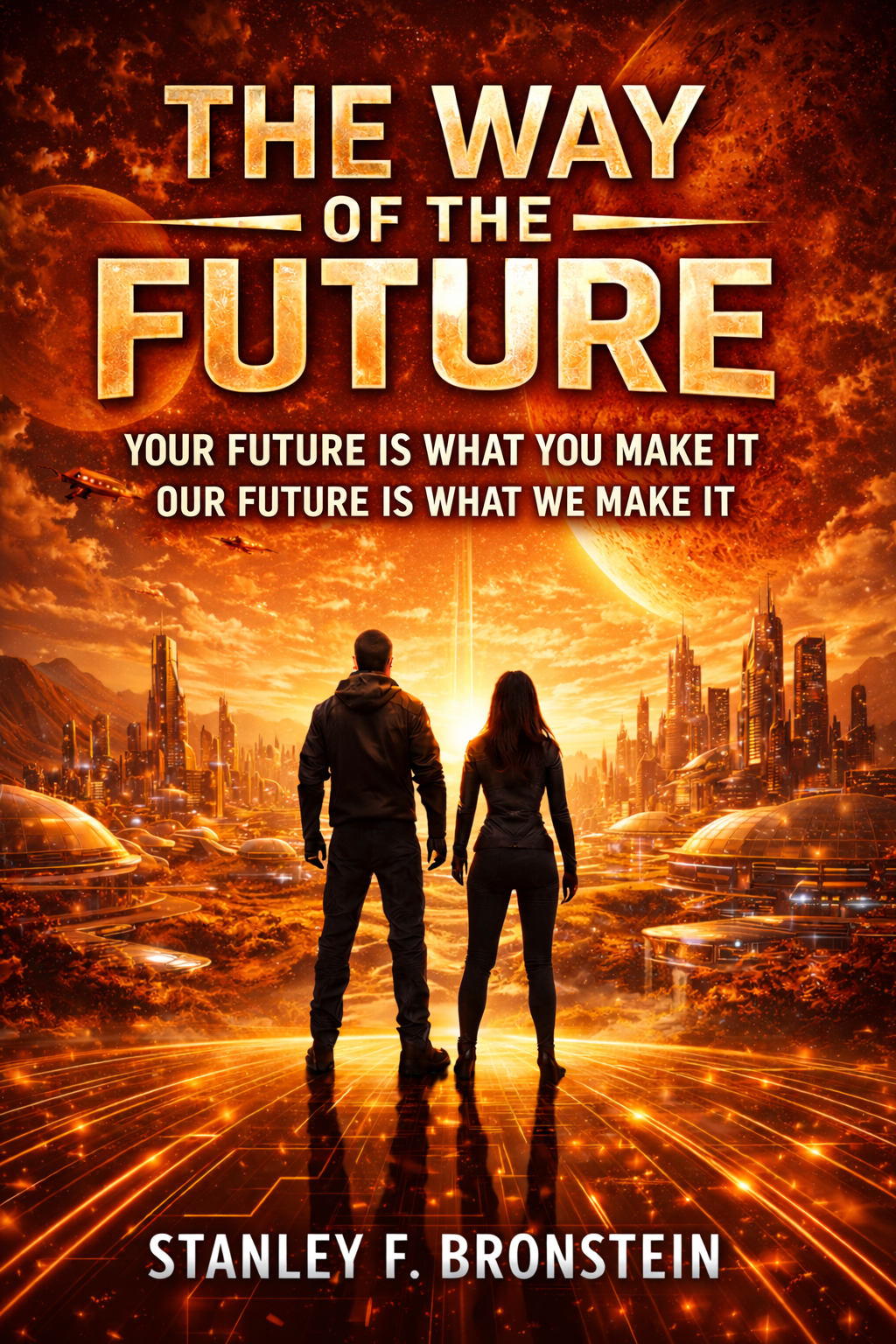
The Way of the Future
Your Future Is What You Make It
Our Future Is What We Make It
By Stanley F. Bronstein – Creator of The Way of Excellence System
Click The Tabs Below To Read Each Chapter Of The Book Online
Or
📘 Download Your Free Copy In Your Preferred Format
The Way of the Future
by Stanley F. Bronstein
How to use this page:
Click a chapter title to open it then scroll down to read.
When you click the title of the next chapter, the previous one will close.
Take your time.
Read, reflect, and do the experiments and assignments before you move on.
EMPTY ITEM
Foreword - Creating The Future
Most people talk about the future as if it is something that will happen to them.
But the future is not something you merely enter.
It is a destination that reveals itself over time, and you arrive there in one of two ways – by living unconsciously, or by living an intentional, conscious, positive course of action long-term.
That is the central idea of this book.
You do not need to predict what is coming next. You need to decide how you will live now. You need a way of thinking, a way of choosing, and a way of returning to what matters when life gets noisy.
That is what an operating system does.
An operating system does not guarantee specific outcomes. It guarantees something more valuable – a reliable process. It helps you choose your inputs, direct your attention, strengthen your beliefs, and turn your standards into consistent action.
In other words, it helps you stop drifting.
Because drifting is real. Autopilot is real. It is the quiet thief of the future.
Most people do not ruin their lives in one dramatic moment. They simply fail to choose. They get pulled by comfort, distracted by noise, and carried by routine. They wake up years later and realize they are living in a future they never consciously created.
This book is a call to wake up.
Not in an anxious way. In a powerful way.
The purpose is not to obsess about tomorrow. The purpose is to take ownership of today. The present is the workshop. The future is built there, or it is not built at all.
And there is something even bigger at stake.
Your future is what you make it.
Our future is what we make it.
Billions of personal operating systems are running every day. Some are running on autopilot. Some are running consciously. The combined result is not only private outcomes. It is the collective world we all live in.
That is why this is not just a personal book.
Conscious choices do not only improve your life. They improve the lives of the people who depend on you, the people who watch you, and the people you influence without even realizing it.
If enough people live unconsciously, we drift as a society.
If enough people live consciously, we build a better shared future.
This is why a simple standard matters.
Think in decades. Act daily.
Decades give you perspective. Daily action gives you momentum. When you combine the two, the future stops being a vague idea and becomes a destination you can actually reach.
The Way of the Future is not about fear. It is about direction.
It is not about perfection. It is about excellence.
It is not about controlling everything. It is about controlling what you can – your standards, your attention, your beliefs, and your choices.
If you commit to those, and you stay on your course long-term, the destination will reveal itself.
Stanley Bronstein
INTRODUCTION TO PART I - WAKE UP AND CHOOSE YOUR COURSE
CHAPTER 1 - THE FUTURE IS A DESTINATION THAT REVEALS ITSELF
Most people treat the future like a mystery they are supposed to solve.
They look for certainty.
They look for guarantees.
They look for proof.
And when they cannot get those things, they either procrastinate, panic, or drift.
But the future is not something you solve.
It is something you arrive at.
And the most important truth you can understand at the beginning of this book is simple:
The future is a destination that reveals itself.
Not all at once.
Not clearly.
Not on demand.
It reveals itself gradually, through the accumulation of choices, actions, and standards over time.
That is why the future is not primarily a prediction problem.
It is a living problem.
It is a course problem.
It is an operating system problem.
Because you arrive at the future in one of two ways:
You arrive by living unconsciously.
Or you arrive by living an intentional, conscious, positive course of action long-term.
That is the fork in the road.
And whether you realize it or not, you are already on one of those paths.
THE DESTINATION IS REVEALED, BUT THE COURSE IS CHOSEN
When you hear “destination,” do not think of a fixed endpoint that you can fully see in advance.
Think of it this way:
You cannot see the entire road from the beginning.
But you can choose the direction you walk.
You can choose the standards you live by.
You can choose what you feed your mind.
You can choose what you do with your body.
You can choose how you treat people.
You can choose how you respond when life hits you.
And those choices, repeated, become a course.
That course carries you.
Over time, the destination reveals itself.
If you want a different future, you do not need a crystal ball.
You need a better course.
And you need the operating system that helps you stay on it.
That is what this book is about.
WHY PEOPLE DRIFT
Drifting rarely looks dramatic.
Drifting looks like normal life.
It looks like:
-
“I’ll get serious later.”
-
“I’m too busy right now.”
-
“I’ll start when things calm down.”
-
“I deserve a break.”
-
“It’s not that big of a deal.”
Drifting is not one big bad decision.
It is the absence of conscious decisions.
It is autopilot.
It is letting the winds of time push you wherever they push you.
And then one day, you wake up and realize something that hurts:
You are living in a future you did not intentionally choose.
That is not a moral failure.
It is a systems failure.
It is an operating system running on default settings.
And default settings do not create an excellent life.
Default settings create the average.
Default settings create the convenient.
Default settings create the comfortable.
Default settings create the common.
If you want an excellent future, you have to choose your course.
THE FUTURE IS BUILT IN PATTERNS
One of the reasons people misunderstand the future is because they think the future is created by big events.
Sometimes it is.
But most of the time, the future is created by patterns.
Patterns of thought.
Patterns of attention.
Patterns of reaction.
Patterns of habits.
Patterns of relationships.
Patterns of standards.
A pattern is simply something you do repeatedly.
A pattern is a vote.
Every day you vote for the kind of life you will live.
Every day you vote for the kind of person you will become.
Every day you vote for the kind of future you will arrive at.
This is why the core standard of this book matters:
Think in decades. Act daily.
Decades keep you oriented.
Daily action builds the path.
If you think in decades but do not act daily, you drift.
If you act daily but do not think in decades, you run in circles.
When you do both, you create a course.
And when you create a course, the destination begins to reveal itself.
THE FUTURE IS PERSONAL AND COLLECTIVE
Now we move to the bigger truth.
Your future is what you make it.
Our future is what we make it.
Billions of personal operating systems are running every day.
Some are running on autopilot.
Some are running consciously.
The combined result is not only private lives.
It is the shared world.
Families are shaped by the operating systems of the people inside them.
Workplaces are shaped by the operating systems of the people inside them.
Communities are shaped by the operating systems of the people inside them.
Nations are shaped by the operating systems of the people inside them.
And the planet, in the long run, is shaped by the accumulated choices of humanity.
So this is not merely self-help.
This is responsibility.
If you run your life unconsciously, you do not only drift personally.
You also contribute unconsciousness to the collective.
More reaction.
More distraction.
More selfishness.
More short-term thinking.
But when you run your life consciously, something different happens.
You become steadier.
You become clearer.
You become more consistent.
You become less reactive.
You become more useful.
You become a stabilizing force.
And stabilizing forces matter.
They change families.
They change relationships.
They change communities.
They create better futures not only for themselves, but for others.
This is one of the hidden reasons excellence matters.
Excellence is not perfection.
Excellence is a standard of living that improves outcomes without destroying the person living it.
When you aim at excellence, you become more capable.
And capable people can carry more responsibility.
They can handle change better.
They can help others rise.
They can make the future less chaotic.
And this is exactly what the world needs.
THE QUESTION THAT STARTS EVERYTHING
If the future is a destination you arrive at, then the most important question becomes:
What course am I currently on?
Not what do you intend.
Not what do you hope.
Not what do you wish.
What course are you actually on?
Your course is revealed by your patterns.
So here is the question in its most honest form:
If I keep living exactly as I am living now, what future will I arrive at?
Ask it about your health.
Ask it about your relationships.
Ask it about your work.
Ask it about your peace.
Ask it about your integrity.
Ask it about your contribution.
Ask it about your time.
Ask it about your attention.
Ask it about your mindset.
Then ask the collective version:
If we keep living as we are living, what future are we collectively arriving at?
This is not meant to scare you.
It is meant to wake you up.
Because awakening is power.
When you see clearly, you can choose.
When you choose, you can act.
When you act daily, you build a course.
When you build a course and stay on it long-term, the destination reveals itself.
THE WAY FORWARD
This chapter is not asking you to predict the future.
It is asking you to stop drifting into it.
It is asking you to become conscious.
It is asking you to choose a course.
And it is asking you to remember one simple standard:
Think in decades. Act daily.
If you do that, you will not only improve your future.
You will improve the future you share with others.
That is where this book begins.
ONE DAILY PRACTICE
Each morning, write and complete this sentence:
“Today, I choose my course by doing __________.”
Make it small enough to do today.
Make it meaningful enough to matter.
Then do it.
That is how the future starts revealing itself.
CHAPTER 2 - AUTOPILOT: THE QUIET THIEF OF THE FUTURE
Autopilot is not evil.
It is efficient.
It is the mind’s way of conserving energy by turning repeated behavior into automatic behavior. That is why autopilot feels normal. It feels like you are simply living your life.
But autopilot has a hidden cost.
It steals the future quietly.
Not by attacking you.
Not by frightening you.
Not by making a scene.
It steals the future by keeping you unconscious.
And when you live unconsciously long enough, you eventually arrive at a destination you did not intentionally select.
That is why this chapter matters.
If you do not understand autopilot, you will never fully escape it.
And if you never fully escape it, you will never fully choose your course.
WHAT AUTOPILOT REALLY IS
Autopilot is the part of you that says:
-
“Just do what you usually do.”
-
“Do what is easiest.”
-
“Do what feels good right now.”
-
“Avoid discomfort.”
-
“Avoid conflict.”
-
“Avoid effort.”
Autopilot is not your enemy. It is your default.
It is your unexamined programming.
Your conditioned responses.
Your habits.
Your routines.
Your reflexes.
Your patterns.
It runs in the background, quietly shaping your actions without asking for permission.
Autopilot is the reason people say, “I don’t know what happened.”
They do know what happened.
They simply did not notice what they were choosing.
Because they were not choosing.
They were drifting.
HOW AUTOPILOT SHOWS UP
Autopilot has many disguises. It often looks like:
1. Emotional autopilot
You react the same way every time.
Anger, withdrawal, sarcasm, people-pleasing, shutting down, exploding, avoiding.
2. Habit autopilot
You do what you do because you always do it.
The snack. The screen. The late night. The skipped workout. The procrastination. The “tomorrow.”
3. Attention autopilot
Your focus gets hijacked.
You reach for your phone without thinking. You scroll without meaning to. You watch without choosing. You consume without awareness.
4. Comfort autopilot
You choose relief over progress.
You choose short-term ease over long-term outcomes.
5. Relationship autopilot
You repeat the same patterns with the same types of people.
You tolerate what you should not tolerate. You avoid what you should confront. You say yes when you should say no.
6. Identity autopilot
You live as the person you used to be.
You repeat old beliefs about yourself even though you have outgrown them.
Autopilot is not just one pattern.
It is the entire collection of default settings you run when you are not awake.
WHY AUTOPILOT IS SO DANGEROUS
Autopilot is dangerous because it does not feel dangerous.
It feels like life.
But autopilot creates a specific kind of future.
A future built from unconscious repetition.
A future built from comfort-based choices.
A future built from distraction.
A future built from avoidance.
A future built from short-term thinking.
This is why autopilot is the quiet thief of the future.
Because the theft is not dramatic.
It is gradual.
It is one day at a time.
And that is exactly how the future is created.
THE MOST COMMON AUTOPILOT LIE
Here is the lie autopilot whispers:
“This is just how I am.”
No.
That is just how you have been.
That is not your identity.
That is your programming.
And programming can be changed.
But it cannot be changed while it is invisible.
Autopilot remains powerful as long as it remains unseen.
So the first move is not willpower.
The first move is awareness.
The first move is waking up.
AUTOPILOT AND THE COLLECTIVE FUTURE
Now let’s widen the lens.
Your future is what you make it.
Our future is what we make it.
Billions of personal operating systems are running every day.
And autopilot does not only shape private lives.
Autopilot shapes the collective world.
When people live unconsciously, they become easier to manipulate.
Easier to distract.
Easier to divide.
Easier to exploit.
They react instead of respond.
They consume instead of create.
They blame instead of build.
They follow the crowd instead of following a course.
When billions live like that, the winds of time take the whole society somewhere.
Not because anyone chose it.
Because no one did.
That is the most dangerous part.
A collective future can be created without collective intention.
Just as your personal future can be created without personal intention.
That is why conscious living is not only personal improvement.
It is a form of responsibility.
Every time you choose to wake up, you strengthen the collective.
Every time you choose to live consciously, you become less reactive.
Every time you choose your course, you become a stabilizing force.
And stabilizing forces matter.
They make families calmer.
They make relationships healthier.
They make communities steadier.
They make the future less chaotic.
This is one of the deeper reasons excellence matters.
Excellence is not perfection.
Excellence is a standard of living that reduces unconscious harm.
To yourself and to others.
THE SWITCH FROM UNCONSCIOUS TO CONSCIOUS
So how do you turn autopilot off?
You do not turn it off permanently.
Autopilot will always try to return. That is what defaults do.
The real goal is not to eliminate autopilot.
The goal is to notice it quickly.
To interrupt it.
To choose consciously.
Then to repeat that.
That is how your operating system becomes stronger than your default settings.
This is where the standard matters again:
Think in decades. Act daily.
Autopilot thinks in minutes.
Autopilot thinks in comfort.
Autopilot thinks in immediate relief.
When you think in decades, you break autopilot’s spell.
When you act daily, you install a new pattern.
And patterns are what create futures.
THE REAL COST OF AUTOPILOT
Autopilot costs you:
-
Clarity
-
Consistency
-
Health
-
Time
-
Relationships
-
Confidence
-
Peace
-
A future you would be proud to arrive at
And the worst part is that it does not charge you all at once.
It charges you in small payments.
Daily payments.
Quiet payments.
Payments you hardly notice.
Until you look up and realize the future has arrived.
So this chapter is the wake-up call.
Stop paying for a future you do not want.
Start investing in the one you do.
ONE DAILY PRACTICE
Before your first screen each day, do this 60-second wake-up check:
-
Take one slow breath in.
-
Take one slow breath out.
-
Ask: “Am I about to live on autopilot, or am I choosing my course?”
-
Then choose one small intentional action and do it immediately.
That is how you begin to take the future back – one conscious moment at a time.
CHAPTER 3 - THE PAST AS OUR TEACHER, NOT AS A TRAP
The past is powerful.
Not because it is still happening, but because it is still living inside people’s minds.
For many, the past is not a memory.
It is a lens.
It is a story.
It is an identity.
It is a weight.
And if you do not learn how to relate to the past properly, you will spend your present reacting to it, and you will arrive at a future shaped by it.
That is the trap.
But there is another way.
The past can be your teacher.
It can be your training ground.
It can be your source of wisdom.
It can be the field you plow so you can plant better seeds.
That is what this chapter is about.
Not forgetting the past.
Not denying the past.
Not rewriting the past.
But using it properly so it stops controlling you.
THE TWO WRONG RELATIONSHIPS WITH THE PAST
Most people fall into one of two extremes.
1. Dwelling on the past
They replay it.
They relive it.
They argue with it.
They regret it.
They rehearse what they should have said, what they should have done, how they should have been different.
This is the kind of past-focus that steals the present.
And if you cannot think clearly in the present, you cannot build a strong future.
2. Ignoring the past
They pretend it did not matter.
They avoid looking at it.
They never process it.
They never extract the lesson.
They never forgive.
They never correct the pattern.
And what happens?
The past repeats itself.
Because what you do not learn, you relive.
So the goal is neither obsession nor avoidance.
The goal is wisdom.
THE PAST IS A FIELD
Here is a simple image to carry forward:
One should plow the fields of one’s past, to help plant the seeds of their future.
Plowing is not living there.
Plowing is working it.
It means you go back for a purpose.
You do not go back to suffer.
You go back to learn.
You go back to extract the lesson.
You go back to understand what happened and what it did to you.
Then you come back to the present and plant better seeds.
That is how you redeem the past.
Not by pretending it did not happen.
But by using it to produce something better.
WHAT THE PAST IS GOOD FOR
The past is useful for four things.
1. Lessons
What did this experience teach you?
What should it teach you now?
Not what did it do to you.
What did it teach you.
That shift alone moves you from victim to student.
2. Patterns
Where do you repeat the same behavior?
Where do you choose the same kind of relationship?
Where do you make the same mistakes with money, health, time, or boundaries?
Patterns are the true language of your future.
Because patterns, repeated, become outcomes.
3. Gratitude
Even painful experiences often reveal strengths you did not know you had.
And gratitude has a strange power.
It turns suffering into meaning.
It turns struggle into maturity.
It turns the past into fuel.
4. Wisdom
Knowledge is of the past.
Wisdom is of the future.
Wisdom means you do not just know what happened.
You know what to do differently now.
You know what standards you need.
You know what you will no longer tolerate.
You know what you will protect.
Wisdom is the past transformed into a better course.
THE PAST BECOMES A TRAP WHEN IT BECOMES IDENTITY
Here is where the real problem shows up.
People do not just remember the past.
They become it.
They build an identity out of it.
-
“I’m the one who always fails.”
-
“I’m the one who can’t be consistent.”
-
“I’m the one who never gets ahead.”
-
“I’m the one who always gets hurt.”
-
“I’m the one who can’t trust anyone.”
Those are not facts.
Those are conclusions.
And conclusions shape the future.
Because the future reveals itself based on the course you follow, and the course you follow is shaped by what you believe about yourself.
So if you drag an old identity forward, you will arrive at an old destination again.
This is why this chapter matters so much.
If you want a new future, you must stop living as your past self.
That does not mean you reject your story.
It means you refuse to be trapped by it.
FORGIVENESS IS A FUTURE DECISION
This is the moment to introduce something that will become a major theme later.
Without forgiveness, there is no future.
Forgiveness does not mean what happened was acceptable.
Forgiveness means you stop paying for it every day.
Forgiveness means you stop letting it control your mood, your reactions, and your identity.
Forgiveness is how you free up energy.
Forgiveness is how you return to the present.
Forgiveness is how you get your hands back on the steering wheel.
This includes forgiving other people when appropriate.
But it also includes something even more important for most people:
Forgiving your younger self.
Your younger self did not know what you know now.
Your younger self did not have the tools you have now.
Your younger self did the best they could with what they had at the time.
If you keep punishing your younger self, you keep your future small.
Forgiveness is not weakness.
It is power.
It is the ability to move forward without dragging chains.
THE COLLECTIVE PAST AND THE COLLECTIVE FUTURE
Now widen the lens again.
Individuals are not the only ones who get trapped by the past.
Groups do too.
Families get trapped by the past.
Communities get trapped by the past.
Nations get trapped by the past.
Humanity gets trapped by the past.
People inherit old stories.
Old grudges.
Old fears.
Old divisions.
Old resentments.
And when the past becomes a collective identity, the future becomes a repetition.
That is why conscious living is so important.
Your future is what you make it.
Our future is what we make it.
If we want a better collective future, we have to learn from the past without living in it.
We have to extract the lesson without continuing the cycle.
We have to replace resentment with responsibility.
We have to replace obsession with wisdom.
We have to stop making the same mistakes with each other.
That does not mean ignoring injustice or pretending things were fine.
It means refusing to let the past become an endless generator of future conflict.
It means choosing a new course.
And you can contribute to that by doing the same thing in your own life.
Because the collective future is shaped by billions of personal operating systems.
Every time you redeem your past, you reduce the amount of unconscious pain you spread forward.
Every time you heal, you become safer for others.
Every time you choose wisdom, you add stability to the system.
This is how personal growth becomes collective benefit.
THE WAY FORWARD
So what do you do with the past?
You do not worship it.
You do not run from it.
You work it.
You plow it.
You extract the lesson.
You take the wisdom.
You forgive what needs forgiveness.
You correct the pattern.
Then you return to the present and choose your course again.
Think in decades. Act daily.
That is how a new future begins.
Not by erasing the past.
By redeeming it.
ONE DAILY PRACTICE
Once per day, answer these two questions in writing:
-
What is one lesson my past is trying to teach me?
-
What is one small action I will take today that proves I learned it?
Then do the action.
That is how you turn the past into a teacher and the future into a destination you are proud to arrive at.
CHAPTER 4 - THE PRESENT IS THE WORKSHOP
Most people live everywhere except where they are.
They live in the past, replaying what happened and what should have happened.
Or they live in the future, rehearsing what might happen and what could go wrong.
Meanwhile, the present goes unused.
And when the present goes unused, the future becomes weak.
Because there is only one place where the future can be built.
Here.
Now.
The present is the workshop.
If you want a better future, you do not need more time.
You need more presence.
You need to be awake inside your own day.
WHY THE PRESENT IS SO HARD
The mind loves to wander.
The mind loves to plan.
The mind loves to worry.
The mind loves to rehearse.
The mind loves to replay.
And in a world filled with constant stimulation, the mind is encouraged to scatter.
Screens pull you away.
Noise pulls you away.
Speed pulls you away.
Worry pulls you away.
Regret pulls you away.
So we lose the present in two common ways.
1. The past steals it.
You carry old moments into new moments.
You replay. You regret. You resent. You relive.
2. The future steals it.
You worry. You over-plan. You catastrophize.
You try to control what cannot be fully controlled.
The result is tragic and surprisingly common.
People experience neither the present nor the future.
They miss today while worrying about tomorrow.
Then tomorrow arrives and they miss it too.
PRESENCE IS NOT A LUXURY – IT IS A POWER
Many people think being present is something soft.
Something spiritual.
Something optional.
But presence is not a luxury.
It is a form of power.
Because presence improves:
-
clarity
-
judgment
-
emotional control
-
decision quality
-
consistency
-
relationships
-
peace
If you are not present, you do not choose well.
You react.
You follow impulses.
You fall into autopilot.
You let the winds of time push you.
Presence is how you interrupt autopilot.
Presence is how you choose your course.
Presence is how you act daily in alignment with the future you want to arrive at.
That is why the present is the workshop.
Because it is the place where choices are made.
And choices are the building blocks of the destination.
THE PRESENT IS WHERE YOU EARN THE FUTURE
The future is a destination that reveals itself.
You do not arrive there by wishing.
You arrive there by earning it.
And you earn it in the present.
You earn it by making one better choice right now.
Then another.
Then another.
You earn it by taking one small action today that matches your course.
Then repeating that action tomorrow.
You earn it by building the operating system that keeps you aligned when you do not feel like it.
Think in decades. Act daily.
Daily action happens only in the present.
If you are not present, you cannot act daily.
You can only intend.
You can only plan.
You can only promise.
But you cannot build.
The workshop remains empty.
THE DIFFERENCE BETWEEN PLANNING AND WORRY
This is important.
The point of living in the present is not to stop planning.
Planning is a tool.
Planning is useful.
Planning helps you think long-term.
Planning helps you choose your course.
But worry is not planning.
Worry is rehearsal without action.
Worry is imagination without power.
Worry is the mind trying to control the uncontrollable.
Planning says: “Here is what I will do.”
Worry says: “Here is what might happen.”
Planning produces action.
Worry produces tension.
Planning builds the future.
Worry steals the present.
So the goal is simple:
Plan enough to act daily.
Then return to the present and do the work.
HOW PEOPLE LOSE THE WORKSHOP
People lose the present in predictable ways.
They fill their days with:
-
distraction
-
multitasking
-
constant stimulation
-
reactive schedules
-
emotional habits
-
unexamined routines
Then they say they have no time to build the future.
But the truth is they have time.
They simply spend it unconsciously.
The workshop is open.
They are just not in it.
This is not a judgment.
It is a wake-up.
And waking up changes everything.
THE PRESENT AND THE COLLECTIVE FUTURE
Now widen the lens again.
Your future is what you make it.
Our future is what we make it.
Culture is not primarily built by big announcements.
It is built by daily behavior.
It is built by what people normalize.
It is built by what people tolerate.
It is built by what people repeat.
Families become what they practice daily.
Communities become what they practice daily.
Societies become what they practice daily.
So when billions live unconsciously, we build a collective future unconsciously.
When billions live distracted, we build a distracted world.
When billions live reactive, we build a reactive society.
But when people become more present, something changes.
They respond instead of react.
They choose instead of drift.
They are less easy to manipulate.
Less easy to divide.
Less likely to spread chaos.
They become stabilizing forces.
This is why presence is not just personal wellness.
It is collective responsibility.
The present is the workshop.
And we are all in it together.
THE PRESENT IS WHERE YOU RE-CHOOSE
There is a moment that happens to every person, often many times per day.
A moment of choice.
A moment where you could go unconscious.
Or you could wake up.
A moment where you could follow impulse.
Or follow your course.
A moment where you could choose comfort.
Or choose your long-term future.
That moment is always now.
You do not need to win the whole day at once.
You need to win the next moment.
Then the next.
This is what conscious living looks like.
It is not dramatic.
It is consistent.
It is built one choice at a time.
In the workshop.
ONE DAILY PRACTICE
Set three daily “return to the workshop” alarms – morning, midday, and evening.
When the alarm goes off, do this:
-
Stop for 10 seconds.
-
Take one slow breath in and one slow breath out.
-
Ask: “What am I doing right now, and is it on course?”
-
If it is on course, continue. If not, make one small correction immediately.
That is how you build the future.
In the present.
On purpose.
One conscious moment at a time.
CHAPTER 5 - CHOOSE YOUR COURSE, THEN STAY ON IT LONG-TERM
The future is a destination that reveals itself.
You do not fully see it in advance.
But you do arrive somewhere.
And the way you arrive is simple:
You arrive by either living unconsciously, or by living an intentional, conscious, positive course of action long-term.
That is the central fork in the road.
This chapter is where you choose.
Not in theory.
Not in inspiration.
In a way that can hold up when life gets difficult.
Because choosing a course is not hard.
Staying on it is.
So this chapter is about both.
Choosing your course.
And building the kind of course you can actually follow long-term.
WHAT A COURSE REALLY IS
A course is not a dream.
A course is not a mood.
A course is not a list of goals.
A course is a direction with standards.
It is a chosen way of living.
It is the set of decisions you make again and again.
It is what you do when no one is watching.
It is what you do when you do not feel like doing it.
It is what you return to when you get knocked off track.
Your course is your life in motion.
If you do not choose it consciously, autopilot will choose it for you.
And autopilot will choose comfort, distraction, and the path of least resistance.
That is why people drift.
They never chose a course.
Or they chose one emotionally and never installed the standards to live it.
INTENTIONAL, CONSCIOUS, POSITIVE – WHAT IT MEANS
Let’s make these words practical.
Intentional means you act on purpose.
You decide. You do not default.
Conscious means you are awake to what you are doing.
You notice your patterns, your triggers, your habits, your excuses, your distractions.
Positive does not mean naive optimism.
It means constructive.
It means you move in a direction that builds strength, health, integrity, and meaning, instead of tearing yourself down or harming others.
A positive course is a course that makes you better.
And because you are part of the collective, it makes the world better too.
So when you choose your course, you are choosing more than your personal future.
You are choosing how you will contribute to our shared future.
WHY MOST PEOPLE FAIL HERE
Most people fail at choosing a course for three reasons.
1. They choose what sounds good, not what they will live.
They choose a fantasy course, not a sustainable course.
2. They confuse goals with a course.
A goal is a milestone. A course is a way of living.
Goals come and go. A course remains.
3. They do not create standards.
Without standards, your course collapses into moods.
On good days you follow it.
On bad days you abandon it.
Standards are what keep your course alive when life gets real.
THINK IN DECADES. ACT DAILY.
This is the line that holds the whole book together.
If you want a future worth arriving at, you must think long-term.
And if you want to think long-term without drifting, you must act daily.
Decades give you perspective.
Daily action gives you momentum.
Together, they create a course that can carry you.
This is how you avoid one of the biggest mistakes people make with the future:
They overvalue the short-term and undervalue the long-term.
They choose what feels good now, and they pay later.
They choose what is easy now, and they regret later.
They sacrifice health for money, then money for health.
They think about the future so much that they neglect the present, and then they arrive at a future they do not like.
A course solves this, because a course turns life into a series of aligned choices.
THE COURSE HAS TO BE LIVABLE
Here is the rule:
A course you cannot live is not a course.
It is a wish.
So your course must be:
-
clear
-
simple
-
values-based
-
sustainable
-
supported by standards
-
strong enough to survive stress
If your course requires you to be perfect, it will fail.
If your course requires constant motivation, it will fail.
If your course requires ideal conditions, it will fail.
A long-term course is built to survive real life.
CHOOSING THE COURSE IN ONE SENTENCE
You cannot follow what you cannot state.
So here is a powerful discipline:
Put your course into one sentence.
Not a paragraph.
Not a speech.
One sentence that you can remember and repeat.
Your sentence should answer:
-
Who am I becoming?
-
What standards will I live by?
-
What kind of life am I building?
This one sentence becomes a daily anchor.
When life gets noisy, you return to it.
When you are tempted, you return to it.
When you drift, you return to it.
When you fail, you return to it.
This is how you stay chosen.
STAYING ON COURSE WHEN YOU GET KNOCKED OFF
You will get knocked off course.
Everyone does.
The difference is what happens next.
Unconscious people treat being knocked off as evidence.
They say: “See, I’m not that kind of person.”
Conscious people treat being knocked off as information.
They say: “That was a slip. I’m returning to my course.”
Staying on course is not never slipping.
Staying on course is returning faster.
This is why this is long-term.
Because long-term means you do not quit.
Long-term means you do not let one bad day become a bad year.
Long-term means you keep choosing.
THE COLLECTIVE COURSE
Now widen the lens.
Your future is what you make it.
Our future is what we make it.
A society is simply millions and billions of personal courses operating at the same time.
If most people live unconsciously, the collective course is unconscious.
If most people live distracted, the collective course becomes distracted.
If most people live reactive, the collective course becomes reactive.
But if enough people live intentionally, consciously, and positively, something changes.
Families become steadier.
Communities become healthier.
Workplaces become more human.
Culture becomes less chaotic.
The future becomes more livable.
This is not idealism.
It is math.
Billions of small daily actions create the world.
So your course is not only your personal plan.
It is your contribution.
You do not have to “save the world.”
But you do have to stop adding unconsciousness to it.
And you can do that by choosing your course and staying on it.
ONE DAILY PRACTICE
Write your course in one sentence.
Then do this every night:
-
Read your course sentence out loud.
-
Ask: “Did I live on course today?”
-
If yes, name one thing you did that proves it.
-
If no, write one correction you will make tomorrow in a single sentence.
Then live tomorrow consciously.
Think in decades.
Act daily.
Stay on course long-term.
That is how the destination reveals itself.
INTRODUCTION TO PART II - BUILD YOUR OPERATING SYSTEM
In Part I, you woke up.
You clarified what the future is in this book – a destination that reveals itself.
You confronted autopilot, learned how to relate to the past without being trapped by it, returned to the present as your workshop, and chose an intentional, conscious, positive course of action long-term.
Now Part II answers the next question:
How do you actually stay on course?
Because choosing a course is not the hard part.
The hard part is staying chosen when life gets busy, when stress hits, when motivation fades, when old habits return, when distractions multiply, and when the world keeps pulling you back into unconscious living.
That is why you need an operating system.
An operating system is the internal structure that runs your life.
It determines what you take in, what you focus on, what you believe, and what you repeatedly do.
Most people try to change their future by changing their outcomes.
They focus on results.
They focus on goals.
They focus on external wins.
But outcomes are the end of the chain.
They are the visible tip.
The real power is earlier in the chain – in the invisible system that produces the outcomes.
That system is what we build in Part II.
This is where you install the things that make your future reliable:
-
standards that do not depend on your mood
-
inputs that strengthen you instead of weaken you
-
attention that stays aligned instead of scattered
-
beliefs that produce action instead of hesitation
-
consistency that compounds over time
This is not about becoming rigid.
It is about becoming stable.
It is about having a calm center that can handle change without losing the course.
It is about building an internal structure that keeps you from drifting.
Because drifting is not usually caused by a lack of desire.
It is caused by a lack of system.
And remember the bigger truth that runs through this entire book:
Your future is what you make it.
Our future is what we make it.
Billions of personal operating systems are running every day. Some are running on autopilot. Some are running consciously. The combined result is the world we live in.
If you upgrade your operating system, you do not only improve your life.
You improve what you contribute to the collective future.
You become less reactive.
Less distracted.
Less impulsive.
More grounded.
More consistent.
More useful.
You become a stabilizing force.
So as you enter Part II, keep the standard close:
Think in decades. Act daily.
That is what an operating system makes possible.
It takes the long-term course you chose in Part I and turns it into daily living.
Now let’s build the system that keeps you on course until the destination reveals itself.
ONE DAILY PRACTICE
Each morning, before you begin your day, ask one question:
“What operating system setting am I choosing today – autopilot, or conscious?”
Then choose one small adjustment immediately, even if it is as simple as one better input, one focused block of attention, or one completed standard.
CHAPTER 6 - STANDARDS: THE CODE YOU LIVE BY
If you want to understand why most people do not arrive at the future they want, the answer is usually not intelligence, talent, or luck.
It is standards.
People do not rise to their hopes.
They fall to their standards.
And the future you arrive at is not built by what you wish for. It is built by the code you live by.
That code is your standards.
But in this book, standards must be understood through a specific lens:
Standards must be rigidly flexible.
Meaning:
-
Rigid in purpose – unwavering in what matters most.
-
Flexible in execution – adaptable in how you honor it.
This is how standards become livable long-term.
This is how standards stop being chains.
This is how standards become anchors.
STANDARDS ARE NOT GOALS
A goal is a milestone.
A standard is a way of living.
A goal says: “I want to get there.”
A standard says: “This is who I am now, and this is how I live.”
Goals come and go.
Standards remain.
And because the future reveals itself through daily life, standards are more powerful than goals. Standards turn intention into a course you can actually follow.
STANDARDS ARE NOT PERFECTION
Excellence is not perfection.
Perfection is brittle. It breaks when life changes shape, and life always changes shape.
Excellence is durable. It holds steady while adapting intelligently.
That is rigid flexibility in action.
A standard of excellence does not mean you never fail.
It means you have a minimum level of behavior you return to.
It means you protect your course even when the day is messy.
It means you keep moving.
STANDARDS MUST BE ANCHORS, NOT CHAINS
This distinction matters, because many people fail in one of two ways:
-
They become rigid – they turn standards into chains, and eventually they snap.
-
They become loose – they abandon standards when conditions change, and they drift.
Rigid flexibility ends that cycle.
Your standards should stabilize you without trapping you.
An anchor keeps you from drifting while still allowing movement.
A chain restricts movement and turns discipline into pressure.
So the question is not “Do I have standards?”
The question is “Do my standards hold me steady, or do they bind me?”
THE SECRET POWER OF MINIMUM STANDARDS
Most people build standards around their best days.
Then life hits.
Stress rises. Energy drops. Schedule changes. Emotions flare. Unexpected responsibilities appear.
And their standards vanish.
So here is one of the most important truths in this book:
Your minimum standards determine your future.
Not your maximum.
Not your best days.
Your minimum.
Minimum standards are your rigid flexibility in daily form:
-
The anchor stays fixed.
-
The execution adapts to the day.
A minimum standard is the smallest version of the right behavior you will do no matter what.
It is your insurance policy against drift.
It is how you stay on course long-term.
PURPOSE STAYS FIXED, EXECUTION ADAPTS
This is the rigid flexibility filter you run on every standard.
Ask two questions:
-
What is the purpose of this standard?
-
What is the most realistic way to honor it today?
Example:
-
Purpose: protect health and energy.
-
Execution: some days a longer workout, other days a shorter walk, other days stretching and mobility.
The point is not one perfect method.
The point is honoring the purpose consistently.
That is how you think in decades and act daily.
That is how you avoid snapping or drifting.
THE FIVE STANDARD AREAS
To build an excellent future, you need standards that cover your whole life, not just one corner of it:
1. Mind
What you feed your mind, how you focus, what you allow to occupy your attention.
2. Body
Movement, nutrition, rest, recovery, and the daily maintenance of health.
3. Spirit
Meaning, purpose, inner alignment, peace, and the values that guide your choices.
4. Relationships
Respect, boundaries, communication, repair, and what you will not tolerate.
5. Work and contribution
Integrity, craft, output, service, and consistency.
Rigid flexibility means you have anchors in each area, but you do not demand identical performance every day. You stay aligned while adapting execution.
STANDARDS REDUCE NEGOTIATION
A standard ends debate.
Without standards, you negotiate with yourself constantly.
-
“Do I feel like it?”
-
“Maybe tomorrow.”
-
“I’ll start when things calm down.”
Standards remove that daily bargaining.
Not harshly.
Cleanly.
You already decided.
And when execution needs to adapt, standards prevent the most dangerous mistake of all: using flexibility as an excuse to drift.
Rigid flexibility allows adjustment without abandonment.
STANDARDS SHAPE THE COLLECTIVE FUTURE
Your future is what you make it.
Our future is what we make it.
Billions of personal operating systems are running daily.
When people live with low standards, the collective future becomes unstable: more reactivity, more distraction, more broken health, more broken trust.
When people live with higher standards, something changes: more stability, more integrity, more responsibility, more care.
Standards scale.
Low standards spread.
High standards spread.
So raising your standards is not only personal growth. It is a form of leadership.
Quiet leadership.
Daily leadership.
The kind that shapes families and communities without announcements.
THE STANDARD TEST
If you want to know whether something is a real standard in your life, ask:
Do I do this even when I do not feel like it?
If the answer is no, it is not a standard yet.
It may be a good intention.
But it is not installed.
Standards are installed through repetition.
And repetition is how the future reveals itself.
ONE DAILY PRACTICE
Write three anchors (rigid) and three executions (flexible):
-
Mind anchor (purpose): ____________________
Mind execution today (minimum): ____________________ -
Body anchor (purpose): ____________________
Body execution today (minimum): ____________________ -
Spirit or Relationships anchor (purpose): ____________________
Execution today (minimum): ____________________
Then do the minimums today.
Your anchors keep you from drifting.
Your flexible execution keeps you from snapping.
That is rigid flexibility.
That is how standards become the code you live by.
That is how you stay on course long-term until the destination reveals itself.
CHAPTER 7 - INPUTS: WHAT YOU TAKE IN PROGRAMS WHAT YOU BECOME
If your future is a destination that reveals itself, then the most practical question is:
What is creating my daily direction?
Most people look at their results and wonder why life is turning out the way it is.
But outcomes are the end of a chain.
The chain begins earlier, in something most people ignore:
Inputs.
Inputs are what you take in – through your eyes, ears, mind, body, environment, and relationships.
Inputs become thoughts.
Thoughts become beliefs.
Beliefs shape decisions.
Decisions create habits.
Habits create a course.
And the course is what carries you to the destination that will eventually reveal itself.
So if you want a better future, one of the simplest places to start is this:
Choose better inputs.
Because you cannot run an excellent operating system on corrupted data.
INPUTS ARE NOT NEUTRAL
Many people assume inputs are harmless.
They think:
“It’s just a show.”
“It’s just a little news.”
“It’s just scrolling.”
“It’s just a snack.”
“It’s just a drink.”
“It’s just how my friend is.”
“It’s just what everyone does.”
But inputs are never neutral.
Everything you take in either strengthens you or weakens you.
Everything you take in either clarifies you or clouds you.
Everything you take in either moves you toward conscious living or back toward autopilot.
Inputs do not only affect what you know.
They affect who you become.
And that is why inputs belong near the foundation of the operating system.
THE FIVE MAJOR INPUT CATEGORIES
To keep this simple and useful, we will group inputs into five categories.
1. Information inputs
News, social media, podcasts, books, videos, conversations, opinions.
2. People inputs
The people you spend time with, the people you listen to, the people who influence you, the people whose moods become your moods.
3. Environment inputs
Your home, your workspace, your schedule, your physical surroundings, your level of order or chaos.
4. Body inputs
Food, hydration, sleep, movement, substances, and anything else you put into your body.
5. Self-talk inputs
The running commentary in your mind. The language you use with yourself. The story you repeat.
All five categories are constantly programming you.
And if you do not choose them consciously, autopilot will choose them for you.
THE AUTOPILOT INPUT PROBLEM
Autopilot loves easy inputs.
Fast inputs.
Loud inputs.
Comfort inputs.
Emotion inputs.
It does not ask, “Is this good for me long-term?”
It asks, “Does this feel good now?”
That is how people slowly lose control of their attention, their energy, their mood, and their discipline.
They do not choose inputs.
Inputs choose them.
Then they wonder why they feel anxious, scattered, tired, negative, and reactive.
That is not a mystery.
That is programming.
RIGID FLEXIBILITY APPLIED TO INPUTS
This is where rigid flexibility belongs again.
You do not need to become extreme.
You do not need to become rigid and fragile.
You need to become anchored and adaptable.
Rigid flexibility with inputs looks like this:
-
Rigid in your purpose: you protect your mind, your body, and your peace.
-
Flexible in execution: you adjust based on your real life and real circumstances.
The purpose is not to remove all enjoyable inputs.
The purpose is to stop feeding yourself things that weaken you.
It is to build an input pattern that strengthens you.
So the question is not, “Can I handle this input?”
The better question is, “What does this input produce in me over time?”
Because the future is long-term.
And inputs compound.
THE INPUT TO BELIEF PIPELINE
Inputs do something most people overlook.
They shape belief.
And belief is an engine.
If your input diet is full of fear, conflict, outrage, cynicism, and distraction, your belief system will drift toward fear, conflict, outrage, cynicism, and distraction.
If your input diet is full of wisdom, discipline, hope, responsibility, truth, and constructive thinking, your belief system will drift toward wisdom, discipline, hope, responsibility, truth, and constructive thinking.
This is why people who want a better future cannot ignore inputs.
Your future is what you make it.
But what you “make” depends on what you “take in.”
THE TWO BIG INPUT MISTAKES
Most people make one of two mistakes.
1. They only remove, they do not replace.
They try to stop bad habits, but they do not install good ones.
So the old inputs return, because the space remains empty.
2. They try to be perfect.
They set rigid rules they cannot maintain, then they snap, then they quit.
The solution is the same in both cases:
Replace, do not just remove.
And stay anchored without becoming brittle.
THE COLLECTIVE INPUT PROBLEM
Now widen the lens.
Your future is what you make it.
Our future is what we make it.
Billions of people are being fed inputs all day long.
Information inputs.
Emotion inputs.
Outrage inputs.
Fear inputs.
Consumption inputs.
And when billions absorb those inputs unconsciously, the collective future becomes unstable.
People become more reactive.
More divided.
More anxious.
More distracted.
More manipulated.
Not because they are bad people.
Because they are running on corrupted data.
But when people choose better inputs, something changes.
They become calmer.
Clearer.
More disciplined.
More thoughtful.
More constructive.
They become harder to manipulate.
They stop spreading chaos.
They start spreading stability.
That is why choosing inputs is not just personal self-help.
It is social responsibility.
A person with clean inputs becomes a better citizen of the world.
A more stable human being.
A more positive contributor.
And we need more of that.
THE INPUT STANDARD
Here is a simple rule you can live by:
If an input repeatedly weakens you, it is not an input. It is a problem.
You do not need to hate it.
You do not need to judge yourself.
You simply need to see it clearly.
Then choose differently.
That is conscious living.
That is how you stay on course.
That is how the destination reveals itself.
Think in decades. Act daily.
Daily action starts with daily programming.
So choose your programming.
ONE DAILY PRACTICE
Each day, make one deliberate input swap.
Write it as:
-
Remove or reduce: ____________________
-
Replace with: ____________________
Examples:
-
Remove or reduce: 20 minutes of doom scrolling
Replace with: 20 minutes of reading something that strengthens my course -
Remove or reduce: late-night screen time
Replace with: a short walk, stretching, or quiet time -
Remove or reduce: conversations that drag me down
Replace with: time with someone who strengthens me
Do one swap per day.
Not ten.
One.
Because one daily input swap, repeated, changes your beliefs.
Changes your habits.
Changes your course.
And that changes the future you arrive at – and the future we arrive at together.
CHAPTER 8 - ATTENTION: THE CURRENCY OF THE FUTURE
If you want to understand why people drift, you do not have to look at their intentions.
You have to look at their attention.
Because attention is the currency of the future.
Where your attention goes, your life goes.
Where your attention goes, your standards go.
Where your attention goes, your habits go.
Where your attention goes, your relationships go.
Where your attention goes, your future goes.
The future is a destination that reveals itself.
And the destination reveals itself along the path your attention repeatedly takes.
That is why attention belongs at the center of your operating system.
You can have good intentions and still drift.
You can have goals and still drift.
You can have dreams and still drift.
But if you control your attention, you control your course.
And if you control your course long-term, the destination will reveal itself.
ATTENTION IS NOT JUST FOCUS – IT IS LIFE DIRECTION
Most people think attention is a productivity topic.
It is much bigger than that.
Attention is the act of choosing what matters right now.
Attention is the act of deciding what will occupy your mind.
Attention is the act of deciding what will shape your beliefs.
Attention is the act of deciding what will receive your time and energy.
So attention is not a small technical skill.
Attention is a life skill.
Because you become what you repeatedly pay attention to.
THE ATTENTION ECONOMY WANTS YOU UNCONSCIOUS
Here is something many people do not want to admit.
You live in an attention economy.
A world where the most valuable commodity is your focus.
And there are powerful forces competing to capture it.
Not because they want to help you build your future.
But because your attention is profitable.
Your attention produces clicks.
Your attention produces purchases.
Your attention produces influence.
Your attention produces control.
So the world will happily rent your mind to you.
And if you do not notice that, autopilot will hand over your attention without negotiation.
Then, without realizing it, you will spend your life building someone else’s future.
Not yours.
This is why attention is the currency of the future.
You either invest it intentionally, or you spend it unconsciously.
THE AUTOPILOT ATTENTION PATTERN
Autopilot attention is not deliberate.
It is reactive.
It looks like:
-
checking your phone without thinking
-
drifting into news and outrage loops
-
scrolling when you feel bored or stressed
-
multitasking until your mind feels scattered
-
consuming information without turning it into action
-
staying busy to avoid being present
The result is predictable.
A scattered mind cannot build a strong future.
A reactive mind cannot stay on course.
A distracted life becomes an unconscious life.
And unconscious living has a destination too.
It just will not be the one you would have chosen.
ATTENTION CREATES BELIEF, AND BELIEF CREATES ACTION
Remember the operating system chain.
Inputs shape thoughts.
Thoughts shape beliefs.
Beliefs shape decisions.
Decisions shape habits.
Habits create a course.
Course reveals a destination.
Attention is what determines which inputs you absorb and which thoughts you rehearse.
So if you want a future built consciously, you must control attention.
Because attention decides what gets repeated.
And repetition is how the future is made.
RIGID FLEXIBILITY APPLIED TO ATTENTION
Attention requires rigid flexibility too.
If you become rigid in a brittle way, you will snap.
If you become loose, you will drift.
So you need an anchor and a range.
-
Rigid in purpose: you protect your ability to focus, think, and live consciously.
-
Flexible in execution: you adjust your tactics depending on your day.
The purpose does not change.
The tactics can.
Some days you will have long stretches of deep focus.
Some days you will have short focused blocks.
Some days you will protect your attention by eliminating distractions.
Other days you will protect it by reducing them and returning quickly.
The goal is not perfect focus.
The goal is consistent control.
Think in decades. Act daily.
Daily attention control is what makes daily action possible.
THE MOST IMPORTANT QUESTION ABOUT ATTENTION
Here is the question that cuts through everything:
Is what I am paying attention to building my future or stealing it?
That one question turns you into a conscious person again.
Because most distractions are not evil.
They are simply misaligned.
They are time and attention spent on things that do not match your course.
And misalignment, repeated, becomes drift.
ATTENTION AND THE COLLECTIVE FUTURE
Now widen the lens.
Your future is what you make it.
Our future is what we make it.
Billions of minds are being pulled every day.
Pulled by distraction.
Pulled by outrage.
Pulled by fear.
Pulled by consumerism.
Pulled by noise.
Pulled by conflict.
And when billions lose control of attention, the collective future becomes unstable.
Because attention determines behavior.
A distracted society becomes a reactive society.
A reactive society becomes an anxious society.
An anxious society becomes an easily manipulated society.
A manipulated society becomes a drifting society.
This is one of the greatest threats to our collective future.
Not a single event.
Not a single enemy.
Unconsciousness.
So when you control your attention, you are not only building your personal future.
You are strengthening the collective.
You are becoming harder to manipulate.
Less reactive.
More thoughtful.
More stable.
More constructive.
This is why attention is a moral issue as well as a practical issue.
If you care about our future, you must care about attention.
Because attention is where culture gets built.
One mind at a time.
THE SIMPLE ATTENTION PLAN
People complicate attention.
They think they need a perfect system.
They do not.
They need three things:
-
a chosen priority
-
a protected block
-
a return habit
A chosen priority means you know what matters today.
A protected block means you give it undivided attention.
A return habit means when you drift, you come back quickly.
That is it.
You do not need to win every moment.
You need to return quickly.
And that is how you build a life that stays on course.
ONE DAILY PRACTICE
Every day, protect one focused block of time.
It can be 20 minutes.
It can be 60 minutes.
But it must be protected.
Here is the rule:
For that block, no phone, no multitasking, no distraction.
Before you begin, write one sentence:
“During this block, I will invest my attention in __________.”
Then do it.
This is how you stop renting your attention.
This is how you invest it.
And this is how you build the future you want to arrive at – and help build the future we all share.
CHAPTER 9 - BELIEF: THE INNER ENGINE
If standards are the code you live by, and attention is the currency of the future, then belief is the engine that makes the whole system move.
Belief determines what you attempt.
Belief determines what you endure.
Belief determines what you persist through.
Belief determines what you interpret as possible.
Belief determines what you do when you get tired, disappointed, or afraid.
And since the future is a destination that reveals itself, belief matters because belief shapes the course you follow long-term.
You do not arrive at a strong future by accident.
You arrive at it because you believed enough to act daily, long-term, until the destination revealed itself.
BELIEF IS NOT HYPE
Many people misunderstand belief.
They think belief is cheerleading.
They think belief is pretending.
They think belief is saying positive things while ignoring reality.
That is not belief.
That is performance.
Real belief is simpler and more powerful.
Belief is sustained expectation plus action.
Belief is what you commit to as possible, and what you prove through what you do.
Belief is not something you declare once.
Belief is something you build.
And you build it the same way you build everything else:
Think in decades. Act daily.
Daily action is how belief becomes real.
BELIEF IS BUILT ON EVIDENCE
This is where most people get it wrong.
They wait for belief before they act.
But belief often comes after action.
You act, you prove, you gain confidence, you believe more, you act again.
That is the loop.
So if you want to strengthen belief, you do not start with a speech.
You start with proof.
One small win.
One repeated standard.
One avoided task completed.
One hard conversation handled well.
One day of following your course.
Evidence is the language belief listens to.
THE COST OF NEGATIVE THINKING
Here is a sentence that belongs in your operating system:
Every negative thought is a down payment on your failure.
That does not mean you must be fake.
It means you must understand the cost of what you rehearse.
When you repeatedly think:
-
“I can’t.”
-
“It won’t work.”
-
“I always fail.”
-
“It’s too late.”
-
“I’m not that kind of person.”
You are not just expressing a feeling.
You are programming the engine.
And an engine programmed for doubt produces hesitation.
Hesitation produces inconsistency.
Inconsistency produces drift.
Drift produces a future you do not want.
Negative thinking is not harmless.
It is a payment plan for regret.
THE POWER OF POSITIVE THINKING
Now the other side is also true:
Every positive thought is an investment in your future.
Again, not fantasy.
Not denial.
Not pretending everything is fine.
Positive thinking, in this book, means constructive thinking.
It means:
-
“I can learn this.”
-
“I can improve.”
-
“I can take the next step.”
-
“I can stay on course even if today is imperfect.”
-
“I am more powerful than I ever imagined.”
Positive thoughts create a different engine.
An engine that produces action.
An engine that produces persistence.
An engine that produces resilience.
An engine that produces long-term follow-through.
So the question is not whether you think.
You will.
The question is what kind of thinking you invest in.
Because thinking becomes belief.
And belief becomes destiny.
THE BELIEF THAT CHANGES EVERYTHING
There is one belief that can transform an entire life:
I am more powerful than I ever imagined.
Not in a magical sense.
In a practical sense.
More capable of change.
More capable of discipline.
More capable of growth.
More capable of endurance.
More capable of courage.
More capable of building a future that reveals itself through long-term consistency.
And when you apply that belief, something else becomes clear:
If I am more powerful than I ever imagined, so are other people.
Which means your belief does not only affect you.
It affects what you see in others.
What you expect from others.
How you treat others.
How much hope you carry into the collective future.
This is why belief is both personal and collective.
RIGID FLEXIBILITY APPLIED TO BELIEF
Belief also requires rigid flexibility.
Because belief can become rigid in the wrong way.
It can become stubbornness.
Denial.
Refusal to adapt.
So the standard is:
-
Rigid in purpose: you believe you can build an excellent future by staying on course.
-
Flexible in strategy: you are willing to adjust methods and tactics as life changes.
That is how belief stays intelligent.
You do not abandon the course when a strategy fails.
You adjust the strategy and keep the course.
That is belief with maturity.
BELIEF AND THE COLLECTIVE FUTURE
Now widen the lens.
Your future is what you make it.
Our future is what we make it.
Collective futures are shaped by collective belief.
Not just belief in politics.
Not just belief in technology.
Belief in what is possible for human beings.
Belief in whether people can change.
Belief in whether responsibility matters.
Belief in whether excellence is still worth aiming for.
When belief collapses into cynicism, societies drift.
When belief becomes hope with standards behind it, societies strengthen.
This is why belief matters beyond your private life.
Hope is a social resource.
Courage is a social resource.
Responsibility is a social resource.
And you contribute to those resources every day by the belief you carry and the behavior you model.
People feel belief.
They feel hopelessness too.
They feel it in your words.
In your posture.
In your decisions.
In your consistency.
So belief is not just something you have.
Belief is something you spread.
BELIEF IS PROVEN IN THE HARD MOMENTS
The true test of belief is not when things are easy.
It is when you are tired.
When you are discouraged.
When you are tempted.
When you are disappointed.
When you are afraid.
That is when belief either becomes power, or becomes a slogan.
This is why standards matter.
Standards turn belief into behavior.
And behavior becomes evidence.
And evidence strengthens belief.
That is the engine.
ONE DAILY PRACTICE
Start a “proof log.”
Every night, write one sentence:
“Today I proved my belief by __________.”
Keep it small.
Keep it real.
Examples:
-
“I kept my minimum standard even though I didn’t feel like it.”
-
“I took the next right step instead of waiting for perfect conditions.”
-
“I made one better choice when autopilot tried to take over.”
-
“I adjusted my strategy without abandoning my course.”
Belief grows when you prove it.
And when belief grows, your future expands.
Not just your personal future.
Our future too.
Because billions of futures are being built one day at a time, by what people believe is possible – and what they are willing to do about it.
CHAPTER 10 - CONSISTENCY: THE BUILDER OF THE DESTINATION
If the future is a destination that reveals itself, then consistency is the bridge that gets you there.
Not intensity.
Not talent.
Not a burst of motivation.
Consistency.
Because the destination does not reveal itself to the person who starts and stops.
It reveals itself to the person who stays on course long-term.
This is one of the most important truths in the book:
The future does not reward what you do occasionally.
It rewards what you do repeatedly.
And repetition is consistency.
So this chapter is about the builder of the destination.
The quiet force that creates the future while no one is watching.
CONSISTENCY BEATS INTENSITY
Intensity feels powerful.
Intensity feels impressive.
Intensity feels like progress.
But intensity is often emotional.
It comes in waves.
And waves do not build a stable future.
Consistency is not exciting.
Consistency is not dramatic.
Consistency is often boring.
But consistency is what compounds.
Consistency is what turns a standard into a habit.
Consistency is what turns a habit into identity.
Consistency is what turns identity into a course.
And course is what reveals the destination.
Think in decades. Act daily.
That is consistency in one line.
THE REAL REASON PEOPLE FAIL
Most people do not fail because they cannot do the right thing.
They fail because they cannot keep doing the right thing.
They start strong.
Then life interrupts.
Then they miss a day.
Then they miss two days.
Then they tell themselves a story.
“I blew it.”
“I’m back to square one.”
“I always do this.”
Then they stop.
So the real problem is not the first miss.
The real problem is what happens after the first miss.
Unconscious people turn a slip into an identity.
Conscious people turn a slip into information.
That is the difference.
And that difference determines the future.
CONSISTENCY IS NOT PERFECTION
Let’s make this clear.
Consistency does not mean you never miss.
Consistency means you do not disappear.
Consistency means you return quickly.
Consistency means you protect the course even when the day is imperfect.
This is rigid flexibility applied to behavior.
-
Rigid in purpose: stay on course.
-
Flexible in execution: adjust to the day.
-
Non-negotiable in return: do not drift.
A person who misses a day and returns the next day is consistent.
A person who misses a day and disappears for a month is not.
So consistency is not flawless performance.
Consistency is fast recovery.
THE MINIMUM STANDARD RULE
This is where your operating system becomes real.
Your minimum standards determine your future.
Because minimum standards are what you do when motivation is gone.
When energy is low.
When stress is high.
When life is messy.
The person who keeps the minimum standard on bad days will beat the person who only performs on good days.
Every time.
Because bad days are part of life.
And the future is long-term.
So you need a rule that protects you.
Here it is:
On bad days, do the minimum standard.
Do not negotiate.
Do not dramatize.
Do not quit.
Do the minimum.
Then go to sleep proud that you stayed on course.
That is how consistency is built.
THE CONSISTENCY LOOP
Consistency is not a single decision.
It is a loop.
The loop is:
-
standard
-
action
-
proof
-
belief
-
identity
-
repetition
Standards tell you what to do.
Action creates proof.
Proof strengthens belief.
Belief strengthens identity.
Identity makes repetition easier.
Repetition builds consistency.
Consistency reveals the destination.
So if you want consistency, you do not beg for motivation.
You build the loop.
One day at a time.
THE TWO CONSISTENCY KILLERS
Most people get taken out by one of two things.
1. All-or-nothing thinking
“If I can’t do it perfectly, I won’t do it at all.”
That is the voice of perfection.
Perfection is brittle.
It snaps.
Excellence is durable.
It adapts.
2. Shame after a slip
Shame makes a slip feel like a verdict.
Shame turns a mistake into an identity.
Shame whispers: “This proves what I already feared.”
But a slip proves nothing except that you are human.
The only thing that matters is what you do next.
That is why the future is built by what you do after the slip.
CONSISTENCY AND TIME
Consistency is not just doing the right thing.
It is doing the right thing long enough.
Because time is the multiplier.
A single week of good behavior is nice.
A year changes you.
Five years transforms you.
A decade rewrites your life.
Think in decades. Act daily.
That is not a slogan.
That is the math of becoming.
The destination reveals itself when time meets consistency.
CONSISTENCY AND THE COLLECTIVE FUTURE
Now widen the lens.
Your future is what you make it.
Our future is what we make it.
People often think the world changes through big moments.
Sometimes it does.
But most of the time, the world is shaped by what is normalized daily.
If billions live unconsciously, autopilot becomes culture.
If billions live distracted, distraction becomes the norm.
If billions live reactive, reactivity becomes the tone of society.
But if enough people live consciously, something changes.
Stability becomes normal.
Respect becomes normal.
Integrity becomes normal.
Health becomes normal.
Responsibility becomes normal.
This is why consistency is not only personal.
It is collective.
One person being consistent is helpful.
Millions being consistent changes culture.
Billions being consistent changes the future of humanity.
This is why your daily standards matter.
They are votes.
Not just for your future.
For our future.
THE CONSISTENCY DECISION
So here is the decision you make at the end of this chapter:
I do not need to do it perfectly.
I need to do it consistently.
I do not need to win forever.
I need to win today.
I do not need to be flawless.
I need to return quickly.
That is how you stay on course long-term.
That is how the destination reveals itself.
ONE DAILY PRACTICE
Create a “minimum standard” list of three actions you will do every day, no matter what.
Write them small enough to be achievable on your worst day.
Then add one rule underneath:
“Never miss twice.”
If you miss a standard today, return tomorrow.
No shame.
No drama.
Just return.
That one rule – never miss twice – is one of the simplest forms of rigid flexibility you can live.
It protects your course.
It protects your future.
And it strengthens the collective future too, because conscious consistency is one of the rarest and most valuable forces in the world.
INTRODUCTION TO PART III - THE HUMAN SKILLS THE FUTURE REQUIRES
Part I helped you wake up and choose your course.
Part II helped you build your operating system – standards, inputs, attention, belief, and consistency.
Now Part III is where that operating system gets tested.
Because real life does not stay neat.
The future changes quickly sometimes. Plans break. People disappoint you. Stress rises. Old triggers show up. The world gets noisy. The winds of time start pushing again.
And when that happens, many people do not fail because they lack knowledge.
They fail because they lose simplicity.
They overcomplicate.
They add more steps.
They add more tools.
They add more pressure.
They add more planning.
They add more explanation.
They add more emotion.
They add more noise.
It feels responsible. It feels smart. It feels like progress.
But very often it is not progress.
It is avoidance wearing a suit.
That is why Part III exists.
This Part is about the human skills that protect your course when life gets messy – and it is about doing it without creating a complicated life you then have to maintain.
This is where The Way of Simplicity becomes a practical survival advantage.
In most situations, the best path is still the same:
Choose the simplest solution that gets the job done, IN AN EXCELLENT MANNER, even if it’s not perfect.
That standard matters more in Part III than anywhere else, because pressure is what pulls people back into autopilot.
And autopilot loves complexity.
Autopilot loves drama.
Autopilot loves the illusion that more is safer.
But more is usually heavier.
More is usually harder to sustain.
More usually creates drift.
So Part III trains you to do something different:
Stay simple.
Stay excellent.
Stay on course.
And to do that, you will keep practicing a key principle we have already introduced:
Rigid Flexibility.
Part III requires you to be:
-
Rigid in purpose – unwavering in what matters most.
-
Flexible in execution – adaptable in how you honor it.
When life changes, you do not abandon your course.
You adjust your approach.
You do not snap into rigidity.
You do not melt into looseness.
You stay anchored and adaptive.
That is how you stay on course long-term until the destination reveals itself.
This Part focuses on five skills that make that possible:
-
Adaptability – responding to change without losing yourself
-
Planning – guidance without illusion and without anxiety
-
Relationships – building the future together with trust and win-win strength
-
Forgiveness – clearing the past so it stops stealing the future
-
Mindfulness – returning to the present, the workshop, so you stop drifting
And remember the larger truth that runs through this book:
YOUR FUTURE IS WHAT YOU MAKE IT. OUR FUTURE IS WHAT WE MAKE IT.
Billions of personal operating systems are running every day. When people live unconsciously, we drift collectively. When people live consciously, we build collectively.
The skills in Part III are not just personal tools.
They are collective stabilizers.
They reduce reactivity.
They reduce conflict.
They reduce unnecessary suffering.
They make you a steadier human being – and steady human beings improve the environments they live in.
So as you enter Part III, keep two standards close:
Think in decades. Act daily.
And:
Choose the simplest solution that gets the job done, IN AN EXCELLENT MANNER, even if it’s not perfect.
That is how you stay conscious when life gets complicated.
That is how you protect your course.
That is how you arrive well.
ONE DAILY PRACTICE
Once per day, run your current challenge through this filter:
-
What is the real problem?
-
What is the simplest solution that will work today, in an excellent manner?
-
How can I apply rigid flexibility – keep the purpose rigid, and make the execution flexible?
Then take the smallest next step immediately.
CHAPTER 11 - ADAPTABILITY: CHANGE WITHOUT LOSING YOURSELF
The future is a destination that reveals itself.
But the path to that destination is not smooth.
Life changes.
Sometimes slowly.
Sometimes suddenly.
Sometimes the future changes quickly and completely, and you are left with only one real choice:
What will you do next?
This is why adaptability is one of the human skills the future requires.
Because if you cannot adapt, you will either snap into rigidity or melt into drift.
And both outcomes lead back to unconscious living.
Adaptability is how you stay on course long-term without pretending the world will cooperate.
THE PROBLEM IS NOT CHANGE – THE PROBLEM IS HOW PEOPLE RESPOND TO CHANGE
Change itself is not the enemy.
The enemy is the unconscious response to change.
People typically respond in one of four ways:
-
panic – overreact, catastrophize, lose clarity
-
freeze – do nothing, wait too long, avoid decisions
-
control – tighten everything, become rigid, demand certainty
-
escape – distract, numb, retreat, drift
All four responses are understandable.
All four are human.
But all four create the same long-term result:
They weaken your operating system.
They pull you off course.
They hand control back to autopilot.
So adaptability is not about being fearless.
It is about being capable.
It is the skill of responding intelligently.
RIGID FLEXIBILITY IS ADAPTABILITY DONE RIGHT
This is where rigid flexibility becomes essential.
Adaptability is not being loose.
Adaptability is not being inconsistent.
Adaptability is not changing your values every time the wind shifts.
True adaptability is:
-
rigid in purpose
-
flexible in execution
Your purpose stays fixed.
Your values stay fixed.
Your standards stay fixed.
But your tactics can change.
Your schedule can change.
Your methods can change.
Your strategy can change.
This is how you stay on course long-term.
You do not abandon the course because one route is blocked.
You take another route.
THE WAY OF SIMPLICITY IN CHANGE
When change hits, people often overcomplicate.
They add more plans.
More tools.
More mental noise.
More “what-ifs.”
More overthinking.
It feels like responsibility.
But it often becomes paralysis.
This is why The Way of Simplicity matters here.
When the future shifts, you do not need complexity.
You need clarity.
You need the simplest solution that gets the job done, in an excellent manner.
Not perfect.
Excellent.
So when change hits, you do not need a 20-step plan.
You need the next right step.
Then the next.
Then the next.
Think in decades. Act daily.
Daily action, even small, is what keeps the course alive.
THE TWO TYPES OF CHANGE
It helps to recognize two kinds of change.
1. External change
Job shifts, market shifts, health shifts, relationships, family issues, world events, unexpected obstacles.
2. Internal change
Emotional cycles, motivation drops, old triggers, fatigue, doubt, fear, discouragement, temptation.
Most people focus only on external change.
But internal change is often the bigger risk.
Because internal change can quietly re-install autopilot.
So adaptability must be internal and external.
You must adapt your behavior to external conditions.
And you must adapt your inner state back to the operating system.
Back to standards.
Back to attention.
Back to conscious choice.
THE ADAPTABILITY QUESTION
Here is the question that makes adaptability practical:
What stays rigid, and what becomes flexible?
When change hits, you ask:
-
What is the purpose I will not abandon?
-
What is the simplest way to honor that purpose today?
If you keep asking those two questions, you stay stable without becoming rigid.
You keep moving without drifting.
That is adaptability.
ADAPTABILITY AND THE COLLECTIVE FUTURE
Now widen the lens.
Your future is what you make it.
Our future is what we make it.
Collective futures are shaped by how people respond to change.
When large groups panic, society becomes chaotic.
When large groups freeze, problems grow.
When large groups become controlling, society becomes harsh.
When large groups escape, society becomes numb and distracted.
But when enough people respond with calm adaptability, something changes.
Families become steadier.
Workplaces become more resilient.
Communities become less reactive.
Solutions become possible.
This is why adaptability is not only personal.
It is collective.
A stable person becomes a stabilizing force.
And stabilizing forces matter most when the future shifts.
THE ADAPTABILITY STANDARD
So here is the standard you live by:
You do not need certainty to act.
You need clarity.
You do not need perfect conditions.
You need the next right step.
You do not need control over everything.
You need control over what you can – your standards, your attention, your response.
You do not need to foresee the future.
You need to enable it.
And you enable it by adapting without abandoning your course.
ONE DAILY PRACTICE
Once per day, run this simple filter:
-
What changed?
-
What is my rigid purpose here?
-
What is the simplest excellent action I can take today?
Then take that action immediately.
That is how you stay on course when the future changes.
That is how you arrive at a destination you can be proud of – for yourself, and for all of us.
CHAPTER 12 - PLANNING: GUIDANCE WITHOUT ILLUSION
Planning matters.
If you do not plan, you drift.
If you do not think ahead, autopilot fills the space.
If you do not choose your course intentionally, the winds of time choose it for you.
So yes, planning matters.
But planning has a hidden danger.
Many people use planning to try to remove uncertainty.
They plan to feel safe.
They plan to control what cannot be fully controlled.
They plan as a way to manage anxiety.
And when planning becomes a substitute for action, it stops being planning.
It becomes illusion.
This chapter is about planning that helps you arrive at the future you want – without the illusion that you can guarantee it.
Planning is guidance, not certainty.
Planning is structure, not control.
Planning is a tool, not a refuge.
THE PURPOSE OF PLANNING
Here is the purpose of planning in this book:
Planning exists to help you act daily and stay on course long-term.
That is it.
Planning is not there to impress you.
Planning is not there to make you feel productive.
Planning is not there to reduce life to a spreadsheet.
Planning is there to translate your long-term course into daily execution.
Think in decades. Act daily.
Planning is what makes daily action simpler.
It turns intention into a schedule.
It turns goals into steps.
It turns values into behavior.
It turns standards into structure.
THE TWO PLANNING FAILURES
Most people fail with planning in one of two ways.
1. No planning
They live reactively.
They handle what screams the loudest.
They are always behind.
Their life is a constant response to external pressure.
They mistake “busy” for “productive.”
The result is predictable: drift.
2. Overplanning
They plan too much.
They create complicated systems.
They build plans they cannot sustain.
They try to plan away uncertainty.
They keep adjusting the plan instead of following a course.
The result is also predictable: paralysis.
So the goal is neither chaos nor obsession.
The goal is simplicity with excellence.
THE WAY OF SIMPLICITY APPLIED TO PLANNING
The best planning system is not the most detailed.
It is the simplest one that gets the job done, in an excellent manner.
Not perfect.
Excellent.
Complex plans often fail because they collapse under real life.
A simple plan survives.
A simple plan can be repeated.
A simple plan can be followed on a hard day.
A simple plan can be resumed after a slip.
That is what makes it powerful long-term.
So if your planning system feels heavy, it is not helping you.
It is becoming another thing you have to maintain.
And then you drift.
RIGID FLEXIBILITY APPLIED TO PLANNING
Planning must also be rigidly flexible.
-
Rigid in purpose: stay on course and protect your standards.
-
Flexible in execution: adjust the plan when reality changes.
The plan is not sacred.
The course is.
Your values are.
Your standards are.
So when life changes, you adjust the plan, not the purpose.
You adjust the schedule, not the standard.
You adjust the tactic, not the course.
That is planning without illusion.
It is structure without brittleness.
It is guidance without control.
THE EARLY RESOURCE MISTAKE
One of the biggest planning mistakes people make is doing the wrong thing with early resources.
Early resources are your first and best fuel.
Your time.
Your energy.
Your attention.
Your money.
Your health.
Your relationships.
If you waste early resources, you may still recover, but it becomes harder.
So planning must include one essential skill:
Spend early resources wisely.
This is the long-term mindset.
People often do the opposite.
They waste early energy on distractions, drama, and comfort.
They waste early money on status, impulse, and coping.
They waste early attention on noise and nonsense.
Then later, when they finally want to build something meaningful, they are tired.
They are behind.
They are fighting uphill.
The future is still possible – but the cost is higher.
So the wise person plans early, not late.
Not with anxiety.
With intention.
PLANNING IS NOT ANXIETY MANAGEMENT
Let’s be direct.
Planning is not the same as peace.
Planning is not the same as control.
And planning is not the cure for uncertainty.
Uncertainty is part of life.
Uncertainty is part of the future.
The goal is not to eliminate uncertainty.
The goal is to build a life that can move forward through uncertainty.
That is why we have an operating system.
Standards, inputs, attention, belief, and consistency do not require certainty.
They require commitment.
So if you notice yourself planning as a way to calm fear, you have crossed the line.
You have moved from guidance into illusion.
The fix is simple:
Return to the simplest plan that gets you back into daily action.
PLANNING AND THE COLLECTIVE FUTURE
Now widen the lens.
Your future is what you make it.
Our future is what we make it.
Collective futures are shaped by how we allocate resources, especially early resources.
When societies waste resources early, they pay later.
When communities ignore health, they pay later.
When organizations ignore integrity, they pay later.
When cultures reward distraction, they pay later.
So planning wisely is not just personal responsibility.
It is collective responsibility.
Because your choices do not stay private.
They ripple outward through your family, your work, your community, and your influence.
So when you plan, do not only ask:
“What do I want?”
Ask:
“What kind of person am I becoming, and what kind of world am I helping to build?”
That is planning at the right level.
THE SIMPLE PLANNING SYSTEM
If you want a planning system you can actually live, keep it simple.
A plan must do three things:
-
define a priority
-
support the priority
-
protect the priority
Define what matters most.
Support it with a few actions.
Protect it with a boundary.
That is enough to create momentum.
And momentum is how the destination reveals itself.
ONE DAILY PRACTICE
Each evening, plan tomorrow in five minutes using this simple structure:
-
One Priority: What is the most important action I will take tomorrow to stay on course?
-
Two Supports: What two actions will support that priority?
-
One Boundary: What is one thing I will say no to, so the plan can succeed?
Write it down.
Then do it tomorrow.
That is planning without illusion.
Simple.
Excellent.
Rigid in purpose.
Flexible in execution.
And powerful over decades.
CHAPTER 13 - RELATIONSHIPS: WE BUILD THE FUTURE TOGETHER
You can build a great deal alone.
You can change your habits alone.
You can raise your standards alone.
You can become more disciplined alone.
But you cannot build a meaningful future alone.
Because your future is not lived in isolation.
It is lived in a web of people.
Family.
Friends.
Work.
Community.
Strangers you influence without knowing it.
And the same is true on the collective level.
Our future is what we make it.
We are shaping it together, whether we admit it or not.
So relationships are not a side topic.
They are a future topic.
Because relationships shape:
-
your peace
-
your habits
-
your health
-
your opportunities
-
your identity
-
your resilience
-
your sense of meaning
-
your ability to stay on course long-term
If you want a future worth arriving at, you must learn how to build the future with others.
Not perfectly.
But excellently.
RELATIONSHIPS ARE PART OF YOUR OPERATING SYSTEM
Most people treat relationships like something that happens.
Something you fall into.
Something you endure.
Something you manage.
But relationships are part of your operating system.
They are inputs.
They are environments.
They are mirrors.
They are forces.
And if you do not handle relationships consciously, you will drift back into autopilot.
Because autopilot creates relationship patterns too.
Autopilot chooses:
-
comfort over truth
-
avoidance over clarity
-
control over respect
-
resentment over repair
-
people-pleasing over boundaries
-
withdrawal over communication
A person can have strong personal standards and still get pulled off course by weak relationship patterns.
So relationships must be approached with the same principles as everything else in this book:
Think in decades. Act daily.
THE FUTURE YOU WANT REQUIRES TRUST YOU MUST EARN
This is one of the simplest truths in human life.
The future you want will often require people.
And people follow trust.
Trust is earned through:
-
consistency
-
integrity
-
respect
-
honesty
-
responsibility
-
reliability
Trust is not a speech.
Trust is a pattern.
It is what people can count on.
Which means trust is built the same way a future is built.
Daily.
Long-term.
So if you want to build a future with others, you do not focus primarily on persuasion.
You focus on being trustworthy.
That is the win before the win.
WIN-WIN IS THE FUTURE-PROOF STRATEGY
If you want relationships that last, you need a future-proof strategy.
That strategy is win-win.
Win-win does not mean you never say no.
It does not mean you sacrifice yourself.
It does not mean you avoid conflict.
Win-win means you seek outcomes where both sides retain dignity.
Both sides retain respect.
Both sides retain fairness.
Both sides can move forward without resentment poisoning the future.
Win-lose creates enemies.
Lose-win creates bitterness.
Win-win creates stability.
And stability is one of the most valuable resources in a changing world.
RIGID FLEXIBILITY IN RELATIONSHIPS
Relationships require rigid flexibility.
Because people are not machines.
Life is not predictable.
Conditions change.
Emotions happen.
Misunderstandings happen.
So you must be:
-
rigid in purpose
-
flexible in execution
Rigid in purpose means you do not compromise core values: respect, honesty, integrity, dignity.
Flexible in execution means you adjust your approach to the person and the moment: timing, tone, wording, pace.
Rigid in purpose.
Flexible in execution.
That is how you stay strong without becoming harsh.
That is how you stay kind without becoming weak.
That is how you stay on course relationally.
THE WAY OF SIMPLICITY IN RELATIONSHIPS
Many people overcomplicate relationships.
They overanalyze.
They rehearse.
They build cases.
They collect evidence.
They plan speeches.
They wait for perfect timing.
They hold resentment while telling themselves they are being patient.
But the simplest excellent move in relationships is usually one of these:
-
tell the truth respectfully
-
ask a clear question
-
set a boundary calmly
-
apologize directly
-
forgive honestly
-
express appreciation
Simple.
Excellent.
Not perfect.
But real.
Relationships are not built by grand moments.
They are built by small moments handled well.
If you want a better future, learn the simplest excellent moves and repeat them.
THE FUTURE RIPPLE OF YOUR RELATIONSHIPS
Now widen the lens.
Your future is what you make it.
Our future is what we make it.
The collective future is shaped more by relationships than most people want to admit.
Trust determines whether communities cooperate or fracture.
Respect determines whether families heal or repeat cycles.
Honesty determines whether organizations improve or rot.
Forgiveness determines whether history becomes wisdom or becomes fuel for endless conflict.
When relationships break down, the collective future becomes unstable.
When relationships improve, the collective future becomes more livable.
This is why your relationships are not only personal.
They are societal.
Every time you handle a relationship with maturity, you contribute stability to the collective.
Every time you handle a relationship unconsciously, you contribute volatility.
So relationships are not a soft topic.
They are a future-building topic.
BE THE ONE
One of the greatest lessons of the future is this:
You do not need to change everyone.
You need to change you.
Then you become the one who changes the room.
One tree can give life to a forest.
One smile can start a friendship.
One hand can uplift a soul.
One idea can shape the future.
One candle can wipe out darkness.
One life can make a difference.
Be that one.
Not occasionally.
Daily.
Think in decades. Act daily.
That is how relationships become a future force.
THE RELATIONSHIP STANDARD
So here is a standard you can live by:
I will not build my future by burning bridges I will need later.
That does not mean you tolerate abuse.
It does not mean you avoid boundaries.
It means you handle relationships with respect, clarity, and integrity.
Because relationships are part of your operating system.
And if your operating system corrupts relationships, it corrupts your future.
ONE DAILY PRACTICE
Each day, take one relationship-building action.
Keep it simple and excellent.
Choose one:
-
express sincere appreciation to someone
-
send a helpful message
-
apologize cleanly if you owe one
-
ask a clear question instead of assuming
-
set one calm boundary
-
repair one small misunderstanding quickly
Do one.
Daily.
Because your future is what you make it.
And our future is what we make it.
And we make it together.
CHAPTER 14 - FORGIVENESS: CLEARING THE PAST TO FREE THE FUTURE
Without forgiveness, there is no future.
That is not a slogan.
It is a reality.
Because when you do not forgive, the past does not stay in the past.
It leaks into the present.
It shapes your reactions.
It shapes your relationships.
It shapes your mood.
It shapes your attention.
It shapes your identity.
And if the present is the workshop, then unforgiveness is a thief that keeps breaking into the workshop and stealing the materials.
Forgiveness is how you stop paying rent to the past.
Forgiveness is how you free your attention for the future.
Forgiveness is how you return to your course.
WHAT FORGIVENESS IS AND IS NOT
Many people resist forgiveness because they misunderstand it.
Let’s make it clear.
Forgiveness is not:
-
pretending it did not matter
-
saying it was acceptable
-
excusing what should not be excused
-
forgetting what happened
-
staying in a harmful situation
-
removing boundaries
Forgiveness is:
-
releasing the emotional grip the past has on you
-
refusing to let old pain dictate new choices
-
choosing to stop bleeding into the future
-
reclaiming your power in the present
-
deciding that your future is worth more than your resentment
Forgiveness is not weakness.
Forgiveness is strength.
It is the power to move forward without dragging chains.
THE TRUE COST OF UNFORGIVENESS
Unforgiveness feels justified.
And sometimes it is.
But it still costs you.
It costs you:
-
peace
-
clarity
-
energy
-
focus
-
health
-
relationships
-
trust
-
openness
-
your ability to stay present
Unforgiveness makes people reactive.
It makes them defensive.
It makes them suspicious.
It makes them rigid.
It makes them avoidant.
And those patterns shape the future.
Remember the central frame:
The future is a destination that reveals itself.
You arrive by either living unconsciously, or by living an intentional, conscious, positive course long-term.
Unforgiveness often pulls you back into unconscious living.
It becomes a trigger that runs you.
It becomes an emotional autopilot.
So if you want to protect your course, you must address unforgiveness.
Not because you owe anyone kindness.
Because you owe yourself a future.
FORGIVENESS AND THE WAY OF SIMPLICITY
People often overcomplicate forgiveness.
They think it requires a perfect emotional state.
They think it requires a conversation that goes exactly right.
They think it requires the other person to understand.
They think it requires closure.
But forgiveness is simpler than that.
Forgiveness is a decision you repeat.
A decision to release.
A decision to stop rehearsing.
A decision to stop feeding the injury.
A decision to return to the present.
A decision to invest your attention in what you can build.
Choose the simplest solution that gets the job done, in an excellent manner.
Not perfect.
Excellent.
The job is not to rewrite the past.
The job is to stop letting it steal the future.
RIGID FLEXIBILITY IN FORGIVENESS
Forgiveness also requires rigid flexibility.
Because people swing to extremes.
They become rigid in the wrong way: “I will never forgive, ever.”
Or they become loose in the wrong way: “I forgive you” while staying in the same harmful situation with no boundaries.
Rigid flexibility means:
-
rigid in purpose: free the future
-
flexible in execution: choose the safest and wisest way to do it
Sometimes forgiveness includes a conversation.
Sometimes it does not.
Sometimes forgiveness includes reconciliation.
Sometimes it does not.
Sometimes forgiveness includes repair.
Sometimes it cannot.
The purpose is freedom.
The execution depends on reality.
That is maturity.
That is excellence.
FORGIVING YOUR YOUNGER SELF
This is where many people need forgiveness the most.
They do not only hold grudges against others.
They hold grudges against themselves.
They replay their mistakes.
They punish their younger self.
They call themselves names.
They live with an identity built out of regret.
But your younger self did the best they could with what they had at the time.
Your younger self did not have what you have now.
Your younger self did not know what you know now.
And if you keep condemning your younger self, you keep dragging that identity into the future.
So a core practice of this book is simple:
Forgive your younger self.
Believe in your current self.
Create your future self.
Forgiveness is the doorway.
Without it, the past keeps running the operating system.
FORGIVENESS AND THE COLLECTIVE FUTURE
Now widen the lens.
Your future is what you make it.
Our future is what we make it.
Collective futures get trapped in unforgiveness too.
Families carry old wounds for generations.
Communities carry resentments.
Nations carry grudges.
Groups carry narratives of victimhood and revenge.
And when the collective past is not processed, it repeats.
It becomes recycled conflict.
It becomes a future built out of old pain.
This does not mean ignoring injustice.
It does not mean pretending history did not happen.
It means refusing to let history become a machine that endlessly manufactures new suffering.
Forgiveness is one of the few forces powerful enough to stop the cycle.
Not by erasing truth.
By releasing the grip.
By choosing a new course.
If we want a future worth living in, we need enough people willing to do the inner work required to stop exporting pain into the collective.
This is how personal forgiveness becomes social progress.
It reduces reactivity.
It reduces projection.
It reduces hatred.
It reduces chaos.
It increases stability.
And stability is a future-building resource.
FORGIVENESS RESTORES THE PRESENT
Remember Chapter 4.
The present is the workshop.
Unforgiveness steals the present.
Forgiveness restores it.
Forgiveness returns your attention.
Forgiveness returns your energy.
Forgiveness returns your power to choose.
And that is why forgiveness is not just about the past.
It is about the future.
THE FORGIVENESS STANDARD
Here is a standard you can live by:
I will not allow the past to steal the rest of my life.
That does not mean you forget.
It means you stop living there.
It means you stop paying for it.
It means you stop letting it decide your reactions.
It means you return to your course.
Think in decades. Act daily.
Forgiveness is a daily act.
Not a one-time speech.
ONE DAILY PRACTICE
Once per day, write one sentence using this structure:
“I release __________ so I can build __________.”
Keep it real.
Examples:
-
“I release my resentment toward him so I can build peace and clarity.”
-
“I release my anger at myself so I can build discipline and confidence.”
-
“I release my need to be understood so I can build forward momentum.”
Then do one small action that matches the future you want to build.
Because forgiveness is not only a feeling.
Forgiveness is a future decision.
And the future is a destination that reveals itself to those who stay free enough to keep moving.
CHAPTER 15 - MINDFULNESS: THE CALM CENTER THAT PREVENTS COLLAPSE
If the future is a destination that reveals itself, then mindfulness is one of the most practical skills you can develop.
Not because it sounds spiritual.
Not because it is fashionable.
Because without mindfulness, you do not stay in the workshop.
You leave the present.
You drift into the past.
You drift into the future.
You drift into worry.
You drift into regret.
You drift into distraction.
You drift into autopilot.
And when you drift, you stop choosing your course.
So mindfulness is not an extra.
It is a stabilizer.
It is the calm center that prevents collapse.
WHY MINDFULNESS MATTERS IN A FUTURE BOOK
Many people misunderstand the future.
They think the future is built by thinking harder.
Planning more.
Worrying more.
Controlling more.
But the future is not built by mental noise.
It is built by clear decisions and consistent action.
And clarity requires presence.
Mindfulness is simply the skill of being present on purpose.
It is the skill of noticing what is happening inside you and around you, without being hijacked by it.
It is the skill of returning to now.
And now is where your standards live.
Now is where your choices happen.
Now is where your course is followed.
Now is where the destination is built.
The present is the workshop.
Mindfulness keeps you in it.
THE TIME TRAP
People often live in one of three time zones.
-
stuck in the past
-
anxious about the future
-
present enough to live well
When you are stuck in the past, you replay and regret.
When you are anxious about the future, you rehearse and worry.
When you are present, you have power.
Not power over everything.
Power over what you can control.
Your response.
Your attention.
Your next action.
If there is hope in the future, there is power in the present.
That is not poetic.
That is practical.
Hope gives you a reason to stay conscious.
The present gives you the ability to act.
And action is how the future reveals itself.
MINDFULNESS IS NOT ESCAPISM
Mindfulness is not zoning out.
Mindfulness is not avoiding problems.
Mindfulness is not pretending everything is fine.
Mindfulness is the opposite of avoidance.
It is the willingness to face reality clearly.
It is the refusal to run.
It is the ability to stay calm enough to make a better decision.
Mindfulness does not remove difficulty.
It removes unnecessary suffering.
It reduces reactivity.
It reduces impulsiveness.
It reduces the probability that you will hand control back to autopilot.
That is why it prevents collapse.
THE WAY OF SIMPLICITY IN MINDFULNESS
People overcomplicate mindfulness.
They think they need special gear.
A perfect environment.
Long sessions.
A certain type of mind.
No thoughts.
No stress.
That is not mindfulness.
That is fantasy.
The Way of Simplicity applies here perfectly.
The simplest version of mindfulness is enough:
Return to the present.
Notice what is true.
Choose your next step.
In an excellent manner.
Not perfect.
Excellent.
You do not need to eliminate thoughts.
You need to notice them.
You do not need to control emotions.
You need to relate to them wisely.
You do not need to master life.
You need to be present in it.
MINDFULNESS CREATES BALANCE
Mindfulness is also where balance becomes real.
When you are present, you can finally see what is excessive and what is deficient.
You can see what you are overdoing.
You can see what you are neglecting.
You can see where your system is out of balance.
And then you can make the correct adjustment.
This is the balance standard that must be trained into the operating system, personally and collectively:
-
Concept #15 – Creating A Balanced Life
-
Until #15 – Until We Achieve Balance
-
Until we bring all our systems (individually and collectively) into balance by increasing that which is deficient and decreasing that which is excessive, we will never achieve our maximum potential and evolve as a species.
-
-
Law #15 – Law Of Balance
-
A balanced system is a productive system. One creates balance by increasing that which is deficient and decreasing that which is excessive. Any system that is out of balance will not reach its maximum level of productivity.
-
-
Benefit #15 – Living In A World Without Excess Or Lack
-
By incorporating Law #15 – The Supreme Law of Balance into our lives, we will be creating a society where our excesses are appropriately curbed and our deficiencies are appropriately addressed, thus creating a balanced and sustainable society.
-
-
Mindfulness is the tool that lets you apply that law in real time.
Without mindfulness, you usually do not see imbalance until it becomes pain.
With mindfulness, you can catch it early and correct it quickly.
And that correction is one of the most future-protective actions you can take.
RIGID FLEXIBILITY IN MINDFULNESS
Mindfulness is also rigidly flexible.
-
rigid in purpose: return to the present, stay conscious
-
flexible in execution: different practices for different days
Some days the practice is sitting quietly for five minutes.
Some days it is mindful walking.
Some days it is one minute of breathing before a hard conversation.
Some days it is pausing before you react.
Some days it is simply noticing, “I’m on autopilot,” and returning.
Rigid purpose.
Flexible execution.
That is how mindfulness becomes sustainable long-term.
That is how it becomes part of your operating system instead of another project you abandon.
MINDFULNESS AND THE COLLECTIVE FUTURE
Now widen the lens.
Your future is what you make it.
Our future is what we make it.
We need enlightenment, not just individually but collectively, to save ourselves and the planet.
You do not have to take that as a grand spiritual statement.
You can take it as a simple practical truth:
A future worth living in requires conscious people.
Because unconscious people drift.
Unconscious people react.
Unconscious people consume without awareness.
Unconscious people spread stress, division, and chaos.
But conscious people do something different.
They respond.
They choose.
They regulate themselves.
They listen.
They repair.
They act with intention.
They become stabilizing forces.
Billions of personal operating systems are running every day.
If most of them run unconsciously, the collective future drifts.
If more of them run consciously, the collective future improves.
And balance is one of the clearest signs of collective consciousness:
Excess reduced.
Deficiencies addressed.
Systems stabilized.
Sustainability restored.
So when you practice mindfulness, you are not only improving your inner life.
You are contributing stability to the shared world.
You are reducing unconscious harm.
You are choosing awareness over autopilot.
That is future work.
MINDFULNESS IS HOW YOU STAY ON COURSE
When life gets loud, mindfulness brings you back to the course.
When you feel tempted, mindfulness creates a gap where you can choose.
When you feel angry, mindfulness helps you respond instead of react.
When you feel anxious, mindfulness returns you to the workshop where action can happen.
When you feel discouraged, mindfulness helps you keep doing the next right step.
Think in decades. Act daily.
Mindfulness is how you keep daily action aligned with long-term purpose.
ONE DAILY PRACTICE
Once per day, do five minutes of simple presence training.
No complexity.
No drama.
Just this:
-
Sit or stand still.
-
Breathe slowly.
-
Notice three things:
-
what you feel in your body
-
what you are thinking
-
what matters most right now
-
-
Ask one balance question: “What is excessive right now, and what is deficient?”
-
Choose one small action that aligns with your course, and do it immediately.
That is mindfulness.
Simple.
Excellent.
Rigid in purpose.
Flexible in execution.
And powerful enough to protect the future you are building – and the future we are building together.
INTRODUCTION TO PART IV - THE FOUR FACTORS
Part I woke you up and helped you choose your course.
Part II helped you build your operating system – standards, inputs, attention, belief, and consistency.
Part III trained the human skills that keep the system stable under pressure – adaptability, planning, relationships, forgiveness, mindfulness, simplicity, and rigid flexibility.
Now Part IV brings everything down to the four factors that determine whether you actually arrive.
Because at the end of the day, the future is a destination that reveals itself.
And you arrive by either living unconsciously, or by living an intentional, conscious, positive course of action long-term.
The difference between those two paths is not complicated.
It is not mysterious.
It is not about having more information.
It is about having the inner drivers required to do what it takes, for however long it takes.
Those inner drivers are the four factors:
-
willingness
-
belief
-
discipline
-
commitment
These four factors are where people either break through or break down.
They are the difference between talking and doing.
They are the difference between knowing and becoming.
They are the difference between drifting and building.
And they are the difference between a future that happens to you and a future you consciously create.
Part IV is not meant to inspire you for a moment.
It is meant to install something.
A deeper way of living.
A more stable identity.
A more powerful operating system.
So you do not just visit these four factors.
You live them.
WHY THESE FACTORS MATTER SO MUCH
When people say they want a better future, what they usually mean is they want a better outcome without paying the full price.
They want change, but they do not want discomfort.
They want results, but they do not want standards.
They want a new life, but they do not want to become a new person.
That is why these four factors exist.
Because excellence requires the person to change.
Permanently.
Not perfectly.
But permanently.
And permanently means the changes must be consistent with the Concepts of Excellence.
This is where rigid flexibility matters again.
You will be rigid in purpose.
Flexible in execution.
And you will stay on course long-term.
Think in decades. Act daily.
That is how the destination reveals itself.
THE COLLECTIVE LAYER BECOMES UNAVOIDABLE HERE
Your future is what you make it.
Our future is what we make it.
Billions of personal operating systems are running every day. Some are running on autopilot. Some are running consciously. The combined result becomes our collective world.
If enough people lack willingness, the world does not change for the better.
If enough people lack belief, possibility shrinks.
If enough people lack discipline, nothing gets done.
If enough people lack commitment, we get halfway results and half-built futures.
But if enough people develop these four factors, something extraordinary happens.
Individuals rise.
Families stabilize.
Communities strengthen.
Society becomes more capable.
We stop merely talking about what could be done and we start getting it done.
We build a future that is better because we became better.
That is what Part IV is about.
Not only personal success.
Collective evolution.
The future is not promised to anyone.
So this is your chance to live consciously.
To choose your course.
To build the operating system.
To develop the skills.
And now, to lock in the four factors that determine whether you actually arrive.
ONE DAILY PRACTICE
Each morning, ask yourself these four questions:
-
What am I willing to do today, even if it is uncomfortable?
-
What do I believe is possible if I stay on course long-term?
-
What is my disciplined action for today?
-
What commitment will I renew right now?
Answer them in one sentence each.
Then take the simplest excellent action that proves your answers are real.
CHAPTER 16 - WILLINGNESS: THE DOOR YOU MUST WALK THROUGH
Every future worth arriving at has a price.
Not a money price.
A personal price.
The price of change.
The price of discomfort.
The price of letting go of what is familiar.
The price of doing what you do not feel like doing.
The price of staying on course long-term.
And the gateway to paying that price is one thing:
Willingness.
Willingness is the door you must walk through.
Because without willingness, nothing changes.
Not permanently.
Not positively.
Not for you.
Not for us.
The future is a destination that reveals itself.
And you arrive by either living unconsciously, or by living an intentional, conscious, positive course of action long-term.
Willingness is what decides which path you take.
CONCEPT #16 – THE WILLINGNESS FACTOR
Until #16 – Until We Are Willing To Permanently Change
-
Until we are willing to permanently change in a manner that is consistent with the Concepts of Excellence, we will never achieve our maximum potential and evolve as a species.
That statement is both personal and collective.
Because the future you want requires change.
And the future we need also requires change.
Not temporary change.
Not cosmetic change.
Permanent change.
But permanent change does not come from wishing.
It comes from willingness.
LAW #16 – THE LAW OF WILLINGNESS
-
If one wants to see permanent, positive changes in one’s life, then one must be willing to make permanent, positive changes in their life. Lasting, positive change will not happen if there is a lack of willingness to do what it takes, for however long it takes.
That is the whole game.
People lose not because they are incapable.
They lose because they are unwilling.
Unwilling to feel discomfort.
Unwilling to be consistent.
Unwilling to give up a harmful habit.
Unwilling to face reality.
Unwilling to change a pattern.
Unwilling to do what it takes for however long it takes.
So willingness is not a soft idea.
It is the dividing line between the life you want and the life you keep repeating.
WHAT WILLINGNESS IS
Willingness is not excitement.
Willingness is not motivation.
Willingness is not confidence.
Willingness is a decision.
A decision to do the right thing even when it is uncomfortable.
A decision to choose the course even when autopilot wants comfort.
A decision to keep acting daily even when you do not feel like it.
A decision to stop negotiating with yourself.
Willingness is saying:
“I will.”
And then proving it.
Think in decades. Act daily.
Willingness is the inner posture that makes daily action possible.
WHAT UNWILLINGNESS LOOKS LIKE
Unwillingness does not usually say, “I refuse.”
Unwillingness usually disguises itself.
It says:
-
“Not yet.”
-
“When things calm down.”
-
“After I get through this week.”
-
“I’m too busy.”
-
“It’s not the right time.”
-
“I need more information.”
-
“I’ll start tomorrow.”
Unwillingness loves delay.
Because delay keeps you comfortable.
Delay keeps you unconscious.
Delay keeps you in the old pattern.
Delay keeps the future from being built.
So if you want to know whether you are willing, do not listen to what you say you want.
Look at what you do.
Willingness is behavior.
RIGID FLEXIBILITY AND WILLINGNESS
Willingness must be rigidly flexible.
Because some people become rigid in the wrong way.
They try to force change through harshness.
They try to crush themselves into compliance.
Then they snap.
Other people become flexible in the wrong way.
They adjust so much that they abandon the standard.
Then they drift.
Rigid flexibility says:
-
rigid in purpose: I will permanently change for the better
-
flexible in execution: I will adjust tactics without abandoning the course
You do not need to do it perfectly.
You need to do it permanently.
And permanent change is built through daily standards that survive real life.
That is rigid flexibility.
That is excellence.
THE WAY OF SIMPLICITY AND WILLINGNESS
Willingness is often overcomplicated.
People think they need a huge plan to prove they are serious.
They think they need to transform their entire life overnight.
That is not willingness.
That is pressure.
Willingness is simpler.
Willingness is the next right step.
In an excellent manner.
Not perfect.
Excellent.
The simplest excellent action is usually the one you have been avoiding.
A phone call.
A walk.
A boundary.
A cleanup.
A truth spoken respectfully.
A habit stopped.
A habit started.
Willingness is doing the avoided thing.
Then doing the next one.
Think in decades. Act daily.
Decades are built by small willing actions repeated.
WILLINGNESS AND THE COLLECTIVE FUTURE
Now widen the lens.
Your future is what you make it.
Our future is what we make it.
A collective future cannot improve if people are unwilling to change.
Unwilling to stop consuming what harms them.
Unwilling to stop distracting themselves.
Unwilling to stop being reactive.
Unwilling to stop spreading chaos.
Unwilling to tell the truth.
Unwilling to take responsibility.
Unwilling to live with higher standards.
But if enough people become willing, something changes.
Not temporarily.
Permanently.
This is why the benefit matters.
BENEFIT #16 – LIVING IN A WORLD THAT HAS PERMANENTLY CHANGED FOR THE BETTER
-
By incorporating Law #16 – The Law of Willingness into our lives, we will be creating a society that has permanently changed for the better and will continue to permanently change for the better.
That starts with individual willingness.
Because the collective future is built out of billions of personal operating systems.
And personal operating systems change only when people become willing.
THE WILLINGNESS TEST
Here is the test:
If you are not willing to do what it takes, for however long it takes, you are not willing yet.
You may want the outcome.
But you are not yet willing to become the person who produces it.
And that is okay.
This is not about shame.
This is about clarity.
The present is the workshop.
Willingness is the tool you pick up when you decide to build.
ONE DAILY PRACTICE
Each morning, write this sentence and complete it:
“Today, I am willing to __________, even if it is uncomfortable.”
Make it simple.
Make it specific.
Then do it before noon.
Do not wait all day.
Because autopilot gets stronger as the day goes on.
Willingness is strongest when it is acted on quickly.
That is how you begin to permanently change for the better.
That is how you stay on course long-term.
That is how the destination reveals itself.
CHAPTER 17 - BELIEF: CREATE YOUR FUTURE FROM THE INSIDE OUT
Willingness opens the door.
Belief is what keeps you walking after the door opens.
Because once you start changing, you will face resistance.
You will face setbacks.
You will face days where the results are not visible yet.
And when the future has not revealed itself yet, what carries you?
Belief.
The future is a destination that reveals itself.
And you arrive by either living unconsciously, or by living an intentional, conscious, positive course of action long-term.
Belief is what makes that long-term course feel possible.
Belief is the inner engine that keeps the course alive.
CONCEPT #17 – THE BELIEF FACTOR
Until #17 – Until We Believe It Is Possible
-
Until we believe that which we want is truly possible, we will never achieve our maximum potential and evolve as a species.
Belief is not a decorative idea.
Belief is a requirement.
Believe you can or believe you can’t. Either way, you’re going to be right.
Because if you do not believe something is possible, you will not do what it takes.
You will not persist.
You will not endure discomfort.
You will not stay consistent.
You will drift.
So belief is the difference between effort and retreat.
Between action and hesitation.
Between building and waiting.
LAW #17 – THE LAW OF BELIEF
-
Belief is key. If you truly believe you can do a thing, you are more likely to actually do that thing. If you believe you cannot do a thing, chances are you never will.
This law is brutally simple.
Your beliefs create your behavioral ceiling.
If you believe you can, you attempt.
If you believe you cannot, you avoid.
If you believe it is too late, you stop.
If you believe you are powerless, you drift.
If you believe you are capable, you act.
Belief does not guarantee success.
But lack of belief almost guarantees failure.
Because you will not stay on the course long enough for the destination to reveal itself.
BELIEF IS NOT HYPE – IT IS EXPECTATION PLUS ACTION
Belief is not pretending.
Belief is not a speech.
Belief is not posting inspirational quotes.
Belief is sustained expectation plus action.
It is the quiet decision that says:
“This is possible, and I will act like it is possible, even before the results show up.”
That is belief.
And belief is proven, not proclaimed.
BELIEF IS BUILT BY PROOF
This is the part most people miss.
They wait to believe.
They say: “Once I feel confident, I’ll start.”
But confidence often comes after you start.
Belief is built by proof.
By small wins.
By kept standards.
By daily action.
By evidence.
One proof at a time.
Think in decades. Act daily.
Belief grows when daily actions prove your identity is changing.
This is why your operating system matters.
Standards create proof.
Proof creates belief.
Belief creates persistence.
Persistence creates outcomes.
Outcomes reveal the destination.
That is the chain.
NEGATIVE THOUGHTS AND POSITIVE THOUGHTS
Every negative thought is a down payment on your failure.
Every positive thought is an investment in your future.
This is not about being fake.
It is about understanding mental economics.
Negative thoughts tend to produce:
-
hesitation
-
avoidance
-
excuses
-
inconsistency
-
drift
Positive thoughts, when grounded in action, tend to produce:
-
courage
-
effort
-
resilience
-
consistency
-
progress
So your task is not to eliminate all negative thoughts.
Your task is to stop paying them.
Stop investing in them.
Stop rehearsing them.
Stop letting them become your operating system.
Instead, invest in thoughts that support your course.
Then prove them with action.
That is how belief becomes real.
RIGID FLEXIBILITY AND BELIEF
Belief must be rigidly flexible.
Because belief can become stubbornness if it is rigid in the wrong way.
Some people refuse to adjust. They cling to one method. They cling to one plan. They cling to one story.
Then when reality contradicts them, they break.
Rigid flexibility says:
-
rigid in purpose: I believe a better future is possible and I will stay on course
-
flexible in execution: I will adjust methods while keeping the mission intact
That is mature belief.
That is belief that survives real life.
That is belief that can last decades.
THE WAY OF SIMPLICITY AND BELIEF
Belief is often overcomplicated.
People think belief requires a grand vision.
A perfect plan.
A dramatic transformation.
But belief is simpler than that.
Belief is the next right step taken consistently.
Belief is showing up.
Belief is keeping a standard when you do not feel like it.
Belief is returning after a slip.
Belief is doing the simplest thing that proves you are serious.
In an excellent manner.
Not perfect.
Excellent.
When you keep doing the simplest excellent actions, belief grows.
Because evidence grows.
And evidence is what belief listens to.
THE BELIEF THAT CHANGES EVERYTHING
There is a belief that can change the entire direction of a life:
I am more powerful than I ever imagined.
When you truly accept that, you stop living like a victim of your past.
You stop living like a prisoner of your habits.
You stop living like the future is something that happens to you.
You start living like the future is something you arrive at through your course.
And then the collective layer becomes obvious:
If I am more powerful than I ever imagined, so are others.
Which means you stop looking at people as hopeless.
You stop looking at the world as doomed.
You stop looking at change as impossible.
You begin to carry hope.
And hope is contagious.
So is cynicism.
You choose what you spread.
BENEFIT #17 – LIVING IN A WORLD WHERE SO MANY MORE THINGS ARE POSSIBLE
-
By incorporating Law #17 – The Law of Belief into our lives, we will be creating a society where so many more things are possible, thus empowering all for the benefit of all.
Belief expands possibility.
Possibility expands action.
Action expands progress.
Progress expands the future.
That is how collective futures change.
One person believing, acting, and proving what is possible.
Then another.
Then another.
ONE DAILY PRACTICE
Keep a “proof log.”
Every night, write one sentence:
“Today, I proved my belief by __________.”
Keep it small and real.
Examples:
-
“I did my minimum standard even though I didn’t feel like it.”
-
“I took the next right step instead of waiting for perfect conditions.”
-
“I adjusted my method without abandoning my course.”
-
“I chose conscious action instead of autopilot.”
Belief grows when you prove it.
And when belief grows, the future expands.
Not only your future.
Our future too.
Because billions of futures are being built each day by what people believe is possible, and what they are willing to do about it.
CHAPTER 18 - DISCIPLINE: NOT PUNISHMENT, BUT POWER
Willingness opens the door.
Belief keeps you moving.
Discipline is what makes you unstoppable.
Because discipline is what turns your course into a regimen.
Discipline is what turns standards into reality.
Discipline is what turns long-term intention into daily execution.
And since the future is a destination that reveals itself, discipline is the force that keeps you walking long after the excitement wears off.
The future is not built by what you do when you feel like it.
It is built by what you do because it is who you are now.
That is discipline.
And discipline is not punishment.
It is power.
CONCEPT #18 – THE DISCIPLINE FACTOR
Until #18 – Until We Develop The Required Discipline
-
Until we develop the discipline required for the task at hand, and exercise that discipline, we will never achieve our maximum potential and evolve as a species.
This is personal and collective.
Because the future requires tasks.
Health requires tasks.
Peace requires tasks.
Integrity requires tasks.
A better society requires tasks.
And tasks require discipline.
Without discipline, we drift into talk.
Into plans that never become action.
Into goals that never become outcomes.
Into futures that never become real.
LAW #18 – THE LAW OF DISCIPLINE
-
The achievement of excellence requires constant and never-ending improvement. This requires one to develop a disciplined regimen that constantly develops and improves their mind, body and spirit and to stick to that regimen. Discipline is not something you have to do; it is something you get to do. Disciplined people get things done.
That is the full truth.
Discipline is the ability to live your standards, not just admire them.
Discipline is how you stick to the regimen.
And the regimen is how your operating system stays installed.
This is also where “Think in decades. Act daily.” becomes more than a standard.
It becomes a way of life.
Because discipline is daily.
And the results are decades.
DISCIPLINE IS NOT MOTIVATION
Motivation is a mood.
It rises and falls.
It cannot be the foundation.
Discipline is not a mood.
Discipline is a structure.
It is something you build.
And once built, it carries you.
Most people wait to feel like it.
Disciplined people do what they said they would do.
Even when they do not feel like it.
Not because they are robots.
Because they are committed to the future they are building.
DISCIPLINE IS AN IDENTITY
The strongest form of discipline is identity discipline.
Not “I’m trying to be disciplined.”
But “I am disciplined.”
That does not mean you are perfect.
It means your operating system includes a standard of follow-through.
It means you do not negotiate with yourself endlessly.
It means you return to the regimen even when you slip.
It means you keep showing up.
That identity is built through repetition.
You do the disciplined action.
You prove you are that kind of person.
You believe it more.
You do it again.
That is how discipline becomes who you are.
RIGID FLEXIBILITY AND DISCIPLINE
Discipline must be rigidly flexible.
Otherwise it becomes brittle.
Some people become rigid and harsh.
They demand perfection.
They punish themselves.
They build a regimen that is unsustainable.
Then life changes and they snap.
Other people become loose and call it flexibility.
They adjust so much that the standard disappears.
Then they drift.
Rigid flexibility solves both problems.
-
rigid in purpose: maintain the regimen and keep improving
-
flexible in execution: adjust the method, time, and intensity without abandoning the standard
So the regimen stays alive.
The operating system stays installed.
And the future stays in motion.
That is disciplined flexibility.
Not punishment.
Power.
THE WAY OF SIMPLICITY AND DISCIPLINE
Discipline fails when the regimen becomes too complicated.
Too many rules.
Too many steps.
Too many categories.
Too many exceptions.
Too much planning.
Too much tracking.
The Way of Simplicity belongs here.
Choose the simplest regimen that gets the job done, in an excellent manner.
Not perfect.
Excellent.
Simple regimens survive.
Complicated regimens collapse.
Simple regimens can be repeated daily.
Complicated regimens are abandoned when stress hits.
So discipline is not “more.”
Discipline is “consistent.”
Discipline is “repeatable.”
Discipline is “built for real life.”
DISCIPLINE IS NOT SOMETHING YOU HAVE TO DO
This is a crucial reframe from your law.
Discipline is not something you have to do.
It is something you get to do.
Because discipline is freedom.
Discipline protects your health.
Discipline protects your future self.
Discipline protects your peace.
Discipline protects your relationships.
Discipline protects your integrity.
Discipline protects your ability to contribute.
So discipline is not a cage.
It is a key.
It unlocks the future.
BENEFIT #18 – LIVING IN A WORLD WHERE THINGS GET DONE
-
By incorporating Law #18 – The Law of Discipline into our lives, we will be creating a society that stops talking about what can be done and that actually starts getting it done.
This is what the world needs.
Less talk.
More action.
More follow-through.
More discipline.
And discipline spreads.
A disciplined person raises standards in the environment around them.
They become reliable.
They become stable.
They become trustworthy.
They become capable.
They become a stabilizing force.
And stabilizing forces shape our collective future.
DISCIPLINE AND INTEGRATION
Discipline also protects integration.
Mind, body, and spirit.
Because without discipline, the system fragments.
You neglect the body while chasing work.
You neglect the spirit while chasing productivity.
You neglect relationships while chasing goals.
Discipline is what keeps the whole system progressing together.
That is why the regimen must improve mind, body, and spirit, not just one part.
A disciplined regimen builds a balanced, integrated future.
ONE DAILY PRACTICE
Create a “three-part regimen” that you do every day.
Keep it simple.
Keep it repeatable.
Keep it excellent.
-
Mind discipline: one focused block of learning or deep work (minimum 20 minutes)
-
Body discipline: one movement standard (minimum 20 minutes)
-
Spirit discipline: one presence or alignment practice (minimum 5 minutes)
Do the minimums even on your worst day.
Do more when you can.
That is rigid flexibility in action.
That is discipline as power.
And that is how the future reveals itself to the person who keeps showing up.
CHAPTER 19 - COMMITMENT: STICKING WITH YOUR CHOICES
Willingness opens the door.
Belief keeps you moving.
Discipline creates daily power.
Commitment is what makes it permanent.
Because the future is not built by what you try.
It is built by what you choose and keep choosing.
The future is a destination that reveals itself.
And you arrive by either living unconsciously, or by living an intentional, conscious, positive course of action long-term.
Commitment is what ends the wobble.
Commitment is what ends the endless debate.
Commitment is what stops you from living with one foot in and one foot out.
Commitment is staying chosen.
CONCEPT #19 – THE COMMITMENT FACTOR
Until #19 – Until We Develop The Required Level Of Commitment
-
Until we go 100% all-in toward achieving that which we truly want, we will never achieve our maximum potential and evolve as a species.
This is the moment where people either become powerful or remain partial.
Because anything less than all-in creates a hidden exit door.
And an exit door becomes a habit.
A habit of quitting.
A habit of “maybe.”
A habit of drifting.
Commitment closes the exit door.
Commitment says, “This is my course.”
Then it lives like it.
LAW #19 – THE LAW OF COMMITMENT
-
The achievement of excellence requires a level of commitment where one goes 100% all-in toward the achievement of that which they truly want. Anything less than 100% will, at best, only get you part of the way there.
That is the truth.
Partial commitment produces partial outcomes.
Because you will not do what it takes, for however long it takes.
You will do what is convenient.
You will do what fits the mood.
You will do what keeps you comfortable.
And comfort does not build an excellent future.
Comfort builds an average future.
Commitment is what builds excellence.
COMMITMENT IS NOT INTENSITY
Commitment is not getting fired up.
Commitment is not a speech.
Commitment is not a burst.
Commitment is the steady decision that survives boredom, stress, disappointment, and delay.
The future does not reveal itself on your timeline.
It reveals itself when the course has been followed long enough.
So commitment is the ability to keep going when you cannot yet see the destination.
Think in decades. Act daily.
Commitment is the decision to act daily for decades.
Not with drama.
With identity.
COMMITMENT IS IDENTITY
The most powerful commitment is identity commitment.
Not “I’m trying.”
Not “I hope.”
Not “I’ll see.”
But “This is who I am now.”
-
I am a person who lives consciously.
-
I am a person who keeps standards.
-
I am a person who returns quickly when I slip.
-
I am a person who does what I said I would do.
-
I am a person who stays on course long-term.
When commitment becomes identity, you stop negotiating.
You stop entertaining the exit door.
You stop asking, “Do I feel like it?”
You start asking, “What does my course require today?”
That is staying chosen.
RIGID FLEXIBILITY AND COMMITMENT
Commitment must be rigidly flexible.
Because commitment can go wrong in two ways.
Some people become rigid in execution.
They refuse to adjust.
They cling to one method.
Then life changes and they snap.
Other people become flexible without a rigid purpose.
They adjust and adjust until the standard disappears.
Then they drift.
Rigid flexibility solves both.
-
rigid in purpose: I am all-in on the course and the standards
-
flexible in execution: I adjust methods, timing, and tactics without abandoning the mission
So commitment stays alive.
It becomes durable.
It becomes real-world commitment, not theoretical commitment.
That is excellence.
THE WAY OF SIMPLICITY AND COMMITMENT
Commitment also fails when life becomes overcomplicated.
Too many goals.
Too many projects.
Too many commitments competing with each other.
Then nothing gets done, and people feel overwhelmed.
Simplicity saves commitment.
Choose the simplest course that gets the job done, in an excellent manner.
Then protect it.
Do not add ten things.
Do the one thing.
Do it daily.
Do it long-term.
Commitment is not doing everything.
Commitment is choosing what matters most and staying chosen.
THE FALSE SAFETY OF HALF-IN
Many people stay half-in because they think it is safer.
“If I don’t fully commit, I can’t fully fail.”
But half-in is not safety.
Half-in is slow loss.
Half-in is drift with a mask on.
Half-in is years of partial effort and partial outcomes.
Half-in is regret disguised as caution.
Commitment is the real safety, because commitment builds a life you can trust.
BENEFIT #19 – LIVING IN A WORLD WHERE EVERYONE IS WORKING TOWARD EXCELLENCE
-
By incorporating Law #19 – The Law of Commitment into our lives, we will be creating a society where everyone can and will achieve a level of excellence which was heretofore not possible.
That is the collective vision.
A world where people stop drifting.
A world where people stop making excuses.
A world where people stop living unconsciously.
A world where people choose their course and stay on it.
That does not require perfection.
It requires commitment.
And commitment spreads.
Committed people raise the level of everyone around them.
They normalize follow-through.
They normalize standards.
They normalize excellence.
That is how our future improves.
One committed life at a time.
THE COMMITMENT TEST
Here is the test.
What do you do when no one is watching?
What do you do when it is inconvenient?
What do you do when you do not feel like it?
That is your real commitment.
Not your words.
Your behavior.
So if you want to increase commitment, do not start with speeches.
Start with a single all-in decision.
Then prove it daily.
ONE DAILY PRACTICE
Each morning, renew your commitment out loud with one sentence:
“Today, I am all-in on my course, and I will prove it by __________.”
Then do the proof action before noon.
Keep it simple.
Keep it excellent.
Do not overcomplicate.
Commitment is staying chosen.
Daily.
Long-term.
Until the destination reveals itself.
CHAPTER 20 - CONCLUSION: BECOME THE PARENT OF YOUR FUTURE
The future is promised to no one.
That is not pessimism.
That is clarity.
And clarity is power.
Because when you accept that the future is not guaranteed, you stop treating life casually.
You stop drifting.
You stop living like you have unlimited time.
You return to the present – the workshop.
And you choose to build.
That is the point of this book.
The future is a destination that reveals itself.
And you arrive by either living unconsciously, or by living an intentional, conscious, positive course of action long-term.
That is the fork in the road.
That is the whole game.
YOU ARE ALWAYS BECOMING
Whether you mean to or not, you are becoming someone.
Every day you are becoming a little more disciplined or a little more undisciplined.
A little more conscious or a little more unconscious.
A little more focused or a little more distracted.
A little more stable or a little more reactive.
A little more integrated or a little more fragmented.
The future does not arrive all at once.
It arrives gradually.
One day at a time.
It is built by patterns.
So the question is not whether you are building a future.
You are.
The question is whether you are building it consciously.
THE COURSE IS WHAT CARRIES YOU
You do not need to predict the future.
You need to choose your course.
And your course is not a dream.
It is the direction you live through standards.
It is what you do repeatedly.
It is what you do when you are tired.
It is what you do when you are stressed.
It is what you do when you are tempted to quit.
The future reveals itself to the person who stays on course long-term.
That is why this book keeps returning to the same standard:
Think in decades. Act daily.
Decades give you perspective.
Daily action gives you momentum.
Together they create a course strong enough to carry you.
YOUR OPERATING SYSTEM IS YOUR FUTURE
This book was built around a simple idea:
Your operating system determines your destiny.
If your operating system runs on autopilot, it will produce an autopilot future.
If your operating system runs consciously, it will produce a conscious future.
So you built the operating system:
-
standards – the code you live by
-
inputs – what programs what you become
-
attention – the currency of the future
-
belief – the engine
-
consistency – the builder of the destination
Then you strengthened the human skills that keep the system stable:
-
adaptability without losing yourself
-
planning as guidance without illusion
-
relationships as future building
-
forgiveness as clearing the past to free the future
-
mindfulness as the calm center that prevents collapse
-
simplicity as the way you avoid unnecessary complexity
-
rigid flexibility as the method: rigid in purpose, flexible in execution
This is the system that keeps you from drifting.
This is the system that keeps you from snapping.
This is the system that keeps you on course long-term.
THE FOUR FACTORS ARE THE LOCK
Then Part IV brought everything down to the four factors that determine whether you actually arrive:
-
willingness
-
belief
-
discipline
-
commitment
Willingness is the door.
Belief is the engine.
Discipline is power.
Commitment is sticking with your choices.
These are not abstract ideas.
They are daily realities.
They are the difference between talk and action.
Between intention and follow-through.
Between hope and results.
And they are not just personal.
They are collective.
YOUR FUTURE IS WHAT YOU MAKE IT. OUR FUTURE IS WHAT WE MAKE IT.
This is not a motivational line.
It is a description of reality.
Billions of personal operating systems are running every day.
Some are running on autopilot.
Some are running consciously.
The combined result becomes our shared future.
Families are shaped by the operating systems of the people inside them.
Workplaces are shaped by the operating systems of the people inside them.
Communities are shaped by the operating systems of the people inside them.
Societies are shaped by the operating systems of the people inside them.
And in the long run, the planet is shaped by the accumulated choices of humanity.
That means your life matters beyond you.
Not because you are responsible for everything.
But because you are always contributing something.
Consciousness or unconsciousness.
Stability or volatility.
Respect or disrespect.
Discipline or drift.
Truth or self-deception.
You are always adding something to the collective.
So the goal is not simply a better personal future.
The goal is to become the kind of person who improves the shared world.
A stabilizing force.
A steady presence.
A person who lives consciously.
A person who thinks in decades and acts daily.
That is how we create a future worth living in.
BALANCE AND INTEGRATION
A future worth living in must also be balanced and integrated.
A balanced system is a productive system.
Balance is created by increasing what is deficient and decreasing what is excessive.
That is true individually.
It is true collectively.
When your mind, body, and spirit are integrated, you are stronger.
You make better decisions.
You live with more peace.
You stay on course longer.
And when enough people live integrated, balance returns to families, communities, and society.
Excess is curbed.
Deficiency is addressed.
Sustainability becomes possible.
Integration is not a luxury.
It is the operating condition for an excellent future.
BECOME THE PARENT OF YOUR FUTURE
The final idea of this book is simple:
Do not be the offspring of your past.
Be the parent of your future.
Your past can teach you.
But it does not get to own you.
Your emotions can inform you.
But they do not get to drive.
Your circumstances can challenge you.
But they do not get to define you.
You choose your course.
You install your operating system.
You live the standards.
You adjust with rigid flexibility.
You keep it simple in an excellent manner.
You stay willing.
You build belief through proof.
You practice discipline as power.
You remain committed.
You think in decades.
You act daily.
And the destination reveals itself.
That is how you arrive at a future you can be proud of.
ONE DAILY PRACTICE
Every night, ask one question and answer it in one sentence:
“Did I live consciously today?”
If yes, write what proved it.
If no, write the simplest correction you will make tomorrow, in an excellent manner.
Then do that correction.
Because the future is built in the present.
And the present is the workshop.
And the future you arrive at is what you make it.
And the future we arrive at is what we make it.
Starting now.