
The Way of Rigid Flexibility

START HERE BY READING
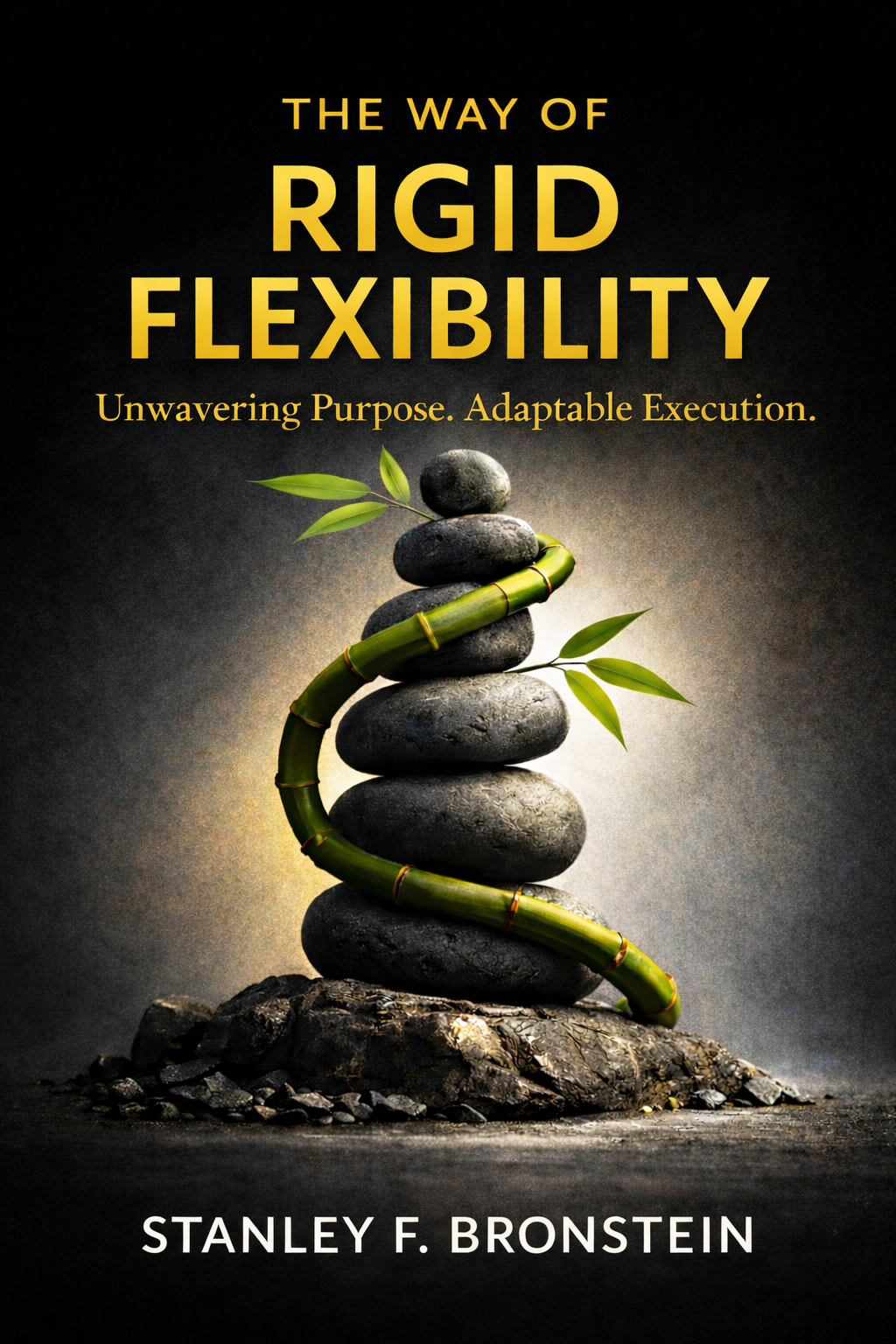
The Way of Rigid Flexibility
Unwavering Purpose. Adaptable Execution.
By Stanley F. Bronstein – Creator of The Way of Excellence System
Click The Tabs Below To Read Each Chapter Of The Book Online
Or
📘 Download Your Free Copy In Your Preferred Format
The Way of Rigid Flexibility
by Stanley F. Bronstein
How to use this page:
Click a chapter title to open it then scroll down to read.
When you click the title of the next chapter, the previous one will close.
Take your time.
Read, reflect, and do the experiments and assignments before you move on.
EMPTY ITEM
Foreword
There is a difference between being strong and being rigid.
Rigidity can look like strength, especially in a world that rewards control, certainty, and intensity. But rigidity has a hidden weakness – it breaks when life changes shape. And life always changes shape.
On the other side of the spectrum is looseness. Looseness can look like freedom, flexibility, and ease. But looseness has its own weakness – it drifts. It adapts so much that it loses direction. It becomes inconsistent. It becomes optional.
Most people spend their lives swinging between these two extremes.
They are rigid until they snap.
Then they loosen until they drift.
Then they try to get rigid again.
And the cycle repeats.
The idea behind this book is simple.
There is a better way.
That way is The Way of Rigid Flexibility (TWORF).
The Way of Rigid Flexibility is the disciplined art of remaining unwavering in purpose yet adaptable in execution. It means building your life around non-negotiable anchors – your core values, daily practices, and long-term goals – while allowing freedom in how you honor them. You hold fast to your commitments but stay fluid in your methods, bending without breaking when circumstances shift. This disciplined art transforms structure into strength, consistency into freedom, and adaptability into mastery. In essence, The Way of Rigid Flexibility is the practice of living with conviction and grace – pursuing excellence without rigidity and progress without perfection.
This is not a complicated philosophy. It is not a productivity method. It is not a self-improvement trick.
It is a posture.
It is a way of living that makes real discipline and real commitment possible over time.
That is why The Way of Rigid Flexibility exists.
In The Way of Excellence, I speak about the importance of Discipline and Commitment. Discipline is not optional if you intend to build anything excellent. Commitment is not optional if you intend to sustain it. But what I have seen, again and again, is that people do not fail because they lack desire. They fail because they cannot maintain their discipline and commitment when life becomes inconvenient, unpredictable, or painful.
They try to stay disciplined by becoming rigid, and eventually that rigidity breaks them.
Or they try to stay flexible by becoming loose, and eventually that looseness dissolves their progress.
Rigid Flexibility is what prevents both outcomes.
It gives Discipline a form that can endure.
It gives Commitment a posture that can survive change.
And there is a third element that matters just as much as discipline and commitment – Perspective.
Perspective determines what you think something means.
It determines whether discipline feels like punishment or alignment.
Whether commitment feels like a trap or a choice.
Whether a disrupted plan feels like failure or refinement.
When you shift your perspective, the experience of discipline changes. The experience of commitment changes. And your ability to remain rigidly flexible becomes dramatically easier.
That is why this book includes the perspective lens throughout – not as an add-on, but as a quiet foundation beneath everything else. Rigid Flexibility is not merely something you do. It is something you see, and then live.
This book is organized in four parts.
Part I clarifies what rigid flexibility is – and what it is not.
Part II explores the internal framework – what must be true inside you for this posture to hold.
Part III moves into external application – how this posture shows up in real life: decisions, work, relationships, adversity, and consistency over time.
Part IV integrates everything into a way of life – not a technique, but a durable orientation you can carry into every season.
If you read this book slowly, you will notice something.
Rigid Flexibility is not about doing more.
It is about doing what matters, without breaking.
It is about remaining true, without becoming brittle.
It is about adapting, without drifting.
It is about staying the course, without clinging to the exact route you first imagined.
When you learn how to live this way, your life becomes steadier.
Not because you control life.
But because you become the kind of person who can move through life with unwavering purpose and adaptable execution.
That is the aim of The Way of Rigid Flexibility.
If you have ever been too rigid and snapped, this book is for you.
If you have ever been too loose and drifted, this book is for you.
If you are ready to hold your anchors and still move with life, this book is for you.
Welcome to The Way of Rigid Flexibility.
Stanley F. Bronstein
INTRODUCTION TO PART I - THE ORIENTATION
Before you can live The Way of Rigid Flexibility (TWORF), you have to see it clearly.
Most people do not struggle because they lack desire. They struggle because they live at the extremes.
Some people become rigid. They create rules, routines, and plans, and they try to force life to cooperate. For a while, rigidity can look like strength. But when life changes – when schedules shift, energy drops, emotions rise, or unexpected events occur – rigidity breaks. The person snaps, quits, or collapses into discouragement.
Other people become loose. They value freedom and flexibility, but without anchors, flexibility turns into inconsistency. They adapt so often that nothing becomes solid. Progress becomes optional. Goals become vague. The person drifts.
Most people bounce back and forth between those two patterns.
Rigid until they break.
Loose until they drift.
Then rigid again.
Part I exists to end that cycle.
This section is called The Orientation because it is designed to give you direction – not through complicated ideas, but through clarity. You will learn what rigid flexibility is, what it is not, and why it matters. You will learn the difference between purpose and method, between anchors and tactics, between standards and strategies. You will learn how to keep what must remain fixed, and how to loosen what must remain adaptable.
Most importantly, you will learn that The Way of Rigid Flexibility is not about becoming stricter. It is about becoming steadier.
It is about building a life around non-negotiable anchors – your core values, daily practices, and long-term goals – while allowing freedom in how you honor them. It is about remaining unwavering in purpose yet adaptable in execution. It is about staying committed without becoming rigid, and staying flexible without becoming loose.
Part I will not ask you to change everything.
It will ask you to see everything differently.
Because once you see the difference between rigidity and rigid flexibility, you begin to understand why discipline and commitment are not meant to feel like pressure. They are meant to feel like alignment. They are meant to support you, not crush you. They are meant to make you stronger, not more brittle.
By the end of Part I, you will have a clear foundation.
You will know what you are building.
You will know what must remain fixed.
And you will know what is allowed – and required – to change.
CHAPTER 1 - WHY RIGID FLEXIBILITY MATTERS
CHAPTER 2 - WHAT RIGID FLEXIBILITY IS (AND IS NOT)
CHAPTER 3 - PURPOSE AS THE NON-NEGOTIABLE
CHAPTER 4 - EXECUTION AS THE VARIABLE
If purpose is what must remain fixed, execution is what must remain adaptable.
This is where most people get trapped.
They confuse commitment with attachment.
They confuse discipline with rigidity.
They confuse changing methods with quitting.
The Way of Rigid Flexibility (TWORF) makes a clear distinction.
Purpose is non-negotiable.
Execution is adjustable.
Why Execution Must Remain Flexible
No plan survives contact with real life unchanged.
Energy fluctuates.
Schedules shift.
Resources change.
People change.
Circumstances intervene.
When execution is treated as fixed, every disruption feels like failure. People either push harder in the wrong direction or abandon the effort entirely. Both outcomes lead to unnecessary collapse.
Rigid Flexibility recognizes a simple truth.
You cannot control conditions, but you can control alignment.
Execution must remain flexible so progress can continue when conditions change.
Goals Are Not Methods
One of the most common mistakes people make is confusing goals with tactics.
A goal answers the question, what am I committed to achieving?
A tactic answers the question, how am I currently trying to achieve it?
When people treat tactics as sacred, they become rigid. When the tactic stops working, they assume the goal is no longer possible.
In The Way of Rigid Flexibility, goals remain steady while tactics evolve.
You do not abandon the destination because one road is blocked.
You find another route.
Discipline Without Attachment
Discipline is not repeating the same behavior no matter what.
Discipline is showing up consistently in service of purpose.
Sometimes discipline looks like following a routine exactly as planned.
Sometimes discipline looks like modifying the routine intelligently.
Sometimes discipline looks like choosing a different action that still honors the same commitment.
What matters is not the form.
What matters is the alignment.
Rigid Flexibility allows discipline to breathe without dissolving.
Adaptation Is Not Failure
Many people resist adaptation because they associate it with weakness.
They believe that changing course means they were wrong. That adjusting execution means they lacked discipline. That modifying a plan means they failed.
This belief is false.
Adaptation is not failure.
Adaptation is responsiveness.
Adaptation is intelligence in motion.
Rigid Flexibility treats adaptation as refinement, not retreat.
You are not starting over.
You are continuing forward with better information.
Execution Serves Purpose
Execution exists to serve purpose, not the other way around.
When execution becomes more important than purpose, people become trapped by their own systems. They protect the process even when it no longer produces results.
Rigid Flexibility reverses that relationship.
Purpose stays in command.
Execution responds.
This keeps discipline functional and commitment alive.
Staying in Motion
Rigid execution stops when conditions are no longer ideal.
Loose execution never builds momentum.
Rigid Flexibility stays in motion.
When one method no longer works, another is chosen. When intensity is unsustainable, consistency is emphasized. When speed is no longer possible, direction is preserved.
This is how progress survives real life.
Execution changes.
Purpose does not.
That distinction is what keeps you moving.
And it is what makes rigid flexibility practical rather than theoretical.
In the next chapter, you will learn how to identify the anchors that hold everything in place – not chains that restrict you, but stabilizing structures that make flexibility possible.
CHAPTER 5 - ANCHORS, NOT CHAINS
Rigid Flexibility only works when the right things are held firmly.
Without anchors, flexibility becomes drift.
With the wrong anchors, flexibility becomes restriction.
This chapter is about learning the difference.
In The Way of Rigid Flexibility (TWORF), anchors are what stabilize you without trapping you. Chains are what bind you without serving you. Confusing the two is one of the primary reasons people either become rigid or fall apart.
What Anchors Are
Anchors are the elements of your life that must remain steady regardless of circumstances.
They include:
-
Core values
-
Daily practices
-
Long-term aims
Anchors do not dictate every action. They provide orientation. They give you something to return to when conditions change. They hold you in place while allowing movement.
An anchor does not prevent motion.
It prevents drift.
Core Values as Anchors
Your core values define how you choose to live, not what you temporarily pursue.
They guide behavior when decisions are difficult.
They remain intact when pressure increases.
They do not change based on convenience or emotion.
When values are clear, flexibility does not threaten integrity. You can adjust your actions without compromising who you are. You know where the line is because your values define it.
Values anchor identity.
Without them, adaptation turns into self-betrayal.
Daily Practices as Anchors
Daily practices are the operational anchors of discipline.
They are not about perfection.
They are about continuity.
Daily practices create rhythm. They keep you connected to your purpose even when motivation fades. They provide structure without demanding intensity.
When daily practices are treated as chains, people rebel. When they are treated as anchors, people return.
Rigid Flexibility does not require doing the same thing every day in the same way. It requires honoring the practice in a way that maintains continuity.
The practice holds.
The form adapts.
Long-Term Aims as Anchors
Long-term aims protect direction.
They prevent short-term discomfort from derailing long-term progress. They remind you why you continue when results are slow or invisible.
Long-term aims are not rigid timelines. They are directional commitments. They keep you oriented toward what matters most without forcing a specific pace.
They anchor patience.
What Chains Are
Chains look like anchors at first.
They are rigid schedules treated as moral obligations.
They are methods mistaken for identity.
They are rules enforced without reflection.
Chains restrict movement without providing stability. They turn structure into confinement. They make discipline feel oppressive instead of supportive.
When people feel chained, they eventually break free.
Not because they lack commitment.
But because the structure is unsustainable.
How Anchors Create Freedom
This may seem counterintuitive, but anchors are what make flexibility possible.
When your values are clear, you do not panic when plans change.
When your practices are stable, you do not lose momentum when execution shifts.
When your long-term aims are intact, you do not mistake temporary detours for failure.
Anchors remove anxiety from adaptation.
They allow you to bend without breaking.
They allow you to adjust without drifting.
They allow you to continue without forcing.
Choosing Your Anchors Intentionally
Anchors should never be accidental.
They should be chosen deliberately, examined honestly, and maintained consciously. If an anchor no longer serves purpose, it should be reassessed. But anchors should not be abandoned lightly.
Rigid Flexibility depends on having fewer anchors, not more.
When everything is non-negotiable, nothing is.
The strength of this posture comes from clarity, not quantity.
The Foundation Moving Forward
As you move deeper into The Way of Rigid Flexibility, you will repeatedly return to this distinction.
What is an anchor?
What is a method?
What is serving stability?
What is quietly becoming a chain?
When anchors are clear, flexibility becomes safe.
When chains are removed, discipline becomes livable.
This is how structure becomes support and this is what allows you to move forward with strength and freedom at the same time.
INTRODUCTION TO PART II - THE INTERNAL FRAMEWORK
The first five chapters were about orientation.
They clarified what rigid flexibility is, why it matters, and how it is built on purpose, adaptable execution, and non-negotiable anchors. That foundation is essential, but it is not sufficient.
Because rigid flexibility is not only a way you plan.
It is a way you live.
It is not held in calendars, checklists, or routines. It is held inside you. And if the inner structure is weak, the outer structure will eventually fail.
Part II exists because most breakdowns do not begin on the outside. They begin on the inside.
A person stops because they lose conviction.
They drift because they lose awareness.
They force themselves because they misunderstand discipline.
They harden because they confuse strength with aggression.
They fall out of balance because they cannot remain steady while life moves.
Rigid flexibility requires a specific internal posture. Not complicated. Not mystical. Just stable and real.
Part II focuses on the inner qualities that make this posture sustainable.
You will learn how to hold conviction without becoming rigid.
You will learn how awareness regulates flexibility so it does not become drift.
You will learn how discipline can be lived without force.
You will learn how true strength is expressed through grace.
You will learn how to stay centered while adapting, and remain steady amid change.
This is the internal framework.
It is the part of you that does not depend on circumstances. It is what allows you to keep your anchors intact without becoming hard, and to stay flexible without becoming loose.
Part I taught you how to see rigid flexibility clearly.
Part II will teach you how to hold it from the inside.
CHAPTER 6 - CONVICTION WITHOUT RIGIDITY
Conviction is essential.
Without conviction, discipline collapses under pressure.
Without conviction, commitment becomes conditional.
Without conviction, purpose fades when it is challenged.
But conviction has a shadow.
When conviction hardens, it turns into rigidity.
This chapter exists to draw a clear line between the two.
What Conviction Really Is
Conviction is clarity that holds.
It is knowing what matters to you and why it matters. It is standing on principles that do not shift with mood, convenience, or external approval. Conviction gives you stability when circumstances are unstable.
In The Way of Rigid Flexibility (TWORF), conviction is not loud, aggressive, or defensive. It does not need to prove itself. It does not need constant reinforcement.
True conviction is calm.
It allows you to act decisively without becoming inflexible.
It allows you to hold standards without hardening around them.
How Conviction Turns Into Rigidity
Conviction turns into rigidity when it becomes attached to form instead of purpose.
This happens when people confuse being committed with being right.
They defend methods instead of outcomes.
They protect routines instead of alignment.
They cling to identity instead of truth.
When conviction is tied to ego, it becomes brittle. Any challenge feels like a threat. Any adjustment feels like failure. Any alternative feels like betrayal.
Rigid Flexibility separates conviction from attachment.
You can be deeply convicted about what matters while remaining open about how it is expressed.
Holding Beliefs Without Hardening
One of the most difficult internal skills to develop is the ability to hold beliefs firmly without becoming rigid.
This requires humility.
It requires the willingness to ask, does this still serve purpose?
It requires the awareness to notice when certainty turns into stubbornness.
It requires the discipline to stay aligned even when the form must change.
Conviction without rigidity is not passive. It is responsive. It listens. It adjusts. It refines.
But it does not abandon its core.
The Danger of Being Right
Many people mistake conviction for the need to be right.
Being right feels powerful. It creates certainty. It provides control. But it also creates fragility. When being right becomes more important than being aligned, growth stops.
Rigid Flexibility does not ask, am I right?
It asks, am I aligned?
This shift is subtle, but it changes everything.
Alignment allows learning.
Alignment allows adaptation.
Alignment allows continued progress.
Being right shuts those doors.
Conviction as Stability, Not Pressure
Conviction is often experienced as pressure because it is misunderstood.
People think conviction means pushing harder, demanding more, and tolerating less. In reality, clear conviction reduces pressure.
When you know what matters, you stop fighting unnecessary battles. You stop forcing outcomes that do not serve purpose. You stop wasting energy on what is misaligned.
Conviction simplifies.
It narrows focus.
It steadies action.
It creates calm strength.
Staying Firm Without Becoming Brittle
Brittleness comes from fear.
Fear of being wrong.
Fear of losing control.
Fear of admitting that something needs to change.
Conviction without rigidity allows change without collapse. You can revise a plan without questioning your purpose. You can adjust execution without weakening commitment. You can evolve without eroding integrity.
This is internal strength.
It does not shout.
It does not force.
It holds.
The Role of Conviction Going Forward
As you continue through this book, conviction will remain central.
It will anchor awareness.
It will support discipline.
It will stabilize commitment.
But it must remain alive, not frozen.
Conviction is not meant to lock you in place.
It is meant to keep you oriented.
When conviction stays flexible in form and firm in essence, it becomes one of the greatest internal supports you can develop.
That is conviction without rigidity and it is one of the core internal foundations of The Way of Rigid Flexibility.
CHAPTER 7 - AWARENESS AS THE REGULATOR
Flexibility without awareness becomes drift.
Discipline without awareness becomes force.
Commitment without awareness becomes stubbornness.
Awareness is what regulates all three.
In The Way of Rigid Flexibility (TWORF), awareness is the internal governor that keeps adaptation intelligent and discipline humane. It is what allows you to adjust without losing alignment and to stay firm without becoming rigid.
Without awareness, even the best intentions deteriorate.
Why Awareness Matters
Awareness is the ability to notice what is actually happening – internally and externally – without distortion.
It allows you to see when effort turns into force.
It allows you to notice when flexibility slips into avoidance.
It allows you to recognize when commitment is being protected and when it is being defended unnecessarily.
Most people do not lack discipline or desire. They lack awareness in motion. They do not notice the moment when a healthy structure becomes a chain, or when a reasonable adjustment becomes an excuse.
Awareness catches these shifts early.
Awareness Prevents Drift
Drift rarely announces itself.
It begins subtly.
A skipped practice becomes occasional.
An adjustment becomes indefinite.
A pause becomes a pattern.
Without awareness, these changes feel harmless. Over time, they quietly erode momentum.
Awareness does not judge these moments. It simply observes them. It asks, is this aligned or is this avoidance? Is this adjustment serving purpose or protecting comfort?
These questions restore direction before drift takes hold.
Self-Observation Without Self-Judgment
Many people resist awareness because they confuse it with criticism.
They believe that noticing their behavior will lead to shame, pressure, or self-reproach. In reality, judgment clouds awareness. It distorts perception and triggers defensiveness.
Rigid Flexibility requires clean observation.
You notice what you are doing without labeling yourself as good or bad. You look at patterns without attacking identity. You separate behavior from worth.
This kind of awareness creates choice.
Choice restores flexibility without sacrificing integrity.
Awareness Regulates Discipline
Discipline without awareness becomes mechanical.
People repeat actions because they are on the schedule, not because they are still aligned. They push through exhaustion when rest would serve purpose better. They follow routines long after those routines have stopped producing results.
Awareness asks better questions.
Is this still serving purpose?
Is the cost still appropriate?
Is there a more aligned way to execute today?
These questions keep discipline alive rather than rigid.
Awareness Regulates Flexibility
Flexibility without awareness becomes justification.
People tell themselves they are adapting when they are actually avoiding. They claim responsiveness while slowly lowering standards. Over time, flexibility becomes an excuse to disengage.
Awareness brings honesty back into the process.
It allows you to say, I am adjusting for alignment, not escaping discomfort. It allows you to distinguish between intelligent modification and quiet withdrawal.
This distinction preserves progress.
Awareness Creates Internal Stability
When awareness is strong, you are not thrown off by change.
You notice emotional shifts without being controlled by them.
You recognize external pressure without reacting impulsively.
You see internal resistance without immediately obeying it.
Awareness creates a pause between stimulus and response.
That pause is where rigid flexibility lives.
Awareness as a Daily Practice
Awareness does not require constant introspection.
It requires periodic honesty.
You check in.
You notice patterns.
You recalibrate.
This keeps your anchors intact and your execution adaptable. It prevents small misalignments from becoming large breakdowns.
Awareness is not something you master once.
It is something you practice continuously.
The Quiet Power of Awareness
Awareness rarely feels dramatic.
It does not announce itself.
It does not demand attention.
It does not force change.
But it quietly determines whether discipline strengthens or hardens, whether commitment endures or collapses, and whether flexibility refines or dissolves progress.
Awareness is the internal regulator that makes The Way of Rigid Flexibility sustainable.
Without it, nothing holds.
With it, everything adjusts intelligently.
This is not control.
It is clarity in motion.
CHAPTER 8 - DISCIPLINE WITHOUT FORCE
Discipline is one of the most misunderstood qualities in personal growth.
For many people, discipline is associated with pressure, punishment, and self-denial. It is something to be endured rather than embraced. Something imposed rather than chosen. Something that requires force.
That understanding is flawed.
In The Way of Rigid Flexibility (TWORF), discipline is not about control. It is about alignment.
Why Force Fails
Force can produce short-term compliance, but it cannot produce long-term consistency.
When discipline is enforced through pressure, people push themselves past sustainable limits. They override signals from their body and mind. They rely on willpower instead of clarity.
Eventually, force creates resistance.
Motivation fades.
Resentment builds.
Burnout appears.
What began as discipline collapses into avoidance or rebellion.
Rigid Flexibility recognizes that discipline built on force cannot endure.
Discipline as Alignment
True discipline is the repeated expression of alignment.
It is doing what serves purpose, even when it is inconvenient, uncomfortable, or unglamorous. It is not driven by intensity. It is driven by clarity.
When you are aligned, discipline feels steady rather than heavy.
You act because it makes sense.
You continue because it matters.
You show up because it supports who you are becoming.
This kind of discipline does not require constant motivation. It relies on orientation.
Consistency Over Intensity
One of the most damaging myths about discipline is that it must always look intense.
People believe that if something feels easy or moderate, it must not be effective. They push harder than necessary, then collapse under the weight of their own expectations.
Rigid Flexibility values consistency over intensity.
A practice done consistently at a sustainable level outperforms a practice done intensely and then abandoned. Discipline succeeds when it can be repeated without resentment.
This is how progress compounds.
Adapting Discipline Without Abandoning It
Discipline does not require repeating the same behavior in the same way forever.
What it requires is honoring the commitment behind the behavior.
Some days, discipline looks like executing the plan exactly as written.
Some days, discipline looks like modifying the plan intelligently.
Some days, discipline looks like choosing a different action that still serves purpose.
Rigid Flexibility allows discipline to adapt without dissolving.
The anchor remains.
The expression adjusts.
Discipline and Self-Respect
When discipline is driven by force, it erodes self-respect.
When discipline is driven by alignment, it strengthens it.
Each time you act in accordance with what matters, you reinforce trust in yourself. You learn that you can rely on your choices, not just your moods. You build credibility with yourself through action.
Discipline becomes an expression of self-respect, not self-control.
Removing Moral Weight
One of the most liberating shifts in The Way of Rigid Flexibility is removing moral judgment from discipline.
Discipline is not about being good or bad.
It is not about worthiness.
It is not about punishment for failure.
It is about alignment with purpose.
When discipline loses its moral weight, it becomes easier to maintain. You stop interpreting missteps as personal flaws and start treating them as information.
This keeps you moving.
Discipline That Endures
Force-driven discipline eventually collapses.
Alignment-driven discipline endures.
It adapts when conditions change.
It softens when pressure increases.
It holds steady without becoming harsh.
This is discipline that supports life rather than dominating it.
As you move forward, discipline will remain central. But it will not be something you fight against. It will be something that works with you.
Discipline without force is not weaker.
It is stronger.
And it is essential to living The Way of Rigid Flexibility.
CHAPTER 9 - STRENGTH EXPRESSED THROUGH GRACE
Strength is often misunderstood.
Many people equate strength with hardness, aggression, or intensity. They believe that to be strong, they must push harder, react faster, and tolerate more. They associate grace with softness and assume that calmness is a sign of weakness.
This misunderstanding creates unnecessary struggle.
In The Way of Rigid Flexibility (TWORF), strength and grace are not opposites. They are partners.
True strength is not loud.
True strength is not frantic.
True strength does not need to prove itself.
True strength is steady.
The Difference Between Force and Strength
Force is effort without regulation.
It overrides signals.
It ignores limits.
It escalates tension.
Force can create movement, but it also creates damage. It exhausts energy, narrows perspective, and accelerates burnout. Over time, force makes discipline unsustainable and commitment brittle.
Strength is different.
Strength is regulated power.
It is applied deliberately.
It is responsive rather than reactive.
Strength knows when to press and when to soften. It adjusts without collapsing and holds without straining.
This is where grace enters.
Grace as Regulation
Grace is not passivity.
Grace is the ability to remain composed under pressure. It is emotional regulation in motion. It is the capacity to respond thoughtfully rather than react impulsively.
Grace allows strength to be used wisely.
When grace is present, setbacks do not trigger panic. Resistance does not provoke aggression. Change does not create collapse. You remain grounded even when circumstances are difficult.
Grace keeps strength from becoming destructive.
Emotional Regulation as Mastery
Most breakdowns are not caused by lack of effort. They are caused by unmanaged emotion.
Frustration leads to force.
Fear leads to rigidity.
Disappointment leads to withdrawal.
Emotional regulation is not suppression. It is awareness combined with restraint. It is the ability to feel fully without being driven blindly by emotion.
Rigid Flexibility depends on this skill.
When emotions are regulated, you can stay committed without becoming harsh. You can remain disciplined without becoming rigid. You can adapt without losing your center.
This is mastery.
Calm Strength Endures
Aggressive strength burns quickly.
Calm strength lasts.
Calm strength does not rush.
It does not overreact.
It does not escalate unnecessarily.
It moves steadily. It absorbs impact without losing direction. It allows pressure to pass through without breaking structure.
This is why calm strength is essential for long-term progress.
Rigid Flexibility is not sustained by intensity.
It is sustained by steadiness.
Grace Under Pressure
Pressure reveals posture.
When pressure increases, rigid people harden. Loose people disengage. Rigidly flexible people regulate.
They slow down before reacting.
They reassess before forcing.
They adjust without abandoning their standards.
Grace under pressure is not weakness. It is strength that has learned restraint.
Strength Without Strain
Strain is a warning sign.
It signals that force is replacing alignment. It indicates that something is being pushed rather than supported. Over time, strain leads to injury, resentment, or collapse.
Strength expressed through grace minimizes strain.
It allows you to continue without grinding yourself down. It preserves energy. It protects consistency.
This is how progress remains sustainable.
The Role of Grace Going Forward
As you continue through this book, grace will remain essential.
It will soften discipline without weakening it.
It will stabilize commitment without hardening it.
It will allow flexibility without chaos.
Strength expressed through grace is what allows rigid flexibility to remain human.
Not mechanical.
Not harsh.
Not brittle.
Just steady, responsive, and alive.
That is real strength.
And it is one of the quiet foundations of The Way of Rigid Flexibility.
CHAPTER 10 - STABILITY IN MOTION
INTRODUCTION TO PART III - THE EXTERNAL APPLICATION
The first two parts of this book built the foundation.
Part I gave you orientation – what rigid flexibility is, why it matters, and how it is rooted in purpose, adaptable execution, and anchors that create freedom.
Part II established the internal framework – conviction without rigidity, awareness as the regulator, discipline without force, strength expressed through grace, and stability in motion.
Now the question becomes practical.
What does all of this look like in real life?
That is what Part III is about.
Rigid flexibility is not proven in theory. It is proven in moments.
When you have to make a decision under pressure.
When your schedule gets disrupted.
When your energy drops.
When other people disappoint you or challenge you.
When adversity hits, and your original plan is no longer possible.
When you must continue for weeks, months, and years, not just for a few days.
Part III moves out of the inner world and into the outer world.
This is where the posture becomes visible.
You will learn how to make decisions without panic or paralysis.
You will learn how to work and create without clinging to routines.
You will learn how to stay firm in relationships without becoming harsh.
You will learn how to handle setbacks without collapse or drift.
You will learn how to sustain consistency over time without relying on intensity.
The goal of this section is not to give you a perfect method.
The goal is to teach you how to apply the posture.
Because life does not reward people who can execute perfectly under ideal conditions. Life rewards people who can adapt intelligently without losing their center.
That is what rigid flexibility makes possible.
In Part III, you will begin to see that rigid flexibility is not something you practice only when everything is going well. It is something you practice precisely when things are not.
This is where the way becomes real.
This is where it becomes yours.
CHAPTER 11 - DECISION-MAKING WITH RIGID FLEXIBILITY
Decisions are where posture is revealed.
You can understand rigid flexibility intellectually and still abandon it the moment a decision feels uncomfortable. You can value discipline and commitment in theory and still react impulsively or freeze when stakes are high.
Decision-making exposes whether rigid flexibility is real for you or merely an idea.
In The Way of Rigid Flexibility (TWORF), decisions are not about finding the perfect choice. They are about staying aligned while choosing the next step.
Why Decisions Break People
Most people struggle with decisions for one of two reasons.
They either rush or they stall.
Some people rush because uncertainty makes them anxious. They decide quickly to relieve discomfort, not because the decision is aligned. Speed becomes a way to escape tension.
Other people stall because they want certainty before acting. They wait for perfect clarity, complete information, or emotional readiness. While they wait, momentum dies.
Both patterns come from the same misunderstanding.
They treat decisions as verdicts instead of steps.
Rigid Flexibility corrects this.
Holding the Aim While Choosing the Method
Every decision contains two elements.
The aim.
The method.
The aim is what you are trying to honor. The method is how you are attempting to honor it right now.
Rigid Flexibility keeps the aim fixed and allows the method to adjust.
When you confuse the two, decisions become loaded. Changing a method feels like abandoning the aim. Choosing differently feels like failure.
When you separate them, decisions become cleaner.
You ask better questions.
What am I committed to here?
What option best serves that commitment right now?
What is the next aligned step, not the final answer?
This reframing reduces pressure.
Avoiding Paralysis and Impulsiveness
Paralysis comes from trying to eliminate uncertainty.
Impulsiveness comes from trying to escape it.
Rigid Flexibility accepts uncertainty as part of movement.
You do not need perfect information to take the next step. You need enough clarity to remain aligned. You decide, act, observe, and adjust.
This keeps momentum alive.
A decision made with awareness and alignment can be refined. A decision avoided cannot.
Commitment in Decisions
Commitment does not mean locking yourself into one choice forever.
It means staying devoted to what matters while allowing course correction.
When you decide rigidly, you protect the decision instead of the purpose. When you decide loosely, you abandon follow-through at the first sign of discomfort.
Rigid Flexibility holds commitment at the level of purpose, not preference.
You stay committed to direction, not attached to a single choice.
Discipline in Decisions
Discipline in decision-making is not about choosing the hardest option.
It is about choosing the aligned option and then honoring it.
Once a decision is made, discipline shows up as follow-through. Not blind persistence, but steady execution. You give the decision a fair chance to work. You do not sabotage it with doubt or constant second-guessing.
At the same time, discipline does not prevent reassessment. It simply prevents impulsive reversal.
Clean, Grounded Decisions
A clean decision is one made without excess emotion, justification, or self-attack.
You decide.
You act.
You observe.
You adjust if needed.
No drama.
No self-punishment.
No overidentification with the outcome.
Rigid Flexibility allows decisions to remain functional instead of personal.
Adaptation Without Retreat
One of the most important decision-making skills is knowing when adjustment is refinement rather than retreat.
Retreat abandons purpose.
Refinement protects it.
Rigid Flexibility gives you the confidence to adjust without questioning your integrity. You are not backing away. You are staying aligned under changing conditions.
This prevents both stubborn persistence and premature quitting.
The Long View
Every decision does not need to be optimal.
It needs to be aligned.
When decisions are made this way, progress compounds. You stop exhausting yourself trying to get everything right and start trusting your ability to stay oriented.
Rigid Flexibility does not promise perfect decisions.
It promises resilient ones.
Decisions that can withstand change.
Decisions that support continuity.
Decisions that keep you moving forward.
That is decision-making with rigid flexibility.
CHAPTER 12 - WORK, CRAFT, AND CREATION
Work is where intention meets reality.
It is easy to speak about purpose, discipline, and commitment in the abstract. It is much harder to live them day after day through effort, repetition, and imperfect conditions.
That is why work, craft, and creation are central proving grounds for The Way of Rigid Flexibility (TWORF).
This chapter is not about productivity tricks or optimization. It is about how excellence is sustained through posture, not pressure.
Commitment to Outcomes, Not Routines
Many people confuse commitment with routine.
They become loyal to specific schedules, systems, or workflows even when those structures stop serving the outcome. When circumstances change, they either cling to the routine or abandon the work entirely.
Rigid Flexibility commits to outcomes, not rigid forms.
The outcome is the anchor.
The routine is a tool.
When a routine supports the outcome, you honor it.
When it stops doing so, you adapt it.
This keeps commitment alive rather than brittle.
Craft Requires Consistency, Not Perfection
Craft is built through repetition.
Not dramatic effort.
Not bursts of inspiration.
Not flawless execution.
Consistent engagement over time is what creates mastery.
Rigid Flexibility supports craft by allowing repetition to evolve. You show up regularly, but you do not demand identical performance each time. Some days are strong. Some are steady. Some are quiet.
You keep working anyway.
This approach preserves momentum without burning out the maker.
Iteration Without Abandonment
One of the greatest threats to meaningful work is abandonment disguised as change.
People quit too early and call it pivoting.
They disengage and call it flexibility.
They lose patience and call it growth.
Rigid Flexibility draws a clear distinction.
Iteration refines commitment.
Abandonment escapes discomfort.
Iteration asks, what needs to change so this can continue?
Abandonment asks, how do I get out?
Rigid Flexibility stays with the work long enough for refinement to matter.
Long-Term Excellence Over Short-Term Performance
Short-term performance can be forced.
Long-term excellence cannot.
When people chase immediate results, they sacrifice sustainability. They overextend, rush timelines, and demand outcomes their systems cannot support.
Rigid Flexibility takes the long view.
It values durability over speed.
It values reliability over intensity.
It values progress that compounds.
This perspective allows work to mature rather than fracture.
Working With Energy, Not Against It
Force-driven work ignores energy.
It pushes through exhaustion.
It dismisses diminishing returns.
It treats rest as weakness.
Rigid Flexibility treats energy as information.
You still show up.
You still honor commitments.
But you adjust how you work based on what is available.
This preserves both output and integrity.
Creation as Expression, Not Proof
When work becomes a way to prove worth, rigidity follows.
People cling to outcomes because failure feels personal. They resist feedback because identity is on the line. They avoid adaptation because it threatens self-image.
Rigid Flexibility reframes creation.
Work is expression, not validation.
Craft is development, not judgment.
Results are feedback, not verdicts.
This allows learning without collapse and refinement without defensiveness.
Staying the Course Without Becoming Mechanical
Consistency does not require sameness.
Rigid people repeat without reflection.
Loose people change without continuity.
Rigid Flexibility repeats with awareness.
You stay engaged.
You reassess regularly.
You refine execution without losing direction.
This keeps work alive rather than mechanical.
Work as a Living Practice
Work, craft, and creation are not destinations.
They are ongoing practices.
Rigid Flexibility allows these practices to remain dynamic without losing structure. You honor discipline without force. You sustain commitment without rigidity. You adapt without retreat.
Over time, this posture transforms work from something you endure into something that expresses who you are becoming.
That is how excellence is built.
Not through pressure.
Not through perfection.
But through aligned effort sustained intelligently over time.
That is work lived through The Way of Rigid Flexibility.
CHAPTER 13 - RELATIONSHIPS AND BOUNDARIES
Relationships are one of the clearest places where posture is tested.
It is easy to practice rigid flexibility alone. It is much harder to practice it when emotions are involved, expectations collide, and other people bring their own needs, fears, and patterns into the space.
In The Way of Rigid Flexibility (TWORF), relationships are not managed through control or accommodation. They are navigated through clear values, flexible engagement, and firm boundaries.
Why Relationships Expose Extremes
Most people fall into one of two patterns in relationships.
They become rigid.
Or they become loose.
Rigid people defend their position at all costs. They equate flexibility with weakness and boundaries with walls. They protect themselves by hardening.
Loose people accommodate excessively. They avoid conflict, soften standards, and bend until they disappear. They confuse harmony with self-erasure.
Neither approach sustains healthy connection.
Rigid Flexibility integrates both firmness and openness.
Standing Firm in Values
Values are non-negotiable.
They define how you treat others, what behavior you tolerate, and what you will not compromise. Without clear values, boundaries become reactive and inconsistent.
Rigid Flexibility requires that your values remain steady regardless of who you are dealing with.
You do not abandon honesty to keep the peace.
You do not sacrifice self-respect to maintain approval.
You do not betray your principles to avoid discomfort.
Standing firm does not mean being harsh. It means being clear.
Boundaries Without Hardness
Boundaries are often misunderstood as ultimatums or punishments.
In reality, boundaries are statements of responsibility.
They clarify what you will do, what you will not do, and what you require in order to remain aligned. They are not demands that others change. They are commitments you make to yourself.
Rigid Flexibility allows boundaries to be firm without being rigid.
You communicate them calmly.
You enforce them consistently.
You adjust delivery without weakening the boundary itself.
This preserves both integrity and connection.
Allowing Others to Evolve
Rigid people demand that others stay the same. Loose people allow others to cross lines repeatedly.
Rigid Flexibility creates a third option.
You allow others the space to evolve without abandoning your standards.
You do not require perfection.
You do not tolerate repeated misalignment.
You observe patterns over time and respond accordingly.
This approach respects both growth and accountability.
Flexibility Without Self-Betrayal
Flexibility in relationships does not mean saying yes when you mean no.
It means adjusting how you engage without abandoning who you are.
You may change tone without changing truth.
You may compromise on preferences without compromising on values.
You may adapt expectations without lowering standards.
Rigid Flexibility protects against self-betrayal by keeping values anchored while allowing expression to remain fluid.
Conflict as Information
Conflict is not failure.
It is information.
Rigid people treat conflict as a threat. Loose people treat it as something to be avoided. Rigid Flexibility treats conflict as feedback.
It reveals misalignment.
It highlights unmet needs.
It exposes assumptions.
When approached with awareness and grace, conflict strengthens boundaries rather than eroding them.
Consistency Builds Trust
Trust is built through consistency, not accommodation.
When people know where you stand, they feel safer, even if they do not always agree. When your responses are predictable and grounded in values, relationships stabilize.
Rigid Flexibility creates consistency without rigidity.
You show up as yourself across changing situations.
You adapt behavior without shifting identity.
You remain reliable without becoming inflexible.
Relationships as Practice Grounds
Relationships are not obstacles to rigid flexibility. They are training grounds.
They test conviction without rigidity.
They test awareness under emotion.
They test discipline in communication.
They test grace under pressure.
Handled well, relationships refine posture rather than destabilizing it.
Carrying Boundaries Forward
As life becomes more complex, boundaries become more important, not less.
Rigid Flexibility allows you to protect what matters while remaining open to connection. You neither close yourself off nor give yourself away.
You stand firm.
You stay open.
You remain aligned.
That is how relationships support, rather than sabotage, The Way of Rigid Flexibility.
CHAPTER 14 - ADVERSITY, SETBACKS, AND CHANGE
Adversity is not an interruption to the path.
It is part of it.
Plans will break.
Energy will fluctuate.
Circumstances will shift without warning.
What determines progress is not whether disruption occurs, but how you respond when it does.
In The Way of Rigid Flexibility (TWORF), adversity is not something to be endured rigidly or escaped loosely. It is something to be worked with intelligently.
Why Setbacks Break People
Setbacks break people when they are interpreted incorrectly.
Rigid people interpret setbacks as threats to identity. When their plan fails, they feel personally compromised. They tighten, push harder, and often fracture.
Loose people interpret setbacks as permission to disengage. When effort becomes difficult, they soften standards and drift away.
Both responses miss the opportunity hidden in disruption.
Rigid Flexibility sees setbacks as signals, not verdicts.
Bending Without Breaking
Flexibility does not mean collapsing under pressure.
It means bending in a way that preserves structure.
Rigid Flexibility allows you to absorb impact without losing direction. You may slow down. You may adjust the plan. You may change tactics entirely.
What you do not change is your commitment to purpose.
This is the difference between bending and breaking.
Adjusting Without Retreating
Retreat abandons direction.
Adjustment protects it.
Rigid Flexibility teaches you to distinguish between the two.
Adjustment asks, what needs to change so I can continue?
Retreat asks, how do I escape this discomfort?
This distinction keeps adversity from derailing progress.
You remain engaged, even when the form must change.
Change as a Constant, Not a Threat
Many people treat change as a problem to be solved rather than a reality to be navigated.
They resist it.
They resent it.
They try to control it.
Rigid Flexibility accepts change as a constant.
When change is expected, it becomes less destabilizing. You plan with adaptation in mind. You remain alert rather than attached. You respond rather than react.
Change becomes a condition, not a crisis.
Using Disruption as Refinement
Disruption exposes weaknesses that stability hides.
It reveals brittle systems.
It highlights unrealistic expectations.
It shows where effort is misaligned.
Rigid Flexibility uses disruption as refinement.
You examine what failed without self-attack.
You extract lessons without dramatizing them.
You rebuild stronger than before.
This is how resilience develops.
Maintaining Identity Through Change
One of the greatest fears during adversity is losing yourself.
When routines fall apart and roles shift, people often feel unmoored. They question who they are because what they do has changed.
Rigid Flexibility anchors identity in principles, not conditions.
You remain the same person even when circumstances change. Your values persist even when execution must adapt. Your integrity survives disruption.
This creates psychological stability during external chaos.
Staying Oriented When Conditions Are Unclear
Adversity often removes clarity.
Timelines blur.
Outcomes feel uncertain.
Effort becomes harder to measure.
Rigid Flexibility keeps orientation when certainty disappears.
You focus on what you can control.
You maintain core practices.
You choose the next aligned step.
You do not require certainty to continue.
Adversity as Training
Handled well, adversity strengthens posture.
It sharpens awareness.
It deepens discipline.
It tests commitment honestly.
Rigid Flexibility does not eliminate difficulty. It transforms how difficulty is engaged.
Instead of becoming rigid or loose, you become responsive.
Instead of collapsing or forcing, you recalibrate.
Over time, adversity stops being something you fear and becomes something you know how to work with.
That is not optimism.
It is competence.
And it is one of the defining strengths of The Way of Rigid Flexibility.
CHAPTER 15 - CONSISTENCY OVER TIME
Consistency is where most approaches fail.
Not because people lack desire.
Not because they lack knowledge.
But because they misunderstand what consistency actually requires.
In The Way of Rigid Flexibility (TWORF), consistency is not about doing the same thing forever. It is about staying aligned over time, through changing conditions, energy levels, and life seasons.
This chapter exists to separate sustainable consistency from brittle persistence.
Why Intensity Fails Long-Term
Intensity feels productive.
It creates momentum quickly.
It delivers visible results.
It feels motivating in the short term.
But intensity is expensive.
It demands high energy.
It requires constant effort.
It leaves little room for life to intervene.
Eventually, intensity collapses. When it does, people often abandon the entire pursuit rather than recalibrate it.
Rigid Flexibility chooses consistency over intensity because consistency survives reality.
Consistency Is Directional, Not Mechanical
Many people mistake consistency for repetition.
They believe that missing a day breaks the streak, that changing a practice ruins momentum, or that slowing down equals failure.
Rigid Flexibility rejects this thinking.
Consistency is directional.
As long as you continue moving in alignment with purpose, consistency remains intact. Execution may change. Pace may vary. Structure may evolve.
Direction remains.
Staying the Course Through Changing Seasons
Life moves in seasons.
There are periods of expansion and contraction.
There are times of high energy and low energy.
There are moments of clarity and moments of confusion.
Rigid approaches collapse when seasons change. Loose approaches drift.
Rigid Flexibility adapts execution while protecting continuity.
You do not demand the same output in every season.
You do not abandon the path because conditions shift.
You adjust intelligently and keep going.
This is how long arcs are completed.
Protecting Momentum
Momentum is fragile when misunderstood.
People think momentum comes from speed. In reality, momentum comes from continuity.
Even small actions, performed consistently, preserve motion. Even modest effort, sustained over time, compounds.
Rigid Flexibility protects momentum by removing all-or-nothing thinking.
You do not need perfect days.
You do not need maximum output.
You need continued engagement.
That is enough.
Consistency Without Self-Punishment
One of the fastest ways to destroy consistency is self-punishment.
When people miss a practice, they respond with guilt. When they fall short, they attack themselves. When progress slows, they interpret it as failure.
Rigid Flexibility removes moral judgment from consistency.
You notice interruptions without dramatizing them.
You resume without punishment.
You adjust without shame.
This keeps consistency humane and sustainable.
The Long View of Progress
Short timelines distort behavior.
When people demand rapid results, they overextend. When results slow, they lose faith.
Rigid Flexibility takes the long view.
It understands that meaningful change unfolds over years, not days. It values durability over speed and stability over spectacle.
Progress that lasts does not rush.
Consistency as Trust With Yourself
Every time you return after disruption, you reinforce trust.
Not trust that you will be perfect.
Trust that you will continue.
Rigid Flexibility builds self-trust through reliable return rather than flawless execution.
You learn that setbacks do not end the journey.
You learn that adjustment is not abandonment.
You learn that continuity is resilient.
Why This Chapter Matters
Everything you are building depends on this.
Discipline without consistency collapses.
Commitment without consistency erodes.
Purpose without consistency remains abstract.
Rigid Flexibility turns consistency into a living process rather than a rigid demand.
You stay engaged.
You stay aligned.
You stay moving.
Over time, this is what separates temporary change from a way of life.
This is not about doing more.
It is about continuing wisely.
That is consistency lived through The Way of Rigid Flexibility.
INTRODUCTION TO PART IV - INTEGRATION AND MASTERY
The first three parts of this book have built something specific.
Part I gave you orientation – what rigid flexibility is, why it matters, and how it is anchored in purpose, adaptable execution, and non-negotiable anchors.
Part II built the internal framework – conviction without rigidity, awareness as the regulator, discipline without force, strength expressed through grace, and stability in motion.
Part III brought that posture into real life – decision-making, work and creation, relationships and boundaries, adversity and change, and consistency over time.
Now Part IV does something different.
It integrates.
Because rigid flexibility is not meant to be a skill you use occasionally. It is meant to become a way of life. A governing posture that shapes how you think, how you choose, how you respond, and how you continue.
Integration is what turns ideas into identity.
Without integration, people understand concepts but fail to live them. They apply principles sporadically. They return to extremes under stress. They forget what they know when pressure rises.
Part IV exists to make rigid flexibility durable.
This section will help you see the deeper distinctions that keep this posture stable over time.
You will learn the difference between control and alignment.
You will learn how to pursue excellence without perfection.
You will learn how to anchor identity in principles rather than conditions.
You will learn how rigid flexibility becomes a way of life rather than a technique.
And you will bring everything together in the conclusion.
Part IV is called Integration and Mastery because mastery is not complexity. It is consistency of posture.
It is living with unwavering purpose and adaptable execution in every season.
It is holding your anchors without becoming hard.
It is adapting without drifting.
It is continuing without forcing.
This is where the way becomes permanent.
This is where it becomes who you are.
CHAPTER 16 - THE DIFFERENCE BETWEEN CONTROL AND ALIGNMENT
Control feels powerful.
It promises certainty.
It offers predictability.
It creates the illusion of safety.
But control is fragile.
The more tightly you try to control outcomes, people, and circumstances, the more energy you expend resisting reality. Eventually, control breaks down under the weight of complexity.
In The Way of Rigid Flexibility (TWORF), control is replaced by alignment.
Why Control Fails
Control depends on conditions cooperating.
It assumes that plans will unfold as expected.
It assumes that effort guarantees outcome.
It assumes that force can override variability.
Life does not work this way.
When conditions shift, control tightens. When control tightens, rigidity increases. When rigidity increases, adaptability disappears.
This is why control leads to brittleness.
Alignment as a Stable Alternative
Alignment does not attempt to dominate conditions.
It orients behavior around purpose, values, and reality as it is. Instead of forcing outcomes, alignment adjusts actions to remain congruent with what matters.
Alignment asks different questions.
What am I committed to here?
What does reality require right now?
What action best honors both?
These questions keep movement intelligent.
Control Focuses on Outcomes, Alignment Focuses on Direction
Control obsesses over specific outcomes.
When outcomes deviate, frustration escalates. People push harder or disengage entirely. They lose sight of direction because they are fixated on results.
Alignment focuses on direction.
Direction can be maintained even when outcomes fluctuate. When you know where you are going, temporary detours do not threaten progress.
Rigid Flexibility depends on this distinction.
You remain committed to direction while allowing outcomes to unfold through adaptive execution.
Letting Go Without Letting Drift
Many people fear alignment because they confuse it with passivity.
They believe that if they release control, they will lose discipline. If they stop forcing, they will drift. If they soften, they will fail.
Rigid Flexibility corrects this misunderstanding.
Letting go of control does not mean letting go of standards. It means releasing attachment to a specific form while protecting intention.
You let go of rigidity.
You do not let go of commitment.
This prevents drift.
Responsibility Without Domination
Control tries to dominate responsibility.
Alignment accepts responsibility without domination.
You take ownership of effort, choices, and posture. You do not claim ownership of outcomes that depend on variables beyond your control.
This distinction reduces anxiety and preserves energy.
You do your part fully.
You allow results to emerge.
This is not resignation. It is clarity.
Why Alignment Endures
Alignment survives complexity.
When plans fail, alignment adapts.
When energy fluctuates, alignment adjusts.
When circumstances change, alignment remains oriented.
Control collapses under complexity because it depends on sameness.
Alignment thrives because it expects change.
The Role of Alignment Going Forward
As you approach mastery, this distinction becomes critical.
Control will repeatedly tempt you when pressure rises. Alignment will feel quieter and less dramatic. But alignment is what sustains rigid flexibility over time.
You do not need to control life to live well.
You need to align with what matters and respond intelligently to what is.
That is the difference.
And it is one of the deepest stabilizers of The Way of Rigid Flexibility.
CHAPTER 17 - EXCELLENCE WITHOUT PERFECTION
Perfection is seductive.
It promises certainty.
It offers the illusion of control.
It suggests that if you get everything exactly right, nothing will fall apart.
But perfection is brittle.
It cannot adapt.
It cannot recover gracefully.
It collapses under real-world conditions.
In The Way of Rigid Flexibility (TWORF), excellence replaces perfection – not as a lower standard, but as a sustainable one.
Why Perfection Breaks Progress
Perfection demands fixed conditions.
It requires ideal timing.
It expects consistent energy.
It assumes mistakes can be eliminated.
When reality deviates, perfection reacts harshly. People either force harder or disengage entirely. Progress becomes fragile because it depends on everything going according to plan.
This is why perfection stalls growth.
It punishes learning.
It amplifies fear of failure.
It turns adaptation into self-criticism.
Rigid Flexibility does not operate under these constraints.
Excellence Is Alive
Excellence is not a static state.
It evolves.
It refines.
It responds.
Excellence allows for error without collapse. It treats mistakes as feedback rather than verdicts. It focuses on quality of engagement rather than flawless execution.
This makes excellence resilient.
You can miss a step and continue.
You can adjust without shame.
You can improve without self-attack.
Perfection cannot do this.
Progress as Refinement
Perfection demands completion.
Excellence values refinement.
Rigid Flexibility frames progress as an ongoing process of adjustment and improvement. You move forward, observe results, and refine execution. You do not wait to be perfect before acting, and you do not abandon effort when outcomes are imperfect.
This keeps momentum intact.
Refinement compounds over time.
Perfection stalls waiting for certainty.
High Standards Without Rigidity
Excellence does not mean lowering standards.
It means holding them intelligently.
Rigid Flexibility allows you to maintain high expectations while remaining adaptable in how they are met. You protect quality without becoming brittle. You honor discipline without demanding flawlessness.
Standards guide effort.
They do not imprison it.
Learning Without Collapse
Perfection turns learning into a threat.
Mistakes feel personal.
Feedback feels dangerous.
Change feels destabilizing.
Excellence welcomes learning.
Rigid Flexibility creates a posture where learning strengthens rather than undermines confidence. You remain committed while improving. You stay grounded while evolving.
This allows skill, judgment, and maturity to deepen.
Why Excellence Endures
Perfection burns out.
Excellence sustains.
Perfection depends on control.
Excellence depends on alignment.
Perfection demands sameness.
Excellence adapts to change.
Rigid Flexibility thrives on excellence because excellence remains functional under real conditions.
Letting Go of Perfection Without Lowering Yourself
Letting go of perfection is not settling.
It is choosing a higher form of engagement.
You stop measuring yourself against impossible standards and start measuring alignment with purpose. You focus on direction, not flawless appearance. You value continuation over performance.
This creates confidence that does not fracture under pressure.
Excellence as a Way of Being
Excellence is not something you achieve and then protect.
It is something you practice.
Rigid Flexibility makes excellence livable. It allows you to hold high standards without rigidity and pursue growth without self-judgment.
That is excellence without perfection.
And it is one of the clearest expressions of mastery within The Way of Rigid Flexibility.
CHAPTER 18 - IDENTITY ANCHORED IN PRINCIPLES
Identity is most vulnerable during change.
When roles shift, routines break, or outcomes fall apart, many people experience disorientation. They question who they are because what they do is no longer stable. When identity is tied to performance, position, or conditions, it becomes fragile.
In The Way of Rigid Flexibility (TWORF), identity is anchored in principles rather than circumstances.
This anchoring is what allows adaptation without self-loss.
Why Identity Often Becomes Brittle
Most people build identity around externals.
What they produce.
How they are perceived.
What they have achieved.
What roles they occupy.
These markers feel solid, but they are temporary. When they change, identity wobbles. People respond by clinging to old forms or resisting necessary change.
Rigid Flexibility avoids this trap by locating identity deeper.
Principles as the Anchor
Principles do not depend on conditions.
They guide behavior regardless of success or failure. They remain intact during progress and setback alike. When identity is anchored in principles, change becomes navigable rather than threatening.
You are not defined by how something turns out.
You are defined by how you engage.
This distinction stabilizes identity.
Who You Are Versus What You Do
What you do will change.
Careers evolve.
Responsibilities shift.
Methods adapt.
Who you are does not need to change with them.
Rigid Flexibility separates essence from expression. You can change tactics, roles, and execution without questioning your core identity. This prevents overidentification with outcomes and protects psychological stability.
You act from principles rather than perform for validation.
Identity That Survives Change
When identity is anchored in principles, it survives disruption.
You may grieve loss.
You may feel uncertainty.
You may need to rebuild.
But you do not feel erased.
You remain oriented because your identity does not depend on sameness. It depends on integrity.
This allows resilience without denial.
Living From Essence, Not Outcomes
Outcomes fluctuate.
Sometimes effort is rewarded.
Sometimes it is not.
Sometimes results arrive quickly.
Sometimes they do not.
If identity is tied to outcomes, confidence rises and falls with circumstances. Rigid Flexibility removes this instability by grounding identity in essence.
You remain steady even when results are delayed or unclear.
Consistency of Self
When principles guide identity, consistency becomes internal.
You are recognizable to yourself across changing situations. You respond differently, but you do not contradict your values. You adapt behavior without betraying integrity.
This consistency builds trust – with yourself and with others.
Identity as Orientation, Not Image
Rigid Flexibility treats identity as orientation rather than image.
You are not trying to maintain a fixed version of yourself. You are staying aligned with what you stand for.
This removes pressure to defend ego and frees energy for growth.
Why This Matters for Mastery
Mastery requires evolution.
If identity cannot tolerate change, mastery stalls. People cling to old competence and resist new learning.
Anchoring identity in principles allows continuous refinement. You grow without feeling diminished. You adapt without feeling threatened.
This is mature strength.
Carrying Identity Forward
As you approach the final chapters, identity becomes increasingly important.
Without a stable sense of self, flexibility turns into drift. With it, flexibility becomes intelligent and grounded.
Identity anchored in principles allows rigid flexibility to become a way of being rather than a technique.
You are not defined by what stays the same.
You are defined by what holds steady within you.
That is identity lived through The Way of Rigid Flexibility.
CHAPTER 19 - RIGID FLEXIBILITY AS A WAY OF LIFE
Up to this point, you have seen rigid flexibility as a posture you can apply.
In decisions.
In work.
In relationships.
In adversity.
In long-term consistency.
Now it must become something deeper.
Because rigid flexibility is not meant to be used only when life is difficult. It is meant to become the way you live.
In The Way of Rigid Flexibility (TWORF), rigid flexibility is not a technique. It is a governing orientation.
Not a Technique, Not a System
Techniques are tools.
They are applied in certain situations and set aside in others. Systems can be helpful, but they often create dependence. People try to follow a structure rather than develop a posture.
Rigid flexibility is different.
It is not something you do occasionally.
It is something you become consistently.
It shapes how you think before you act. It determines how you respond before you react. It governs your relationship with discipline, commitment, and change.
A Governing Orientation
An orientation is a default posture.
When your orientation is rigid, you tighten under pressure.
When your orientation is loose, you drift under stress.
When your orientation is rigidly flexible, you stay aligned and adapt.
Rigid flexibility becomes a governing orientation when the distinctions in this book become automatic.
Purpose stays fixed.
Execution adapts.
Anchors remain non-negotiable.
Methods remain adjustable.
You stop negotiating with your values.
You stop overattaching to tactics.
You stop interpreting disruption as failure.
This is a different way of living.
Quiet Mastery Over Time
Mastery does not look dramatic.
It looks stable.
It looks like a person who continues when conditions are imperfect. A person who adjusts without making excuses. A person who remains calm under pressure. A person who holds standards without hardening.
Rigid flexibility produces quiet mastery because it removes extremes.
You do not need intensity to stay committed.
You do not need rigidity to stay disciplined.
You do not need looseness to feel free.
You create steadiness that lasts.
Structure as Support, Not Constraint
When rigid flexibility becomes a way of life, structure changes meaning.
Structure stops feeling like restriction. It becomes support. It becomes something that strengthens you rather than confines you.
Your anchors feel grounding, not oppressive. Your practices feel stabilizing, not punishing. Your commitments feel chosen, not imposed.
This is the point where discipline becomes natural.
Not because it is easy.
Because it is aligned.
Adaptation as the Normal Condition
Rigid people experience adaptation as a threat. Loose people experience adaptation as permission to drift.
Rigidly flexible people experience adaptation as normal.
They expect change. They plan with flexibility in mind. They remain oriented even when the route changes. They adjust quickly without self-judgment and without losing standards.
Adaptation becomes refinement, not disruption.
Living Without Collapse
The deepest value of rigid flexibility as a way of life is that it prevents collapse.
It prevents the collapse that comes from rigidity under pressure.
It prevents the collapse that comes from looseness over time.
It prevents the collapse that comes from perfectionism, control, and fragile identity.
Instead, you remain steady.
You move through seasons without losing yourself. You keep commitments without forcing. You adjust without quitting.
Becoming the Kind of Person Who Continues
At its highest level, rigid flexibility is not a concept.
It is the development of a person.
A person who does not require ideal conditions.
A person who does not need constant motivation.
A person who does not break when life changes shape.
A person who continues with unwavering purpose and adaptable execution.
This is rigid flexibility as a way of life.
Not a tool.
Not a trick.
A durable posture that becomes who you are.
CHAPTER 20 - CONCLUSION - LIVING THE WAY OF RIGID FLEXIBILITY
The Way of Rigid Flexibility (TWORF) is not a clever phrase.
It is not a motivational idea.
It is not a personality trait.
It is not something you either have or do not have.
It is a disciplined posture you intentionally create.
It is the decision to remain unwavering in purpose yet adaptable in execution – to build your life around non-negotiable anchors while allowing freedom in how you honor them.
And once you understand it clearly, something important becomes obvious.
Rigid flexibility is not complicated.
What is difficult is not understanding it.
What is difficult is living it consistently.
That is why this book exists.
The Central Problem This Solves
Most people live at the extremes.
They become rigid and eventually break.
They become loose and slowly drift.
Then they try again, often with more intensity, and repeat the same pattern.
Rigid Flexibility ends the cycle by integrating what both extremes are trying to provide.
Rigidity tries to provide structure, discipline, and certainty.
Looseness tries to provide freedom, adaptability, and relief.
Rigid flexibility provides structure without brittleness and freedom without drift.
That is the integration.
What You Are Really Building
You are not building a perfect plan.
You are building a way of being.
You are becoming the kind of person who can hold a direction even when the route changes. The kind of person who can remain committed without becoming hard. The kind of person who can adapt without abandoning what matters.
This posture is built on a few clear realities.
Purpose is non-negotiable.
Execution is variable.
Anchors create freedom.
Awareness regulates adaptation.
Discipline must be lived without force.
Strength must be expressed through grace.
Consistency must be sustainable.
Identity must be anchored in principles.
Alignment must replace control.
Excellence must replace perfection.
Those are not separate ideas.
They are one integrated posture.
The Small Set of Commitments That Matter Most
If you strip away everything else, living the way of rigid flexibility can be reduced to a small set of commitments you return to repeatedly.
-
I will keep my purpose fixed.
I will not abandon what matters because conditions shift. -
I will keep my anchors non-negotiable.
I will not negotiate with my values, my core practices, and my long-term aims. -
I will allow execution to adapt.
I will change methods when needed without dramatizing the change. -
I will use awareness as the regulator.
I will notice drift early. I will notice rigidity early. I will recalibrate. -
I will treat discipline as alignment, not force.
I will not punish myself into progress. -
I will express strength through grace.
I will remain steady under pressure. I will respond instead of react. -
I will pursue excellence without perfection.
I will refine continuously without demanding flawlessness.
These commitments are simple.
They are also powerful.
Because they make continuation possible.
The Real Victory Is Continuation
The world celebrates intensity.
It celebrates dramatic transformation, heroic effort, and overnight success.
But the truth is that most excellent outcomes are not created through intensity.
They are created through continuation.
Rigid flexibility protects continuation.
It keeps you moving when motivation fades.
It keeps you aligned when life disrupts your plans.
It keeps you steady when pressure rises.
It keeps you consistent when progress feels slow.
This is why rigid flexibility produces durable change.
Not because it forces outcomes.
Because it sustains the person who creates outcomes.
How This Becomes a Way of Life
Rigid flexibility becomes permanent when it stops being a concept you admire and becomes a posture you default to.
That does not happen through one decision.
It happens through repetition.
Each time you choose purpose over mood, you strengthen the posture.
Each time you adapt without quitting, you strengthen the posture.
Each time you return to your anchors after disruption, you strengthen the posture.
Each time you refine without self-attack, you strengthen the posture.
Over time, this becomes who you are.
Not rigid.
Not loose.
Steady, adaptable, and aligned.
A Final Word on Perspective
There is one final distinction worth holding.
Rigid flexibility is not a burden.
It is not something to dread or resent. It is not meant to feel like oppression. It is something you create intentionally because you have decided that excellence matters more than comfort, and alignment matters more than ease.
When your perspective is correct, discipline feels less like pressure and more like self-respect. Commitment feels less like confinement and more like devotion. Adaptation feels less like failure and more like intelligence.
Perspective changes experience.
And experience determines whether you continue.
Your Life Will Still Change Shape
This book does not promise that life will become predictable.
It will not.
You will still face disruption.
You will still encounter setbacks.
You will still have days when you do not feel like showing up.
The difference is that you will not be dependent on ideal conditions.
You will have a posture that holds.
Unwavering purpose.
Adaptable execution.
Anchors, not chains.
Discipline without force.
Strength with grace.
Consistency over time.
That is what it means to live the way of rigid flexibility.
And if you do, you will discover something quietly extraordinary.
You will stop being the kind of person who breaks.
You will become the kind of person who bends, adjusts, and continues.
That is mastery.
That is freedom.
That is The Way of Rigid Flexibility.