
The Way of Anger

START HERE BY READING
The Way of Anger
Turn Angry Reactions Into Conscious Responses
By Stanley F. Bronstein – Creator of The Way of Excellence System
Click The Tabs Below To Read Each Chapter Of The Book Online
Or
📘 Download Your Free Copy In Your Preferred Format
The Way of Anger
by Stanley F. Bronstein
How to use this page:
Click a chapter title to open it then scroll down to read.
When you click the title of the next chapter, the previous one will close.
Take your time.
Read, reflect, and do the experiments and assignments before you move on.
EMPTY ITEM
Foreword
Anger is one of the most powerful emotions a human being can experience.
It can rise in a moment. It can feel hot, urgent, righteous, and overwhelming. It can make a person feel strong, certain, and ready to act. It can also damage relationships, cloud judgment, destroy trust, and create consequences that last far longer than the moment that caused it.
For that reason, anger is often misunderstood.
Some people believe anger is always bad. They try to deny it, suppress it, bury it, or pretend it is not there. Others believe anger should always be expressed, as if every angry impulse deserves release. Neither extreme leads to wisdom. Neither extreme leads to self-mastery. Neither extreme leads to the kind of life most people actually want to live.
Anger is real. Anger matters. But anger is not always right.
Feeling anger does not make you weak. It does not make you broken. It does not make you a bad person. It makes you human. Anger often signals that something feels wrong, unfair, threatening, painful, frustrating, disrespectful, or out of alignment. In that sense, anger can contain information. It can reveal. It can expose. It can point.
But the presence of anger does not automatically justify the reaction that follows.
That is where the real issue begins.
The deepest problem is usually not anger itself. The deepest problem is what happens when anger takes over before awareness has a chance to enter. The deepest problem is unconscious reaction. A person gets triggered, old programming takes over, and the reaction comes out before thought, clarity, and judgment have had time to do their work.
That is when anger becomes dangerous.
Words are spoken that cannot be taken back. Decisions are made that produce regret. Harshness replaces truth. Force replaces wisdom. And a moment that could have been handled with strength turns into one more example of what happens when emotion is left ungoverned.
This book was written to help prevent that.
It is not a book about pretending anger does not exist. It is not a book about becoming passive, emotionless, or weak. It is not a book about perfection. It is not a book about never feeling upset, offended, frustrated, or hurt. That is not realistic, and it is not the goal.
The goal is something better.
The goal is to learn how to turn angry reactions into conscious responses.
That is a very different thing.
A reaction is fast, automatic, and often driven by old patterns. A conscious response is chosen. It may still be firm. It may still be direct. It may still confront something that needs to be confronted. But it is governed. It is thoughtful. It is deliberate. It is aligned with truth and with long-term consequences.
That difference matters.
It matters in marriage. It matters in parenting. It matters in families. It matters at work. It matters in public life. It matters in moments of disappointment, disrespect, injustice, exhaustion, and pain. It matters when dealing with other people, and it matters when dealing with yourself.
Because anger does not only move outward.
Sometimes anger is directed at a spouse, a child, a coworker, a stranger, a situation, or the world. Sometimes anger turns inward and becomes self-criticism, self-hatred, shame, blame, bitterness, or internal attack. Sometimes it burns hot and visible. Sometimes it hardens into resentment and stays for years.
Whatever form it takes, the same question eventually appears:
Will this anger control you, or will you learn how to work with it consciously?
That question is at the heart of this book.
You will see that anger is not always the deepest emotion in the room. Often it covers fear, hurt, helplessness, embarrassment, grief, disappointment, or wounded pride. You will see that angry feelings are real, but they are not always right. You will see that the body, the mind, and old programming all play a role in how anger rises and how it gets expressed. You will also see that there is a practical way to interrupt that process before it takes over.
That interruption matters more than most people realize.
A pause can change everything.
A pause can prevent damage. A pause can protect clarity. A pause can create the space in which truth, discipline, and wisdom have a chance to enter. A pause can turn a reflex into a choice. A pause can mean the difference between regret and self-respect.
This book will return to that idea again and again because it is one of the most important ideas in the entire subject of anger. In many cases, the future of a relationship, a conversation, a decision, or even a life direction can change in the space of a few seconds.
That is why this book is practical.
It is designed not only to help you understand anger, but also to help you do something with that understanding. It is meant to help you recognize anger more clearly, interrupt destructive patterns more effectively, and build the kind of internal strength that allows you to respond with greater awareness and greater control. It is meant to help you become more honest, more grounded, more disciplined, and more free.
That does not mean anger has no place.
There are times when anger points to something that must change. There are times when anger reveals a boundary violation, a deception, an injustice, or a problem that must be addressed. There are times when anger contains moral energy. There are times when anger is pointing toward truth, courage, or necessary action.
But even then, anger needs guidance.
Fire can warm a home, cook a meal, and provide life-saving heat. Fire can also destroy everything in its path. The difference is not in the existence of the fire. The difference is in whether it is contained, directed, and used wisely.
Anger is much the same way.
You do not need to become less human. You do not need to become numb. You do not need to deny what you feel. You need to become more conscious. You need to become more aware of what is happening in you, what story you are telling yourself, what your body is doing, what your anger may be covering up, and what kind of response would actually serve the truth and the future you want.
That is the work.
And it is worthy work.
The person who learns how to govern anger does not become smaller. That person becomes stronger. That person becomes steadier. That person becomes more trustworthy, more thoughtful, and more effective. That person becomes more capable of speaking truth without unnecessary destruction, setting boundaries without explosions, and confronting problems without becoming one.
That kind of strength is available.
It is built step by step, moment by moment, choice by choice.
This book was written to help you build it.
As you read, do not ask whether you have ever been angry. Of course you have. Ask better questions. Ask where your anger tends to come from. Ask what it tends to cover up. Ask what it has cost you. Ask what it has tried to protect. Ask where it may be pointing to needed change. Ask how often it has spoken for you before you had the chance to speak for yourself.
Then ask the most important question of all:
What would become possible if you learned how to pause, see clearly, and consciously choose your response?
That is the journey this book invites you to take.
Not the journey of becoming emotionless.
Not the journey of becoming perfect.
The journey of becoming more aware, more disciplined, and more free.
The journey of learning how to turn angry reactions into conscious responses.
INTRODUCTION TO PART I - UNDERSTANDING ANGER
Anger is one of the most common human emotions, and also one of the most misunderstood.
Most people have felt it many times. They know the heat of it, the pressure of it, the urgency of it, and the force of it. They know what it is like to feel irritated, frustrated, offended, resentful, furious, or deeply wounded. They know the desire to react, defend, attack, withdraw, or say something they may later regret. Because anger is so familiar, many people assume they already understand it.
Usually, they do not.
What many people understand is what anger feels like. That is not the same thing as understanding what anger is, where it comes from, what it may be covering up, what it does to the mind and body, and why it can so quickly turn into reaction. Feeling anger is easy. Understanding anger is harder. Handling anger wisely is harder still.
That is why this first part of the book matters so much.
Before you can interrupt angry reactions, you have to understand what is actually happening. Before you can respond consciously, you have to see more clearly what anger is and what it is not. Before you can transform anger into something wiser and more useful, you have to stop treating it as either a simple enemy or an unquestioned authority.
Anger is neither of those things.
It is not automatically evil. It is not automatically wisdom. It is not automatically proof that you are right. It is not automatically proof that something is wrong with you. It is an emotional signal. Sometimes that signal points to something true and important. Sometimes it is distorted by stress, old pain, false assumptions, wounded pride, exhaustion, fear, or habit. Sometimes it is some mixture of all of those things.
That is why anger requires understanding.
This part of the book is designed to help you build that understanding. It begins with the most basic questions. What is anger, really? What does it mean to say angry feelings are real, but not always right? What is anger often covering up beneath the surface? Why do people react so quickly when anger rises? And what does uncontrolled anger actually cost?
Those questions are foundational.
If you do not understand anger clearly, you will almost certainly mishandle it. You may suppress it until it turns into bitterness. You may justify it until it turns into destruction. You may confuse it with strength. You may mistake it for truth. You may let it speak for you before you have taken the time to understand what it is trying to say.
That happens every day.
People damage relationships because they assume their angry interpretation must be correct. People carry resentment for years because they never stop to examine what is really going on beneath the surface. People say things in ten seconds that create consequences lasting ten years. People attack others when the deeper issue is pain within themselves. People harden. People regret. People lose clarity. People lose trust. People lose peace.
This part of the book begins the work of changing that.
It asks you to slow down and become a more careful observer of your own anger. It asks you to stop seeing anger only as a problem to get rid of or a force to obey. It asks you to start seeing anger as something that can be understood more honestly and handled more consciously.
That does not mean this section will be abstract. It is practical from beginning to end. Understanding anger is not a purely intellectual exercise. It changes what becomes possible in real life. The more clearly you understand anger, the sooner you can recognize it. The sooner you recognize it, the more likely you are to interrupt it. And the more often you interrupt it, the more likely you are to respond in a way that is truthful, disciplined, and aligned with who you want to be.
In other words, understanding anger is not separate from changing anger. It is the beginning of changing it.
As you move through this part of the book, I encourage you to be honest, curious, and patient with yourself. Do not read these chapters just to evaluate other people. Read them to understand your own patterns. Notice what angers you. Notice how quickly you move from feeling to interpretation. Notice what your anger may be protecting. Notice what it has cost you. Notice where it may be pointing toward something real, and where it may be magnifying what is not fully true.
That kind of awareness is not weakness.
It is strength.
It is the beginning of self-mastery.
And it is the necessary first step in learning how to turn angry reactions into conscious responses.
Chapter 1 - What Anger Really Is
Anger is one of the most powerful emotions a human being can experience. It can appear in a flash. It can rise quietly or violently. It can feel justified, necessary, and urgent. It can also feel confusing, frightening, exhausting, or out of control.
Most people have experienced anger so many times that they think they already understand it. In one sense, that is true. They know what it feels like. They know what happens in their body. They know the heat, the tension, the tightening, the pressure, the rush. They know the feeling of wanting to say something, do something, defend something, stop something, or punish something.
But feeling anger and understanding anger are not the same thing.
Many people do not really understand anger. They only experience it. As a result, they often relate to anger in one of two unhelpful ways. They either fear it and try to suppress it, or they justify it and let it run wild. Both approaches create problems. Both approaches prevent wisdom. Both approaches make it harder to learn what anger actually is and what it is trying to say.
This chapter begins with a simple but important idea: anger is not automatically the enemy. Anger is an emotional signal. It is real. It matters. It often points to something important. But it is not automatically truth, and it is not automatically wisdom. Most importantly, it is not automatically a command that should be obeyed.
That distinction matters.
If you do not understand what anger really is, you will either give it too much power or deny that it has any legitimate place at all. Neither response will serve you well. A wiser path is to understand anger clearly, respect it appropriately, and then learn how to work with it consciously.
Anger Is An Emotion, Not A Moral Failure
Many people were taught, directly or indirectly, that anger is bad. They may not have been told that in so many words, but they absorbed the message anyway. They learned that good people do not get angry, that spiritual people do not get angry, that mature people do not get angry, or that calm people do not get angry.
That is not true.
Human beings get angry. Kind people get angry. thoughtful people get angry. disciplined people get angry. loving people get angry. Strong people get angry. The issue is not whether anger ever appears. The issue is what happens next.
Feeling anger does not make you weak. It does not make you broken. It does not make you immature. It does not make you a bad person. It means you are having a human emotional experience.
That does not mean every angry reaction is acceptable. It does not mean every angry thought is wise. It does not mean every expression of anger is justified. It simply means that the emotion itself is not proof of moral failure.
That is an important place to begin because many people carry shame about anger. They feel ashamed for having it, ashamed for feeling it, ashamed for not handling it perfectly, or ashamed for still carrying anger from the past. Shame rarely makes anger easier to understand. More often, it drives anger underground, where it becomes resentment, bitterness, coldness, passive aggression, or self-attack.
You cannot work well with an emotion you refuse to acknowledge.
One of the first steps in handling anger wisely is to stop treating the emotion itself as proof that something is wrong with you. Something may indeed be wrong in the situation. Something may be wrong in your interpretation of the situation. Something may be wrong in the way you are handling the situation. But the mere fact that anger has appeared is not, by itself, proof that you are defective.
Anger is an emotion. It is not yet a verdict on your character.
Anger Is A Signal
If anger is not automatically a moral failure, then what is it?
Anger is a signal.
It usually signals that something feels wrong, threatened, blocked, violated, unfair, painful, disrespectful, frustrating, or out of alignment. That does not mean the signal is always perfectly accurate. It does mean the signal deserves attention.
Suppose someone lies to you. Suppose someone humiliates you. Suppose someone crosses a boundary repeatedly. Suppose you are exhausted, pressured, and pushed too far. Suppose you are treated unfairly. Suppose something you care deeply about is threatened. In situations like these, anger often appears because something in you is saying, This matters. Something is wrong here. Pay attention.
That is one of the reasons anger can feel so intense. It carries energy. It wants movement. It wants recognition. It wants action. It wants something to change.
Seen this way, anger is not merely a problem. It is information.
The problem comes when people confuse information with instruction.
Anger may be signaling that something matters. It may be signaling that something needs attention. It may be signaling that a boundary has been crossed or that something unjust is happening. But the presence of the signal does not automatically tell you the wisest way to respond.
A smoke alarm tells you something may be wrong. It does not tell you to burn down the house.
In the same way, anger may alert you to a real issue, but it does not automatically justify whatever response first rushes through your mind or body. That is why understanding anger matters so much. If you can learn to see anger as a signal rather than a command, you immediately gain more room to think clearly.
That room can change everything.
Anger Is Not The Same As Violence
One of the great confusions around anger is that people often mix it up with aggression, cruelty, abuse, rage, or violence. These things are related, but they are not the same.
Anger is an emotion.
Violence is a behavior.
Abuse is a behavior.
Cruelty is a behavior.
Explosive verbal attack is a behavior.
Revenge is a behavior.
Bitterness is a pattern.
Hatred is a deeper and more settled condition of mind and heart.
These distinctions matter because if you treat anger as identical to violence, you will fear the emotion itself and perhaps avoid dealing with it honestly. On the other hand, if you treat anger as a complete excuse for destructive behavior, you will allow the emotion to become a shield for what should not be defended.
A person can feel angry and remain silent.
A person can feel angry and speak calmly.
A person can feel angry and walk away.
A person can feel angry and think first.
A person can feel angry and set a healthy boundary.
A person can feel angry and confront a problem with dignity.
A person can also feel angry and behave in ways that are reckless, cruel, humiliating, or destructive.
The anger may be present in all of those scenarios, but the anger itself is not the whole story. Character enters the picture. Awareness enters the picture. Discipline enters the picture. Choice enters the picture.
That is why this book is not built around the fantasy that anger can simply be eliminated. It is built around the possibility that anger can be understood, interrupted, guided, and transformed.
The emotion may come. What you do with it is another matter.
Anger Has Energy
Anger is not a flat emotion. It carries force.
That force is one of the reasons anger can feel empowering. A frightened person may feel weak. A hurt person may feel exposed. A disappointed person may feel deflated. But an angry person often feels activated. Anger can create the sensation of strength, certainty, momentum, and readiness to act.
Sometimes that energy is part of why anger becomes attractive.
A person may not consciously want to be angry, but anger can feel easier to tolerate than sadness, helplessness, grief, embarrassment, or fear. Anger feels stronger. Anger feels more armored. Anger feels less vulnerable. For that reason, many people move into anger quickly when deeper pain is touched.
This is one reason anger is often called a secondary emotion. It may be the first thing a person notices, but it is not always the deepest thing going on. Underneath the anger there may be hurt. Underneath the hurt there may be fear. Underneath the fear there may be loss, shame, disappointment, or powerlessness.
That deeper work comes later in this book. For now, it is enough to understand that anger often carries emotional energy that can either be misused or redirected.
Energy itself is not the problem.
Unconscious use of energy is the problem.
Fire can be destructive, but fire can also be directed. Electricity can kill, but it can also power a city. Anger can burn through trust, judgment, peace, and relationships, but anger can also become fuel for truth, courage, boundaries, and needed change.
The energy of anger is not always the danger.
The danger is what happens when that energy is left ungoverned.
Anger Often Makes You Feel Certain
One of the most dangerous things about anger is that it often creates a powerful feeling of certainty. In the angry moment, you may feel absolutely sure that you know what happened, why it happened, what the other person meant, what should be done, and who is right.
That certainty can be intoxicating.
Anger narrows attention. It simplifies complexity. It reduces nuance. It can quickly move the mind toward conclusions like these:
They disrespected me.
They do not care.
They always do this.
They never listen.
This is unfair.
I should say something right now.
I need to put them in their place.
I know exactly what this means.
Sometimes those conclusions may contain truth. Sometimes they may be partly true. Sometimes they may be badly distorted. But anger often makes them feel unquestionably true.
That feeling is one of the reasons anger can be so persuasive inside your own mind. It does not merely make you feel intense. It often makes you feel right.
That is why anger must be respected without being blindly trusted.
An angry feeling is real. The meaning you assign to that feeling may or may not be accurate. The story you tell yourself in the angry moment may contain insight, distortion, or both. The urge you feel may point toward wise action, unwise action, or some mixture of the two.
So while anger may bring clarity about the fact that something matters, it does not automatically bring clarity about everything else. The emotion is real. The interpretation still needs examination.
That is an essential lesson for anyone who wants to stop being ruled by angry reactions.
Anger Is Often About Perceived Threat
Anger frequently arises when something important feels threatened.
The threat may be physical. It may be emotional. It may be relational. It may be social. It may be moral. It may involve identity, expectations, values, territory, safety, dignity, control, time, or peace of mind.
Sometimes the threat is real.
Sometimes the threat is exaggerated.
Sometimes the threat is imagined.
Sometimes the threat has little to do with the current moment and much to do with old wounds being activated by the current moment.
For example, a delayed text message may not be about a delayed text message. It may trigger fears of rejection, disrespect, abandonment, or being unimportant. A disagreement at work may not only be about the disagreement. It may trigger old sensitivities around being dismissed, controlled, blamed, or not being heard.
This does not mean anger is irrational by definition. It means anger often emerges around perceived threat, and perception is not always simple. Two people can experience the same event and react very differently because they are not merely responding to the event itself. They are responding to the meaning of the event as filtered through their own history, beliefs, sensitivities, fatigue, values, and expectations.
That is one reason anger work requires humility.
You may be angry because something truly needs attention. You may also be angry because something in your past has made the current moment feel more threatening than it actually is. Many times, both are present. Something real has happened, and old material is attaching itself to it.
Learning to sort that out is part of becoming wiser with anger.
Anger Is Not Always Wrong
Some people are so concerned about the damage anger can do that they begin to assume anger is always wrong. That is not true.
Some anger is appropriate.
Some anger is necessary.
Some anger is morally important.
If someone is being abused, exploited, lied to, manipulated, degraded, or treated unjustly, anger may be one of the healthiest possible signs. It may indicate that something in the person is still alive, still awake, still unwilling to pretend that wrongdoing is acceptable.
A person who never feels anger in the face of cruelty, betrayal, or injustice is not necessarily healthier than a person who does. Sometimes the absence of anger reflects wisdom. Sometimes it reflects numbness, fear, suppression, resignation, or collapse.
The point is not to become incapable of anger.
The point is to become capable of handling anger wisely.
There are situations in which anger points toward truth, needed confrontation, boundary-setting, protection, or courageous action. But even in such cases, anger still requires guidance. Uncontrolled anger can damage a just cause as easily as it can damage a selfish one.
A person may be right about the problem and still wrong about the response.
That is why this book is not trying to talk you out of every angry feeling. It is trying to help you understand anger well enough that you can distinguish between anger that reveals something important and anger that is distorting everything it touches.
That distinction is life-changing.
Anger Is Not The Same As Strength
Because anger carries force, many people confuse it with strength. They assume that the louder voice, the harder tone, the sharper attack, or the more forceful presence is automatically the stronger one.
It is not.
Uncontrolled anger often looks powerful in the moment, but it frequently reflects a loss of command. The person is no longer governing the emotion. The emotion is governing the person.
Real strength is not measured by intensity alone.
Real strength includes self-control.
Real strength includes the ability to pause.
Real strength includes the ability to speak truth without unnecessary destruction.
Real strength includes the ability to stay grounded when provoked.
Real strength includes the ability to choose timing, tone, and action deliberately.
A person who can only express power through explosion is not as strong as that person may appear. A person who can remain conscious in the middle of anger, and still choose a wise response, possesses a different and deeper kind of strength.
That strength is quieter, but it is more reliable.
This matters because some people defend their anger by calling it honesty, passion, strength, or authenticity. Sometimes it is none of those things. Sometimes it is simply undisciplined reaction wearing the costume of strength.
You do not become stronger by being mastered by your anger.
You become stronger by learning how to master yourself in the presence of anger.
Anger Can Move Outward Or Inward
When people think of anger, they often imagine outward expression – yelling, arguing, blaming, attacking, slamming doors, or saying harsh things. That is one form of anger, but it is not the only form.
Anger can also turn inward.
It can become self-attack.
It can become self-contempt.
It can become relentless criticism.
It can become shame-driven punishment.
It can become the internal voice that says, What is wrong with you? How could you do that? You always ruin everything.
This matters because many people do not think of themselves as angry people even though they live under constant internal aggression. They may not explode at others, but they burn themselves from the inside. They may not appear reactive on the surface, but inwardly they are harsh, unforgiving, and punishing.
This book addresses both directions.
Anger toward others matters.
Anger toward yourself matters too.
In some cases, the two are deeply connected. A person who is harsh internally may become harsh externally. A person who suppresses outward anger may convert it into inward bitterness. A person who cannot tolerate vulnerability may attack others and then attack himself afterward for losing control.
Anger is not always loud. Sometimes it is silent, chronic, and corrosive.
That form of anger can do immense damage over time.
Understanding Anger Creates Choice
The more clearly you understand anger, the less likely you are to become its prisoner.
If you see anger only as a problem, you may suppress it until it leaks out sideways. If you see anger only as truth, you may obey it too quickly and too often. If you see anger as a signal, an energy, a possible source of information, and a force that must be guided, you gain something precious: choice.
Choice begins with clarity.
Once you understand that anger is not identical to violence, you can stop fearing the mere existence of the emotion. Once you understand that anger is a signal rather than a command, you can begin listening without obeying blindly. Once you understand that anger often carries energy and certainty, you can become more careful about what you do when those sensations rise. Once you understand that anger may point to real issues without automatically solving them, you can begin to respond more intelligently.
In that sense, understanding anger is not abstract work. It is practical work. It changes what becomes possible in the moment.
A person who understands anger more clearly is more likely to notice it sooner.
A person who notices it sooner is more likely to interrupt it.
A person who can interrupt it is more likely to choose well.
That progression matters.
It is one of the foundational ideas of this book.
The Goal Is Not To Never Feel Angry
It is important to end this chapter by removing one more misunderstanding.
The goal of this book is not to make you emotionless. The goal is not to make you passive. The goal is not to eliminate every angry feeling from your life. The goal is not to become so detached that nothing ever affects you.
That would not be health. That would be disconnection.
The goal is awareness.
The goal is honesty.
The goal is understanding.
The goal is discipline.
The goal is conscious response.
You are going to feel anger sometimes. That is part of being alive. The question is not whether anger will ever arise. The question is whether anger will own you when it does.
Can you notice it?
Can you name it?
Can you respect it without surrendering to it?
Can you understand what it may be signaling?
Can you separate the emotion from the first impulse?
Can you allow awareness to enter before action takes over?
Those are the questions that matter.
This chapter has laid the groundwork by defining anger more clearly. Anger is an emotion, not a moral failure. Anger is a signal, not a command. Anger is not the same as violence. Anger contains energy, but that energy requires guidance. Anger is not always wrong, but it is not always right. Anger can point to truth, but it can also distort. Anger is not strength by itself. And anger can move outward toward others or inward toward yourself.
All of that matters because understanding is the beginning of freedom.
When you understand anger more clearly, you are in a better position to work with it wisely.
That is where this journey begins.
Assignment
Step 1 – Identify Three Recent Moments Of Anger
Write down three recent situations in which you felt angry. Choose real situations, not theoretical ones. They can be large or small.
Step 2 – Describe What Happened
For each situation, describe what actually happened as plainly and factually as possible. Keep this part simple and concrete.
Step 3 – Identify What The Anger May Have Been Signaling
Ask yourself what your anger seemed to be reacting to. Did it feel like disrespect, unfairness, frustration, hurt, fear, pressure, disappointment, helplessness, or something else?
Step 4 – Separate The Feeling From The Response
For each situation, write down the difference between the anger you felt and the response you gave. The goal here is to begin seeing that the emotion and the behavior are not the same thing.
Step 5 – Reflect On What You Learned
Write a short paragraph about what you learned from this exercise. Did your anger seem to function as a signal? Did it point to something real? Did it move you toward a wise response or a reactive one?
The goal of this assignment is not to judge yourself. The goal is to begin seeing anger more clearly. That clarity will matter more and more as you move through the rest of the book.
Chapter 2 - Angry Feelings Are Real, But They Are Not Always Right
In the last chapter, we established that anger is real. It is a human emotion, a signal, a form of energy, and often an indication that something feels wrong, threatened, blocked, violated, or out of alignment. That was an important starting point because many people either shame themselves for feeling anger or excuse everything they do because they feel angry.
Neither response is wise.
Now we move to an equally important truth: angry feelings are real, but they are not always right.
That sentence matters because it protects us from two opposite errors. The first error is dismissing feelings entirely, as though emotions do not matter. The second error is treating feelings as infallible proof that our conclusions, interpretations, and reactions must be correct. Both errors create unnecessary suffering. Both errors distort judgment. Both errors make anger harder to handle well.
If you want to turn angry reactions into conscious responses, you must learn how to respect your feelings without making them your unquestioned authority.
That is what this chapter is about.
Feelings Are Real Experiences
When we say that a feeling is real, we do not mean it is automatically correct in every conclusion it suggests. We mean that the feeling is genuinely being experienced.
If you feel angry, you feel angry.
You are not making it up.
You are not imagining the fact that anger is moving through you.
You are not lying simply because the feeling exists.
The emotion is real as an experience.
This is important because some people were raised to distrust or dismiss their inner emotional world. They were taught to toughen up, stop being sensitive, get over it, or ignore what they feel. Others were made to feel foolish or weak whenever they had emotional reactions. As a result, they learned to shut down awareness of what was happening inside them.
That approach may look strong on the surface, but it usually creates confusion underneath. When you ignore your emotional reality, you lose information. You become less aware of what is affecting you, what is building in you, what you are reacting to, and what may need attention.
So let us be clear: if you feel angry, the feeling is real.
If you feel hurt, the feeling is real.
If you feel threatened, the feeling is real.
If you feel insulted, disrespected, ignored, dismissed, or overwhelmed, those feelings are real as experiences.
That does not settle the larger question of whether your interpretation is accurate. But it does mean the experience itself deserves honest acknowledgment.
This is an essential step in mature emotional life. You do not become wiser by pretending you do not feel what you feel.
A Feeling Is Not The Same As A Fact
This is where many people get into trouble.
A feeling is real, but a feeling is not the same as a fact.
If you feel disrespected, that is a real feeling. But it does not automatically prove that the other person intended disrespect.
If you feel ignored, that is a real feeling. But it does not automatically prove that the other person does not care.
If you feel attacked, that is a real feeling. But it does not automatically prove that you are under actual attack.
If you feel certain that someone meant to insult you, manipulate you, or undermine you, that feeling may be intense and persuasive. But the intensity of the feeling does not guarantee the accuracy of the conclusion.
This distinction is critical because anger often rushes straight from feeling to interpretation to judgment. The mind experiences emotional intensity and quickly converts it into a story:
They did that on purpose.
They were trying to embarrass me.
They do not respect me.
They always treat me this way.
They never care what I think.
I know exactly what this means.
Sometimes that story may be true. Sometimes it may be partly true. Sometimes it may be badly distorted. But anger often makes the story feel as real as the emotion itself.
This is one of the great dangers of anger. It does not merely produce feeling. It often produces confidence in a particular interpretation of the feeling.
That confidence must be examined.
You are allowed to feel what you feel.
You are not wise simply because you feel it strongly.
Anger Often Collapses Feeling And Meaning Into One
One reason angry reactions happen so quickly is that anger often collapses two things together: the experience of the emotion and the meaning assigned to the emotion.
The feeling arises, and almost immediately the mind begins explaining it.
I feel angry, therefore I have been wronged.
I feel furious, therefore the other person is the problem.
I feel offended, therefore an offense was intended.
I feel hurt, therefore I know exactly why they did what they did.
This process happens so fast that many people do not even realize it is happening. They experience the conclusion as though it came fully formed from reality itself, when in fact it came through the filter of their own interpretation.
This does not mean the interpretation is automatically false. It means it is an interpretation.
That is a very important difference.
When you learn to separate the emotional experience from the immediate meaning assigned to it, you create room for awareness. That room is one of the most important forms of freedom a person can have. Without it, anger tends to run on autopilot. With it, you begin to see that between what you feel and what you conclude, there is a space in which thought, honesty, and discipline can enter.
That space is where conscious response becomes possible.
Anger Can Be Accurate, Inaccurate, Or Mixed
It is tempting to look for a simple rule. Some people want to believe angry feelings are always misleading. Others want to believe they are always valid in the sense of being fully accurate guides to reality.
Neither extreme is trustworthy.
Angry feelings can be accurate.
They can also be inaccurate.
Very often, they are mixed.
You may be angry because someone truly crossed a line. At the same time, your anger may be amplified by old wounds, fatigue, insecurity, or a habit of assuming the worst.
You may be angry because something unfair really happened. At the same time, the conclusions you draw about the other person’s motives may go far beyond what you actually know.
You may be angry because you were genuinely hurt. At the same time, your response may be more intense than the situation itself warrants because it touched something much older inside you.
This mixed quality is one reason anger requires maturity. It is not enough to ask, Am I angry? You must also ask, What in this anger is true? What in this anger is exaggerated? What in this anger belongs to the present? What in this anger belongs to the past? What in this anger deserves action? What in this anger needs examination first?
These are not weak questions. They are strong questions.
They require honesty rather than impulse.
They require awareness rather than certainty.
They require a willingness to tell it like it is, not merely like it feels in the moment.
That is a major part of emotional adulthood.
Why Angry Feelings Can Feel So Convincing
Anger often feels more convincing than many other emotions. There are several reasons for this.
First, anger has energy. It activates the body. The body tightens, heats up, and prepares for action. That physical activation can make the feeling seem more authoritative. It does not feel like a passing cloud. It feels like a command center has come online.
Second, anger simplifies. It narrows the field of attention. It tends to reduce complexity and make the situation feel clearer than it may actually be. In the angry moment, nuance often disappears. Ambiguity shrinks. Alternative explanations fade into the background. The mind latches onto one interpretation and treats it as obvious.
Third, anger creates urgency. It tells you something must be done now. It reduces tolerance for waiting, reflecting, clarifying, or gathering more information. It wants movement. It wants expression. It wants action. That urgency makes the interpretation attached to the anger feel more compelling.
Fourth, anger often protects the ego. Other emotions can feel vulnerable. Hurt can feel weak. fear can feel exposed. Shame can feel painful. helplessness can feel humiliating. Anger often feels stronger than those emotions. It can function like armor. Because of that, the mind may prefer the angry interpretation over a more vulnerable truth.
These forces combine to make anger highly persuasive. Not always correct. Persuasive.
That is why angry feelings must be respected without being automatically obeyed.
Perception Is Not Reality, Even When It Feels Like It
A great deal of anger is connected to perception.
You perceive disrespect.
You perceive threat.
You perceive dismissal.
You perceive betrayal.
You perceive unfairness.
Sometimes perception lines up closely with reality. Sometimes it does not. Sometimes perception is partially accurate but incomplete. Sometimes perception is shaped not only by what is happening now, but by what has happened before.
This matters because people often speak as though their perception is reality itself.
They disrespected me.
They were trying to control me.
They do not care.
They always do this.
But often, what they really mean is:
I experienced what happened as disrespect.
I interpreted what happened as an attempt to control me.
I felt uncared for.
I perceived a pattern.
This is not word games. This is emotional accuracy.
The more precisely you can describe your experience, the less likely you are to confuse your internal interpretation with objective reality. That precision does not make your feelings less important. It makes your understanding more truthful.
A person who says, “I felt dismissed by what you said,” is speaking differently from a person who says, “You were trying to humiliate me.” The first statement describes an emotional reality. The second often claims knowledge of intention that may or may not be justified.
This kind of distinction can save relationships, clarify thinking, and reduce unnecessary escalation.
It can also help you become more honest with yourself.
The Story May Be Wrong Even If The Feeling Is Real
This is one of the most important lessons in the entire subject of anger.
The feeling may be real even if the story is wrong.
You may feel furious because you think someone ignored you on purpose. Later you may discover they never saw the message.
You may feel deeply insulted because you think someone was mocking you. Later you may realize they were clumsy, distracted, or careless rather than malicious.
You may feel attacked because someone questioned you. Later you may realize they were confused, not aggressive.
You may feel certain that someone betrayed you. Later you may discover you misunderstood what happened.
None of these examples make the feeling unreal. The anger was genuinely experienced. The problem was not the emotional experience itself. The problem was the story attached to it.
This is why the mind must be brought into dialogue with the feeling rather than put under its total control.
The question is not, Do I feel angry?
The question is, What story am I telling myself about why I feel angry, and how sure am I that the story is true?
That question creates humility.
It also creates safety.
Many destructive reactions happen because a person acts on a story that felt obvious in the moment but was incomplete, exaggerated, or entirely wrong. The more emotionally charged the story, the more important it is to slow down and examine it.
Anger Often Magnifies Absolutes
Another reason angry feelings are not always right is that anger tends to magnify absolute thinking.
You always do this.
You never listen.
Nothing ever changes.
Everything is ruined.
This always happens to me.
They never care.
No one respects me.
Absolute language feels powerful in the angry moment because anger intensifies experience. It enlarges the offense, sharpens the interpretation, and compresses time. One event becomes a permanent pattern. One failure becomes total failure. One painful interaction becomes proof of everything.
Sometimes there really is a pattern. But anger often overstates the pattern.
When absolute language takes over, judgment usually becomes less accurate. It becomes more emotionally satisfying, but less precise. And when accuracy drops, the chances of wise response drop with it.
This is why emotionally mature people learn to be suspicious of their own absolute language in the heat of anger. They learn to pause when their inner language becomes totalizing. They ask themselves whether they are describing what happened or enlarging it into something broader because the feeling is so intense.
This kind of self-questioning is not self-betrayal. It is self-governance.
The Body Reacts Fast, The Mind Often Explains Later
Anger often feels immediate because much of it is immediate.
The body reacts quickly. The pulse changes. Muscles tighten. Heat rises. Breath changes. Energy surges. The body prepares for defense, confrontation, or action before careful thought has had time to fully form.
Then the mind begins constructing explanation.
Because the bodily reaction came first, the mind often mistakes that activation for proof. It assumes that if the body reacted so strongly, the interpretation attached to the reaction must be correct.
But the body can react strongly to many things.
It can react to old memories.
It can react to perceived rejection.
It can react to shame.
It can react to fear.
It can react to past pain that has been awakened by something in the present.
The body’s speed is part of why anger feels so convincing. But speed is not the same as wisdom.
One of the reasons the STOP Method will matter later in this book is that it gives the mind time to catch up with the body. It helps you avoid turning immediate activation into immediate reaction. It helps create space for examination, which is exactly what anger often tries to prevent.
You Can Honor The Feeling Without Surrendering To It
Some people resist this whole conversation because they worry it will lead to emotional suppression. They hear, “Your feelings are not always right,” and translate it as, “Your feelings do not matter,” or, “You should distrust yourself.”
That is not the point.
The point is to honor the feeling without surrendering to it.
Honoring the feeling means acknowledging it honestly.
I am angry.
I am hurt.
I feel disrespected.
I feel threatened.
I feel dismissed.
I feel flooded right now.
This kind of honesty matters.
But surrendering to the feeling means allowing the emotion to become judge, jury, and commander. It means letting the feeling dictate your conclusions, your words, your tone, your behavior, and your timing without sufficient reflection.
That is what we are trying to avoid.
A mature person can say, “My anger is real, and I need to understand it.” A mature person does not have to say, “Because I feel angry, everything I think right now must be true.”
That distinction protects dignity.
It protects judgment.
It protects relationships.
It protects truth.
Angry Feelings Can Reveal What Needs Examination
Angry feelings may not always be right, but they are often useful.
They can reveal where you are sensitive.
They can reveal what you value.
They can reveal where you feel threatened.
They can reveal where old wounds are still active.
They can reveal where expectations are too rigid.
They can reveal where boundaries are needed.
They can reveal where exhaustion is making you brittle.
They can reveal where the story you are telling yourself is more extreme than the facts support.
In other words, anger does not have to be perfect in order to be informative.
This is one of the wisest ways to relate to anger. Instead of asking whether anger is good or bad, right or wrong, justified or unjustified, you can also ask, What is this anger helping me see?
That question changes everything.
It moves you from immediate reaction to curious awareness.
It turns anger into a source of information rather than an unquestioned command.
It creates the possibility of learning.
That learning may reveal that something real needs to be addressed. It may reveal that your interpretation needs correction. It may reveal that both are true at the same time.
But without examination, you never get that far.
The Wiser Question Is Not “Do I Feel Angry?”
By now, a better question should be emerging.
The wisest question in an anger moment is not merely, Do I feel angry?
That question matters, but it is not enough.
A better question is, What is this anger actually about?
What happened?
What am I feeling?
What am I concluding?
What story am I telling?
How certain am I?
What part of this is fact?
What part of this is interpretation?
What part of this may belong to older pain?
What response would serve truth instead of merely serving the emotion?
These questions do not weaken your position. They strengthen your clarity.
They do not make you passive. They make you more intentional.
They do not silence your anger. They help you hear it more accurately.
That is one of the central practices of this book: moving from emotional certainty to conscious examination, and from conscious examination to wiser action.
This Is About Truth, Not Emotional Self-Betrayal
There is a wrong way to apply the lesson of this chapter. The wrong way is to use it to talk yourself out of every angry experience. Some people do that. They become so eager to seem evolved, calm, fair, or self-controlled that they invalidate themselves. They overcorrect. They dismiss real harm, real disrespect, real betrayal, or real injustice because they do not want to seem reactive.
That is not wisdom either.
The purpose of saying angry feelings are not always right is not to make you distrust yourself automatically. It is to help you pursue truth more carefully.
Sometimes your anger will be pointing directly at something that needs attention.
Sometimes it will be distorted.
Sometimes it will be both.
The goal is not self-betrayal.
The goal is self-honesty.
That is a major difference.
Self-betrayal says, “I should not feel this.”
Self-honesty says, “I do feel this. Now let me understand it more clearly.”
Self-betrayal says, “Because I might be wrong, I should ignore myself.”
Self-honesty says, “Because I want truth, I should examine this carefully.”
Self-betrayal disconnects you from yourself.
Self-honesty brings you into more accurate relationship with yourself.
That is what this chapter is calling for.
Clarity Creates Better Responses
If angry feelings are real but not always right, then what is the practical value of that truth?
The practical value is enormous.
It slows you down.
It creates humility.
It protects you from overconfidence in the heat of emotion.
It reduces unnecessary escalation.
It helps you separate experience from interpretation.
It gives you a chance to see more clearly before you act.
And that clarity changes the quality of your response.
A person who knows angry feelings are not always right is less likely to speak as though every interpretation is a fact.
A person who knows angry feelings are not always right is more likely to ask questions before making accusations.
A person who knows angry feelings are not always right is more likely to check assumptions.
A person who knows angry feelings are not always right is more likely to tell the truth with greater precision.
This does not mean such a person never gets angry. It means the anger is less likely to become a dictator.
That is the beginning of freedom.
Assignment
Step 1 – Write Down One Recent Anger Episode
Choose one recent situation in which you felt angry. Pick a real situation that still feels emotionally alive enough for you to examine honestly.
Step 2 – Separate Facts From Feelings
Make two short lists. In the first list, write down only the observable facts of what happened. In the second list, write down what you felt.
Step 3 – Separate Feelings From Interpretations
Now make a third list called “My Interpretations.” Write down the meanings, assumptions, and conclusions you attached to the event. Be honest. This is where you identify the story you told yourself.
Step 4 – Ask What Might Be Accurate, Inaccurate, Or Mixed
Review your lists and ask yourself which parts seem clearly true, which parts may be assumptions, and which parts may be a mixture of both.
Step 5 – Write A More Accurate Summary
Write one paragraph that describes the event as truthfully as you can. Include what happened, what you felt, what you assumed, and what remains uncertain.
The purpose of this assignment is not to make you doubt every feeling. It is to help you become more accurate. Accuracy is one of the foundations of conscious response.
Chapter 3 - What Anger Is Usually Covering Up
Anger is often the emotion people notice first.
It rises quickly. It feels hot. It feels urgent. It feels active. It pushes toward movement, speech, defense, confrontation, blame, or withdrawal. Because it is so forceful, anger often becomes the center of attention. A person feels angry and assumes the anger is the whole story.
Very often, it is not.
Anger is frequently covering up something else.
That does not mean anger is fake. It does not mean anger is dishonest. It does not mean anger is never valid. It means anger is often the most visible layer of a more complicated emotional experience. It is the part that breaks the surface. It is the feeling that announces itself most loudly. Beneath it, however, there is often something more vulnerable, more painful, more revealing, or more difficult to face.
That is why anger can be so misleading when it is left unexamined.
A person may think the real issue is rage, when the deeper issue is hurt. A person may think the problem is irritation, when the deeper issue is exhaustion. A person may think the issue is outrage, when the deeper issue is shame. A person may think the issue is aggression, when the deeper issue is fear, grief, helplessness, disappointment, or wounded pride.
Understanding what anger is covering up is one of the most important steps in transforming angry reactions into conscious responses. If you only deal with the surface, you may never reach the real source of the reaction. If you never reach the real source, the anger pattern often continues.
This chapter is about looking beneath the anger.
Anger Is Often A Secondary Emotion
When people refer to anger as a secondary emotion, they mean that anger is often not the first emotional event taking place inside a person. It may be the first one the person notices. It may be the first one the person expresses. It may be the first one others see. But it is often not the deepest feeling in the moment.
Underneath anger there may be hurt.
Underneath anger there may be fear.
Underneath anger there may be disappointment.
Underneath anger there may be embarrassment.
Underneath anger there may be grief.
Underneath anger there may be helplessness.
Underneath anger there may be shame.
Underneath anger there may be the pain of feeling ignored, dismissed, abandoned, controlled, exposed, or not enough.
This matters because anger often feels stronger than those emotions. Hurt can feel vulnerable. Fear can feel weak. Shame can feel humiliating. Grief can feel heavy. Helplessness can feel unbearable. Anger often feels more powerful than all of them. It gives energy. It creates movement. It feels less exposed.
For that reason, many people move into anger very quickly when something more vulnerable has been touched.
They may not even realize it is happening.
They just know that something inside them hurt, tightened, or trembled, and almost immediately anger arrived. Because anger arrived so quickly, it became the emotion they identified with. It became the emotion they spoke from. It became the emotion they used to explain the situation.
But if the anger is secondary, then dealing with the anger alone may not be enough. A person can work very hard to manage the visible reaction while never addressing the deeper pain that keeps feeding it.
That is one reason anger keeps repeating itself in so many lives.
Anger Often Feels Safer Than Vulnerability
One of the most important reasons anger covers up deeper feelings is that anger often feels safer than vulnerability.
If you are hurt, you may feel exposed.
If you are ashamed, you may feel small.
If you are afraid, you may feel unsteady.
If you are rejected, you may feel unwanted.
If you are disappointed, you may feel let down.
If you are helpless, you may feel powerless.
These feelings are deeply human, but many people have spent years learning not to show them. Some were taught that vulnerability is weakness. Some were mocked when they expressed pain. Some were ignored when they needed comfort. Some learned that showing sadness, fear, or hurt did not protect them. Over time, anger became the more acceptable option.
Anger can feel stronger than pain.
Anger can feel more defended than grief.
Anger can feel more commanding than fear.
Anger can feel more adult than hurt.
Whether those impressions are true or not, they are common. As a result, anger often functions like armor. It comes forward to protect the softer parts of the self from being seen, felt, or acknowledged.
This does not mean anger is always a disguise in a manipulative sense. Usually it is not. Usually it is a fast emotional adaptation. Something vulnerable gets touched, and anger rushes in because anger feels more manageable than what lies beneath it.
That pattern can become so automatic that a person no longer notices the vulnerable layer at all. He thinks he is angry, full stop. She thinks she is furious, end of story. But if they slow down and look carefully, they may find that what came first was hurt, fear, humiliation, disappointment, or some other deeper feeling that anger quickly covered.
This is one reason the STOP Method will matter so much later in the book. If anger moves quickly enough, it hides what came before it. The pause creates a chance to see beneath the surface.
Hurt Is One Of Anger’s Most Common Foundations
Very often, anger is covering hurt.
A person says something cutting. A promise is broken. Someone forgets something important. A person feels dismissed, betrayed, insulted, rejected, ignored, or unappreciated. The hurt lands first. Then anger rises.
This sequence is common in close relationships.
In a marriage, one person may sound angry when the deeper issue is that he feels unseen. A wife may sound sharp and critical when the deeper issue is that she feels alone and unsupported. A parent may sound explosive when the deeper issue is fear for a child combined with exhaustion and hurt. A friend may sound cold and indignant when the deeper issue is disappointment and sadness.
Because anger is louder than hurt, the relationship often becomes organized around the anger rather than the pain. The argument turns into a fight about tone, words, or behavior. Those things matter, but sometimes they are only the visible part of a deeper injury.
If the hurt remains unspoken, the anger tends to repeat.
That is why learning to ask, What might be underneath this anger? can be so transformative. Not every angry moment is hiding hurt, but many are.
Hurt matters because it changes the whole meaning of the moment.
There is a difference between saying, “I am furious with you,” and saying, “What happened hurt me.”
There is a difference between attacking and revealing.
There is a difference between reacting from the armor and speaking from the wound.
This does not mean vulnerable truth should be spoken carelessly. It does mean that when hurt is the deeper issue, healing usually begins only when the hurt becomes visible.
Fear Often Turns Into Anger
Fear is another common foundation beneath anger.
Sometimes the fear is obvious. Sometimes it is not.
A person may become angry because something important feels threatened. The threat may be to safety, status, identity, control, peace, reputation, relationship, or future security. In some cases, the fear is concrete. In other cases, it is more subtle. A disagreement may awaken fear of not being respected. A delayed response may awaken fear of rejection. Change may awaken fear of uncertainty. A challenge may awaken fear of inadequacy. A loss of control may awaken fear of chaos.
Because fear can feel uncomfortable or humiliating, anger often arrives as a more forceful replacement.
Anger says, “Fight.”
Fear says, “Something feels unsafe.”
Anger says, “Push back.”
Fear says, “Something important feels threatened.”
Anger says, “Take control.”
Fear says, “I do not feel secure right now.”
When fear becomes anger, the original issue is often obscured. The person reacts as though the problem is only external, while the deeper emotional truth involves internal insecurity or perceived danger.
This matters because fear-based anger is often handled poorly when the fear is never acknowledged. A person keeps escalating, blaming, or controlling, not realizing that the engine beneath the behavior is anxiety, threat sensitivity, or fear of loss.
To say that anger often covers fear is not to reduce everything to fear. It is simply to recognize that many angry reactions are really defensive reactions. Something inside the person felt unsafe, unstable, or threatened, and anger became the shield.
Shame Can Fuel Intense Anger
Shame is one of the most painful feelings a human being can experience. It is not just the sense that something went wrong. It is often the feeling that something is wrong with me.
That feeling can be unbearable.
When shame is touched, anger often appears very quickly.
A person feels exposed, corrected, embarrassed, criticized, inadequate, or inferior. Instead of remaining in that painful inner state, anger surges outward. The anger may be directed at the person who exposed the weakness, the situation that revealed the inadequacy, or even the self. In each case, anger serves as a response to the unbearable weight of shame.
This is one reason some people react so strongly to small corrections.
The correction is not really small to them.
It touches something larger.
It may awaken an old wound around failure, humiliation, rejection, or never feeling good enough. The person may respond as though under attack, not because the current moment fully justifies that intensity, but because the current moment has activated something deeper.
Shame-based anger can be especially explosive because shame often feels intolerable. Anger comes in hard and fast to cover the exposure.
That is why the angry reaction may seem disproportionate.
The visible event is not the full event.
The visible event is connected to something older, deeper, and more painful.
This kind of anger can be difficult to change because shame rarely wants to be seen. It wants to be hidden, denied, defended against, or pushed away. But until the shame beneath the anger is recognized, the angry pattern often persists.
Helplessness Often Hides Beneath Anger
Another common foundation beneath anger is helplessness.
People do not like feeling powerless.
They do not like feeling trapped.
They do not like feeling unable to fix something, stop something, change something, or influence something.
When helplessness rises, anger often follows.
This can happen in many settings. A parent feels helpless watching a child make destructive choices. A spouse feels helpless in a relationship pattern that does not change. A person feels helpless in the face of bureaucracy, illness, injustice, loss, aging, or repeated disappointment. Someone may feel helpless in the face of political events, family dysfunction, financial pressure, or personal limitation.
Helplessness is painful because it confronts the limits of control.
Anger often tries to push back against those limits.
It gives a sense of force where power feels absent.
It creates the feeling of movement where stagnation feels unbearable.
It produces an impression of strength where helplessness feels humiliating.
This is one reason people often lash out when they cannot fix what is happening. The anger is not always about hatred. Sometimes it is about the agony of not being able to make reality conform to their will.
Recognizing helplessness beneath anger can be profoundly clarifying. It changes the question from, “Why am I so angry?” to, “Where do I feel powerless here?” That is a deeper question, and often a more honest one.
Exhaustion, Stress, And Overload Make Anger More Likely
Not all anger is rooted in deep psychological wounds. Sometimes anger is covering something simpler but still important: exhaustion.
A tired person is often a more irritable person.
A depleted person is often a more reactive person.
A stressed person is often closer to anger than he realizes.
When the mind and body are overloaded, the threshold for anger drops. Small irritations feel larger. Minor inconveniences feel offensive. Ordinary frustrations feel intolerable. The person may think the problem is entirely about the external trigger, when in fact the trigger landed on top of a nervous system already under strain.
This does not mean the trigger did not matter. It means the reaction was shaped by the condition of the person receiving it.
Someone who is rested, nourished, and grounded may respond one way.
That same person, when overwhelmed, sleep-deprived, pressured, and depleted, may respond very differently.
In such cases, anger may be covering fatigue, overload, stress, and lack of resources. The problem is not simply moral weakness. It is also diminished capacity.
That matters because it points toward practical solutions.
Sometimes the path to less anger involves not only emotional insight, but sleep, rest, recovery, nourishment, movement, breathing room, and wiser allocation of time and energy. A person cannot be at his best emotionally if he is chronically under-resourced.
The body matters.
The nervous system matters.
The state you are in matters.
Many people blame themselves or others for angry reactions that are being intensified by plain exhaustion.
Disappointment Frequently Becomes Anger
Disappointment is another feeling that often hides beneath anger.
A person hoped for something else.
A person expected better.
A person wanted more care, more effort, more honesty, more appreciation, more maturity, more support, more consistency, or more love. When reality falls short, disappointment lands.
Sometimes that disappointment becomes sadness.
Sometimes it becomes resignation.
Often, it becomes anger.
This is especially true when the disappointment involves someone or something that mattered a great deal. The greater the investment, the greater the potential disappointment. And the greater the disappointment, the more likely anger may arise to cover the ache of unmet hope.
This pattern is especially common in long-term relationships, parenting, family life, work, and personal goals. The angry person may say, “I am sick of this,” when the deeper truth is, “I had hoped for so much better than this.”
Disappointment matters because it softens the inner meaning of anger without weakening its significance. It reveals that beneath the reaction was often care, hope, investment, and longing.
A person does not become deeply disappointed by what means nothing.
That is one reason anger can be so painful. It often attaches to what matters.
Wounded Pride And Ego Injury
Sometimes anger is covering wounded pride.
A person feels slighted.
A person feels disrespected.
A person feels not chosen, not admired, not obeyed, not recognized, not deferred to, or not treated as important.
When pride is injured, anger often arrives quickly.
This is one of the more difficult forms of anger to examine honestly because pride does not always like being named. It is easier to say, “I am angry because of what they did,” than to say, “I am angry because my ego was bruised.”
But ego injury is real.
People can become intensely angry when they feel corrected, overshadowed, interrupted, overlooked, contradicted, or made to feel small. Sometimes this anger has legitimate elements. Other times it is mostly about self-image.
The key question is not whether pride is involved. The key question is how much.
Sometimes anger is pointing to genuine disrespect.
Sometimes it is pointing to vanity.
Sometimes it is pointing to both at the same time.
Only honest examination can sort that out.
This is part of why anger work requires humility. If you are never willing to admit that some of your anger may be tied to pride, image, or ego, then a great deal of self-understanding will remain unavailable to you.
Anger Can Cover Grief
Grief is not always quiet.
Sometimes grief cries.
Sometimes grief collapses.
Sometimes grief hardens and comes out as anger.
This is especially common when loss feels unfair, sudden, or unresolved. A grieving person may become angry at life, at other people, at God, at doctors, at family members, at circumstances, or at anyone nearby. Sometimes the anger seems irrational to others. But the anger may be carrying the unbearable pain of loss.
Grief-based anger can also appear long after the original loss. A person may carry unprocessed sorrow for years, and then react with unusual anger in situations that somehow touch the old wound. The anger may seem out of proportion to the present moment because it is not only about the present moment.
The grief is speaking through it.
If grief is never acknowledged, anger can become one of its masks.
That mask may persist for a very long time.
Recognizing grief beneath anger can be deeply humanizing. It helps explain why some anger is not merely aggressive. Sometimes it is heartbreak with armor on.
The Same Anger Pattern Often Has The Same Hidden Core
One of the most useful things a person can notice is that recurring anger patterns often share a recurring hidden core.
If you repeatedly become angry when someone disagrees with you, perhaps the deeper issue is shame or fear of being wrong.
If you repeatedly become angry when people do not respond quickly, perhaps the deeper issue is fear of abandonment or feeling unimportant.
If you repeatedly become angry when things do not go according to plan, perhaps the deeper issue is anxiety and need for control.
If you repeatedly become angry when you feel criticized, perhaps the deeper issue is old inadequacy or wounded pride.
If you repeatedly become angry when others need something from you, perhaps the deeper issue is exhaustion, resentment, or a lack of boundaries.
Patterns matter.
A one-time anger event may be complicated. A recurring anger pattern is often more revealing. It suggests that certain situations reliably touch the same deeper issue inside you. Once you identify that deeper issue, anger becomes easier to understand and eventually easier to interrupt.
This is why awareness is so powerful.
When you stop treating each anger episode as an isolated event and begin seeing the pattern beneath the pattern, you move much closer to real change.
Seeing Beneath The Anger Does Not Excuse Bad Behavior
At this point, an important clarification is necessary.
Understanding what anger is covering up does not excuse destructive behavior.
If a person lashes out because he feels ashamed, the shame may help explain the reaction, but it does not justify cruelty.
If a person explodes because she feels hurt, the hurt may matter, but it does not make reckless behavior wise.
If a person becomes controlling because he feels afraid, the fear may be real, but it does not turn unhealthy behavior into healthy behavior.
Explanation is not the same as excuse.
Understanding is not the same as permission.
The goal of this chapter is not to rationalize ungoverned anger. The goal is to help you see more deeply so that your response can become more conscious, more honest, and more constructive.
If you know what lies beneath the anger, you have a better chance of dealing with the real issue rather than just reacting to the surface.
That is the point.
The Deeper Feeling Often Reveals The Better Path Forward
When you identify what anger is covering up, the right response often becomes clearer.
If the deeper issue is hurt, then honest communication may be more helpful than attack.
If the deeper issue is fear, then reassurance, clarity, grounding, or courage may be needed.
If the deeper issue is shame, then self-honesty and self-respect may matter more than defensiveness.
If the deeper issue is helplessness, then the task may involve acceptance, support, limits, or identifying what you actually can influence.
If the deeper issue is exhaustion, then rest and resource management may be part of the solution.
If the deeper issue is disappointment, then grieving the gap between hope and reality may be necessary.
If the deeper issue is wounded pride, then humility may be required.
If the deeper issue is grief, then mourning may need to happen.
In other words, seeing beneath anger often reveals the more truthful response.
Anger says one thing.
The deeper feeling may say something else.
When you listen only to the surface, you often respond to the wrong problem. When you see beneath the surface, you begin responding to what is actually there.
That changes everything.
Awareness Of What Is Beneath Anger Is A Form Of Strength
Some people think that looking beneath anger makes them weaker. They think that if they acknowledge the hurt, fear, shame, grief, or helplessness under the anger, they will lose their edge or their power.
Usually the opposite is true.
Awareness makes you stronger because awareness makes you more accurate.
If you know what is actually happening in you, you are less likely to become captive to surface intensity. You are less likely to confuse the armor with the wound. You are less likely to let anger speak for pain in ways that create damage without solving anything.
It takes strength to admit, “I am angry, but underneath that anger I am hurt.”
It takes strength to say, “I am reacting strongly because I feel threatened.”
It takes strength to notice, “This is touching shame in me.”
It takes strength to recognize, “Part of what is happening here is exhaustion.”
That kind of honesty is not weakness.
It is depth.
It is clarity.
It is self-command in the making.
And it is one of the great turning points in emotional maturity.
The Goal Is Not To Eliminate Anger, But To Understand It More Honestly
By now the central point of this chapter should be clear. Anger is often the visible part of a deeper emotional reality.
Sometimes it covers hurt.
Sometimes it covers fear.
Sometimes it covers shame.
Sometimes it covers helplessness.
Sometimes it covers exhaustion, disappointment, grief, or wounded pride.
Sometimes it covers several of these at once.
That does not make anger false. It makes anger layered.
And layered emotions require deeper attention.
The goal is not to talk yourself out of anger. The goal is not to become endlessly analytical. The goal is not to deny that anger may be appropriate. The goal is to understand it more honestly so that you can deal with the real issue rather than merely being driven by the surface reaction.
That is how angry reactions begin to turn into conscious responses.
You notice the anger.
You pause long enough to ask what may be beneath it.
You become more truthful about what is actually happening.
And then you respond from that deeper truth instead of from the first surge alone.
That is not only wiser.
It is freer.
Assignment
Step 1 – Identify Three Personal Anger Patterns
Write down three recurring situations in which you tend to become angry. Choose patterns, not isolated events.
Step 2 – Describe The Surface Reaction
For each pattern, describe what the anger usually looks like. What do you say, do, think, or feel on the surface?
Step 3 – Ask What Might Be Beneath It
For each pattern, ask what the anger may be covering up. Could the deeper issue be hurt, fear, shame, helplessness, exhaustion, disappointment, grief, wounded pride, or something else?
Step 4 – Look For Repetition
Notice whether the same deeper feeling appears in more than one anger pattern. If it does, that may be an important clue about your emotional life.
Step 5 – Reflect On The Real Issue
Write a short paragraph about what you learned. Did your anger seem to be the whole story, or did it appear to be covering something deeper? What might change if you dealt more directly with the deeper issue instead of only reacting to the anger?
Chapter 4 - Why People React So Fast
Angry reactions often happen so quickly that they seem automatic.
In many cases, they are.
A person hears something, sees something, feels something, remembers something, and almost immediately reacts. The face tightens. The body surges. The tone changes. The mind races. Words come out. The person may say something sharp, pull away, attack, accuse, or make an instant decision. By the time he reflects on what happened, the reaction has already occurred.
This speed is one of the reasons anger can feel so powerful and so difficult to manage. It often seems as though the reaction simply happened, almost as if there were no meaningful space between the trigger and the response.
But there is more going on than most people realize.
People do not usually react so quickly because they are consciously choosing the wisest possible response in real time. They react quickly because the mind and body are often running patterns that were formed long before the current moment. The present trigger is real, but the reaction is often being shaped by old programming, conditioned habits, repeated interpretations, emotional shortcuts, and learned defense patterns.
That is what this chapter is about.
If you want to turn angry reactions into conscious responses, you must understand why reactions happen so fast in the first place. You must understand the mechanics of automatic reaction. You must understand the role of conditioning. You must understand how triggers connect with old material. And you must understand why the speed of reaction often has less to do with the present situation than it seems.
Once you understand that, real change becomes more possible.
Fast Reactions Usually Are Not Freshly Created
One of the most important things to understand about anger is that most quick reactions are not being invented from scratch in the moment.
They are usually being activated.
Something happens in the present, but the reaction is often built from patterns that already exist. The current event may light the match, but the fuel was already there.
A person who reacts intensely to criticism may not be reacting only to the current criticism. He may also be reacting from years of feeling judged, embarrassed, corrected, or not good enough.
A person who reacts strongly to delayed communication may not be reacting only to the delayed communication. She may also be reacting from old fears of being ignored, rejected, forgotten, or treated as unimportant.
A person who becomes furious when things do not go according to plan may not be reacting only to inconvenience. He may also be reacting from long-standing anxiety, fear of disorder, or a deep need to control uncertainty.
In all of these cases, the present moment matters. But the reaction is not being built entirely in the present moment. The present is touching something that already exists.
This is why similar situations often produce similar angry reactions.
The pattern is already there.
The current event does not create the whole structure. It activates it.
That is an important shift in understanding. If you believe every angry reaction is caused only by whatever just happened, you will remain focused only on external triggers. If you understand that triggers often activate existing patterns, you begin to see why deeper self-awareness matters so much.
The Mind And Body Learn Patterns
Human beings are pattern-forming creatures.
We learn by repetition.
We learn by association.
We learn by emotional impact.
We learn by survival.
If certain situations repeatedly produced pain, fear, shame, helplessness, or threat in the past, the mind and body often learn to react quickly when similar situations appear again. They become primed. They develop shortcuts. They stop waiting for full reflection because they believe they already know what is happening and what must be done.
That process can be useful in some situations. It helps people respond quickly to genuine danger. It helps create learned skill. It allows many forms of experience to become efficient.
But it also creates problems.
A learned pattern may remain active long after it stops serving the person well.
The body may still brace when no real danger is present.
The mind may still assume attack where there is only disagreement.
The person may still react defensively where curiosity would be wiser.
The old pattern may once have helped. It may once have protected. It may once have made sense. But what once served can later distort.
This is one reason fast reactions are so often unreliable. They are not always responding only to what is actually happening. They are often responding to what the system has learned to expect.
That expectation can be powerful.
And it can be wrong.
Conditioning Speeds Everything Up
Conditioning is one of the main reasons people react so fast.
By conditioning, I mean repeated emotional learning. The person has linked certain events, tones, expressions, situations, or patterns with certain meanings and certain responses. Over time, the sequence becomes faster and more automatic.
For example, if a person has repeatedly linked disagreement with disrespect, then disagreement may immediately trigger anger.
If a person has repeatedly linked delay with rejection, then delay may immediately trigger anger.
If a person has repeatedly linked correction with humiliation, then correction may immediately trigger anger.
If a person has repeatedly linked uncertainty with danger, then change may immediately trigger anger.
This does not require conscious thought. In fact, the whole point is that conscious thought often gets bypassed. The conditioning speeds up interpretation and reaction so dramatically that the person experiences the conclusion as obvious and immediate.
That is part of why angry reactions can feel so certain.
The person is not merely observing the present. The person is seeing the present through a conditioned lens that already has built-in assumptions and emotional momentum.
This is why two people can experience the same event and react very differently. One may shrug. The other may become deeply angry. The difference is often not just the event. The difference is the conditioning each person brings to the event.
This should create humility.
It should remind you that your reaction may tell you something real, but it may also be revealing the lens through which you are seeing the situation.
Triggers Do Not Create Everything
People often talk about being triggered, and rightly so. Triggers are real.
Certain words, tones, gestures, behaviors, delays, expressions, and situations can activate intense emotional reactions. But triggers do not create everything from nothing. They activate what is already there.
A trigger is not the whole cause.
A trigger is the point of contact.
Imagine touching a bruise. The touch matters. But the bruise was already there. Without the bruise, the same touch would not have the same effect.
Anger often works this way.
Something in the present touches something tender, raw, unresolved, conditioned, exhausted, fearful, ashamed, or defended in the person. The trigger matters, but the trigger alone does not explain the full reaction.
This matters because many people explain their anger as though the trigger tells the whole story.
They made me angry.
They disrespected me.
They did this to me.
Sometimes there is truth in those statements. But often the fuller truth is something more like this:
What they did touched something in me that reacted strongly.
That is a very different statement.
It does not excuse harmful behavior from others when it exists. But it does restore your awareness of the inner material involved in the reaction. That awareness matters because what is already in you is where your greatest capacity for change lies.
You cannot always control triggers.
You can learn more about what they activate.
And that knowledge is powerful.
The Body Often Reacts Before Thought Fully Forms
One reason angry reactions feel so fast is that the body often moves before careful thought has fully formed.
The heart rate changes.
Breathing changes.
Muscles tighten.
Heat rises.
Energy surges.
Attention narrows.
The body prepares for action before the mind has completed careful interpretation.
This is not a personal flaw. It is part of how human beings are built. The system is designed for speed in certain conditions. If something feels threatening, unjust, insulting, or destabilizing, the body often responds immediately.
The problem is that bodily speed is not the same thing as wise assessment.
The body can react to actual threat.
It can also react to perceived threat.
It can react to old pain.
It can react to anticipated shame.
It can react to uncertainty.
It can react to symbolic danger rather than literal danger.
By the time the body is activated, the person often feels as though the conclusion is already obvious. The emotional certainty seems to confirm the interpretation. But sometimes what has really happened is simpler: the body reacted first, and the mind rushed to explain the activation.
This is why the pause matters so much.
Without the pause, the body’s activation often becomes the engine of the whole moment. With the pause, the mind has a chance to catch up, observe, and evaluate before the reaction takes over.
The Mind Likes Fast Stories
When anger rises, the mind usually begins creating fast stories.
They do not respect me.
They are doing this on purpose.
They always do this.
They never care.
This is unfair.
I need to do something right now.
These stories often arrive quickly because the mind prefers immediate meaning to uncertainty. In an angry moment, ambiguity can feel intolerable. The mind wants clarity, even if the clarity is oversimplified. It wants a story that explains the feeling and justifies movement.
That speed can be useful when the story is accurate.
It can be dangerous when the story is wrong.
The faster the story arrives, the less likely it is to have been carefully examined. That does not prove it false. It simply means speed is not proof of truth.
Many angry reactions are driven not only by the emotion itself, but by the speed and certainty of the story attached to the emotion.
Something happens.
The body reacts.
The mind tells a fast story.
The story intensifies the emotion.
The intensified emotion strengthens belief in the story.
The person reacts.
This sequence can happen in seconds.
That is why anger work is not only about managing emotion. It is also about slowing the story down enough to examine whether it is true, exaggerated, incomplete, or mixed.
Repeated Reactions Become Habits
The more often a person reacts in the same way, the more familiar that pathway becomes.
At first, a certain angry reaction may feel occasional. Over time, repeated use turns it into habit. The person begins reacting in similar ways to similar stimuli without much awareness.
This matters because habits do not merely repeat behavior. They reduce the amount of thought required to produce the behavior. Once a reaction becomes habitual, it takes less conscious effort for it to happen.
A person may habitually interrupt.
A person may habitually escalate.
A person may habitually assume the worst.
A person may habitually withdraw and become cold.
A person may habitually attack first.
A person may habitually rehearse grievances and grow more bitter.
The more often these reactions occur, the more normal they feel. Eventually the person may stop experiencing them as choices at all. They just seem like who I am, how I am, or what happens when people do certain things.
But many of these patterns are not fixed identity.
They are learned habit.
And what has been learned can be examined, interrupted, and retrained.
That is one of the most hopeful truths in this entire subject.
Old Protection Can Become Current Distortion
Many fast angry reactions began as protection.
At some point in life, reacting quickly may have felt necessary. Maybe the person needed to defend himself. Maybe she needed to protect a vulnerable part of herself. Maybe fast anger helped prevent humiliation, rejection, exposure, or perceived weakness. Maybe it created distance when distance felt safer. Maybe it gave a sense of power in a painful environment.
In that context, the pattern may have made emotional sense.
But what once functioned as protection can later function as distortion.
A defense pattern may keep operating long after the original environment has changed.
The person keeps reacting as though under the same kind of threat.
The reaction still feels necessary, but it may no longer be accurate.
This is especially important in relationships. Someone who learned to defend quickly in an earlier environment may keep doing so in a healthier relationship, not because the current partner deserves it, but because the old pattern is still active.
The person may not even realize that the present moment is being filtered through an older protective system.
This does not make the person bad.
It does mean change requires more than telling yourself to calm down. It requires understanding what the fast reaction has been trying to do for you, and whether it is still serving truth in the present.
Stress Lowers The Threshold For Reaction
Even when conditioning and old patterns are present, the speed of reaction is also influenced by current condition.
A tired person often reacts faster.
A stressed person often reacts faster.
An overloaded person often reacts faster.
A hungry person often reacts faster.
A depleted person often reacts faster.
When the system is under strain, the threshold for irritation and anger drops. Things that might normally be manageable begin to feel provocative. Patience shrinks. Flexibility shrinks. Interpretation becomes harsher. The person becomes more vulnerable to rapid reaction.
This matters because many people interpret all angry reactivity as purely moral or psychological when some of it is also physiological and practical.
If you are exhausted, you are more likely to react.
If you are constantly pressured, you are more likely to react.
If you have no margin, you are more likely to react.
This does not excuse destructive behavior. It does help explain why current state matters so much. A person cannot consistently respond at a high level when chronically running on low internal resources.
That is why long-term anger transformation is not just about insight. It is also about how you live, how you rest, how you recover, how you allocate your energy, and how much margin you allow in your life.
Emotional Certainty Often Hides Unexamined Assumptions
Fast angry reactions are frequently built on assumptions that have not been examined.
He meant that as an insult.
She does not care.
They are trying to control me.
This is personal.
They should know better.
This always happens to me.
Assumptions like these often arise so quickly that they feel more like perceptions than interpretations. The person feels as though he is simply seeing what is there. But often he is also supplying hidden conclusions about intention, motive, pattern, and meaning.
These assumptions can become emotionally explosive because they convert discomfort into personal narrative.
It is one thing to think, Something upsetting just happened.
It is another to think, This proves they do not respect me and never will.
The first thought leaves more room for observation.
The second thought pushes rapidly toward reaction.
Many fast angry reactions are powered by exactly this kind of unexamined meaning-making. The person is not just reacting to an event. The person is reacting to an event plus a set of assumptions about what it means.
Slowing that process down is one of the great tasks of emotional maturity.
The Present Often Wakes Up The Past
People react so fast in part because the present often wakes up the past.
A current situation may resemble an earlier wound, earlier pattern, earlier threat, earlier humiliation, earlier abandonment, or earlier sense of powerlessness. When that happens, the reaction often contains more than the present moment can explain.
The person may think, Why am I reacting so strongly to this?
The answer is often that this is not only about this.
A present disagreement may awaken old experiences of being silenced.
A present delay may awaken old experiences of being forgotten.
A present correction may awaken old experiences of being shamed.
A present withdrawal may awaken old experiences of rejection.
The current event becomes linked with older emotional material, and the reaction intensifies accordingly.
This is one reason angry reactions can feel disproportionate. The visible trigger may be small, but the total emotional field is not small. The past has entered the room.
That does not mean you are doomed to keep reacting this way forever.
It does mean that speed of reaction often reflects depth of association. Something deep was touched quickly.
That is exactly why conscious interruption matters so much. Without interruption, the old pattern simply runs again.
Fast Reaction Often Feels Like Identity
Another reason people do not question their fast angry reactions is that those reactions often feel personal and familiar enough to seem like identity.
I am just a fiery person.
I have always been this way.
That is just how I react.
I do not hold back.
That is how I am when I get mad.
Sometimes such statements are partly true in the descriptive sense. But they can also become traps. They turn patterns into identity and make change feel less possible.
A fast angry reaction may feel like personality when in fact it is partly training, partly habit, partly conditioning, partly protection, and partly repetition.
That matters because identity statements often close the door on growth.
If you believe your reactions are simply who you are, you are less likely to examine them.
If you see them as patterns you have learned and reinforced, you are more likely to realize they can be changed.
This does not mean change is easy.
It does mean change is possible.
That possibility begins with seeing clearly.
Awareness Slows The Sequence
The good news in all of this is that awareness changes the sequence.
When you become more aware of triggers, bodily activation, fast stories, assumptions, habits, and old conditioning, the reaction begins to lose some of its invisibility. You start noticing the pattern sooner. You start recognizing the signs earlier. You begin to realize that what once felt instantaneous actually has stages.
Something happens.
Your body reacts.
A story begins.
An assumption forms.
Emotion intensifies.
Impulse builds.
You move toward response.
That sequence may happen quickly, but once you can see it, you are no longer completely trapped inside it. Awareness introduces possibility. Awareness creates a point of intervention.
That point of intervention is where the STOP Method becomes so important.
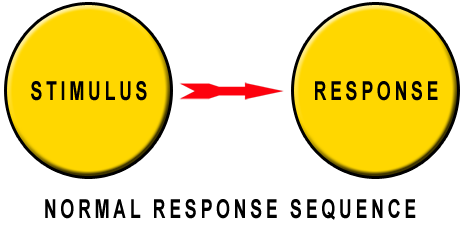
Without conscious interruption, many people live inside a very simple emotional pattern:
Stimulus. Response.
Something happens, and they react.
But that is not the only possible sequence.
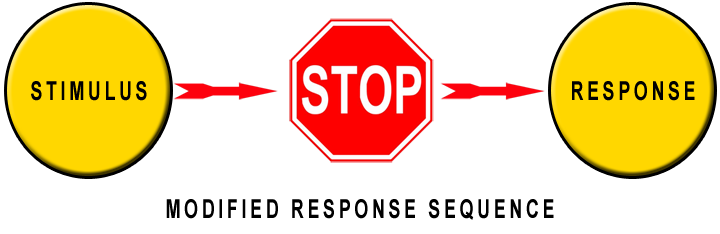
Once awareness enters, the pattern can begin to change:
Stimulus. STOP Method. Response.
That change is not small.
It is the difference between living at the mercy of conditioned reactivity and beginning to exercise conscious choice.
This chapter is helping you understand why that interruption is needed. The next part of the book will help you practice it more directly.
Understanding Fast Reaction Creates Compassion And Responsibility
When people begin to understand why they react so fast, two healthy things can happen at once.
First, compassion can increase.
You may begin to see that your angry reactivity is not simply random madness or proof that you are hopelessly flawed. You may begin to understand the role of conditioning, old pain, bodily activation, habit, exhaustion, and learned protection. That understanding can reduce shame and create a more honest starting point for change.
Second, responsibility can increase.
Once you understand the pattern more clearly, it becomes harder to pretend you are powerless before it. You may not control every trigger. You may not be able to stop every flash of emotion. But you can begin learning the pattern, interrupting the sequence, retraining the habit, and choosing differently.
That is the balance this book is aiming for.
Not blame without understanding.
Not understanding without responsibility.
Both.
Understanding helps you see why the reaction happens.
Responsibility helps you change what happens next.
The Real Goal Is Not Slower Emotion, But Better Interruption
It is worth ending with an important clarification.
The goal is not to become a person who never feels fast emotion.
Human beings are built for quick emotion.
The goal is not to remove all immediate feeling.
The goal is to improve what happens after the feeling begins.
Can you notice the activation?
Can you recognize the pattern?
Can you slow the story down?
Can you question the assumption?
Can you allow awareness to enter before the reaction becomes behavior?
Can you interrupt the sequence?
That is the work.
People react so fast because patterns are fast, conditioning is fast, bodily activation is fast, stories are fast, and habit is fast. But awareness can become faster too. Practice can become faster too. Conscious interruption can become more available too.
That is one of the great hopes of this book.
You do not need to remain trapped in the speed of your old reactions.
You can learn to catch them earlier.
You can learn to understand them more honestly.
And you can learn to create enough space to choose a better response.
That is where freedom begins.
Assignment
Step 1 – Identify Three Recurring Triggers
Write down three situations that regularly trigger anger in you. Be specific. Name the kind of event, behavior, tone, delay, or pattern that tends to activate you.
Step 2 – Describe Your Usual Reaction Sequence
For each trigger, describe what usually happens next. What do you feel in your body? What story do you start telling yourself? What do you usually say or do?
Step 3 – Look For The Pattern Beneath The Trigger
Ask yourself what older pattern, belief, fear, wound, or habit might be getting activated. What does this trigger seem to touch in you?
Step 4 – Identify The Fast Assumption
For each trigger, write down the immediate assumption you tend to make. Do you assume disrespect, rejection, attack, control, unfairness, or something else?
Step 5 – Reflect On What You Learned
Write a short paragraph about what you noticed. Did your anger seem to come only from the present moment, or did it appear to be activating an older pattern? What might change if you learned to interrupt the sequence earlier?
Chapter 5 - The Cost Of Uncontrolled Anger
Anger has a cost.
Sometimes the cost is immediate. A conversation goes badly. A relationship is damaged. A decision is made too quickly. A moment of frustration turns into words that cannot be taken back. A person says something in thirty seconds that creates consequences lasting thirty years.
Sometimes the cost is slower. Trust erodes. Respect fades. Health suffers. Bitterness settles in. The angry person becomes harder, colder, less patient, less clear, and less free. Over time, what first appeared to be isolated angry episodes becomes a pattern, and the pattern begins shaping a life.
That is one of the reasons this chapter matters so much.
Many people do not change their relationship with anger until they honestly face what it is costing them. As long as anger still feels useful, justified, powerful, or protective, it remains easy to defend. It remains easy to say, This is just who I am. It remains easy to blame the trigger, the other person, the pressure, the circumstance, or the world.
But cost has a way of revealing truth.
If something repeatedly leaves damage behind, then no matter how satisfying it felt in the moment, it deserves serious examination. If uncontrolled anger repeatedly harms relationships, judgment, health, peace, opportunity, and self-respect, then it is not enough to say, I was angry. The wiser question becomes, What is this anger doing to my life?
That is the question this chapter explores.
Uncontrolled Anger Damages Relationships
One of the first places anger leaves its mark is in relationships.
A person may think he is simply expressing himself, but others experience something different. They experience sharpness, unpredictability, accusation, harshness, contempt, intimidation, withdrawal, or emotional volatility. Even when the anger has some legitimate basis, the way it is expressed may still damage connection.
This is especially true in close relationships.
When anger is uncontrolled, people often stop feeling safe. They may begin choosing their words carefully, not because they are becoming more thoughtful, but because they are trying to avoid setting off another reaction. They may hide what they really think. They may withdraw emotionally. They may become defensive before the angry person has even said anything because they are already bracing for what usually comes next.
Trust begins to weaken in such environments.
And once trust weakens, a relationship changes.
The issue is not merely that arguments happen. Healthy relationships can survive disagreement. The issue is when anger becomes the atmosphere. The issue is when one person never knows what tone, outburst, coldness, or retaliation may appear next. The issue is when truth becomes harder to speak because anger has become too dominant in the emotional environment.
This can happen in marriages, friendships, families, workplaces, and almost any meaningful connection.
Anger does not have to be violent to be damaging.
It can wound through repeated sarcasm.
It can wound through constant criticism.
It can wound through contempt.
It can wound through dismissiveness.
It can wound through cold withdrawal.
It can wound through emotional unpredictability.
Sometimes the person expressing anger focuses so heavily on the trigger that he fails to see the relational cost of the way he is handling it. He thinks, I had every right to be angry. Perhaps so. But that is not the only question. Another question is, What did my anger do to this relationship?
That question often tells the deeper truth.
Uncontrolled Anger Clouds Judgment
Anger is not only emotional. It is cognitive. It changes how people see.
When anger takes over, judgment often narrows. Complexity gets reduced. Other perspectives seem less relevant. Certainty rises. The person becomes less interested in understanding and more interested in reacting, defending, winning, punishing, or proving.
This matters because many decisions made in anger are not good decisions.
A person sends the email too soon.
A person says the thing that should not have been said.
A person makes the threat that should not have been made.
A person walks away too fast.
A person escalates too quickly.
A person assumes too much.
A person hardens around a conclusion that later proves incomplete or false.
Anger often creates the illusion of clarity while actually reducing accuracy.
That is one of its most dangerous qualities.
Because anger feels certain, many people trust its judgment more than they should. They mistake intensity for insight. They mistake urgency for wisdom. They mistake force for correctness. But some of the worst decisions people make are made while feeling absolutely sure that they are right.
That is why a wise person learns to be cautious in the angry moment.
Not because anger never sees anything real.
But because anger often sees only part of the truth and tries to act as though it sees the whole thing.
The cost of clouded judgment can be enormous. A misread conversation can damage a marriage. A poorly timed outburst can damage a career. A rash decision can damage a family. A harsh reaction can damage a child’s trust. A fixed interpretation can keep a conflict alive far longer than it needed to last.
Clarity matters.
And uncontrolled anger often takes it away.
Uncontrolled Anger Creates Consequences That Outlast The Moment
One of the greatest lies anger tells is that the moment is everything.
In the angry moment, all attention goes to the present offense, present feeling, present reaction, present need to release, defend, confront, or retaliate. The future often shrinks. Consequences fade into the background. The person acts as though the emotional pressure of the current moment is the main thing that matters.
It is not.
Moments pass.
Consequences often remain.
A child may remember one angry scene for years.
A spouse may remember one cutting sentence long after the speaker has forgotten it.
A coworker may remember one public outburst that permanently changes professional trust.
A friend may remember one humiliating reaction and never quite feel the same closeness again.
A single angry act can create a long emotional shadow.
This is especially true when anger is expressed through humiliation, contempt, ridicule, intimidation, or betrayal of confidence. People do not easily forget moments in which they felt small, unsafe, exposed, or emotionally harmed by someone they trusted.
And the angry person often underestimates this.
He thinks, I was just upset.
She thinks, I did not mean it that way.
He thinks, I got over it quickly.
But the other person may not have gotten over it quickly.
That is why uncontrolled anger is so costly. It often treats the moment as temporary while creating effects that are anything but temporary.
This is one of the reasons long-term thinking matters so much in the subject of anger. A person who wants to live wisely must ask not only, What do I feel like doing right now? but also, What might this create that will still be here tomorrow, next month, next year, or ten years from now?
That question alone can prevent enormous damage.
Uncontrolled Anger Erodes Respect
Many people think anger earns respect because it looks forceful.
Sometimes it may produce compliance.
Sometimes it may produce silence.
Sometimes it may produce retreat.
But those are not the same as respect.
In many cases, uncontrolled anger actually erodes respect.
People may become more cautious around the angry person, but less admiring.
They may become quieter, but less trusting.
They may comply outwardly while withdrawing inwardly.
They may avoid confrontation, not because they respect the person more, but because dealing with the anger is exhausting, unpleasant, or unsafe.
Real respect is not built on volatility.
Real respect is built on character.
It is built on steadiness, integrity, judgment, honesty, consistency, and the ability to handle difficulty without collapsing into chaos. A person who repeatedly loses command of himself may still appear intense, but intensity is not the same thing as dignity.
This is especially important for leaders, parents, spouses, teachers, and anyone whose life affects others. If your anger regularly overrides your judgment, then over time people may stop trusting your leadership even if they still respond to your force.
The loss may be subtle at first.
People tell you less.
People hide more.
People stop bringing problems forward.
People protect themselves from your reactions.
People disengage.
And in that disengagement, respect has already begun to die.
That is a heavy cost.
Uncontrolled Anger Can Become Identity-Forming
Another cost of uncontrolled anger is that it can begin shaping identity.
What starts as repeated behavior eventually becomes reputation. What becomes reputation often becomes self-concept. Over time, the person is no longer seen as someone who sometimes becomes angry. He is seen as an angry person.
That identity can form both externally and internally.
Other people begin expecting anger.
They describe the person in terms of anger.
They organize themselves around the person’s anger.
And the person himself may begin to accept that description as simply true.
I am just an angry person.
I have always had a temper.
That is just how I am.
This is dangerous because once anger becomes identity, change feels harder. The pattern feels permanent. The person may stop imagining another way of being. He may even begin defending the anger because it has become part of his sense of self.
But anger is a pattern, not a destiny.
And yet, if left unexamined long enough, it can become identity-forming in ways that affect everything. It shapes relationships, expectations, self-image, memory, family atmosphere, and future behavior.
This is part of the cost.
A pattern that is repeated long enough does not remain a mere episode. It begins writing itself into the story of who you are.
That is not a small thing.
Uncontrolled Anger Harms The Angry Person
Often when people think about anger, they focus on what it does to others.
That matters.
But uncontrolled anger also harms the person carrying it.
It drains energy.
It disturbs peace.
It distorts perception.
It exhausts the body.
It keeps the nervous system activated.
It feeds rumination.
It invites bitterness.
It narrows emotional freedom.
It keeps a person tied to injury, offense, replay, resentment, and emotional agitation.
In some cases, the angry person suffers most of all.
He replays the conversation all day.
She imagines what she should have said.
He keeps building the grievance in his mind.
She remains internally activated long after the external event is over.
The body does not simply forget this.
The mind does not simply reset.
Uncontrolled anger can create an ongoing internal environment of stress, tension, and unrest. Even when the person believes he is hurting someone else with his anger, much of the fire burns inside him first.
This is one of the reasons resentment is so costly. Even when the object of resentment is not present, the angry person continues carrying the burden. The grievance lives in him. The replay happens in him. The poison circulates in him.
That is not freedom.
That is imprisonment.
And many people do not realize how much of their life energy is being consumed by anger until they begin imagining what it would feel like not to carry it so constantly.
Uncontrolled Anger Damages Health
The body is not separate from the emotional life.
Uncontrolled anger affects the body.
When anger rises, the body activates. That activation is not always a problem in short bursts, but repeated or chronic angry states can take a toll. Constant tension, chronic stress, elevated physiological arousal, shallow breathing, poor sleep, emotional exhaustion, and repeated nervous system activation all place demands on the body.
Even if a person does not think of himself as carrying chronic anger, frequent irritability, resentment, bitterness, hostility, and reactivity all create a bodily environment that is less peaceful and more strained.
This matters.
A life marked by repeated angry activation is not only emotionally costly. It is physically costly. The person may sleep worse. Recover worse. Think worse. Live in a body that rarely feels truly settled. Over time, this contributes to wear and tear that should not be dismissed lightly.
This chapter is not meant to be a medical lecture. It is simply meant to remind you that the cost of uncontrolled anger is not only philosophical or relational. It is embodied.
Your body pays for what your mind repeatedly rehearses.
Your nervous system pays for what your emotions repeatedly amplify.
Your health pays for what your life repeatedly normalizes.
That should not be ignored.
Uncontrolled Anger Teaches Others How To Relate To You
Anger does not only express something. It also trains people.
When a person repeatedly reacts with uncontrolled anger, others begin adjusting around it. Children learn how to survive around it. Spouses learn how to manage around it. Coworkers learn how to avoid it. Friends learn what subjects not to touch. Everyone nearby starts learning the rules.
Do not bring that up.
Do not challenge him there.
Do not say it that way.
Do not correct her directly.
Wait until he is in a better mood.
Do not be too honest.
Do not make the atmosphere worse.
That is one of the hidden costs of uncontrolled anger. It teaches people to become less real around you. It trains them to protect themselves rather than relate openly. It creates environments of caution, suppression, and emotional management.
That cost is especially tragic in close relationships because closeness depends on honesty. If your anger teaches people not to be honest with you, then your anger is damaging one of the most important conditions of love, trust, and intimacy.
This can happen even if the angry person believes he is simply being passionate, direct, or strong.
Others may be experiencing something very different.
They may be learning that openness is unsafe.
They may be learning that disagreement will be punished.
They may be learning that your emotions matter more than truth.
Once that lesson is learned, the relationship has already been diminished.
Uncontrolled Anger Makes The World Smaller
Another cost of uncontrolled anger is that it makes the world smaller.
It narrows attention.
It narrows possibility.
It narrows interpretation.
It narrows freedom.
An angry person often begins seeing life through the lens of offense, frustration, injustice, incompetence, disrespect, and irritation. Over time, this becomes a way of moving through the world. The person becomes easier to trigger, quicker to condemn, slower to soften, and less able to experience peace.
This is a terrible cost because it changes more than isolated moments. It changes atmosphere. It changes perception. It changes the emotional quality of daily life.
The person may not even realize how much has been lost.
Wonder fades.
Patience fades.
Humor fades.
Generosity fades.
Curiosity fades.
The world becomes more adversarial, more irritating, more exhausting, and more heavy.
This is what chronic uncontrolled anger often does. It does not just produce bad moments. It reshapes the person’s basic way of experiencing life.
That is a profound loss.
Uncontrolled Anger Often Prevents The Real Issue From Being Addressed
One of the strangest costs of uncontrolled anger is that it often prevents the real problem from being dealt with.
The person believes the anger is helping. He believes it is expressing truth, forcing attention, or making the point clear. Sometimes it may briefly do that. But often the method overwhelms the message.
The other person stops hearing the actual issue and starts reacting to the anger itself.
The conversation shifts from the problem to the explosion.
The relationship shifts from the issue to the damage caused by the delivery.
The focus shifts from what needed to be addressed to how badly it was handled.
In that sense, uncontrolled anger is often self-defeating.
It wants resolution but creates resistance.
It wants truth but creates defensiveness.
It wants change but creates fear or withdrawal.
It wants to be heard but makes hearing harder.
That is an immense cost because the angry person may keep believing the problem is that others refuse to listen, when part of the truth may be that his way of expressing anger is making real listening less likely.
This does not mean hard truths should never be spoken firmly.
It means the manner of expression matters.
If your anger repeatedly prevents the real issue from being addressed, then your anger is no longer serving the truth. It is getting in the truth’s way.
Uncontrolled Anger Damages Self-Respect
Perhaps one of the deepest costs of uncontrolled anger is what it does to self-respect.
A person may justify the reaction in the moment, but afterward something else often appears: regret.
I should not have said that.
I knew better.
That was not who I want to be.
I lost control again.
Why did I do that?
These moments matter because they reveal an internal cost. Even when no one else sees the full damage, the person sees it. He knows when he acted beneath his own standards. He knows when he let anger govern him. He knows when his reaction was not aligned with the kind of person he wants to be.
Repeated experiences like this weaken self-trust.
The person begins to doubt himself.
Will I lose control again?
Will I handle this badly again?
Can I trust myself when I get angry?
These are painful questions.
And over time they can eat away at dignity.
This is one reason the work of transforming anger matters so deeply. It is not only about having better relationships with others. It is about being able to live with yourself more honestly and more peacefully. It is about being able to look back at difficult moments and know that even when you felt anger, you handled it with greater awareness, greater steadiness, and greater integrity.
That kind of self-respect is worth protecting.
The Cost Is Often Greater Than The Cause
One of the clearest signs that anger is out of control is when the cost of the reaction becomes greater than the original offense.
A minor frustration leads to major conflict.
A small insult leads to deep damage.
A brief inconvenience leads to lasting bitterness.
A passing moment leads to long regret.
This happens often with uncontrolled anger. The initial trigger may be real but limited. The reaction expands the problem far beyond what it originally was. Instead of dealing with a manageable issue, the person creates a larger one.
That is why wise people learn to compare the size of the trigger with the size of the response.
Is the response proportionate?
Is it helping?
Is it worth the cost?
Will this matter tomorrow?
Will my reaction create a bigger problem than the one I am upset about right now?
These are essential questions.
Without them, people repeatedly sacrifice large things for small provocations. They trade peace, trust, dignity, and clarity for the temporary satisfaction of release.
That is a bad trade.
And yet it is made every day.
Facing The Cost Creates Motivation For Change
The purpose of this chapter is not to shame you.
It is to clarify what is at stake.
Uncontrolled anger has a cost. It damages relationships. It clouds judgment. It creates consequences that outlast the moment. It erodes respect. It can become identity-forming. It harms the angry person. It affects the body. It teaches others how to relate to you. It makes the world smaller. It often prevents the real issue from being addressed. And it can deeply damage self-respect.
That is a lot to lose.
But facing the cost has value.
As long as anger remains abstract, change can remain optional. As long as anger is defended as personality, passion, honesty, or strength, the deeper truth stays hidden. But when a person begins honestly seeing the damage, motivation begins to change.
I do not want to keep paying this price.
That thought matters.
It creates seriousness.
It creates willingness.
It creates the beginning of discipline.
Sometimes people do not change because they do not yet hate the cost enough. They still focus more on the satisfaction of the reaction than on the damage that follows it. But when the cost becomes undeniable, the desire to change becomes more real.
That is not a small turning point.
It is one of the places where transformation often begins.
The Goal Is Not To Never Feel Anger, But To Stop Letting It Run Your Life
This chapter ends with the same reminder that has appeared throughout this first part of the book.
The goal is not to never feel anger.
The goal is not emotional deadness.
The goal is not pretending that nothing matters.
The goal is not passivity.
The goal is not weakness.
The goal is to stop letting uncontrolled anger run your life.
It is to stop paying a price that is too high.
It is to stop allowing temporary emotional force to create lasting damage.
It is to stop sacrificing the long-term for the short-term release of reaction.
It is to become someone who can feel anger without being ruled by it.
That is possible.
But it becomes more possible when you see clearly what anger has been costing you.
That clarity matters.
Because when you finally see the cost honestly, you become much more ready to do the work required to change.
Assignment
Step 1 – Make A Cost Inventory
Write down the areas of life where anger may be costing you something. Include relationships, work, health, peace of mind, opportunities, trust, and self-respect.
Step 2 – Identify Specific Examples
For each area, write one or two specific examples of how uncontrolled anger has created damage, regret, distance, or loss.
Step 3 – Compare The Trigger To The Cost
Choose two of those examples and ask yourself whether the original trigger was worth the cost created by your reaction.
Step 4 – Identify Your Greatest Cost
Ask yourself where anger has cost you the most. What loss or pattern troubles you the most when you think about your history with anger?
Step 5 – Write A Commitment Statement
Write a short paragraph beginning with these words:
The cost of uncontrolled anger in my life has been too high because…
Then complete the paragraph honestly.
The purpose of this assignment is not to condemn yourself. It is to help you see clearly. Clear seeing is one of the foundations of real change.
INTRODUCTION TO PART II - INTERRUPTING THE REACTION
By this point in the book, the foundation has been laid.
You have seen that anger is real, but not always right. You have seen that it is often covering up something deeper. You have seen that people react quickly not only because of what is happening in the moment, but because old patterns, old stories, conditioning, stress, habit, and bodily activation are already in motion. You have also seen that uncontrolled anger carries a cost that is often far greater than people want to admit.
Now the book turns.
Understanding anger matters, but understanding alone is not enough.
A person can understand anger conceptually and still react badly in real life. A person can know that anger is layered, know that anger is often distorted, know that anger has consequences, and still say the wrong thing in the wrong tone at the wrong time. Knowledge matters, but what matters next is interruption.
That is what this part of the book is about.
If Part I helped you understand anger, Part II is designed to help you work with it in real time. This is where the book shifts from explanation to intervention. This is where you begin learning how to interrupt the movement from trigger to reaction. This is where anger stops being only something to analyze and becomes something to handle more consciously, more skillfully, and more effectively in the moment itself.
That shift is crucial.
Many people do not need more information about why anger is dangerous. They already know that. Many people do not need more reminders that anger can damage relationships, cloud judgment, and create regret. They have lived it. What they need is a way to break the sequence while it is happening.
They need a pause.
They need space.
They need a method.
They need a way to slow things down before the old pattern takes over and does what it has done so many times before.
That is what this part begins to provide.
One of the biggest problems with anger is not simply that it exists. The problem is that anger often moves faster than awareness. By the time the person realizes what is happening, the body is already activated, the story is already forming, the tone is already shifting, and the reaction is already underway. The whole sequence can unfold so quickly that it seems unavoidable.
But it is not unavoidable.
It can be interrupted.
That interruption may be brief. It may last only seconds. But those seconds matter. They may be the difference between damage and dignity. They may be the difference between old programming and new choice. They may be the difference between speaking from anger and speaking with awareness while anger is present.
That distinction is the heart of this section.
In the chapters that follow, we will look at the pause that changes everything. We will introduce the STOP Method as a practical framework for interrupting anger before it controls behavior. We will look at the role of the body, because anger is not just mental. We will look at the stories people tell themselves in the angry moment, because interpretation often drives reaction as much as feeling does. And we will look at the difference between consciously choosing a response and simply releasing a reaction.
All of that is practical.
All of that is necessary.
And all of that is learnable.
This is important to emphasize. The ability to interrupt anger is not reserved for a special category of people. It is not only for the naturally calm. It is not only for the emotionally gifted. It is not only for those who have never struggled. It is a skill. Like other skills, it can be developed. At first it may feel awkward, slow, unnatural, or difficult. That is normal. Old reactions are practiced reactions. Of course they feel easier. But what has been practiced can be replaced by something better if you are willing to slow down, pay attention, and keep working.
That is part of the larger hope of this book.
You are not trapped with your first impulse forever.
You are not required to live as a prisoner of your fastest reaction.
You are not doomed to keep repeating every old pattern just because it has become familiar.
Something different is possible.
But it does require willingness.
It requires honesty.
It requires discipline.
And it requires enough humility to admit that what feels natural in the angry moment is not always what is best.
That is not weakness.
That is wisdom.
This part of the book does not ask you to become passive. It does not ask you to stop caring. It does not ask you to ignore injustice, swallow truth, or silence yourself. It asks for something far more powerful than that. It asks you to become more governed. It asks you to create enough space between stimulus and response that you can act with greater clarity, greater strength, and greater intention.
That kind of strength is quieter than reactivity, but it is stronger.
It is stronger because it is chosen.
It is stronger because it sees more.
It is stronger because it does not allow anger to become the sole author of the moment.
That is where this part begins.
Not with perfection.
Not with emotional numbness.
But with the possibility of interruption.
And in many lives, that possibility changes everything.
Chapter 6 - The Pause That Changes Everything
There is a moment in every anger sequence that matters more than most people realize.
It is the moment between what happens and what you do next.
Most people do not notice this moment very often. They experience the trigger, the surge, the thought, the urge, and then the reaction. It happens so quickly that it feels like one continuous event. Something is said, something is done, something is felt, and the response seems to come almost automatically.
That is exactly why this chapter matters.
If you want to turn angry reactions into conscious responses, you must learn to see and use the pause between stimulus and response. That pause may be brief. It may last only a few seconds. But those few seconds can change the entire direction of a conversation, a relationship, a decision, or even a life.
The pause is where choice begins.
Without the pause, anger often runs on old programming. The trigger appears, the body activates, the story forms, the emotion rises, and the reaction follows. The whole sequence feels inevitable because there was never enough space for awareness to enter.
With the pause, something different becomes possible.
The body may still activate.
The anger may still be real.
The issue may still matter.
But there is now enough room for thought, observation, restraint, and conscious choice to begin doing their work.
That room changes everything.
Most Angry Reactions Happen Too Fast
One of the central problems with anger is speed.
Anger often arrives with urgency. It wants movement. It wants speech. It wants action. It wants to do something now. It does not naturally encourage patience, reflection, or restraint. In fact, it often treats delay as weakness or failure.
This is one reason so many people react in ways they later regret.
They did not pause.
They did not slow the moment down.
They did not create enough distance between feeling and behavior.
Instead, they moved directly from activation to expression. They said the sharp thing, sent the angry message, made the accusation, slammed the door, hardened the tone, withdrew in contempt, or pushed forward without clarity.
Then later, when the emotional surge settled, they saw more clearly.
I should not have said that.
I reacted too quickly.
That was not wise.
I made it worse.
These moments of regret are common not because people are always cruel or careless, but because anger often moves faster than awareness.
The pause interrupts that speed.
It does not erase the anger.
It does not deny the trigger.
It simply creates the first condition required for a better response.
Time.
Space.
Distance.
A chance not to be ruled by the first impulse.
The Pause Is Small, But Powerful
Many people underestimate the power of a short pause because they imagine change must begin with something large. They think transformation requires long reflection, major calm, or complete emotional control.
It does not begin there.
Often it begins with something much smaller.
A breath.
A moment of silence.
A decision not to speak yet.
A choice not to send the message yet.
A willingness to wait ten seconds before responding.
A conscious recognition that anger is rising and that this is not the time to move automatically.
That is the pause.
It is small.
But it is powerful because it breaks momentum.
Anger often depends on momentum. Once it starts moving, it wants to keep moving. The body surges, the mind justifies, the emotion intensifies, and the reaction gathers force. The longer that sequence continues without interruption, the harder it becomes to change course.
The pause breaks that sequence before it hardens.
It disrupts the automatic path.
It inserts awareness where there would otherwise be only reaction.
That is why even a brief pause matters so much. It may not solve the whole issue. It may not fully calm the emotion. It may not immediately reveal the perfect response. But it prevents the old pattern from taking full control quite so quickly.
That is a major victory.
Without the pause, anger often follows a simple pattern:
Stimulus. Response.
Something happens, and the person reacts.
That pattern feels natural because it is familiar. It may even feel honest because the response comes quickly and intensely. But natural does not always mean wise, and familiar does not always mean healthy.
There is another possibility.
Stimulus. STOP Method. Response.
That is what this chapter introduces.
Not the full method yet, but the opening doorway into it.
The pause is that doorway.
The Pause Creates Choice
Choice requires space.
If there is no space between emotion and behavior, then what looks like choice is often only impulse wearing the costume of choice. The person may believe he is deciding, but often he is simply being carried by the strongest immediate force in the moment.
The pause changes that.
When you pause, even briefly, you move from automaticity toward awareness.
You begin to notice.
I am getting angry.
My body is tightening.
My voice wants to rise.
I am telling myself a story.
I want to react right now.
This matters.
That kind of noticing is not yet a finished response. But it is the beginning of one. It is the moment in which the person starts becoming present inside the anger instead of simply being carried by it.
That presence creates options.
Maybe I should ask a question instead of making an accusation.
Maybe I should wait before I answer.
Maybe I should lower my voice.
Maybe I should step away for a minute.
Maybe I should say less right now, not more.
Maybe I should slow down enough to understand what I am really reacting to.
These options do not usually appear when the person is moving too fast. They appear when the pause creates enough space for them to become visible.
That is why the pause is so powerful.
It does not guarantee wisdom.
It makes wisdom possible.
The Pause Does Not Make You Weak
Some people resist the pause because they associate it with weakness.
They think pausing means backing down.
They think pausing means giving in.
They think pausing means letting the other person win.
They think pausing means suppressing truth, silencing themselves, or losing force.
That is not what the pause means.
The pause does not remove strength.
It governs strength.
It does not erase conviction.
It disciplines conviction.
It does not make a person passive.
It makes a person more deliberate.
There is a major difference between losing your edge and gaining command. The pause is not about becoming less powerful. It is about becoming powerful in a more useful way.
An uncontrolled explosion may look forceful, but much of that force is wasted. It creates damage, confusion, fear, defensiveness, and regret. It may express intensity, but intensity alone is not mastery.
The pause allows force to become governed.
The person can still speak firmly.
The person can still set a boundary.
The person can still confront.
The person can still tell the truth.
The difference is that now the response is more likely to be aligned with purpose instead of merely aligned with impulse.
That is not weakness.
That is strength under command.
The Pause Protects You From The First Story
When anger rises, the mind often tells a fast story.
They disrespected me.
They did this on purpose.
They never care.
This is unfair.
I need to deal with this right now.
Sometimes that first story is true.
Sometimes it is partly true.
Sometimes it is badly distorted.
The problem is that anger often pushes you to act before you know which is the case.
The pause protects you from becoming a servant of the first story.
It allows you to say, at least internally, Wait a moment. What am I telling myself right now? How sure am I? What else might be going on? What facts do I actually know? What assumptions am I making?
Those questions become possible only when the moment slows down.
Without the pause, the first story often becomes the ruling story. It feels certain, urgent, and self-justifying. The person reacts from it as though it were established truth.
With the pause, the story becomes available for examination.
That does not mean you must distrust yourself completely. It means you do not hand total authority to the first interpretation that arrives in a flooded emotional state.
That is wise.
The Pause Gives The Body Time To Settle
Anger is not only mental. It is physical.
The heartbeat changes.
The muscles tighten.
The jaw sets.
Breathing shifts.
Heat rises.
The body prepares for confrontation or defense.
In the angry moment, this bodily activation can make everything feel more urgent and more certain than it really is. The person feels charged, and that charge pushes toward immediate movement. If nothing interrupts that physical escalation, the body can help drive the whole reaction forward.
The pause helps here too.
A short pause may allow the person to take one deeper breath.
A short pause may reduce the intensity by even a small amount.
A short pause may allow the shoulders to drop, the jaw to loosen, the voice to soften slightly, or the body to move from full automatic activation toward something more governed.
That matters because a less flooded body supports a clearer mind.
The pause does not always eliminate physical activation immediately. But it can begin reducing the intensity enough that the person is no longer completely fused with it.
This is one reason a wise anger response often begins with slowing down physically, not just thinking differently. The body needs room too. The pause creates that room.
A Short Delay Can Prevent Long Regret
This may be one of the simplest and most practical truths in the whole subject of anger.
A short delay can prevent long regret.
Ten seconds can prevent ten years of damage.
A few minutes can preserve a conversation.
An hour can keep an unnecessary rupture from happening.
One unsent message can save enormous trouble.
One withheld sentence can protect trust.
One decision to pause can keep a difficult moment from turning into a defining wound.
The tragedy is that people often do not realize this until afterward. They look back and see that the thing they most regret was often not the anger itself, but the speed with which they acted on it.
If only I had waited.
If only I had said less.
If only I had stepped back.
If only I had not answered right away.
These are painful realizations, but they point to a very practical truth. Many anger disasters are not caused only by emotion. They are caused by unpaused emotion.
That means many anger disasters can be prevented not by eliminating feeling, but by delaying reaction long enough for awareness to enter.
This is hopeful.
It means you do not need perfect control to begin changing your life.
You need interruption.
You need enough pause to keep the first surge from becoming the final act.
The Pause Is Where Responsibility Begins
Many people speak as though anger simply takes over and there is nothing to be done.
Sometimes they say it directly.
I just snapped.
I lost it.
I could not help it.
Sometimes there is honesty in those statements. The person really does feel carried by something powerful. But if the person stays there, responsibility becomes very difficult to build. Change becomes less likely because the whole event is treated as though it were outside meaningful influence.
The pause changes that.
It is the place where responsibility begins to re-enter the moment.
Not blame.
Not shame.
Responsibility.
Responsibility begins when a person sees that there is a point, however brief, at which awareness can enter and a different choice can begin to form. That point may have been missed many times in the past. It may still be hard to access. But if it exists, then growth becomes possible.
That is why the pause matters so much. It is the bridge from emotional inevitability to personal response-ability.
It is the place where the person begins to say, Something is happening in me, and what I do next matters.
That sentence changes everything.
The Pause Often Feels Unnatural At First
Because many people are used to reacting quickly, the pause often feels awkward in the beginning.
It may feel artificial.
It may feel forced.
It may feel unsatisfying.
It may even feel dishonest.
The person may think, This is not me. This is not natural. I should just say what I feel.
That resistance is normal.
Old patterns usually feel more natural than new ones, even when the old patterns keep creating pain. Quick anger may feel honest simply because it is familiar. Immediate expression may feel authentic simply because it is practiced. But practice and authenticity are not always the same thing.
A person can be deeply practiced in reactivity.
That does not mean reactivity is the highest form of truth.
Sometimes the more honest response is the one that comes after the pause, not before it. Sometimes the first impulse is only the surface. Sometimes what feels natural is only what has been repeated most often. Sometimes a better response feels unnatural at first because it is new, not because it is false.
This is important to remember.
Do not reject the pause simply because it feels unfamiliar.
The pause may feel unnatural at first precisely because you are disrupting an old habit that has been running for years.
That is not failure.
That is growth beginning.
The Pause Makes Better Responses Possible, Not Perfect
It is important not to romanticize the pause.
The pause does not guarantee that you will instantly know the perfect thing to say.
It does not guarantee that all anger will disappear.
It does not guarantee that every conversation will go well.
It does not guarantee that you will never misread a situation again.
The pause is not magic.
It is a doorway.
It makes better responses possible.
Sometimes the better response will be calm speech.
Sometimes the better response will be silence.
Sometimes the better response will be a question.
Sometimes the better response will be leaving the room.
Sometimes the better response will be saying, I need a minute.
Sometimes the better response will be returning later.
Sometimes the better response will still be firm and difficult, but it will be more grounded and less destructive.
That is enough.
The goal is not perfection.
The goal is improvement.
The goal is to create enough interruption that the old reaction is no longer the only thing available.
That alone can change a life.
The Pause Can Be Practiced In Small Moments
Many people think they will learn to pause in major anger moments by sheer force of will when those moments arrive.
Usually that is not how it works.
The pause becomes more available in major moments when it is practiced in smaller ones.
Practice pausing when interrupted.
Practice pausing when mildly frustrated.
Practice pausing when traffic slows down.
Practice pausing when someone says something slightly irritating.
Practice pausing before answering a message that annoys you.
Practice pausing when you feel the first shift in tone inside yourself.
These small moments matter because they train the nervous system and the mind to recognize that interruption is possible. They teach you that anger does not have to move directly into reaction. They help build familiarity with the space between stimulus and response.
Then, when larger moments come, the pause is not a completely foreign act. It is still difficult, but it is no longer entirely unfamiliar.
This matters because growth in anger rarely happens only in dramatic moments. It happens in repeated practice. It happens when the person keeps choosing interruption often enough that awareness becomes more available and reactivity becomes less automatic.
That is how the pause gets stronger.
The Pause Is The Gateway To The STOP Method
This chapter is about the pause because the pause is the doorway into everything that follows.
You cannot think clearly if you never pause.
You cannot observe honestly if you never pause.
You cannot choose consciously if you never pause.
You cannot proceed wisely if you never pause.
That is why the STOP Method begins where it does.
It begins with stopping.
Not because stopping solves everything by itself, but because nothing else in the method becomes possible without it.
The stop is the interruption.
The pause is the opening.
The pause says, This moment matters too much to hand over entirely to the first surge.
That is a powerful decision.
And it is the first step in turning anger from an unconscious driver into a consciously handled force.
The Goal Is To Become Someone Who Can Pause
At a deeper level, this chapter is about identity as much as technique.
It is not only teaching you to use a pause once in a while.
It is inviting you to become someone who can pause.
Someone who does not have to speak the instant anger appears.
Someone who does not have to act from the first story.
Someone who does not confuse immediate impulse with truth.
Someone who can create space for awareness, even under pressure.
Someone who can feel anger without becoming fully possessed by it.
That kind of person is not weak.
That kind of person is becoming free.
And that freedom begins, very often, in a moment so small that most people overlook it.
A pause.
A breath.
A decision not to react yet.
That moment may not look impressive from the outside.
But from the inside, it can be the beginning of a different life.
Assignment
Step 1 – Identify Three Low-Stakes Situations
Write down three common situations in which you feel mild frustration or irritation. Choose low-stakes situations where you can practice pausing without major pressure.
Step 2 – Practice A Deliberate Pause
The next time one of those situations happens, do not react immediately. Take one breath. Wait a few seconds. Notice what is happening in your body and mind before you speak or act.
Step 3 – Record What You Noticed
After each practice moment, write down what happened. What did your body want to do? What story did your mind start telling? What changed when you paused, even briefly?
Step 4 – Identify One High-Stakes Situation
Write down one situation in your life where anger tends to rise quickly and the stakes are higher. Do not try to solve it yet. Just identify it and imagine what it would mean to bring a pause into that moment.
Step 5 – Write A Personal Pause Commitment
Complete this sentence in writing:
When anger rises, I want to remember that the pause matters because…
The purpose of this assignment is to help you stop thinking of the pause as a theory and start experiencing it as a practical tool. The more real the pause becomes to you, the more available it will be when you need it most.
Chapter 7 - STOP: A Practical Method For Interrupting Anger
In the last chapter, we focused on the pause.
That pause matters because it creates the first opening between anger and action. It interrupts momentum. It slows the sequence. It makes awareness possible. Without that pause, angry reactions often move too fast for truth, discipline, and wisdom to do their work.
Now we take the next step.
The pause is the doorway. The STOP Method is what helps you walk through it.
This chapter introduces the STOP Method as a practical framework for interrupting anger before it controls behavior. It is simple enough to remember in a heated moment, but powerful enough to change the entire direction of what happens next. It does not require perfection. It does not require the absence of anger. It does not require emotional numbness. It requires willingness, awareness, and practice.
The STOP Method gives structure to the pause.
Instead of simply telling yourself to calm down, which is often not very helpful, the STOP Method gives you something specific to do. It helps you shift from automatic reactivity toward conscious response. It gives your mind and body a sequence to follow when anger begins rising faster than judgment.
The STOP Method is:
S – Stop
T – Think
O – Observe
P – Proceed
These four words are simple.
Their impact can be profound.
When practiced consistently, the STOP Method can help you interrupt the old pattern of stimulus and reaction and replace it with something far more useful: stimulus, awareness, examination, and conscious choice.
That is what this chapter is about.
Why A Method Helps
Many people understand anger in theory but still react badly in practice.
They know anger can be destructive.
They know they should pause.
They know they should not always say the first thing that comes to mind.
They know they should be more careful.
But in the heat of the moment, all of that knowledge can disappear.
Why?
Because in an angry moment, people often do not need more general advice. They need a structure. They need something concrete enough to remember while their body is activated and their mind is racing. They need something simple enough to use under pressure.
That is where a method becomes valuable.
A method reduces vagueness.
A method gives direction.
A method offers a path when emotion is trying to take over.
The STOP Method is not meant to be mechanical in a cold or lifeless way. It is meant to be stabilizing. It gives you a process to lean on until conscious response becomes stronger and more natural.
In that sense, the STOP Method is both practical and freeing.
It is practical because it tells you what to do.
It is freeing because it keeps the first impulse from becoming the final act.
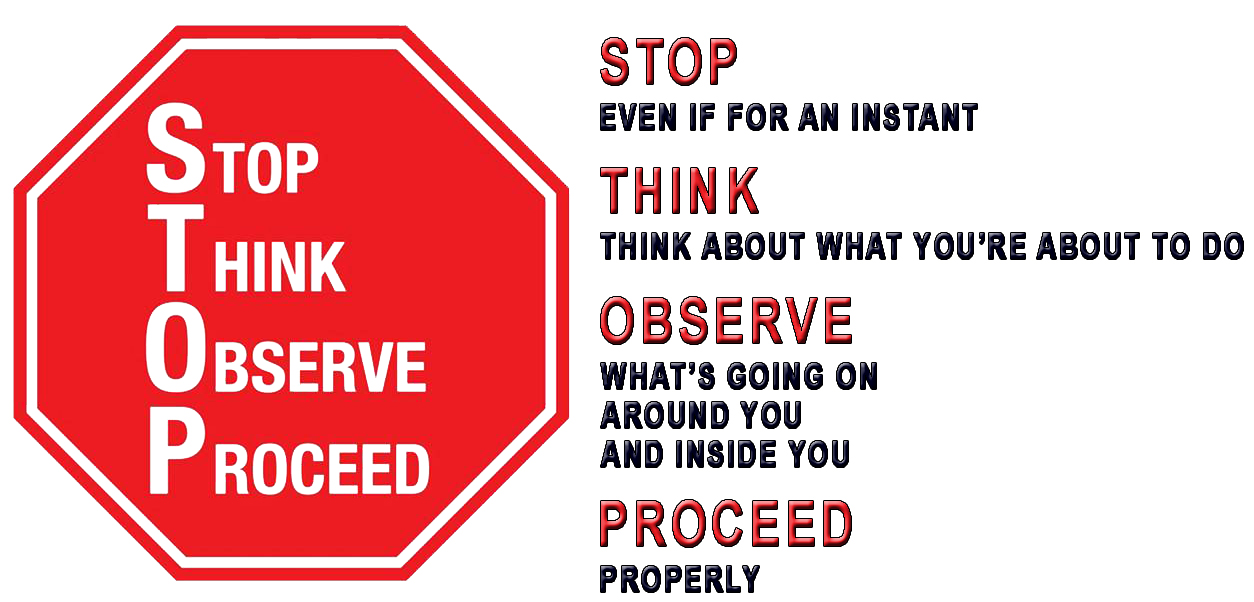
The visual matters because anger often makes the mind rush. The STOP Method gives the mind something steady to return to.
Stop.
Think.
Observe.
Proceed.
That sequence may look simple on the page, but in real life it can prevent enormous damage.
The STOP Method Changes The Sequence
Without conscious interruption, anger often moves along a very short path.
Something happens.
You react.
That path is familiar, fast, and dangerous.
The STOP Method inserts awareness into that sequence.
Instead of this:
Stimulus. Response.
The pattern becomes this:
Stimulus. STOP Method. Response.
That one change is the core of the whole book.
It is the difference between being driven and becoming conscious.
It is the difference between old programming and present awareness.
It is the difference between simply releasing anger and actually handling it.
This does not mean the STOP Method removes emotion. It means the STOP Method gives you a way to work with emotion before emotion works on you.
That is why it matters so much.
S – Stop
The first step is the most basic, and the most important.
Stop.
This means interrupt the automatic movement toward reaction.
Do not say the next thing yet.
Do not send the message yet.
Do not raise the volume yet.
Do not escalate yet.
Do not decide yet.
Do not assume that because anger has arrived, action must immediately follow.
Stopping is not denial.
Stopping is not weakness.
Stopping is not pretending nothing matters.
Stopping is the refusal to let the first surge control the whole moment.
This is the beginning of command.
The stop may be brief. It may last only a breath or two. It may be the decision to stay silent for five seconds instead of speaking instantly. It may be the decision to put the phone down. It may be the decision not to answer immediately. It may be the decision to say, “Give me a minute.” It may be the decision to leave the room long enough to prevent the reaction from hardening into behavior.
The exact form may vary.
The principle does not.
The stop interrupts momentum.
Without the stop, the rest of the STOP Method cannot happen. There is no real thinking, no real observing, and no real choosing if the person never interrupts the first automatic surge.
That is why this first step matters so much. It creates the opening in which the rest of the method becomes possible.
Stopping says, This moment matters too much to hand over to my fastest reaction.
That is a powerful sentence.
It is the beginning of mature self-government.
Stopping Does Not Mean Suppressing
Some people misunderstand the first step because they associate stopping with unhealthy suppression.
They think that if they do not express the anger immediately, they are stuffing it down, betraying themselves, or being fake.
That is not what stopping means.
Suppression says, I am not angry.
Stopping says, I am angry, and that is exactly why I need not react automatically.
Suppression disconnects you from what you feel.
Stopping helps you stay connected while gaining control.
Suppression tries to bury the emotion.
Stopping creates enough space to understand and guide the emotion.
This is an important difference.
The STOP Method does not ask you to lie to yourself about what you feel. It asks you not to let feeling become behavior without awareness. That is not emotional dishonesty. That is emotional discipline.
And emotional discipline is a form of strength.
T – Think
Once you have stopped, even briefly, the next step is to think.
This step matters because anger often rushes past thought and moves directly into story, certainty, and reaction. The mind starts making meaning quickly, often without enough examination. Thinking interrupts that process by asking better questions.
In an angry moment, thinking may include questions like these:
What is actually happening here?
What am I angry about?
What story am I telling myself?
What am I assuming?
How certain am I that my interpretation is correct?
What do I know for sure?
What else might be true?
What am I about to do, and what might that create?
These questions are not signs of indecision or weakness. They are signs of intelligence under pressure.
Thinking helps slow down the speed with which anger turns emotion into certainty. It gives the mind a chance to move from raw interpretation toward clearer understanding. It brings analysis into a moment that otherwise might be ruled entirely by impulse.
This does not mean endless overthinking.
It means enough thinking to prevent foolish reaction.
Sometimes the most important act of thinking in an anger moment is simply asking, What will happen if I say or do what I feel like saying or doing right now?
That one question alone can save relationships, careers, reputations, peace of mind, and self-respect.
Thinking restores consequence.
And consequence matters.
Thinking Is Not Talking Yourself Out Of Truth
The goal of thinking is not to neutralize every angry feeling.
It is not to automatically conclude that you are wrong.
It is not to dismiss yourself.
It is not to explain away every offense.
The goal is to become more accurate.
Sometimes thinking will confirm that something really is wrong.
Sometimes thinking will reveal that your first interpretation was incomplete.
Sometimes thinking will show that the issue is real, but your planned reaction is not wise.
Sometimes thinking will expose a story that anger made feel obvious but that truth does not support.
In every case, thinking improves the quality of what follows.
It helps you separate emotional intensity from factual certainty.
It helps you distinguish between what is known and what is assumed.
It helps you respond from truth rather than from the speed of the first story.
That is why it is such an essential step in the STOP Method.
O – Observe
After stopping and thinking, the next step is to observe.
Observation is where the method deepens.
Thinking asks questions about the situation.
Observing pays attention to what is happening both outside and inside.
What is my body doing right now?
How intense is this anger?
Where do I feel it?
What tone is rising in me?
What is happening in my face, jaw, voice, posture, breathing?
What emotion might be underneath the anger?
What exactly triggered me?
What pattern does this resemble?
What is happening in the room, in the relationship, in the conversation?
Observation creates awareness without immediate judgment.
It turns the person into a witness of the moment instead of merely a participant being dragged through it. That shift is powerful because people often become less dangerous the moment they begin accurately observing what is happening in them.
I am clenching my jaw.
My breathing is shallow.
I am assuming the worst.
This is touching an old wound.
I feel more hurt than I first realized.
I want to punish, not solve.
My voice is about to rise.
This is less about the present than I thought.
These kinds of observations matter.
They reveal the true shape of the moment.
They help uncover what anger is covering up.
They expose old programming.
They make the internal process visible.
And once the internal process becomes more visible, it becomes easier not to be ruled by it.
That is why observation is such an essential part of conscious anger work.
Observation Requires Honesty
Observation is not helpful unless it is honest.
If you observe only what flatters your position, you are not really observing.
If you notice only the other person’s flaws and not your own rising intensity, you are not really observing.
If you use observation only to build a stronger case for why you are right, you are not really observing.
Real observation includes yourself.
It includes your body.
It includes your assumptions.
It includes your wounds.
It includes your patterns.
It includes your motives.
It includes your urge to attack, withdraw, punish, defend, or prove.
This is not self-condemnation.
It is self-honesty.
And self-honesty is one of the strongest foundations of self-mastery.
Without honest observation, anger remains too vague, too fast, and too justified to be transformed. With observation, the anger becomes more visible, more understandable, and more workable.
That matters enormously.
P – Proceed
Only after stopping, thinking, and observing do you proceed.
This is the step many people take first.
That is the problem.
They proceed before they have stopped.
They proceed before they have thought.
They proceed before they have observed.
The result is reaction.
Proceeding wisely means choosing the response that best fits the truth, the situation, and the long-term outcome you actually want.
Sometimes proceeding means speaking directly but calmly.
Sometimes it means asking a clarifying question.
Sometimes it means saying less, not more.
Sometimes it means setting a boundary.
Sometimes it means taking a longer break before continuing.
Sometimes it means acknowledging hurt instead of leading with anger.
Sometimes it means recognizing that no response is needed right now.
Sometimes it means returning later with greater clarity.
Proceeding does not mean moving timidly.
It means moving deliberately.
This is where the whole STOP Method comes together. Stopping interrupts the rush. Thinking examines meaning. Observing reveals what is happening. Proceeding turns that awareness into action.
This is where anger begins to become consciously handled rather than merely expressed.
And this is where a person begins developing a new relationship with power.
Not power as explosion.
Power as governed response.
Proceeding Is About Alignment
A wise response is not merely the response that feels good in the moment.
It is the response that aligns with truth, purpose, and long-term consequence.
That alignment matters.
What response tells the truth without unnecessary destruction?
What response protects dignity?
What response addresses the real issue instead of only the emotional surge?
What response would I still respect tomorrow?
What response fits the person I want to become?
Those are the kinds of questions that help guide the Proceed step.
Without them, proceeding becomes just another name for acting on impulse. With them, proceeding becomes deliberate action.
That is the goal.
Not to freeze.
Not to avoid.
Not to collapse.
But to act from awareness instead of being driven by the first emotional wave.
The STOP Method Works In Real Life
The STOP Method is practical because it can be used almost anywhere anger appears.
In a marriage.
In parenting.
At work.
In traffic.
With strangers.
With family.
In political conversations.
In texts and emails.
In self-talk.
That last one matters too.
The STOP Method is not only for outward anger. It can also interrupt internal attack.
You make a mistake.
The self-anger begins.
The story forms: I always do this. What is wrong with me?
This is exactly where the STOP Method can help.
Stop.
Do not let the self-attack run automatically.
Think.
What actually happened? What am I assuming? What is true here?
Observe.
What am I feeling underneath this? Shame? fear? disappointment? exhaustion?
Proceed.
What response would be honest, responsible, and constructive instead of punishing?
This is one of the strengths of the STOP Method. It is not limited to one type of anger. It is a general method of conscious interruption that can be applied wherever anger tries to take over.
The STOP Method Is Simple, But Not Easy
This is important to say clearly.
The STOP Method is simple.
That does not mean it is easy.
When anger rises strongly, even a simple method can be hard to use. The body may resist it. The ego may resist it. The habit may resist it. The old pattern may say, Forget this. I already know what is happening. I need to act now.
That resistance is normal.
Do not mistake resistance for proof that the method does not work.
More often, resistance is proof that the method is interrupting something old and deeply practiced.
The STOP Method may feel unnatural at first.
That is because anger has usually had a head start.
The old reaction has often been rehearsed for years.
The STOP Method is new.
It needs repetition.
It needs willingness.
It needs practice in small moments and large ones.
Over time, what once felt awkward can become more available. The steps begin to appear sooner. Awareness starts arriving faster. The pause becomes more natural. The reaction loses some of its old inevitability.
That is how change happens.
Not all at once.
By repetition.
By practice.
By returning to the method enough times that a new pathway begins forming.
The STOP Method Protects What Matters Most
One of the best ways to understand the value of the STOP Method is to ask what it protects.
It protects relationships from unnecessary damage.
It protects truth from being buried under explosion.
It protects judgment from being clouded by urgency.
It protects dignity.
It protects self-respect.
It protects long-term goals from short-term reaction.
It protects clarity.
It protects trust.
It protects the possibility of real resolution.
All of that matters.
Anger often promises power while creating loss.
The STOP Method helps prevent that loss.
It does not make difficult conversations disappear.
It does not remove conflict from life.
It does not guarantee agreement.
But it helps preserve what anger so often destroys when it goes ungoverned.
That is one reason it belongs at the center of this book.
The STOP Method Can Become A Way Of Living
At first, the STOP Method may feel like something you use only in moments of obvious anger.
That is a good place to begin.
But over time, it can become more than an emergency tool. It can become a way of living with greater consciousness.
Stop before reacting.
Think before concluding.
Observe before assuming.
Proceed with intention.
That pattern is useful far beyond anger. It improves communication, decision-making, conflict, self-awareness, and emotional steadiness. It is a method for staying present when emotion wants to rush the moment.
That is why it is so powerful.
It is not merely about anger control.
It is about conscious living under pressure.
And conscious living under pressure is a major part of what emotional maturity looks like.
Sometimes readers benefit from seeing the sequence again after they understand it more deeply.
Stop.
Think.
Observe.
Proceed.
That is the method.
Simple.
Direct.
Practical.
Powerful.
The Goal Is Not To Be Perfect, But To Interrupt More Often
No one uses the STOP Method perfectly every time.
That is not the standard.
The standard is progress.
Can you interrupt one reaction this week that you would have fed automatically last month?
Can you pause once where you once would have exploded?
Can you ask one question where you once would have made one accusation?
Can you notice one deeper feeling where you once would have seen only anger?
Can you choose one wiser response where you once would have repeated the old pattern?
That is real change.
And it matters.
Every time you use the STOP Method, you strengthen a different possibility inside yourself. You prove that anger is not the sole author of the moment. You practice conscious power instead of automatic release. You build the conditions for a different kind of life.
That is what this book is aiming toward.
Not perfection.
Not passivity.
Not denial.
But increasing freedom from the rule of your first angry reaction.
The STOP Method is one of the clearest and most practical ways to build that freedom.
Assignment
Step 1 – Write Out The STOP Method By Hand
Write these four steps on paper:
Stop
Think
Observe
Proceed
Then briefly define each one in your own words.
Step 2 – Apply The STOP Method To Three Past Situations
Choose three recent situations in which anger rose. For each situation, write what happened and then walk through how the STOP Method could have been used.
Step 3 – Create A Personal Reminder Phrase
Write a short phrase you can use in angry moments to remind yourself to use the STOP Method. Examples might include:
Pause first.
Do not give the first reaction control.
Use the STOP Method now.
Step 4 – Identify Which Step Is Hardest For You
Ask yourself which part of the STOP Method is most difficult for you right now. Is it stopping, thinking, observing, or proceeding wisely? Write down why.
Step 5 – Practice The STOP Method In One Real Situation
In the next few days, use the STOP Method in one real moment of irritation, frustration, or anger. Afterward, write down what happened and what changed because you used it.
The purpose of this assignment is to help the STOP Method move from concept to practice. The more often you use it, the more available it becomes when you need it most.
Chapter 8 Calming The Body Before You Use The Mind
Anger does not begin only in the mind.
It happens in the body too.
The jaw tightens. The chest hardens. The breath shortens. The stomach knots. The face warms. The pulse rises. Muscles prepare. Energy surges. The whole system starts moving toward action before a person has fully thought through what is happening.
That is one of the reasons anger can feel so convincing.
It is not just a thought.
It is a state.
And if you do not understand that, you may try to solve an embodied problem with words alone.
That rarely works well.
Many people think that if they could just think more clearly in an angry moment, they would handle anger better. Clear thinking does matter. But when the body is fully activated, clear thinking is often harder to access. The mind does not operate in isolation from the body. A dysregulated body often produces a dysregulated thought process. It pushes interpretation toward danger, urgency, attack, defense, blame, and certainty. It narrows patience. It reduces flexibility. It makes the first story feel more believable and the first reaction feel more necessary.
That is why this chapter matters.
Before you use the mind well, it often helps to calm the body.
That does not mean you must become perfectly relaxed before making any decision. It means that if anger has driven your body into a strong reactive state, then helping the body settle even a little can make a great difference in the quality of what happens next.
This chapter is about that difference.
Anger Is A Whole-Body Experience
A person does not just think anger.
A person experiences anger physically.
That physical dimension matters because the body often registers anger before the mind has fully named it. You may feel the tightening, heat, restlessness, pressure, or agitation before you have consciously said to yourself, I am getting angry.
That early bodily activation is one reason anger can move so fast. The body is already preparing for confrontation while the mind is still catching up.
This can happen in obvious ways.
Your voice gets louder.
Your breathing gets shallower.
Your hands tense.
Your face hardens.
You lean forward.
You start moving more sharply.
But it can also happen in quieter ways.
You become still and rigid.
You go cold.
Your stomach drops.
Your chest tightens.
Your shoulders lift.
Your tone flattens.
Your body prepares for battle, withdrawal, or self-protection even if very little has been said out loud.
This matters because people often miss the early warning signs. They imagine anger begins at the moment of speech or behavior, when in reality it often begins much sooner in the body. If you learn to notice anger where it first starts to gather physically, you gain access to the moment earlier. That earlier awareness gives you more room to interrupt the sequence before it becomes harder to control.
The body often knows first.
That is not a weakness.
It is information.
A Dysregulated Body Pushes Toward Fast Reaction
When the body becomes highly activated, the whole system begins pushing toward speed.
Speed in breathing.
Speed in thought.
Speed in interpretation.
Speed in speech.
Speed in action.
That speed creates danger because speed tends to favor old patterns over conscious response. A person in a strongly activated state is more likely to jump to conclusions, assume intention, exaggerate threat, misread tone, harden around a story, and act before clarity has fully formed.
This is not only because the person lacks character or discipline. It is also because the body is signaling urgency.
The body says, Something is wrong. Move now.
Sometimes that urgency is justified.
Sometimes it is not.
Sometimes it is partly justified but badly amplified.
The important point is that a highly activated body changes the quality of perception. It makes it harder to think with range and patience. It makes it easier to act as though the first interpretation is the only interpretation. It creates pressure to do something immediately.
That is why calming the body matters. It lowers the pressure. It interrupts the physical momentum that often feeds the angry reaction. It gives the mind a better environment in which to think, observe, and choose.
A less flooded body supports a clearer response.
That is not theory.
That is practical reality.
The Body Can Be Calmed Before The Whole Situation Is Solved
Many people make the mistake of thinking they need to solve the issue immediately in order to calm down.
Often the opposite is wiser.
You calm down enough first so that you can deal with the issue better.
This is an important distinction.
If you try to solve an emotionally loaded problem while your body is still in a high reactive state, you often bring reactivity into the solution process. Even if you are technically discussing the right subject, your body may still be driving the conversation toward sharpness, defensiveness, escalation, or narrow thinking.
Calming the body first does not mean the issue disappears.
It means you stop requiring your most activated state to do the most important thinking.
That is wise.
The issue may still need to be addressed.
The boundary may still need to be set.
The truth may still need to be spoken.
The decision may still need to be made.
But your chances of handling all of that well improve when the body is less inflamed by the immediate surge.
That is why body calming is not avoidance.
It is preparation.
It is not weakness.
It is wisdom.
It is not denial.
It is a way of creating better internal conditions for truth and strength.
The Body Often Needs A Different Kind Of Intervention Than The Mind
When anger rises, many people immediately try to reason with themselves.
Calm down.
You should not feel this way.
Do not be ridiculous.
Let it go.
Why are you so upset?
Sometimes these thoughts help a little.
Often they do not.
Why?
Because the body is not persuaded by abstract instruction alone when it is already activated.
The body often needs something more direct.
A breath.
A slower pace.
Silence.
Space.
Movement.
A drink of water.
A change in posture.
A pause in the conversation.
Distance from the trigger.
Time.
These things may seem simple, but they matter because they communicate safety and interruption to the system more effectively than self-scolding usually does.
This is one reason anger work becomes more powerful when you stop treating it as only a thinking problem. The body is involved. The body needs attention. The body needs regulation. The body needs support.
If you ignore that, you may keep trying to think your way out of a state that is still being powerfully driven by physical activation.
That is exhausting.
And often ineffective.
A wiser approach is to work with the body directly enough that the mind can function better afterward.
Breathing Is One Of The Fastest Available Tools
Breathing matters because anger often changes it quickly.
The breath becomes shallow.
The breath becomes fast.
The breath gets held.
The chest tightens.
The body prepares for reaction.
A more conscious breath can interrupt that pattern.
This does not require elaborate technique. It can be very simple.
One slower breath.
One fuller breath.
One exhale that lasts a little longer.
One decision not to stay trapped in short, constricted breathing.
Why does this matter?
Because breathing is one of the few functions that is both automatic and consciously influenceable. You do not have to control every process in your body, but you can often influence your breath. That makes breathing one of the most practical entry points for calming the body in anger.
A deeper breath will not automatically solve the whole situation.
But it can create a shift.
It can loosen a little pressure.
It can signal a little less emergency.
It can create a little more room.
And in anger work, a little more room can matter enormously.
Breathing is often the first body-based doorway back toward conscious response.
That is why it deserves respect.
Posture And Movement Affect The Angry State
The body’s position influences the emotional state.
When a person is angry, posture often reflects it.
The shoulders rise.
The body leans forward.
The face hardens.
Arms tighten.
Hands clench.
The whole structure becomes more compressed, guarded, or aggressive.
A small shift in posture can begin shifting the internal state as well.
Unclench the jaw.
Drop the shoulders.
Uncross the arms.
Sit down if standing is fueling intensity.
Stand up and walk slowly if frozen tension is building.
Step back physically from the conversation if closeness is intensifying the charge.
These shifts are not magical, but they are meaningful. They help interrupt the body’s participation in the reactive sequence. They help reduce the sense that the whole system must move immediately toward confrontation or defense.
Movement can help too.
Sometimes the body needs stillness.
Sometimes it needs motion.
A brief walk.
A few steps.
Leaving the room for a moment.
Changing location.
Letting the body move enough to discharge some activation without turning that activation into attack.
This matters because anger often builds pressure. If the pressure has nowhere to go, it may rush into words or behavior. Thoughtful movement can help reduce that pressure enough to preserve the moment from escalation.
Silence Can Help The Body De-Escalate
Not every angry moment needs more words.
Sometimes more words make things worse because the body is not ready for them yet.
Silence, when used wisely, can become a regulating tool.
This does not mean punishing silence.
It does not mean cold withdrawal intended to wound.
It means intentional quiet.
A few seconds without speaking.
A pause before answering.
A decision not to keep feeding the escalation.
This kind of silence matters because speech often intensifies bodily activation. Tone fuels tone. Sharpness fuels sharpness. Once two people are reacting physically and verbally at the same time, escalation can gather force very quickly.
Silence interrupts that.
It gives the body a chance not to keep pouring more energy into the system. It creates space for breathing, posture, and awareness to begin doing their work.
Many people are uncomfortable with silence because they think silence means weakness, loss, surrender, or defeat. Sometimes silence is none of those things. Sometimes silence is what preserves dignity, accuracy, and restraint.
Sometimes silence is what prevents a damaging sentence from being spoken.
Sometimes silence is what gives the body the moment it needs to come down enough for better words to become possible.
That makes silence a form of strength.
Distance Can Prevent Escalation
There are moments when staying right in the middle of the trigger keeps the body too activated to recover.
In those moments, distance helps.
This may be physical distance.
Leaving the room.
Stepping outside.
Putting down the phone.
Walking away from the keyboard.
Taking a break from the conversation.
It may also be sensory distance.
Lowering the volume.
Reducing stimulation.
Not staring at the message thread.
Not replaying the video again.
Not remaining locked into the same inflaming input over and over.
Distance helps because the body often needs a break from immediate exposure to the trigger. If the system keeps getting fed the same stimulus while already activated, calming becomes harder. A little separation can reduce the intensity enough for clearer thought to return.
This does not mean you must run from every difficult situation.
It means you should respect the truth that sometimes the body needs space before the mind can operate well.
Distance is not always avoidance.
Sometimes distance is how you prevent a bad moment from becoming a damaging one.
Used wisely, it is not retreat from truth.
It is retreat from unnecessary escalation.
Hydration, Rest, And Basic Physical Care Matter More Than People Think
Many angry reactions are intensified by poor physical condition.
The person is tired.
The person is depleted.
The person is hungry.
The person is overstimulated.
The person has not rested well.
The person is carrying stress with no recovery.
In that state, the threshold for anger drops.
This is not an excuse.
It is a reality.
If the body is under-resourced, the mind often becomes less flexible, less patient, and more reactive. Irritation rises faster. Interpretation hardens faster. Recovery takes longer.
That is why anger work is not only about what you do in the moment. It is also about how you care for the body over time.
Sleep matters.
Food matters.
Hydration matters.
Recovery matters.
Margin matters.
A person who is chronically exhausted will often find it harder to access calm strength. A person who is constantly running on depletion may keep trying to solve anger at the level of moral effort alone while ignoring the fact that his body is making wise response harder every day.
This matters especially if you are serious about long-term change. You cannot consistently ask an under-cared-for body to produce your best emotional life.
The body is part of the process.
Respecting that is not indulgence.
It is realism.
The Body Can Also Reveal What The Anger Is Covering Up
Earlier in the book, we discussed the fact that anger often covers deeper feelings.
The body can help reveal those feelings.
A tight chest may indicate hurt or fear.
A dropped stomach may indicate anxiety or shame.
A frozen body may indicate overwhelm.
A restless body may indicate agitation mixed with helplessness.
Tears behind anger may indicate grief or disappointment.
This is important because people often understand their emotional life more accurately when they pay attention to the body, not less. The body may reveal what the mind has covered with story, certainty, and reaction.
What am I actually feeling here?
Where is this in my body?
Does this feel only like anger, or is there fear underneath it?
Is this pressure really frustration, or is it hurt?
Is this sharpness coming from conviction, or from exhaustion?
These questions matter because they make the body a source of truth rather than merely a source of trouble.
The body is not only where anger accelerates.
It is also where deeper awareness can begin.
That is one more reason calming the body matters. As the activation lowers even a little, more accurate feeling often becomes easier to notice.
The STOP Method Often Begins In The Body
When people first learn the STOP Method, they sometimes think it is a purely mental process.
It is not.
The STOP Method often begins in the body.
You stop by not letting the body immediately move into reaction.
You think more clearly because the body is a little less flooded.
You observe not only the external situation, but the internal physical state.
You proceed more wisely because the body is no longer driving the moment with the same force.
That is why body regulation belongs inside anger work, not outside it.
Sometimes the first meaningful stop is not verbal.
It is physical.
One breath.
One still moment.
One unclenched jaw.
One dropped shoulder.
One decision not to type, not to point, not to step forward, not to raise the voice.
This is how the body participates in conscious response.
The space between stimulus and response is not only mental space.
It is bodily space too.
It is the space in which the body does not get to decide everything first.
That matters greatly.
A Personal Body Reset Can Change Angry Moments
Because people vary, body calming should become personal and practical.
Not everyone responds to the same tool in the same way. Some people regulate best through stillness. Others through movement. Some need silence. Others need brief separation. Some respond quickly to breathing. Others need a longer change of setting.
That is why it helps to build a personal body reset.
A body reset is a simple plan you can use when anger begins rising.
It might include:
One slower breath.
Relax the jaw.
Drop the shoulders.
Do not speak for ten seconds.
Take a sip of water.
Step outside.
Walk briefly.
Put the phone down.
Say, “I need a minute.”
Return when more settled.
The point is not complexity.
The point is readiness.
If you already know what helps your body calm, you are less likely to improvise badly in the heat of the moment. You are more likely to remember that there is something else to do besides react.
That is powerful.
Preparedness is one of the ways discipline becomes real.
Calming The Body Is Not The End Of The Work
It is important to say clearly that calming the body is not the whole solution.
A calmer body does not automatically resolve the issue.
You may still need to speak.
You may still need to set a boundary.
You may still need to address pain, dishonesty, disrespect, or injustice.
You may still need to make a difficult decision.
But calming the body helps you do those things better.
It reduces distortion.
It lowers unnecessary urgency.
It helps the mind think more clearly.
It helps the person tell the truth with less reactivity.
That is the point.
The goal is not simply to feel calmer.
The goal is to become more capable of conscious response.
Calming the body serves that goal.
It does not replace truth.
It supports truthful action.
Calm Is Not Passivity
This chapter could be misunderstood if someone assumes that calming the body means becoming soft, passive, or compliant.
That is not the message.
A calm body can still support a firm response.
A calm voice can still tell the truth.
A calm posture can still hold a boundary.
A calm presence can still refuse what must be refused.
Calm is not the opposite of strength.
Often, calm is strength under better command.
The body does not need to be inflamed for the person to be serious.
The body does not need to be explosive for the person to be powerful.
The body does not need to be visibly agitated for the person to mean what he says.
This matters because many people unconsciously believe that if they calm down physically, they will lose moral force or personal authority. Usually the opposite is closer to the truth. A calmer body often helps a person become more precise, more persuasive, more grounded, and more credible.
That is not less power.
That is better power.
The Goal Is To Make The Body An Ally
In uncontrolled anger, the body often becomes an amplifier of reactivity.
In conscious anger work, the body can become an ally.
It can warn you early.
It can help you pause sooner.
It can reveal what lies underneath the anger.
It can be calmed enough to support clearer thinking.
It can be trained to participate in the STOP Method.
That is a profound shift.
The body is no longer just where anger happens to you.
It becomes part of how you work with anger wisely.
That is one of the great aims of this chapter.
Not to get rid of the body.
Not to ignore it.
Not to treat it as the enemy.
But to understand it well enough that it helps you move toward conscious response instead of automatic reaction.
That kind of relationship with the body is a major part of emotional maturity.
And it is deeply practical.
Assignment
Step 1 – Identify Your Physical Signs Of Anger
Write down the first three to five physical signs that tell you anger is rising. Be as specific as possible. Include things like jaw tension, shallow breathing, chest tightness, heat, posture change, or restlessness.
Step 2 – Identify What Helps Your Body Settle
Make a list of the things that help your body calm down when you are activated. Include practical items such as breathing, silence, stepping away, walking, water, sitting down, or changing posture.
Step 3 – Build A Personal Body Reset Plan
Write out a short plan you can use when anger begins rising. Keep it simple and realistic. Your plan should be short enough to remember and practical enough to use in real life.
Step 4 – Practice In A Mild Moment
The next time you feel mild irritation or frustration, use one or two parts of your body reset plan before the emotion escalates. Notice what changes physically and mentally.
Step 5 – Reflect On What You Learned
Write a short paragraph about how your body participates in anger. Does your body warn you early? Does it intensify the reaction? What might change if you learn to calm your body before trying to solve the issue with your mind?
Chapter 9 - The Story You Tell Yourself In The Angry Moment
Anger does not rise in a vacuum.
Something happens, but what happens is only part of the story. The other part is the meaning you assign to what happens. That meaning often forms quickly, quietly, and automatically. It may feel obvious. It may feel certain. It may feel like simple reality. But in many angry moments, what drives the reaction is not only the event itself. It is the story being told about the event.
That story matters enormously.
Two people can experience the same event and react very differently. One may feel mildly irritated. Another may feel deeply offended. One may shrug and move on. Another may become furious. The external event may be the same. The difference is often in the internal meaning.
That is why this chapter is so important.
If you want to turn angry reactions into conscious responses, you must learn to notice the story you are telling yourself in the angry moment. You must learn to recognize that between the event and the reaction, interpretation is happening. You must learn that anger is often intensified not only by what occurred, but by what you believe it means.
When that begins to change, the quality of your anger can begin to change as well.
What Happened Is One Thing. What You Tell Yourself About It Is Another
This is one of the most important distinctions in the whole book.
What happened is one thing.
What you tell yourself about what happened is another.
Someone does not answer a message right away. That is what happened.
You tell yourself, They are ignoring me. They do not care. That is the story.
Someone interrupts you in a conversation. That is what happened.
You tell yourself, They do not respect me. They always have to dominate. That is the story.
Someone gives you feedback. That is what happened.
You tell yourself, They are trying to make me feel small. They think I am incompetent. That is the story.
A person forgets something important. That is what happened.
You tell yourself, I do not matter to them. If I mattered, they would have remembered. That is the story.
This distinction is not meant to dismiss your experience. It is meant to clarify it.
The event matters.
The story matters too.
And often the story is what gives the anger its particular shape and intensity.
That is why conscious anger work requires more than analyzing events. It requires examining interpretation.
The Angry Mind Is A Meaning-Making Mind
When anger rises, the mind starts making meaning very quickly.
It does not like uncertainty.
It does not like emotional ambiguity.
It does not like having no explanation for why the body is activated.
So it starts telling a story.
This happened because…
They meant…
This proves…
This always means…
Now I know…
Sometimes that story is partly true.
Sometimes it is mostly true.
Sometimes it is distorted, exaggerated, incomplete, or simply wrong.
The problem is that angry stories often arrive with the feeling of certainty. They do not present themselves as stories. They present themselves as facts.
That is one reason anger can be so persuasive. The story feels real. It feels immediate. It feels self-evident. The more emotionally charged the moment becomes, the more convincing the story often seems.
That is dangerous.
It is dangerous because a person who cannot distinguish between what happened and what he is telling himself about what happened becomes easier to control through emotion. He reacts not only to the event, but to the interpretation he has wrapped around the event. That interpretation may contain truth, but it may also contain assumption, projection, fear, pride, memory, and habit.
When those things combine, the story can become much more explosive than the event itself.
Anger Stories Often Follow Familiar Patterns
Most angry stories are not random.
They tend to follow familiar patterns.
They disrespected me.
They do not care.
They are doing this on purpose.
They always do this.
They never listen.
They are trying to control me.
This is unfair.
I am being attacked.
No one values me.
I have to defend myself.
These kinds of stories often repeat because they are tied to old sensitivities, old wounds, old habits of thought, and old expectations. A person who often feels dismissed may build angry stories around disrespect. A person who fears rejection may build angry stories around abandonment or being unimportant. A person who is highly control-oriented may build angry stories around incompetence, delay, or disorder. A person with unresolved shame may build angry stories around humiliation or being judged.
In other words, people often tell the same types of stories over and over.
The names, situations, and details change, but the basic structure remains familiar.
That is important to notice.
If your angry stories are repetitive, they are revealing something about your inner world. They are not only describing the outside world. They are also exposing the lens through which you tend to interpret it.
That awareness is powerful.
It means that when you hear the old story starting again, you may be able to recognize it sooner.
And once you recognize it sooner, you can begin interrupting it.
Angry Stories Often Include Mind-Reading
One of the most common distortions in anger is mind-reading.
Mind-reading is when you assume you know what another person meant, intended, wanted, or felt without actually knowing.
You know exactly what you were doing.
You were trying to insult me.
You wanted to embarrass me.
You did that to get under my skin.
You do not care how this affects me.
You wanted control.
Sometimes these interpretations may turn out to be correct.
Many times they are not.
The problem is that anger often collapses possibility into certainty. It moves quickly from behavior to motive. It assumes intention. It treats interpretation as proven fact.
This matters because reactions based on assumed intention are often much stronger than reactions based on uncertain meaning. If you believe not only that something happened, but that it was done to wound, insult, belittle, or dominate you, your anger will usually become much more intense.
That is why mind-reading is so important to notice.
When the story in your mind becomes a confident explanation of another person’s motive, it is time to slow down. You may be right. But you may also be writing a story that anger finds satisfying because it justifies reaction.
A wiser response often begins with replacing certainty with humility.
Maybe I know what this means.
Maybe I do not.
That humility can prevent a great deal of unnecessary damage.
Angry Stories Often Use Absolutes
Another common feature of angry storytelling is absolute language.
Always.
Never.
Everyone.
No one.
Everything.
Nothing.
You always do this.
You never listen.
Everything falls on me.
No one respects me.
Nothing ever changes.
Absolute language feels powerful because it gives emotional force to the moment. It makes the story clearer, larger, and more dramatic. It also often makes the person feel more justified.
The problem is that absolute language is usually less accurate than it feels.
There may indeed be a pattern.
But anger often overstates the pattern.
One offense becomes every offense.
One failure becomes total failure.
One difficult conversation becomes proof of a permanent condition.
This matters because exaggerated language feeds exaggerated reaction. The more total the story becomes, the less room there is for nuance, context, proportion, or creative response.
A person who says, This one thing upset me, is usually in a different state from a person who says, You always do this and nothing ever changes. The second person is not only reacting to the present moment. He is reacting to an enlarged story that turns the present moment into a symbol of everything.
That story may feel true.
But it still needs examination.
Angry Stories Often Turn Pain Into Accusation
Sometimes the real issue in anger is pain.
But rather than expressing pain directly, the mind turns it into accusation.
Instead of saying, That hurt me, the story becomes, You do not care about me.
Instead of saying, I felt disappointed, the story becomes, You let me down because you are selfish.
Instead of saying, I feel overlooked, the story becomes, You always have to make everything about yourself.
Instead of saying, I am afraid this does not matter to you, the story becomes, You are proving I mean nothing to you.
This is one of the ways anger protects vulnerability. The story moves away from direct pain and into prosecuting meaning. The result is often sharper, more condemning, and more escalatory than the deeper truth would have required.
This matters because accusation often invites defense rather than understanding. If the real issue is pain, but the only thing the other person hears is accusation, the conversation may never reach what actually needs attention.
That is one reason the story matters so much. Sometimes the story is not simply inaccurate. Sometimes it is hiding the more truthful feeling.
If you can learn to hear the difference between the accusation and the pain underneath it, your anger can begin changing in profound ways.
The Story Intensifies The Feeling
Once the angry story begins, it usually does not sit quietly.
It intensifies the feeling.
Something small happens.
The mind tells a story.
The story makes the emotion stronger.
The stronger emotion makes the story feel more believable.
Then the whole cycle accelerates.
This is why anger can escalate so quickly. The event activates the emotion. The emotion activates the story. The story intensifies the emotion. The intensified emotion strengthens commitment to the story.
By the time the person reacts, he may feel as though the full force of the moment comes directly from what happened. But often the force has been built by what the mind has been repeatedly telling itself in the seconds or minutes afterward.
That is why the story deserves serious attention.
If you change the story, you may change the emotional intensity.
If you question the story, you may create room inside the reaction.
If you stop feeding the story, the emotion may stop escalating with the same force.
This does not mean every anger story is false. It means stories amplify emotion, and amplified emotion often produces stronger reaction.
That is exactly why a conscious person learns to examine the story instead of simply obeying it.
The Story May Be Partly True, But Still Unhelpful
One of the challenges in anger work is that the story is not always entirely false.
Sometimes the story contains truth.
Someone really was inconsiderate.
Someone really did cross a line.
Someone really did speak harshly.
Someone really did fail you.
Someone really is repeating a problem.
So the issue is not always that the angry story is imaginary. The issue is often that the story, even if partly true, is still being framed in a way that inflames rather than clarifies.
For example, there is a difference between saying, This behavior is a problem, and saying, You never care about anyone but yourself.
There is a difference between saying, This really disappointed me, and saying, I clearly mean nothing to you.
There is a difference between saying, This pattern needs to change, and saying, You always ruin everything.
The first kind of statement may still be strong, but it stays closer to reality.
The second kind of statement often turns a real issue into an emotionally loaded total story.
That matters.
Because even when the anger is based on something real, the story can still make resolution harder. It can shift the conversation from the issue itself to the larger accusation. It can make the other person defend identity rather than address behavior. It can intensify the conflict while weakening the chance of meaningful change.
A wiser story does not have to deny the truth.
It needs to tell the truth more accurately.
The Story Is Often Old Before The Situation Is New
Many angry stories feel current.
But they are often older than the present moment.
A current event may activate an old story about being ignored.
A current disagreement may activate an old story about not being respected.
A current disappointment may activate an old story about always being the one who carries more.
A current correction may activate an old story about never being good enough.
This matters because sometimes a person is not only reacting to what just happened. He is reacting to what this reminds him of, what it confirms, what old script it seems to repeat, or what deep belief it touches.
The story is not new.
The current event just brought it back to life.
This is one reason reactions can feel so large. The person is not only responding to the present. The present has awakened a long-standing emotional narrative.
That narrative may have some truth in its history. But if it is allowed to govern every current situation, it can distort present reality badly.
That is why self-awareness matters so much here.
If you can recognize, This is touching an old story in me, you gain an enormous advantage. You may still feel angry. But you are less likely to confuse the full weight of the old story with the exact meaning of the present event.
That distinction can protect truth.
It can also protect relationships.
The Mind Needs A Better Question
Because angry stories arise so quickly, it helps to have a better question available.
Not, What do I feel like doing right now?
Not, How do I prove my point?
Not, What accusation fits the emotion best?
A better question is this:
What story am I telling myself right now?
That question changes the whole moment.
It introduces awareness.
It slows certainty.
It makes the invisible more visible.
It moves you from being fused with the story to observing it.
And once you can observe the story, you can begin asking more useful questions.
What facts do I actually know?
What am I assuming?
What else might be true?
What part of this is interpretation?
What part of this may be old pain?
What response would fit the truth, not just the story?
These are strong questions.
They do not weaken you.
They strengthen accuracy.
And in anger work, accuracy matters greatly.
Observation Changes The Story
This is one reason the STOP Method is so valuable.
When you stop, think, and observe, the story begins to lose some of its hidden authority.
Instead of moving directly from stimulus to meaning to reaction, you begin interrupting the process.
You notice the story.
You question the story.
You compare it to facts.
You compare it to your body.
You compare it to patterns you know about yourself.
You consider alternatives.
You allow uncertainty where certainty was too quick.
That is a major shift.
And it often changes the emotion itself.
A person who says, They are trying to humiliate me, will often feel more inflamed than a person who says, I feel embarrassed and I need to understand what actually happened.
A person who says, This proves I do not matter, will often feel more hurt and angry than a person who says, I feel disappointed, and I may be telling myself a larger story here.
The story shapes the feeling.
Changing the story often changes the feeling enough to create a wiser response.
A More Accurate Story Creates A Better Response
The goal is not to replace every angry story with a sweet or passive one.
The goal is accuracy.
Sometimes the more accurate story will still be hard.
This was disrespectful.
This hurt.
This pattern is real.
This needs to be addressed.
This is not acceptable.
Those may all be accurate and necessary.
But accuracy usually reduces distortion.
It tells the truth without unnecessary enlargement.
It addresses behavior without pretending total knowledge of motive.
It stays close to what is real.
That matters because the quality of your response depends heavily on the quality of the story guiding it.
A distorted story tends to produce distorted response.
An exaggerated story tends to produce exaggerated response.
A more accurate story makes a more conscious response possible.
That is one of the most practical truths in the whole subject of anger.
If you want a better response, tell a truer story.
This Is Not About Becoming Passive
Some people hear all of this and worry that questioning the story will make them too soft, too hesitant, or too self-doubting.
That is not the point.
The point is not to make you passive.
The point is not to make you excuse bad behavior.
The point is not to make you endlessly second-guess yourself.
The point is to prevent anger from hijacking meaning faster than truth can catch up.
Sometimes your story will turn out to be largely right.
Good.
Then you can act from clearer ground.
Sometimes your story will turn out to be partly right and partly distorted.
Good.
Then you can respond with greater maturity.
Sometimes your story will turn out to be deeply mistaken.
Good.
Then you may avoid damage you would have created in ignorance.
In every case, the work of examining the story serves truth.
And truth is stronger than impulsive certainty.
A Conscious Person Learns To Rewrite The Moment
One of the great skills in anger work is learning how to rewrite the moment before the moment hardens into behavior.
Not by pretending.
Not by denying.
By becoming more accurate.
What happened?
What am I feeling?
What story started forming?
What assumptions am I making?
What deeper issue may be underneath this?
What would a truer story sound like?
Sometimes the truer story will be softer.
Sometimes it will be firmer.
Sometimes it will reveal pain.
Sometimes it will reveal fear.
Sometimes it will expose pride.
Sometimes it will confirm that a boundary is needed.
The important thing is not that the rewritten story sounds nicer.
The important thing is that it sounds truer.
Because when the story becomes truer, the response can become wiser.
That is what this chapter is really about.
Anger is not only shaped by events.
It is shaped by meaning.
And if meaning can be examined, then anger can be interrupted in a new and powerful way.
That is freedom growing.
The Goal Is Not To Have No Story, But A More Truthful One
Human beings are always making meaning.
You are not going to stop interpreting life.
That is not the goal.
The goal is to stop letting the first angry story behave like unquestioned truth.
The goal is to become aware enough to hear the story, examine the story, and revise the story when necessary.
That is how reactive anger begins turning into conscious response.
You still feel.
You still care.
You still notice.
You still act when action is needed.
But you do not allow the fastest and most inflamed version of the story to control everything.
That is wisdom.
That is discipline.
And that is one more way freedom begins to grow inside anger.
Assignment
Step 1 – Identify One Recurring Anger Story
Write down one story you commonly tell yourself when you get angry. Be honest and specific. It might be something like, They do not respect me, No one cares, I always get treated this way, or I have to defend myself.
Step 2 – Write Down The Facts
Choose one recent situation connected to that story. Write down only the observable facts of what happened. Keep this part plain and concrete.
Step 3 – Write Down Your Story About The Facts
Now write what you told yourself the event meant. Include your assumptions, interpretations, and emotional conclusions.
Step 4 – Rewrite The Story More Accurately
Write a new version of the story that stays closer to the facts, acknowledges your feelings, and avoids exaggeration, mind-reading, and absolute language.
Step 5 – Reflect On What Changed
Write a short paragraph about how the new version affects your anger. Does it reduce intensity? Does it reveal something deeper? Does it change what kind of response would make the most sense?
The purpose of this assignment is not to deny anger. It is to help you hear the story inside it more clearly. When the story becomes more truthful, the response can become more conscious.
Chapter 10 - Consciously Choosing A Response Instead Of Just Releasing A Reaction
By this point in the book, a major shift should be taking place.
You have seen that anger is real, but not always right. You have seen that anger often covers deeper feelings. You have seen that people react quickly because of conditioning, old stories, bodily activation, and habit. You have also seen that the pause matters, that the STOP Method matters, that the body matters, and that the story you tell yourself matters.
Now we come to a crucial question:
Once anger has risen, and once awareness has entered, what do you actually do next?
This question matters because many people assume there are only two options. Either they release the anger, or they suppress it. Either they say exactly what they feel like saying, or they stuff it down and say nothing. Either they explode, or they stay silent. Either they vent, or they pretend.
That is a false choice.
There is another possibility.
You can consciously choose a response.
That is what this chapter is about.
It is about moving beyond the common and deeply mistaken belief that expression is always health, that venting is always honesty, or that whatever feels urgent in the angry moment deserves immediate release. It is about understanding the difference between reaction and response. It is about recognizing that not every form of emotional release is wise, and not every form of restraint is unhealthy. Most of all, it is about learning how to choose what you do with anger instead of letting anger choose for you.
That is a major turning point in emotional maturity.
Reaction And Response Are Not The Same Thing
These two words are often treated as if they mean the same thing.
They do not.
A reaction is automatic, fast, and largely driven by immediate emotional momentum. It is what happens when anger moves directly into behavior before enough awareness, thought, and observation have entered the moment.
A response is chosen.
A response may still be strong.
A response may still be direct.
A response may still involve truth, boundaries, confrontation, or firm action.
But a response is more deliberate. It has been shaped by awareness. It has been examined. It has been chosen with some regard for reality, purpose, and consequence.
That distinction matters greatly.
A reaction says, This is what I feel, so this is what I am doing.
A response says, This is what I feel, and now I am deciding what to do with it.
That second sentence contains freedom.
It contains responsibility.
It contains dignity.
It contains self-governance.
This does not mean a response is always calm in tone or soft in style. It means the person is no longer simply being carried by the first emotional wave. There is some measure of conscious participation in what happens next.
That is the goal.
Not never feeling anger.
Not becoming emotionally flat.
But becoming capable of choosing your response instead of merely releasing your reaction.
Many People Mistake Release For Resolution
This is one of the most common confusions in the subject of anger.
People often assume that if they get the anger out, they have handled it.
That is not always true.
Sometimes release creates clarity.
Sometimes expression is necessary.
Sometimes silence would be false, unhealthy, or cowardly.
But many times, what people call release is not resolution at all. It is simply discharge. It is simply the emotional energy moving outward. It may lower pressure temporarily, but it does not necessarily solve the problem, reveal the truth, improve the relationship, or produce a wise outcome.
A person yells and feels temporary relief.
A person sends the harsh message and feels temporary satisfaction.
A person says the cutting sentence and feels temporary power.
A person vents to others and feels temporarily validated.
But what happens afterward?
Often the issue remains.
Sometimes it gets worse.
Sometimes the relationship is more damaged.
Sometimes the person feels regret.
Sometimes the person feels justified in the moment and ashamed later.
Sometimes the release becomes part of the cycle that keeps anger strong.
That is why it is so important not to confuse discharge with wisdom.
Getting something out is not the same as handling it well.
Releasing emotion is not the same as resolving the issue that produced the emotion.
That distinction can save a great deal of pain.
Venting Can Strengthen The Pattern
Many people have been taught that venting is healthy.
Sometimes limited expression can be helpful. It can clarify what you feel. It can prevent denial. It can reduce internal pressure. It can help you name what is happening.
But venting is not automatically healthy simply because it is expressive.
In many cases, venting can strengthen the anger pattern.
Why?
Because what is practiced becomes easier.
If every time anger rises, you intensify it through repetitive emotional release, your mind and body may become more practiced at anger rather than less. You rehearse the grievance. You replay the offense. You strengthen the story. You intensify the emotion. You give anger more language, more momentum, and more internal authority.
The person may feel better for a few minutes.
But the larger pattern may actually be getting reinforced.
This is especially true when venting becomes circular rather than clarifying. The person is not moving toward truth or action. The person is feeding the emotional charge. The story gets bigger. The certainty gets stronger. The body gets more activated. The identity around being wronged becomes more established.
That is not healing.
That is rehearsal.
It is important to understand this because many people defend their anger habits by calling them honesty. Sometimes what they are calling honesty is actually repetition. It is emotional repetition that keeps the angry pathway strong.
That is why conscious response matters.
Conscious response asks not only, What do I feel like saying? but also, If I say this, and say it this way, what pattern am I strengthening?
That is an intelligent question.
Suppression Is Not The Answer Either
Once people realize that impulsive release is not always wise, they sometimes swing too far the other way. They think the answer must be suppression.
It is not.
Suppression says, Do not feel this. Do not admit this. Do not show this. Do not deal with this. Push it down. Pretend you are fine.
That approach creates its own problems.
Suppressed anger often does not disappear. It goes underground. It becomes resentment, distance, passive aggression, sarcasm, coldness, inner hardness, emotional fatigue, and sometimes eventual explosion. A person may appear calm on the surface while inwardly carrying heavy bitterness.
That is not conscious response.
That is delayed reaction living in disguise.
This matters because some people mistake self-control for emotional avoidance. They think they are handling anger well because they are not yelling, but inwardly they are carrying a growing storehouse of grievance, contempt, and unspoken hostility.
A consciously chosen response is different.
It does not deny the anger.
It does not worship the anger.
It works with the anger honestly and deliberately.
That is why the real choice is not between venting and suppression.
The real choice is whether you will handle anger unconsciously or consciously.
That is the deeper issue.
A Conscious Response Begins With Purpose
When anger rises, one of the most helpful questions you can ask is this:
What am I trying to accomplish here?
That question changes the whole moment.
Without it, people often react simply to relieve pressure.
With it, they begin thinking in terms of purpose.
Do I want understanding?
Do I want truth?
Do I want repair?
Do I want a boundary?
Do I want accountability?
Do I want distance?
Do I want clarity?
Do I want the problem solved?
Do I want to protect something important?
These are very different aims from simply wanting to release emotional force.
That is why purpose matters so much.
If your goal is repair, then some forms of release will work against it.
If your goal is truth, then exaggeration will work against it.
If your goal is being heard, then contempt may work against it.
If your goal is protecting self-respect, then losing control may work against it.
A consciously chosen response is shaped by purpose. It asks, What response would serve what matters most here?
That question brings maturity into the moment.
It moves the person beyond mere expression and toward intentional action.
That is a major difference.
Timing Matters
Not every true thing should be said immediately.
Not every needed conversation should happen in the hottest moment.
Not every emotion should be acted on at the exact second it rises.
This can be difficult for angry people to accept because anger often insists that now is the right time. It creates urgency. It says that waiting means weakness, avoidance, passivity, or failure. It says that if something matters, it should be dealt with immediately.
Sometimes that is true.
Often it is not.
Timing matters.
A person who speaks truth in the wrong moment may damage the very truth he wants heard.
A person who tries to resolve something while still physically activated may turn the conversation into a fight.
A person who sends the message too soon may create a larger problem than the original one.
A consciously chosen response includes timing.
It asks, Is now the best time for this? Am I capable of handling this well right now? Is the other person capable of hearing this right now? Would waiting increase clarity without becoming avoidance?
These are wise questions.
Waiting is not always cowardice.
Sometimes waiting is discipline.
Sometimes waiting is what protects the truth from being buried under reaction.
That is why conscious response is not only about what you say or do. It is also about when.
Tone Matters
People often focus only on content.
I told the truth.
I said what needed to be said.
I was honest.
Maybe so.
But tone matters.
The same truth spoken in different tones can produce very different effects. A cutting tone may turn truth into attack. A contemptuous tone may make repair almost impossible. A sarcastic tone may create shame instead of understanding. A steady tone may allow difficult truth to be heard with less defensiveness.
This matters because many angry people believe that if the content is justified, the tone does not matter much.
It does.
Tone communicates meaning beyond words. It communicates respect or disrespect. It communicates steadiness or loss of control. It communicates whether the person is trying to address the issue or wound the person.
A consciously chosen response includes tone.
It asks, How can I say what is true without unnecessary destruction? How can I be firm without becoming cruel? How can I preserve dignity while still being clear?
This does not mean the tone must always be soft.
It means the tone should be chosen, not merely spilled.
That is maturity.
Sometimes The Best Response Is Less, Not More
When people are angry, they often believe they need to say everything.
They unload every grievance, every memory, every complaint, every disappointment, every conclusion, every character judgment, every frustration. The anger creates pressure to say more and more.
This is often a mistake.
More words do not always mean more truth.
More intensity does not always mean more clarity.
More release does not always mean more wisdom.
Sometimes the best response is less.
One clear sentence instead of ten emotional ones.
One direct boundary instead of a long lecture.
One honest statement instead of a detailed attack.
One calm question instead of a long accusation.
This matters because anger often adds excess. It keeps piling on. It brings in past offenses, enlarged stories, imagined motives, and total judgments. In doing so, it often makes the real issue harder to see.
A consciously chosen response often has restraint in it.
Not because the person is hiding.
Because the person is choosing precision.
Precision is powerful.
It keeps the issue clearer.
It reduces unnecessary damage.
It protects the truth from being lost inside the flood.
That is one of the quiet strengths of conscious response.
A Conscious Response May Still Be Strong
Some people hear all of this and begin imagining a response as something mild, hesitant, or endlessly gentle.
That is not necessarily so.
A conscious response may be very strong.
It may say no.
It may confront dishonesty.
It may expose a pattern.
It may set a firm boundary.
It may end a conversation.
It may require change.
It may involve consequences.
The difference is not that a conscious response is always softer.
The difference is that it is chosen.
A person can say, This is not acceptable, in a conscious way.
A person can say, I am not willing to continue this conversation if you keep speaking to me like that, in a conscious way.
A person can say, I need distance right now, in a conscious way.
A person can say, This pattern has to change, in a conscious way.
Strength is not the problem.
Ungoverned strength is the problem.
Conscious response does not remove force where force is appropriate. It brings force under guidance. It lets truth be strong without letting anger become the sole author of the message.
That distinction is crucial.
The Right Response Depends On The Situation
There is no single perfect response for every anger situation.
Sometimes the best response is to speak immediately and clearly.
Sometimes the best response is to wait.
Sometimes the best response is to ask a question.
Sometimes the best response is to name hurt instead of accusation.
Sometimes the best response is to leave.
Sometimes the best response is to return later.
Sometimes the best response is to set a hard boundary.
Sometimes the best response is to realize that no response is needed at all.
This is why conscious response cannot be reduced to a script.
It requires judgment.
It requires awareness of context.
It requires some understanding of yourself, the other person, the stakes, the relationship, the truth of the situation, and the long-term consequences.
That is also why conscious response is more demanding than reaction. Reaction is simple. It does whatever the emotional surge wants next. Conscious response asks more of you. It asks for thought, observation, honesty, and choice.
That may be harder.
But it is also far more powerful.
The STOP Method Supports Conscious Response
This chapter is really the natural outcome of the STOP Method.
You stop so that reaction does not automatically take over.
You think so that meaning can be examined.
You observe so that the full truth of the moment becomes more visible.
Then you proceed.
That final step is where conscious response becomes real.
Without conscious interruption, many people treat anger as though it has only one outlet: immediate expression.
The STOP Method changes that.
It creates the space in which a response can be chosen.
That is why the STOP Method is not merely about delay.
It is about transformation.
It changes what kind of action becomes possible.
Instead of:
I felt it, so I released it.
The pattern becomes:
I felt it, I worked with it, and then I chose what to do next.
That is a profound change.
Self-Respect Grows When Response Replaces Reaction
One of the great rewards of consciously choosing a response is what it does to self-respect.
When people react badly in anger, they often carry regret.
I knew better.
I should not have said that.
That was not who I want to be.
That regret weakens self-trust.
But when a person handles anger more consciously, even if the situation is still difficult, something different happens.
He may still feel anger.
He may still need to be firm.
He may still need to confront.
But afterward, he is more likely to feel aligned with himself.
I handled that better.
I was angry, but I stayed present.
I said what needed to be said without losing myself.
I did not let the moment own me.
That kind of self-respect matters deeply.
It is one of the reasons this work is worth doing.
This is not only about improving external outcomes. It is also about becoming someone you can trust in difficult moments.
That is part of freedom.
That is part of strength.
That is part of becoming more whole.
You Are Not Required To Give Every Angry Feeling A Voice
This may be one of the most liberating truths in the whole subject.
You are not required to give every angry feeling a voice.
You are not required to speak every thought that anger produces.
You are not required to act every impulse.
You are not required to turn every internal surge into external expression.
This does not mean you should become emotionally dishonest.
It means you are allowed to choose.
You are allowed to decide that some thoughts should pass.
You are allowed to decide that some reactions should not become words.
You are allowed to decide that some moments need calm, not expression.
You are allowed to decide that some issues need to be addressed later, not now.
You are allowed to decide that the first thing you feel is not the final thing you should do.
That is not repression.
That is freedom.
And many people need to hear that more clearly than they ever have.
The Goal Is Not To Be Silent. The Goal Is To Be Conscious
The point of this chapter is not to make you passive or quiet.
It is to make you conscious.
The point is not to suppress truth.
It is to help truth come through with more clarity and less destruction.
The point is not to stop caring.
It is to stop letting care become chaos.
The point is not to erase anger.
It is to keep anger from deciding everything.
That is the work.
And it is one of the most important forms of maturity a person can build.
A consciously chosen response does not always look dramatic.
Sometimes it is a simple sentence.
Sometimes it is one less sentence.
Sometimes it is a changed tone.
Sometimes it is a delayed conversation.
Sometimes it is a clear boundary.
Sometimes it is the courage to name the deeper feeling underneath the anger.
Whatever form it takes, the key is the same:
You chose it.
And because you chose it, you are no longer merely releasing a reaction.
You are becoming someone capable of conscious response.
That changes everything.
Assignment
Step 1 – Identify Three Past Anger Situations
Write down three situations in which you reacted angrily in a way you later regretted or would now like to handle differently.
Step 2 – Describe The Reaction You Released
For each situation, write what you actually did. Be honest. Did you vent, attack, withdraw, lecture, send the message, raise your voice, or say too much?
Step 3 – Identify What You Were Trying To Accomplish
Ask yourself what you wanted in that moment. Did you want relief, understanding, repair, control, respect, distance, or something else?
Step 4 – Describe A Conscious Response Instead
For each situation, write what a consciously chosen response could have looked like. Include timing, tone, amount of words, and purpose.
Step 5 – Write A Personal Response Standard
Complete this sentence in writing:
When I feel angry, I want my response to be guided by…
Then finish the sentence with the qualities you want to build, such as truth, dignity, clarity, self-respect, firmness, patience, or wisdom.
The purpose of this assignment is to help you move from theory into deliberate practice. The more clearly you can imagine a conscious response, the more available it becomes the next time anger rises.
INTRODUCTION TO PART III - ANGER IN REAL LIFE
By this point in the book, the focus has shifted from understanding anger to interrupting it.
That shift matters.
It is one thing to understand anger in theory. It is another thing to deal with anger in real life, where people say things you do not like, disappoint you, ignore you, misunderstand you, cross lines, move too slowly, move too carelessly, or touch places in you that are still tender. It is one thing to understand the STOP Method on paper. It is another thing to use it when your spouse says something sharp, when a coworker is difficult, when traffic is terrible, when someone wastes your time, when your own inner voice turns against you, or when old resentment gets stirred up all over again.
That is why this part of the book matters so much.
Anger does not only exist as an idea. It shows up in daily life. It shows up in relationships. It shows up at work. It shows up in public settings. It shows up in the way people speak to each other, think about each other, remember the past, interpret the present, and imagine what the future means. It shows up in moments of stress, disappointment, pressure, disrespect, injustice, helplessness, and fatigue. It shows up in what people say out loud, and it shows up in what they say only to themselves.
In other words, anger lives where life lives.
That means any serious effort to transform anger must eventually move out of the conceptual and into the practical. It must face real situations, real patterns, real pressure, and real consequences. It must ask not only, What is anger? and, How do I interrupt it? but also, What does this look like in marriage? In family life? In work? In public frustrations? In self-judgment? In long-carried resentment? In situations where anger may actually be pointing to something that needs to change?
Those are the questions this part begins to answer.
This section is important because anger changes shape depending on where it appears. In one setting, anger may be loud and explosive. In another, it may be cold and quiet. In one situation, anger may come out as sharp words. In another, it may come out as withdrawal, criticism, blame, sarcasm, silent punishment, or internal attack. In one context, anger may be clearly unhealthy. In another, anger may be revealing something real that requires honesty, courage, and action.
That complexity matters.
If you try to handle all anger as though it were exactly the same, you may miss what the moment actually requires. Sometimes the wiser path is calming down and letting something go. Sometimes the wiser path is setting a boundary. Sometimes the wiser path is recognizing hurt underneath the anger. Sometimes the wiser path is seeing that the anger has been carried too long and is turning into bitterness. Sometimes the wiser path is understanding that what looks like anger is actually self-attack. And sometimes the wiser path is admitting that anger is pointing to a real injustice, a real pattern, or a real need for change.
This is why real-life application matters so much.
Life is where theory gets tested.
Life is where patterns get exposed.
Life is where the cost of anger becomes undeniable.
Life is where the possibility of a different response becomes meaningful.
This part of the book is designed to help you bring what you have learned so far into those real-life situations. It is meant to help you recognize how anger behaves in the places where people are most likely to struggle with it. It is meant to help you see that anger is not just something that happens to other people in dramatic moments. It is something that touches almost every human life in ordinary ways, repeated ways, and deeply personal ways.
That includes you.
As you read the chapters ahead, do not only think about people who have anger problems in obvious or extreme forms. Think about your own life. Think about your own close relationships. Think about your own frustrations in the world. Think about the ways you may turn anger inward. Think about resentments that may still be living in you. Think about places where your anger may be telling the truth, and places where it may be distorting it.
Most of all, think about what it would mean to bring conscious response into these parts of your life.
That is the hope of this section.
Not that you will never feel anger again.
Not that life will stop provoking you.
Not that people will become easier, fairer, or more predictable.
But that you will become more aware, more skillful, and more free in the places where anger actually shows up.
That kind of freedom is not abstract.
It changes conversations.
It changes relationships.
It changes choices.
It changes what happens next.
And in many lives, that is exactly where the deepest transformation begins.
Chapter 11 - Anger In Relationships
Relationships are one of the places where anger matters most.
That is because relationships are where people are most emotionally invested, most vulnerable, most exposed, and most affected by each other. In close relationships, people do not merely exchange information. They exchange tone, attention, presence, memory, expectation, disappointment, hope, and emotional impact. What one person says or does can land with unusual force because the relationship matters.
That is why anger in relationships can become so intense.
The closer the relationship, the greater the potential for hurt.
The greater the hurt, the greater the potential for anger.
This is not always because the people involved are cruel or unhealthy. Sometimes it is simply because intimacy increases emotional consequence. A stranger can irritate you. A spouse, partner, parent, child, sibling, or close friend can reach much deeper places. The same sentence that would roll off your back from someone else may feel cutting when it comes from someone whose opinion matters to you. The same neglect that would be mildly disappointing in another setting may feel painful when it comes from someone you love.
That is why relationship anger deserves careful attention.
It is not only common.
It is deeply consequential.
If handled poorly, it can erode trust, create emotional distance, harden patterns, and slowly damage what matters most. If handled wisely, it can become a place where truth is spoken, pain is understood, boundaries are clarified, and the relationship grows stronger rather than weaker.
This chapter is about that difference.
Relationships Intensify Emotional Meaning
One reason anger becomes so charged in relationships is that close relationships carry meaning far beyond the surface event.
A forgotten call may not feel like a forgotten call.
It may feel like neglect.
A sharp tone may not feel like a sharp tone.
It may feel like disrespect.
A delay may not feel like a delay.
It may feel like indifference.
A disagreement may not feel like a disagreement.
It may feel like rejection.
This matters because people in relationships often react not only to what happened, but to what they believe it means about the bond itself.
Do I matter to you?
Do you respect me?
Can I trust you?
Am I seen?
Am I safe here?
Do you care?
Those questions are often just beneath the surface of relationship anger. The visible argument may be about dishes, timing, forgotten tasks, money, schedules, text messages, tone, parenting, sex, travel, or any number of ordinary things. But underneath, the anger may be tied to much deeper relational meaning.
That is one reason relationship anger can feel so disproportionate from the outside. The issue may seem small, but the meaning attached to it is not small. The event touched something central inside the relationship.
If people do not understand this, they often argue endlessly about the surface and never address what is actually hurting.
Expectation Fuels Much Relationship Anger
Expectation plays a major role in relationship anger.
The more people expect from one another, the more potential there is for disappointment, frustration, and resentment. This is not necessarily bad. Close relationships should involve expectations. Love, commitment, and trust all create some degree of expectation. The problem is not that expectations exist. The problem is when expectations remain unspoken, unrealistic, rigid, or repeatedly violated.
A person may expect more appreciation.
A person may expect more attention.
A person may expect more initiative.
A person may expect more loyalty.
A person may expect more sensitivity.
A person may expect the other to know what is needed without being told.
When those expectations are not met, anger often rises.
This is especially true when the expectation has emotional weight behind it. The person is not merely upset that something did not happen. The person is upset because the disappointment feels personal.
You should have known.
You should have cared.
You should have remembered.
You should have seen what this meant to me.
Sometimes these expectations are understandable.
Sometimes they are unfair.
Sometimes they are understandable and still need to be expressed more clearly.
That is why expectation needs examination in relationship anger. If you do not know what you expected, why you expected it, whether it was communicated, and whether it was realistic, your anger may keep returning without getting clearer.
Many relationship conflicts are fueled not only by behavior, but by expectations that have never been examined honestly enough.
Old Wounds Get Activated In Close Relationships
Close relationships often activate old emotional material.
This happens because intimacy lowers defenses and raises stakes. The more someone matters to you, the more power that relationship has to awaken earlier pain. A spouse may trigger feelings first experienced in childhood. A partner may touch old fears of abandonment. A disagreement may stir old wounds around not being heard. A criticism may awaken shame that existed long before the current relationship.
This does not mean the current relationship is not real.
It means the current moment may be carrying more than the current moment alone.
A person may react strongly to feeling ignored because the feeling touches an old history of being overlooked.
A person may react strongly to correction because the feeling touches an old history of humiliation.
A person may react strongly to emotional distance because the feeling touches old fear of rejection or abandonment.
When this happens, the reaction often becomes larger than the visible issue seems to justify. The present has awakened the past.
This matters enormously in relationships because many recurring conflicts are not just about what keeps happening between two people. They are also about what keeps getting touched inside each person. If those deeper wounds remain unseen, the couple, family, or friendship may keep fighting the same fight in different forms.
That is why understanding relationship anger requires more than just evaluating behavior. It also requires awareness of what the behavior touches.
People Often Fight Over The Surface Issue While The Deeper Issue Remains Untouched
This is one of the great tragedies of relationship anger.
People often keep arguing about the visible issue while the deeper issue remains unspoken.
They argue about the late arrival.
But underneath, the real issue is feeling unimportant.
They argue about the tone.
But underneath, the real issue is feeling unsafe or disrespected.
They argue about the forgotten task.
But underneath, the real issue is feeling alone in carrying too much.
They argue about the text message.
But underneath, the real issue is insecurity or fear of disconnection.
The surface issue matters. It should not be dismissed. But if the deeper issue never gets touched, the anger often returns again and again. The visible conflict gets replayed because the invisible pain never gets addressed.
This is why relationship anger can feel repetitive.
It is repetitive.
The details change, but the deeper emotional themes often remain the same.
You do not hear me.
I do not feel important.
I do not feel safe.
I feel alone.
I feel unseen.
I feel controlled.
I feel judged.
I do not trust the pattern.
If anger stays at the surface, these truths may never get spoken clearly enough. Instead, people keep exchanging reactions rather than revealing what most needs understanding.
That keeps the relationship stuck.
Relationship Anger Often Moves In Cycles
Very often, anger in relationships is cyclical rather than random.
One person feels hurt and becomes sharp.
The other person feels attacked and becomes defensive.
The first person feels even less understood and intensifies.
The second person withdraws or escalates.
Both leave feeling justified and unseen.
Then the cycle waits for the next trigger.
This pattern can become so familiar that both people start expecting it. Each person begins seeing the other through the cycle. They no longer meet each moment freshly. They meet it through memory, dread, and pattern recognition.
Here we go again.
This always happens.
You always react like this.
You never listen.
Cycles like these can become very discouraging because they create the impression that anger is the real relationship language. Even when love exists, the relationship begins moving predictably through criticism, defensiveness, contempt, avoidance, or emotional shutdown.
That is why cycles need to be named.
A couple or family member who can identify the cycle has already made progress. Once the cycle is visible, it becomes easier to stop blaming only the latest moment and start seeing the larger pattern.
That does not mean both people always carry equal responsibility. Some patterns are more harmful than others. Some people behave much worse than others. But even then, seeing the cycle helps clarify where interruption and change are needed.
Unseen cycles remain powerful.
Seen cycles can be changed.
The Story You Tell About The Other Person Matters
As we saw in the last chapter, anger is shaped not only by what happens, but by the story you tell yourself about what happens.
This is especially important in relationships.
You do not care.
You are trying to control me.
You always make everything about yourself.
You never think about how this affects me.
You are doing this on purpose.
Sometimes such conclusions may be partly true.
Often they are exaggerated, incomplete, or filtered through old hurt.
The relationship story matters because it shapes both emotion and response. If you tell yourself your partner is selfish, your sibling is impossible, your parent never listens, or your friend does not really care, your anger will form around those meanings. Then you will respond not just to the current behavior, but to the larger character story you have assigned to the person.
This is dangerous because relationships can become trapped in increasingly negative interpretation. Each person starts assigning motive more quickly, more harshly, and more globally. Once that happens, even neutral or clumsy behavior gets interpreted through a hostile lens.
That is one reason awareness is so important. In relationship anger, you must not only ask, What happened? You must also ask, What story am I telling about this person right now? How certain am I? Is this about one behavior, or am I turning it into a total character judgment?
Those questions can save a relationship from unnecessary damage.
The STOP Method Is Especially Valuable In Relationships
Relationships are one of the places where the STOP Method becomes most useful.
That is because relationship anger often moves fast and lands deep.
A sharp word is spoken.
The body reacts.
The story forms.
The tone shifts.
The old pattern starts.
This is exactly where interruption matters.
Without interruption, relationship anger often becomes automatic:
Trigger. Story. Reaction. Counterreaction.
With interruption, something else becomes possible:
Trigger. STOP Method. Chosen response.
That change may sound simple, but in a relationship it can be profound. It may mean not saying the cruel sentence. It may mean asking a question instead of making an accusation. It may mean realizing that hurt is underneath the anger. It may mean saying, I need a minute. It may mean hearing your own tone before it escalates further.
In relationships, the STOP Method can protect what matters most. It can keep one difficult moment from becoming a larger wound. It can help one person interrupt a cycle that would otherwise keep repeating. It can create the first piece of space needed for better communication and better truth.
That is not a small thing.
Close Relationships Often Need Slower Truth, Not Faster Reaction
When people are angry in relationships, they often feel pressure to say everything immediately.
That is rarely wise.
Close relationships often need slower truth, not faster reaction.
This means taking the time to say what is real without letting anger rush the whole moment. It means not confusing speed with honesty. It means not assuming that immediate release is the highest form of authenticity.
Sometimes slower truth sounds like this:
What you said hurt me.
I felt dismissed when that happened.
I am more upset than I first realized, and I want to say this carefully.
This pattern is becoming hard for me, and we need to deal with it.
I need a few minutes so I do not say this badly.
These kinds of statements are different from reactive attack. They are not weak. They are not vague. They are not passive. They are clearer because they are less driven by emotional momentum.
This matters in relationships because people often hear the delivery before they can hear the content. If the truth comes wrapped in contempt, blame, sarcasm, or escalation, the other person may defend against the tone and never hear the pain underneath. Slower truth increases the chance that what most needs to be heard can actually be heard.
That matters greatly.
Relationships Need More Than Winning
In anger, many people shift into winning mode.
They want to prove the point.
They want to expose the other person.
They want to show that they are right.
They want the other person to feel the force of the offense.
This impulse is understandable.
It is also often destructive in relationships.
Close relationships usually need more than victory. They need clarity, truth, accountability, repair, boundary, safety, and continued dignity. If one person wins the moment but loses trust, intimacy, or goodwill, the relationship may pay a price that is too high.
This does not mean all conflict should be softened into niceness.
It means that in relationships, your response must consider more than the immediate urge to triumph.
What outcome am I actually trying to create here?
Do I want understanding?
Do I want change?
Do I want repair?
Do I want to be heard?
Do I want to punish?
That last question is especially important.
A great deal of relationship anger includes the desire to punish. The person may not say it directly, but it is there. I want you to feel what I am feeling. I want you to hurt the way I hurt. I want the force of this to land on you.
That desire is deeply human.
It is also often destructive.
A conscious person learns to recognize it without letting it govern the response.
Anger In Relationships Can Be Honest Without Being Cruel
Some people believe that if they become less reactive, they will become less honest.
That is not true.
You can be honest without being cruel.
You can be direct without being contemptuous.
You can be firm without humiliating.
You can name a painful truth without trying to wound.
This matters especially in close relationships because cruelty leaves residue. Even when the conversation ends, the residue remains. A cruel sentence may be remembered long after the issue itself has passed. A humiliating tone may stay in the relationship like a stain. A contemptuous look may communicate more damage than a page of words.
That is why relationship anger must be handled with care.
Not because you should become fake.
Because truth matters too much to be delivered in a way that destroys what it is trying to save.
A conscious response asks, How can I tell the truth without unnecessary injury? How can I protect my dignity and still protect the relationship where possible? How can I be clear without becoming cruel?
These are not soft questions.
They are relationally intelligent questions.
Sometimes Anger In Relationships Points To Something That Truly Must Change
It is important not to turn this chapter into a message of endless accommodation.
Sometimes anger in relationships is pointing to something that must change.
A harmful pattern.
A repeated violation.
A deep imbalance.
Dishonesty.
Neglect.
Control.
Manipulation.
Disrespect.
Repeated failure to take responsibility.
Sometimes the relationship issue is not merely about calming down. Sometimes it is about facing reality. Sometimes anger is telling the truth that something is wrong and cannot continue the same way.
In such cases, a conscious response does not mean silence.
It means clearer action.
It may mean a stronger boundary.
It may mean a serious conversation.
It may mean counseling.
It may mean a demand for change.
It may mean stepping back.
It may mean ending something.
The point is not that all relationship anger should be soothed away. The point is that even when anger points to something real, the response still matters. Ungoverned reaction may make the situation worse. Conscious response increases the chance that what truly needs to happen can happen with greater clarity and strength.
That distinction is very important.
Repair Matters In Relationships
One reason relationship anger can be healed better than many people assume is that repair is possible.
People will sometimes say the wrong thing.
Misread each other.
React too quickly.
Get hurt.
Miss the deeper issue.
Become defensive.
This is part of human relationship.
The key question is not whether mistakes happen.
The key question is whether repair happens.
Can someone say, I handled that badly?
Can someone say, I see what my tone did?
Can someone say, I hear the hurt underneath your anger?
Can someone say, Let me try that again?
Can someone say, I need to own my part?
Repair matters because it restores trust after rupture. It does not erase everything. It does not excuse repeated harm. But in many ordinary relationship conflicts, repair is one of the great difference-makers between patterns that destroy and patterns that deepen maturity.
This is another reason conscious response matters so much. The more conscious the response, the less repair may be needed afterward. And when repair is needed, consciousness makes sincere repair more possible.
That is not weakness.
That is relational strength.
Healthy Relationship Anger Can Lead To Greater Closeness
This may seem surprising, but anger in relationships does not always weaken closeness.
If handled wisely, it can deepen it.
How?
By bringing truth to the surface.
By revealing hidden hurt.
By clarifying needs.
By showing where boundaries are needed.
By exposing patterns that must be changed.
By creating conversations that would not otherwise happen.
The key phrase is if handled wisely.
When anger is only reaction, it usually damages.
When anger becomes conscious response, it can reveal and clarify. It can become a doorway into honesty rather than merely a weapon of pain. A couple, family member, or close friend who can move from anger into clearer truth may actually become stronger because the relationship is no longer built on silent frustration, hidden injury, or false peace.
This does not mean conflict is pleasant.
It means conflict can become useful instead of destructive.
That is a major difference.
And it is one of the reasons anger work matters so much in close relationships.
The Goal Is Not No Anger, But Better Relating
No close relationship will be free of frustration, disappointment, or anger.
That is not the goal.
The goal is better relating inside those moments.
Better awareness.
Better interruption.
Better truth.
Better listening.
Better boundaries.
Better timing.
Better tone.
Better repair.
Better use of anger as information instead of merely using it as force.
That is what changes relationships.
Not perfection.
Not passivity.
Not pretending.
But more consciousness.
And more consciousness can transform even difficult moments into opportunities for growth rather than just more evidence of pain.
That is the invitation of this chapter.
Not to stop caring enough to get angry.
But to care enough to handle anger in a way that protects what matters most.
Assignment
Step 1 – Identify One Recurring Relationship Conflict
Choose one recurring anger pattern in a close relationship. It may be with a spouse, partner, parent, child, sibling, or close friend.
Step 2 – Describe The Surface Pattern
Write down what usually happens on the surface. What triggers the conflict? What do each of you tend to say or do?
Step 3 – Identify The Deeper Issue
Ask yourself what may be underneath the anger for you. Is it hurt, fear, disappointment, feeling unseen, feeling disrespected, feeling alone, old pain, or something else?
Step 4 – Identify The Story You Tell
Write down the story you tend to tell yourself about the other person in that conflict. Be honest. Then ask whether the story may be exaggerated, incomplete, or based partly on old pattern.
Step 5 – Describe A More Conscious Response
Write a short paragraph describing how you would like to handle this pattern differently in the future. Include what you would pause, say, ask, or do differently so that the next conflict has a better chance of becoming truthful instead of merely reactive.
Chapter 12 - Anger At Work And In Public Life
Anger does not only show up in close relationships.
It also shows up in the workplace, in traffic, in stores, in lines, in customer service calls, in public meetings, in professional disagreements, in politics, online, and in the thousand daily moments where people encounter delay, incompetence, unfairness, disrespect, inefficiency, and frustration. In some ways, public anger can seem smaller than relationship anger because the people involved may not be as emotionally close. In other ways, public anger can become more dangerous because it is often fueled by stress, pressure, ego, time scarcity, and a reduced sense of personal connection.
People are often harsher when they do not feel bonded.
They are often less patient when they feel rushed.
They are often quicker to react when they believe the other person is an obstacle instead of a human being.
That is one reason anger in work and public life deserves careful attention.
It may not always have the emotional depth of family anger, but it can still produce real harm. It can damage careers, reputations, opportunities, judgment, teamwork, peace of mind, and even physical safety. It can turn ordinary days into exhausting battles. It can train a person to move through the world in a constant state of irritation, contempt, and emotional readiness for conflict.
That is not a small thing.
This chapter is about understanding anger in those broader settings. It is about workplace frustration, public irritation, traffic anger, bureaucratic anger, political anger, and the countless other ways anger rises when life outside intimate relationships does not go as we want. It is also about learning how to stay grounded in those moments so that inconvenience, disagreement, incompetence, and public stress do not repeatedly steal your peace or govern your behavior.
Public Anger Often Mixes Stress, Pressure, And Ego
One reason anger rises so quickly in work and public settings is that these environments often combine multiple sources of strain.
There is pressure.
There are deadlines.
There are expectations.
There is fatigue.
There is uncertainty.
There are competing interests.
There are systems that do not work well.
There are people who move too slowly, care too little, communicate poorly, or make preventable mistakes.
When all of this combines, a person may already be carrying a high internal load before the triggering event even happens. Then one more delay, one more mistake, one more interruption, one more inconvenience, one more careless comment, and the reaction comes quickly.
This is important to recognize because public anger is often not about one thing.
It is cumulative.
The line itself may not be the whole issue.
The rude email may not be the whole issue.
The delayed flight may not be the whole issue.
The traffic jam may not be the whole issue.
The person is reacting not only to what just happened, but to the total load he is already carrying. In that state, frustration lands harder and escalates faster.
Ego is often involved too.
In public and professional settings, people can feel disrespected, ignored, underestimated, blocked, inconvenienced, corrected, or made to look foolish. These situations often stir pride, status sensitivity, and the desire not to be diminished. A person may not only be angry that something went wrong. He may be angry that the problem touched his pride, authority, competence, or image.
That mix of stress and ego can be powerful.
It can turn ordinary frustrations into personal offense.
And once that happens, the anger often grows larger than the external event alone would explain.
Not Every Fight Is Worth Fighting
This may be one of the most important lessons in public anger.
Not every fight is worth fighting.
Not every irritation deserves your energy.
Not every offense deserves your voice.
Not every mistake deserves your emotional investment.
Not every foolish statement deserves your reply.
This does not mean you become passive, weak, or afraid to act. It means you become selective. You begin asking whether a particular moment is worth the cost of your engagement.
This matters especially in public life because there is an endless supply of potential irritants. Traffic, technology, politics, incompetence, noise, bureaucracy, poor communication, rude strangers, online argument, customer service failures, inconsiderate behavior – if a person treats every one of these moments as a call to battle, anger can become a way of life.
That is exhausting.
It is also unnecessary.
A conscious person learns to distinguish between what matters and what merely annoys. He learns that irritation is not always a call to action. He learns that energy is finite and should not be spent as though it were not. He learns that some things should be addressed, some things should be noted, and some things should simply be released.
This is wisdom.
And it matters because a great deal of public anger comes not from major injustice, but from repeated overinvestment in things that do not deserve that much of your life force.
Frustration Tolerance Matters
One of the great determinants of public anger is frustration tolerance.
Frustration tolerance is the ability to remain reasonably steady when things are inconvenient, delayed, inefficient, disappointing, or not under your control. A person with low frustration tolerance becomes angry quickly when life fails to move according to preference. A person with higher frustration tolerance can absorb more disruption without losing balance.
This does not mean becoming indifferent.
It means becoming sturdier.
That sturdiness matters greatly in public and professional life because these environments rarely work exactly as you want. Systems fail. Plans change. People disappoint. Messages get missed. Technology glitches. Others act carelessly. Delays happen. Disagreement happens. Confusion happens. If your emotional system treats each of these as intolerable, you will live in near-constant agitation.
That is no way to live.
It is also no way to lead, work, drive, collaborate, or think clearly.
Frustration tolerance can be developed. It grows when you stop requiring life to obey your preferences in order for you to remain governed. It grows when you learn to endure inconvenience without turning every inconvenience into an emotional emergency. It grows when you practice pausing, breathing, reinterpreting, and remembering that not every disruption is a violation.
This is especially important for people in positions of responsibility. Leaders, professionals, parents, entrepreneurs, and public-facing workers often face constant friction. Without strong frustration tolerance, that friction can make them sharp, cynical, reactive, and hard to be around. With better frustration tolerance, the same pressures can be navigated with greater steadiness and better judgment.
Some Public Anger Is Displaced Private Anger
Not all anger that appears in public really belongs to the public moment.
Sometimes public anger is displaced private anger.
A person may explode at the waiter, the driver, the cashier, the customer service representative, the airline employee, the clerk, or the stranger online, not because that person fully caused the intensity of the reaction, but because the angry person is already carrying stress, hurt, resentment, disappointment, shame, or helplessness from somewhere else.
This happens often.
The public situation becomes the outlet because it feels safer than facing the deeper issue. It feels easier to snap at a stranger than to deal honestly with pain at home. It feels easier to rage at traffic than to admit grief, loneliness, fear, or exhaustion. It feels easier to become self-righteous about incompetence than to acknowledge your own internal overload.
This is one reason public anger can be so disproportionate.
The surface trigger is real, but it is not the full source.
The moment becomes a container for displaced force.
That matters because it creates both unfairness and blindness. It is unfair to the people receiving anger that does not fully belong to them. It is blinding to the angry person because it keeps him focused outward when the deeper issue may be inward or elsewhere.
That is why one of the most important questions in public anger is this:
How much of what I am feeling belongs to this exact moment, and how much am I bringing into this moment from somewhere else?
That is a powerful question.
It can restore both honesty and proportion.
Traffic Anger Reveals A Great Deal
Few things expose reactive anger as quickly as traffic.
Traffic combines delay, lack of control, uncertainty, inconvenience, rudeness, danger, and the feeling of being blocked. It is almost a perfect laboratory for studying anger because it strips away many of the social restraints that keep people more careful in other settings. People feel anonymous. They feel rushed. They feel trapped. They feel powerless over the pace. Then someone cuts in, slows down, blocks the lane, fails to signal, or behaves carelessly, and anger surges.
Why does traffic anger matter so much?
Because it reveals what happens when inconvenience meets ego and lack of control.
A person may tell himself that the issue is only the bad driver. Sometimes that is part of it. But often the intensity comes from deeper layers:
You slowed me down.
You disrespected me.
You acted as though only you matter.
You created danger.
You wasted my time.
You took control away from me.
Traffic anger is useful to examine because it often shows how quickly a person can move from event to story to emotional escalation. It also shows how vulnerable many people are to the frustration of not getting where they want to go as quickly as they want to get there.
Road rage is one of the clearest examples of why the STOP Method matters. A momentary event can produce massive risk when anger is allowed to govern behavior. One gesture, one lane change, one assumption, one retaliatory act can become disastrous.
That is why traffic is not trivial in this conversation. It reveals how dangerous ordinary anger can become when mixed with speed, machinery, and ego.
Workplace Anger Can Damage More Than The Moment
Anger at work carries special consequences because the workplace involves reputation, collaboration, leadership, trust, and ongoing interaction.
An outburst at work is rarely just an outburst.
It becomes part of how people see you.
It becomes part of your professional identity.
It affects what people tell you, bring to you, hide from you, and trust you with.
A person who reacts badly under pressure may lose more than a single conversation. He may lose influence. He may lose credibility. He may lose advancement. He may lose the confidence of those around him. People may become careful in his presence, not out of respect, but out of self-protection.
This matters greatly because some people excuse workplace anger as a sign of high standards, intensity, or leadership. Sometimes it is none of those things. Sometimes it is simply poor self-government under stress.
That does not mean all workplace anger is wrong. Some professional settings do require directness. Some problems do need to be confronted. Some standards do need to be enforced. Some people do need correction. But the way correction happens matters enormously.
A leader who loses control does not become more authoritative.
A professional who humiliates others does not become more credible.
A worker who vents recklessly does not become more respected.
If anything, such behavior often weakens the very authority the person hopes to assert.
That is why workplace anger must be handled with unusual care. The cost is often much larger than people realize.
The Story Of Disrespect Drives A Lot Of Public Anger
In public life, one of the most common anger stories is some version of this:
I am being disrespected.
That story appears everywhere.
The rude driver.
The dismissive coworker.
The inattentive server.
The bureaucrat with no urgency.
The person cutting the line.
The stranger being loud on the phone.
The political figure making claims you find absurd or offensive.
The online commenter insulting your intelligence.
Disrespect is a real issue at times. But the story of disrespect can also become a habitual interpretive frame. A person begins seeing many frustrations through that lens. What may partly be carelessness, distraction, stress, incompetence, or simple difference gets interpreted as a personal insult.
Once that story becomes dominant, public anger rises faster.
That is why it is so important to ask whether disrespect is actually present, and if so, in what degree. Are you being meaningfully dishonored, or are you encountering ordinary human imperfection? Is this about your dignity, or about your preference? Is this worth protecting against, or merely irritating?
These questions do not remove the possibility of real disrespect.
They help distinguish it from the many other things anger likes to label as disrespect because the label justifies force.
This matters because a life lived in constant sensitivity to perceived disrespect becomes a life easily governed by anger.
Online And Political Anger Can Become Addictive
Public anger today is not limited to physical spaces.
A great deal of it now happens online.
This matters because online anger can become self-reinforcing. The person reads something provocative, feels the surge, tells a story, reacts internally, comments externally, receives reinforcement, and then does it again. The cycle can feel energizing, righteous, and even purposeful. But often it trains the mind and body toward chronic indignation.
Political anger can do something similar.
A person becomes convinced that outrage is proof of moral seriousness. Sometimes anger at injustice is appropriate. Sometimes political anger reflects conscience. But it can also become habitual, performative, addictive, and identity-forming. The person begins living in a state of continual provocation, continually feeding on offense, continually rehearsing contempt for those on the other side.
That state is costly.
It narrows the soul.
It shortens patience.
It distorts perception.
It can make a person feel morally alive while actually becoming emotionally brittle and chronically inflamed.
This is one reason discipline matters so much in public anger. You are not required to consume endless provocation. You are not required to enter every argument. You are not required to keep feeding your own agitation as though that were the same thing as constructive action.
A conscious person learns that moral seriousness and emotional self-government are not enemies.
They belong together.
Selective Engagement Is A Form Of Wisdom
One of the most powerful skills in public anger is selective engagement.
Selective engagement means choosing where your energy goes. It means deciding consciously which issues deserve your involvement, which battles are truly yours, which moments require action, and which moments are best left alone.
This is not cowardice.
It is discipline.
It is recognizing that you cannot respond to everything without becoming depleted, reactive, and unfocused. It is understanding that the quality of your life depends partly on what you allow to enter your nervous system and how often you hand your internal state over to public foolishness.
Selective engagement asks:
Does this matter enough?
Can I help here?
Am I the right person to address this?
Will this response serve something real?
Or am I simply feeding my own agitation?
These are wise questions.
They help prevent the endless leakage of life energy into irritation, argument, and emotional overreaction. They also make it more likely that when you do engage, your engagement will be more grounded, more purposeful, and more effective.
That is the difference between conscious action and habitual public outrage.
The STOP Method Helps In Public Moments Too
The STOP Method is not only for private emotional life.
It is equally useful in public anger.
At work, it may mean not answering the inflammatory email immediately.
In traffic, it may mean not reacting to the careless driver with your own reckless behavior.
In public disagreement, it may mean not escalating the tone.
Online, it may mean not posting the first furious response.
In customer service frustration, it may mean remembering that the person in front of you is not the whole system.
This matters because public moments often move quickly. There is little time, little relationship buffer, and much opportunity for automatic reaction. That is exactly why interruption matters so much.
Stop.
Do not let the public moment own you instantly.
Think.
What is actually happening here? What story am I telling? What matters most?
Observe.
What is my body doing? How escalated am I? Is this really about this moment alone?
Proceed.
What response serves truth, dignity, and proportion?
This is how the STOP Method protects peace, judgment, and public conduct.
It does not make public life perfect.
It makes you more capable inside it.
A Mature Person Learns To Carry Peace Into Public Friction
Public life contains friction.
That is not going away.
People will be careless.
Systems will fail.
Others will be rude.
Traffic will back up.
Technology will malfunction.
Politics will inflame.
Lines will move slowly.
Professionals will disappoint.
Plans will change.
The question is not whether friction will disappear.
The question is what you will carry into it.
Will you carry a nervous system that is ready to ignite over everything?
Will you carry a story that every inconvenience is personal?
Will you carry a life posture of continual indignation?
Or will you carry greater steadiness, greater perspective, greater selectivity, and greater freedom from the need to react every time something goes wrong?
That is the deeper issue.
Maturity in public anger does not mean becoming numb. It means becoming harder to govern through irritation. It means not letting every frustration own your inner life. It means becoming a person who can move through imperfect systems and imperfect people without constantly surrendering your peace.
That is real strength.
It is not dramatic.
But it is powerful.
Sometimes Public Anger Is Pointing To A Real Issue
It is important to say again that not all public anger is misplaced.
Sometimes anger at work points to injustice, corruption, abuse, exploitation, dishonesty, negligence, or a standard that truly must be enforced.
Sometimes public anger points to dangerous systems, irresponsible behavior, or repeated disregard for others.
Sometimes political or social anger is appropriate.
Sometimes public anger is the emotional recognition that something wrong is happening and should not simply be accepted.
That matters.
This chapter is not asking you to become endlessly accommodating in public life.
It is asking you to become more conscious.
Even when the anger points to something real, the question remains:
What response would be strongest, wisest, and most effective here?
Uncontrolled public anger may feel righteous while accomplishing very little. Conscious public response may accomplish far more because it is strategic, governed, and better aimed.
That distinction matters.
The goal is not less moral seriousness.
The goal is more conscious moral force.
The Goal Is Not To Be Unbothered By Everything
This chapter is not calling you to indifference.
You do not need to become someone who feels nothing.
You do not need to pretend inefficiency, irresponsibility, public foolishness, and real injustice do not matter.
You do not need to erase preference or concern.
The goal is not to be unbothered by everything.
The goal is to be more governed by fewer things.
It is to stop turning ordinary friction into chronic emotional loss.
It is to choose your battles wisely.
It is to maintain dignity under pressure.
It is to preserve peace where possible and bring strength where necessary.
That is a better way to live.
And it is one of the clearest signs that angry reactions are beginning to turn into conscious responses.
Assignment
Step 1 – Track A Week Of Public Irritations
For one week, write down the moments in which you feel anger, irritation, or strong frustration in public or professional life. Include work, traffic, stores, phone calls, technology, politics, and online interactions.
Step 2 – Identify The Trigger And The Story
For each moment, write what happened and what story you told yourself about it. Notice how often the story involves disrespect, unfairness, incompetence, delay, or control.
Step 3 – Identify Which Moments Truly Deserved Action
Review your list and ask which situations actually needed a response, correction, or boundary, and which situations were simply frustrating but did not deserve that much of your energy.
Step 4 – Identify One Pattern In Your Public Anger
Look for a repeated theme. Do you react strongly to delay, incompetence, disrespect, wasted time, disorder, political difference, or something else? Write down what pattern you notice.
Step 5 – Write A Selective Engagement Statement
Complete this sentence in writing:
I want to become more selective about where I spend my anger because…
The purpose of this assignment is to help you see how anger operates in public life and where your energy may be leaking away unnecessarily. Awareness is the first step toward carrying more peace and more strength into the world outside your closest relationships.
Chapter 13 - Anger At Yourself
Not all anger moves outward.
Some of it turns inward.
Some of it becomes the voice that attacks you after a mistake. Some of it becomes the harsh private judgment no one else hears. Some of it becomes relentless criticism, shame, disgust, blame, or punishment directed at yourself. Some of it becomes the quiet conclusion that you are never enough, never disciplined enough, never strong enough, never wise enough, never good enough.
This matters because many people do not think of themselves as angry people when, in fact, they are living under constant internal aggression.
They may not yell at others.
They may not explode in public.
They may not seem reactive on the outside.
But inwardly they are sharp, severe, and punishing.
They replay failures.
They insult themselves.
They exaggerate mistakes.
They use inner attack as though it were a form of discipline.
And over time, that pattern becomes deeply destructive.
This chapter is about that form of anger.
It is about anger directed at the self.
It is about the inner voice that wounds instead of guides.
It is about the difference between honest accountability and self-attack.
And it is about learning how to respond to your own failures, weaknesses, mistakes, disappointments, and imperfections in a way that is truthful without being destructive.
That is not a small matter.
For many people, anger at self is one of the deepest and most persistent forms of anger they carry.
Self-Anger Is Often Harder To Notice
Anger at others is easier to recognize.
It has an object.
It has visible expression.
It may involve words, tone, posture, conflict, or outward reaction.
Anger at yourself is often quieter.
It happens inside.
It disguises itself as thought.
It may sound reasonable because the words are familiar.
It may even sound responsible because it uses the language of standards, correction, and self-improvement.
But many times it is not guidance at all.
It is attack.
What is wrong with you?
How could you do that again?
You always screw things up.
You should know better by now.
You never get it right.
That inner language matters.
It matters because repeated internal speech shapes the emotional atmosphere in which you live. If your inner world is filled with contempt, disgust, harshness, and chronic attack, then you are living in an environment of anger even if no one else sees it.
That kind of anger can become normal.
It can become so familiar that you stop questioning it.
You may think, This is just how I motivate myself.
This is just me being honest.
This is just me holding myself accountable.
Sometimes it is none of those things.
Sometimes it is internalized hostility.
And unless you learn to recognize it, it can do enormous damage.
Self-Anger Often Follows Mistakes, Failures, And Regret
There are many triggers for anger at self.
A mistake.
A poor decision.
A lost opportunity.
A lack of discipline.
A repeated bad habit.
A harsh word you wish you had not spoken.
A promise you broke to yourself.
A goal you did not meet.
A weakness you thought you should have conquered by now.
In such moments, self-anger can rise quickly.
Sometimes it is connected to conscience. You know something went wrong, and part of you rightly recognizes that. That recognition matters. It is part of moral and personal seriousness.
But then something else often happens.
The recognition turns into attack.
Instead of saying, I made a mistake, the mind says, I am a failure.
Instead of saying, I handled that badly, the mind says, I always ruin things.
Instead of saying, I need to change this, the mind says, What is wrong with me?
This shift is crucial.
It is the difference between honest responsibility and identity-level condemnation.
And once that shift happens, self-anger often stops helping and starts harming.
Self-Anger Can Sound Like Discipline But Become Destruction
One reason self-anger survives for so long is that it often presents itself as strength.
It says things like:
I am being hard on myself because I care.
I am pushing myself because I need to improve.
I am refusing to make excuses.
I am holding myself to a high standard.
Those things can sound admirable.
And at times, there may indeed be a healthy desire for accountability underneath them.
But accountability and cruelty are not the same thing.
Harshness is not automatically discipline.
Self-contempt is not automatically honesty.
Punishment is not automatically growth.
This matters because many people have confused emotional brutality with seriousness. They believe that if they stop attacking themselves, they will become lazy, weak, indulgent, or mediocre. They believe inner softness equals decline. So they keep using internal anger as fuel.
Sometimes it works in the very short term.
It can create temporary urgency.
It can create pressure.
It can push a person through discomfort.
But in the long term, it often damages motivation, peace, self-trust, resilience, and joy. It makes growth feel unsafe. It turns effort into punishment. It makes the self into an enemy rather than a life that needs to be guided well.
That is not real discipline.
Real discipline is firm without being cruel.
It tells the truth without becoming abusive.
It corrects without humiliating.
It requires without despising.
That difference matters greatly.
Shame Often Fuels Anger At Self
Self-anger is often deeply connected to shame.
Not just the feeling that something went wrong, but the feeling that something is wrong with me.
That kind of shame can be intense.
It can arise when a person fails publicly, breaks a standard, relapses into an old pattern, speaks badly, disappoints someone, loses control, falls short, or sees a weakness he wanted to believe was behind him.
When shame rises, anger often follows.
Why?
Because shame is painful, exposing, and heavy. Anger can feel more active than shame. It can feel like doing something about the shame. It can feel like force, correction, moral seriousness, or emotional control. But often it is really just shame with a weapon in its hand.
The person becomes both judge and target.
He attacks himself to avoid feeling exposed.
She punishes herself to avoid feeling powerless.
He uses internal fury to create the impression of strength in the face of inward collapse.
This is important to understand because many people do not realize how much of their self-anger is really shame-driven. They think they are just being tough or honest. But underneath, something far more painful is happening.
They are hurting.
They feel diminished.
They feel not enough.
They feel exposed.
And instead of meeting that pain with truthful responsibility, they meet it with inner violence.
That pattern can become deeply ingrained if left unexamined.
The Inner Critic Often Uses Anger As Its Tone
Most people are familiar with the idea of an inner critic.
But it is worth seeing that the inner critic is often not just critical.
It is angry.
Its tone is impatient, disgusted, contemptuous, or accusatory.
It does not simply say, This needs improvement.
It says, How could you be so stupid?
It does not simply say, That was the wrong choice.
It says, You always ruin things.
It does not simply say, You need to be more disciplined.
It says, You are weak.
This tone matters.
Because tone shapes emotional effect.
An inner voice can say something partially true in such a violent way that the truth becomes almost unusable. The message gets buried under the hostility. The person becomes ashamed, discouraged, or hopeless rather than strengthened or clarified.
This is one reason self-anger can be so damaging. It may attach itself to real issues, but it communicates them with such aggression that learning becomes harder. The person stops hearing correction and starts hearing condemnation.
Once that happens, change often slows down.
The person may still be driven, but the drive is increasingly fueled by fear, shame, and self-rejection rather than grounded purpose and disciplined care.
That is not a stable foundation for a good life.
Anger At Yourself Often Repeats Old Voices
For many people, self-anger did not begin as a voice they invented entirely on their own.
It may echo old voices.
Voices of criticism.
Voices of contempt.
Voices of impossible standards.
Voices of disappointment.
Voices that taught them, directly or indirectly, that mistakes are dangerous, weakness is shameful, and love is conditional on performance.
This does not mean everyone with self-anger had the same history.
But it does mean that the harsh inner voice is often learned, reinforced, and repeated. The person may now speak to himself in ways that once came from somewhere else. Over time, the voice became internalized. It became familiar. It became automatic. It became the way he now monitors and punishes himself.
This matters because what feels like your own deepest truth may partly be inherited pattern.
If you never question that pattern, you may assume the inner harshness is wisdom. In reality, it may be repetition.
And what has been repeated can be interrupted.
That is one of the hopeful truths here.
You are not required to keep speaking to yourself in the harshest way available just because that way has become familiar.
Familiar is not the same as wise.
Familiar is not the same as necessary.
Familiar is not the same as true.
Self-Anger Can Become A Hidden Form Of Hopelessness
Sometimes self-anger looks strong, but underneath it is hopelessness.
The person keeps attacking himself because he no longer believes gentler forms of guidance will work. He may think:
I have to be hard on myself or I will never change.
I have to pressure myself because nothing else works.
I deserve this because I should be better by now.
These beliefs often carry despair underneath them.
The person no longer believes he can grow through patience, practice, self-respect, or disciplined compassion. So he falls back on inner attack because it feels forceful. It feels like action. It feels like at least something is happening.
But when hopelessness hides inside self-anger, the results are often tragic. The person becomes locked in cycles of failure, attack, shame, and renewed effort without genuine internal support. He may keep functioning at a high level outwardly while inwardly living in a state of ongoing war.
That is exhausting.
It also eventually weakens the spirit.
A person can only live under internal hostility for so long before something starts collapsing: joy, energy, trust, peace, creativity, confidence, or desire.
That is why anger at self must be taken seriously.
It is not just a style of thinking.
It is a climate in which you are trying to live.
Self-Anger Often Makes Change Harder, Not Easier
One of the greatest misconceptions about self-anger is that it helps people change.
Sometimes it can create short bursts of action.
But sustainable change usually requires something more stable.
Why?
Because real change requires honesty, effort, repetition, learning, recovery from setbacks, and continued willingness. A person who treats every setback as proof of worthlessness makes all of that harder. A person who turns every failure into self-attack often becomes less resilient, less open, and more fearful of mistakes.
Fear can motivate for a while.
Shame can pressure for a while.
Self-disgust can push for a while.
But none of these are especially good teachers.
They tend to narrow the mind, weaken self-trust, and make learning more difficult.
A person grows more effectively when he can face truth without collapsing into hatred of self. He grows more effectively when he can say, That was wrong. That must change. And I am still going to work with myself honestly instead of turning myself into an enemy.
That is not indulgence.
That is intelligent self-governance.
And it works better over the long term.
Blame Does Not Fix
When anger turns inward, it often becomes blame.
I am the problem.
I ruin everything.
I always do this.
I never learn.
Blame can feel morally satisfying because it sounds serious. It sounds like accountability. But blame is often a dead end.
Why?
Because blame focuses on condemnation more than correction.
It spends energy on defining guilt rather than improving action.
It intensifies suffering without always clarifying what needs to happen next.
This is especially true when blame becomes global and identity-based. If everything is reduced to what is wrong with me, then specifics get lost. The person is no longer dealing with one problem. He is drowning in a totalized negative self-conclusion.
That helps very little.
Responsibility is different.
Responsibility asks:
What happened?
What part was mine?
What needs to change?
What can I do next?
How do I take ownership without turning this into self-destruction?
Those are constructive questions.
Blame punishes.
Responsibility builds.
That difference is at the heart of healthy self-correction.
Honest Accountability And Self-Respect Can Coexist
Some people fear that if they become less harsh with themselves, they will stop being accountable.
That fear is understandable.
It is also mistaken.
Honest accountability and self-respect can coexist.
You can admit that you were wrong.
You can acknowledge that you failed.
You can face the fact that you lost discipline, reacted badly, broke trust, wasted time, avoided responsibility, or ignored what you knew.
And you can do all of that without hating yourself.
That is a powerful truth.
It means you do not have to choose between self-honesty and self-respect.
You can have both.
You can say:
I was wrong.
I need to change this.
I own my part.
I do not want to keep living this way.
And I am still going to speak to myself in a way that supports growth rather than destruction.
This is a major shift.
It moves the person from internal war to internal leadership.
And leadership is what the self needs.
Not cruelty.
Not indulgence.
Leadership.
The STOP Method Can Interrupt Self-Anger Too
The STOP Method is not only for outward anger.
It is highly useful for anger directed at yourself.
You make a mistake.
You fail to follow through.
You say the wrong thing.
You notice an old pattern again.
The inner reaction starts immediately.
This is where the STOP Method can intervene.
Stop.
Do not let the first self-attacking sentence take over the whole moment.
Think.
What actually happened? What is true? What am I assuming? Am I moving from mistake to identity condemnation?
Observe.
What am I feeling underneath this self-anger? Shame? fear? disappointment? helplessness? exhaustion? wounded pride?
Proceed.
What response would be honest, responsible, and constructive instead of punishing?
This matters because self-anger often moves quickly and invisibly. Without interruption, it can flood the whole internal atmosphere. But once you begin applying the STOP Method inwardly, you gain the ability to relate to your own failures with more consciousness.
That does not remove standards.
It keeps standards from becoming weapons.
That is a major difference.
Sometimes The Deeper Need Is Repair, Not Punishment
When people become angry at themselves, they often move straight toward punishment.
I need to feel bad.
I need to be hard on myself.
I need to suffer for this.
But in many cases, what is actually needed is repair.
Repair may mean apologizing.
Repair may mean correcting something.
Repair may mean making a plan.
Repair may mean resting.
Repair may mean asking for help.
Repair may mean learning.
Repair may mean returning to the standard with renewed clarity.
Punishment often feels active, but it may not repair anything.
A person can spend an hour attacking himself and not take one useful step toward repair.
This is why self-anger needs to be examined carefully.
What do I actually need here?
Do I need punishment?
Or do I need repair?
That question can change everything.
Because once a person turns toward repair, the whole inner posture can begin shifting. The focus moves from emotional self-injury to truthful next action.
That is healthier.
It is also far more effective.
Compassionate Accountability Is Stronger Than Self-Hatred
Some people resist the idea of compassion toward self because they think it means letting themselves off the hook.
That is not what true compassion means.
True compassion is not pretending wrong is right.
It is not excusing.
It is not indulgence.
It is seeing suffering clearly and responding to it wisely.
Compassionate accountability says:
Yes, this matters.
Yes, you need to own it.
Yes, something must change.
And no, turning yourself into an object of hatred is not the wisest way to make that change happen.
This kind of accountability is actually strong. It asks for honesty. It asks for effort. It asks for responsibility. But it refuses to confuse brutality with seriousness.
That matters because many people have never learned another way. They know how to attack themselves. They do not know how to guide themselves. They know how to feel ashamed. They do not know how to remain honest without becoming cruel.
Compassionate accountability teaches that.
It says that a person can be responsible and still remain fundamentally on his own side.
That is not weakness.
That is one of the deepest forms of wisdom.
Your Relationship With Yourself Matters
There is a relationship you live in every day whether you acknowledge it or not.
Your relationship with yourself.
If that relationship is characterized by chronic anger, contempt, blame, and internal punishment, it affects everything. It affects how you recover from mistakes. It affects how you pursue goals. It affects how you relate to others. It affects what kind of peace is possible inside your own life.
This is why anger at self is not a private little issue.
It is foundational.
A person who lives under ongoing self-attack may find it harder to trust himself, enjoy success, accept correction, remain resilient, or love others well. Internal hostility tends to spread. It affects how a person hears the world and how he offers himself to it.
That is why healing anger at self matters so much.
It is not merely about feeling better.
It is about becoming more truthful, more stable, more teachable, and more whole.
The Goal Is Not To Lower Standards, But To Change The Voice
This chapter is not inviting you to become careless.
It is not telling you to lower your standards, excuse your failures, or stop taking responsibility.
The goal is not weaker standards.
The goal is a wiser inner voice.
A voice that tells the truth.
A voice that requires change.
A voice that does not pretend.
But also a voice that does not humiliate, condemn, or destroy.
You need standards.
You need responsibility.
You need honesty.
But you do not need inner cruelty in order to have them.
That is one of the most important lessons in the whole subject of self-anger.
The voice can change.
The standards do not have to disappear.
The truth can remain.
The attack does not have to.
That is freedom.
And for many people, it is a freedom they have needed for a very long time.
Assignment
Step 1 – Write A Self-Anger Inventory
Write down three recent situations in which you became angry at yourself. Include what happened and what triggered the anger.
Step 2 – Record Your Inner Language
For each situation, write down the exact kind of things you said to yourself inwardly. Be as honest as possible about tone and wording.
Step 3 – Identify What Was Underneath The Self-Anger
Ask yourself what deeper feelings may have been present. Was it shame, fear, disappointment, regret, helplessness, wounded pride, or something else?
Step 4 – Convert Blame Statements Into Responsibility Statements
Take your harshest self-blaming statements and rewrite them into honest responsibility statements. For example, change You always ruin everything into I handled this badly, and I need to change how I respond next time.
Step 5 – Write A New Standard For Self-Correction
Complete this sentence in writing:
When I fail or fall short, I want to correct myself with…
Then finish the sentence with the qualities you want to build, such as honesty, firmness, dignity, patience, clarity, responsibility, and self-respect.
The purpose of this assignment is to help you hear how anger at self operates inside you and begin replacing destruction with truthful, constructive self-governance.
Chapter 14 - Resentment, Bitterness, And Unfinished Anger
Some anger burns hot and fast.
It flares, expresses itself, and then fades.
Other anger does not fade.
It stays.
It settles in.
It hardens.
It becomes resentment, bitterness, and unfinished anger.
This form of anger is often quieter than open rage, but it can be even more damaging over time. It may no longer look explosive. It may not shout. It may not slam doors. It may not announce itself dramatically. But it keeps living beneath the surface, shaping perception, feeding stories, darkening memory, and quietly influencing how a person sees other people, relationships, and life itself.
That is why this chapter matters so much.
Unfinished anger does not simply remain where it started. It spreads. It stains the mind. It changes the emotional atmosphere in which a person lives. It can alter trust, hope, openness, patience, generosity, and peace. It can create a life in which the past remains emotionally present long after the event itself is over.
That is not freedom.
And many people live there without fully realizing how much it is costing them.
This chapter is about that kind of anger.
It is about resentment.
It is about bitterness.
It is about the emotional weight of what has not been processed, resolved, released, or transformed.
It is about what happens when anger no longer appears only as a momentary reaction, but begins turning into a way of carrying the past.
Resentment Is Anger That Stayed
Resentment is often anger that did not fully move through.
It was not resolved.
It was not healed.
It was not honestly faced.
It was not released.
So it remained.
At first, the person may have simply felt hurt, insulted, betrayed, disappointed, dismissed, or wronged. That initial anger may even have been understandable and appropriate. But instead of being worked with consciously, it settled into the emotional system and stayed active.
That staying matters.
Because once anger remains long enough, it begins changing form.
It becomes easier to revisit.
It becomes easier to feed.
It becomes part of how a person interprets the relationship or event.
It becomes a source of repeated inner argument.
The person remembers.
Rehearses.
Replays.
Re-feels.
Re-judges.
Each repetition strengthens the pattern.
That is why resentment is not just memory.
It is emotionally charged memory that keeps getting fed.
And each time it is fed, the anger gets another layer of reinforcement.
This is one reason resentment can feel strangely alive. The event may be over, but the anger keeps being renewed through attention, story, and repetition.
That is important to understand.
Resentment is not only about what happened.
It is also about what keeps happening inside the person afterward.
Bitterness Is Resentment That Hardened
If resentment remains long enough, it often turns into bitterness.
Bitterness is not just anger.
It is anger that has settled into the personality.
It is anger that has lost some of its heat but gained a kind of cold permanence.
It is not merely reaction anymore.
It becomes stance.
It becomes worldview.
It becomes emotional posture.
A bitter person often does not only remember a wound. The wound begins shaping how that person sees people, trust, hope, fairness, love, loyalty, and life itself. The injury becomes evidence. The evidence becomes conclusion. The conclusion becomes attitude.
This is why bitterness is so dangerous.
It does not remain limited to the original offense.
It spreads.
It colors interpretation.
It lowers generosity.
It feeds suspicion.
It makes tenderness harder.
It narrows the soul.
The person may still function well outwardly. He may still work, achieve, speak intelligently, and move through life. But inwardly, bitterness is changing the tone of his existence. It becomes easier to expect disappointment, easier to assume bad motive, easier to stay guarded, easier to speak from hardness rather than openness.
That is a profound cost.
Because bitterness does not only preserve pain.
It reshapes character.
Unfinished Anger Keeps The Past Alive In The Present
One of the clearest signs of unfinished anger is that the past remains emotionally present.
A person remembers an old betrayal and feels it almost as if it were happening now.
A person recalls an insult from years ago and still feels the charge.
A person hears a familiar tone and is immediately pulled back into earlier injury.
A person sees the one who caused the hurt, or even thinks about that person, and the anger rises again with little delay.
This matters because unfinished anger does not stay in its original time. It keeps crossing into the present. It keeps entering current relationships, current conversations, current interpretations, and current emotional states.
The past is no longer just remembered.
It is reactivated.
And when it is repeatedly reactivated, it continues exerting influence over the present.
This is one reason unresolved anger can create disproportionate reactions in current life. A small moment touches the old place, and suddenly the full emotional load of earlier injury enters the room. The current event may be minor. But it has awakened something large.
That does not mean the person is irrational.
It means unfinished anger is still active.
Something in the person has not yet found a more conscious way to process, contain, or release what happened.
Until that happens, the past remains emotionally available in ways that keep shaping the present.
Resentment Often Feels Justified
One reason resentment is so hard to release is that it often feels morally justified.
The person was wrong.
The betrayal was real.
The neglect happened.
The deception happened.
The injury mattered.
The unfairness was real.
Because of this, the person may feel that letting go means minimizing what happened, excusing what happened, or dishonoring the seriousness of the wound.
That fear is understandable.
It is also one of the reasons resentment can become a form of emotional loyalty to the injury.
The person may unconsciously believe:
If I stop resenting, I am saying it was fine.
If I release this, I am saying it did not matter.
If I let go, they win.
If I stop carrying this, I betray my own pain.
These beliefs are powerful.
They help explain why resentment can feel like integrity even while it is causing harm.
This is important to understand compassionately. People often do not cling to resentment because they love suffering. They cling to it because they believe it protects truth, honors pain, or preserves moral seriousness.
But resentment often does something very different from what it promises.
It does not always protect truth.
Sometimes it traps pain.
It does not always preserve dignity.
Sometimes it prolongs imprisonment.
It does not always honor the wound.
Sometimes it keeps the wound open.
That is one of the central tensions in this chapter.
The person must learn how to take the injury seriously without letting the injury continue governing the whole emotional life.
That is difficult work.
It is also necessary work.
There Is Often A Hidden Payoff In Resentment
Resentment is costly, but it often carries hidden payoffs.
That is one reason people hold onto it.
A resentful person may feel morally superior.
A resentful person may feel protected from vulnerability.
A resentful person may feel justified in distance, coldness, or withdrawal.
A resentful person may feel that anger provides identity, energy, or a sense of not being weak.
A resentful person may feel that staying angry prevents being naive.
These payoffs do not make resentment good.
They do help explain why it persists.
The mind often keeps what it believes is useful.
If resentment seems to provide safety, certainty, identity, or power, then some part of the person may continue feeding it even while consciously saying, I wish I could let this go.
This is why simply telling someone to release resentment rarely works. The resentment is often doing something psychologically important, even if that something is unhealthy in the long run. It may be helping the person feel defended, clear, or strong in the face of an old wound.
To transform resentment, you often have to understand what it has been doing for you.
What has it protected?
What has it allowed?
What has it prevented?
What has it helped you avoid feeling?
Those are deeper questions.
And they often reveal why resentment stays longer than people think it should.
Resentment Changes How You See The Other Person
Once resentment takes hold, it often narrows perception.
The person is no longer seen in full.
The offense becomes central.
The failure becomes defining.
The wound becomes the lens.
This can happen even when the other person has many qualities, complexities, and changes that do not fit the original injury. The resentful mind keeps returning to the offense and treating it as the central truth. Other information gets reduced, filtered, or dismissed.
This matters because resentment is not merely remembering what happened. It is organizing perception around what happened.
The person becomes the one who hurt me.
The one who betrayed me.
The one who failed me.
The one who ruined this.
The one who cannot be trusted.
Sometimes such conclusions may remain largely accurate.
Sometimes they become too total.
Either way, resentment tends to freeze the person in the frame of the offense.
That makes movement difficult.
It makes nuance difficult.
It makes any kind of fresh seeing difficult.
This is especially important in ongoing relationships, where the injury may be real but the whole relationship keeps getting interpreted through that one chapter. If there is no larger, more conscious process, resentment can keep the relationship trapped in an old emotional position even when other things are also true.
This does not mean you should ignore real harm.
It means you should recognize what resentment does to perception.
It simplifies.
It hardens.
It freezes.
And once those processes are strong enough, growth becomes harder.
Resentment Also Changes How You See Yourself
Unfinished anger does not only shape how you see the other person.
It also shapes how you see yourself.
A person who carries resentment often begins building identity around the injury.
I am the one who was wronged.
I am the one who was betrayed.
I am the one who has had to carry more.
I am the one people fail.
I am the one who cannot trust.
These identity positions may contain real pain and real history. But if they become too central, the person can start organizing the self around grievance.
That is dangerous.
Because identity built around wound tends to resist healing. If the resentment becomes part of who I am, then releasing it can feel like losing a piece of self. The person may not consciously want that, but at a deeper level the psyche may still cling to the familiar identity of the wronged one, the vigilant one, the guarded one, the one who knows better now.
This is one reason long-term resentment can be so stubborn. It is not only about an event. It may also be tied to self-concept.
That is why part of anger work involves asking:
Who have I become around this wound?
What identity has this resentment helped me maintain?
What would it mean to become larger than the injury?
Those are difficult questions.
But they often open the door to deeper freedom.
Bitterness Makes The World Smaller
Bitterness does not stay neatly contained.
It changes the emotional climate.
It makes trust harder.
It makes tenderness harder.
It makes gratitude harder.
It makes generosity harder.
It makes hope harder.
It makes joy harder.
It narrows the world.
This matters because a person may think bitterness is directed only at one person or one event, while in reality it is affecting far more than that. It changes the tone of daily life. It becomes easier to interpret things negatively. It becomes easier to assume disappointment. It becomes easier to remain defended. It becomes harder to be surprised by goodness because the mind has become more organized around injury and suspicion.
That is a very high price.
Bitterness can make life feel heavier than it needs to feel.
It can keep a person living in reaction to something that is no longer happening, at least not in the external sense.
It can make a person less available for the present because the past still occupies too much emotional ground.
This is one reason releasing bitterness matters so much. It is not only about being kind to the other person. It is about not surrendering the size of your own life to what hurt you.
That is a very different perspective.
And often a very necessary one.
Resentment Can Become A Habit Of Rehearsal
Unfinished anger often survives through rehearsal.
The mind replays.
The mind re-argues.
The mind restages the scene.
The mind imagines what should have been said.
The mind revisits the injury and strengthens the emotional charge.
This rehearsal may happen consciously or almost automatically. The person gets triggered by a memory, a tone, a reminder, a story, a face, a date, or a current event that resembles the old one. Then the mind returns to the grievance.
Each return matters.
Because repeated rehearsal is not neutral.
It keeps the emotional pathway active.
It keeps the story sharpened.
It keeps the body ready to re-feel the anger.
The resentment remains alive because attention keeps feeding it.
This is not said as accusation.
It is said as reality.
What the mind rehearses, it strengthens.
That is why resentment is not only something you have. It is also often something you keep practicing.
This can be a difficult truth to accept because it introduces responsibility. The injury may not have been your fault. But your ongoing relationship with the resentment is something in which you participate, at least once awareness has grown enough to see it.
That is actually hopeful.
Because if rehearsal strengthens resentment, then interruption can weaken it.
If repetition feeds it, different repetition can begin changing it.
That is not easy.
But it is possible.
Some Unfinished Anger Needs Truth Before It Can Be Released
It would be a mistake to suggest that people should simply release resentment without telling the truth.
Sometimes unfinished anger remains because something has never been fully acknowledged.
The person was hurt, but never admitted how deeply.
The person was betrayed, but minimized it.
The person was wronged, but never spoke it clearly.
The person lost something real, but moved too quickly into pretending to be fine.
In such cases, resentment may remain because the emotional truth was never honored.
This matters because release is not the same as denial. If a person tries to let go before truly facing what happened, the anger may simply move underground and remain active in another form.
Sometimes truth must come first.
Truth inwardly.
Sometimes truth relationally.
Sometimes truth in writing.
Sometimes truth in grief.
Sometimes truth in boundary.
The anger cannot always be transformed until the wound is named honestly enough.
That is not a contradiction of this chapter.
It is part of it.
Unfinished anger often requires truth, grieving, and conscious processing before genuine release becomes possible.
Otherwise, the person may only be trying to skip to peace without fully facing pain.
That usually does not work.
Release Is Not The Same As Excusing
This is one of the most important clarifications in the whole subject of resentment.
Release is not the same as saying it was acceptable.
Release is not the same as saying it did not matter.
Release is not the same as trusting again automatically.
Release is not the same as reconciliation.
Release is not the same as removing boundaries.
Release means you stop allowing the unfinished anger to govern your emotional life in the same way.
That distinction matters deeply.
Because many people keep resentment alive out of fear that releasing it would be morally weak or relationally foolish. But conscious release can coexist with strong boundaries, clear memory, changed expectations, and wise distance.
You can release bitterness and still say, This was wrong.
You can release resentment and still say, I will not trust this person the same way.
You can let go of the inner poison and still refuse to return to harmful conditions.
That is strength.
It is mature strength.
And it is often what people need to hear in order to begin loosening resentment’s hold.
The STOP Method Can Interrupt Resentment Too
The STOP Method is not only for fresh anger.
It is also useful for repeated anger.
When resentment begins stirring again, the old story often wants to run automatically. The memory appears, the emotion rises, the grievance starts replaying, and the inner argument begins.
This is exactly where interruption matters.
Stop.
Do not let the rehearsal immediately take over.
Think.
What is happening right now? Is this a current issue, an old issue, or both? What am I telling myself? What is this resentment doing in me?
Observe.
What am I feeling underneath the resentment? Hurt? grief? shame? fear? helplessness? What happens in my body when this starts again? What pattern am I repeating?
Proceed.
What would a conscious next step look like? Do I need truth, grieving, boundary, conversation, distance, prayer, journaling, or release?
This matters because resentment often feels automatic after enough repetition. The STOP Method helps make the sequence visible again.
Long-held anger may feel deeply entrenched.
But it can still be interrupted.
And interruption is often the beginning of transformation.
The old pattern is:
Memory. Story. Rehearsal. Bitterness.
The new possibility is:
Memory. STOP Method. Conscious response.
That is a profound change.
It may not erase the wound immediately.
It does begin changing your relationship to it.
Sometimes The Real Work Is Grief
What looks like resentment is sometimes grief that never fully moved.
The person lost something.
Trust.
Time.
Safety.
Hope.
Innocence.
A version of the relationship.
A version of the future.
A part of self.
When that loss is not grieved, anger may remain in its place. The person keeps fighting the loss inwardly instead of mourning it. He keeps replaying instead of grieving. He keeps resenting instead of admitting that something important was lost and hurts deeply.
This matters because grief has a different emotional task than resentment.
Resentment keeps arguing with what happened.
Grief begins acknowledging that it happened, that it mattered, and that something must now be mourned.
That is painful work.
But it is often healing work.
In some cases, bitterness softens only when the person finally allows grief to emerge from underneath it.
That does not mean the anger was false.
It means the anger was not the whole story.
The deeper movement required may not be one of argument or revenge, but of mourning.
That is a powerful shift.
And often a necessary one.
The Goal Is Not To Carry This Forever
Some people assume they will always carry certain anger.
Maybe they are partly right in the sense that memory does not disappear and some wounds never become trivial.
But there is a difference between memory and continual inner carrying.
The goal is not to erase reality.
The goal is not to force emotional amnesia.
The goal is not to pretend the injury never mattered.
The goal is not to carry unfinished anger forever in the same way.
That is a worthy goal.
It is worthy because your life matters.
Your peace matters.
Your freedom matters.
Your present matters.
The people who hurt you should not have permanent ownership over the quality of your inner life.
That does not mean release is simple.
It does mean it is valuable.
And in many cases, necessary.
The Goal Is Freedom From What Still Governs You
This chapter is not mainly about becoming nicer.
It is about becoming freer.
Freer from replay.
Freer from chronic grievance.
Freer from hardened emotional identity.
Freer from bitterness.
Freer from the way unfinished anger narrows life.
Sometimes that freedom will include forgiveness.
Sometimes it will include grief.
Sometimes it will include stronger boundary.
Sometimes it will include acceptance that something was wrong and cannot now be changed.
Sometimes it will include all of these together.
The exact path may vary.
But the aim remains the same:
Do not let old anger keep ruling the present.
That is a worthy aim.
And often one of the most powerful forms of emotional healing a person can pursue.
Assignment
Step 1 – Identify One Long-Held Resentment
Write down one resentment you have carried for a long time. Be specific about the person, event, or pattern involved.
Step 2 – Name The Cost
Write down what this resentment has cost you emotionally, relationally, physically, or spiritually. Be honest about the effect it has had on your life.
Step 3 – Identify The Hidden Payoff
Ask yourself what holding onto this resentment may have done for you. Has it helped you feel protected, justified, strong, morally clear, distant, or safe?
Step 4 – Ask What Still Remains Unfinished
What about this anger still feels unfinished? Is there truth that has not been fully faced, grief that has not been felt, a boundary that has not been set, or a story that keeps being rehearsed?
Step 5 – Write A Path Forward Statement
Complete this sentence in writing:
The next step in changing my relationship with this resentment may be…
The purpose of this assignment is not to force instant release. It is to help you see more clearly what this unfinished anger is, what it has been doing, and what freedom from it may require.
Chapter 15 - When Anger Is Actually Pointing To Something That Must Change
By now, it should be clear that this book is not against anger.
It is against unconscious anger.
It is against anger that takes over before awareness enters.
It is against anger that becomes reaction, destruction, distortion, bitterness, or harm.
But that does not mean all anger should be dissolved, minimized, or explained away.
Sometimes anger is pointing to something real.
Sometimes anger is not the problem.
Sometimes anger is the signal that a problem exists.
That distinction is extremely important.
A person who has learned that anger can be dangerous may begin mistrusting all anger. A person who has seen the damage of reactivity may become so cautious that he starts turning away from emotional truth altogether. He may become too quick to soothe, too quick to rationalize, too quick to suppress, and too quick to talk himself out of what anger is trying to reveal.
That is not wisdom.
Sometimes anger is what tells the truth first.
Sometimes anger is what says, This is wrong.
Sometimes anger is what says, This cannot continue.
Sometimes anger is what says, A boundary has been crossed.
Sometimes anger is what says, Someone is being harmed.
Sometimes anger is what says, Change is needed.
That is what this chapter is about.
It is about the kind of anger that is not merely reactive noise, but moral or practical signal. It is about anger that points toward truth, courage, boundaries, action, and necessary change. It is about learning how to distinguish between anger that should be interrupted because it is distorting reality and anger that should be listened to because it is revealing reality.
That is a major part of mature anger work.
Not All Anger Should Be Calmed Away
There are times when people use emotional regulation to avoid reality.
They calm down too fast.
They soften too quickly.
They explain away what should be confronted.
They call it peace, but it is really avoidance.
This is especially common in people who fear conflict, fear disapproval, or have been taught that good people do not get angry. They may become highly skilled at suppressing the signal in order to preserve surface calm. Outwardly they appear composed. Inwardly something real remains unaddressed.
This matters because some anger should not simply be soothed away.
If someone is repeatedly lying to you, anger may be appropriate.
If someone is repeatedly violating your boundaries, anger may be appropriate.
If someone is exploiting, manipulating, humiliating, or using you, anger may be appropriate.
If you are watching injustice, abuse, cruelty, or serious neglect, anger may be appropriate.
If you are betraying your own values, ignoring your own truth, or allowing something harmful to continue, anger may be appropriate.
In such cases, the problem is not that anger appeared.
The problem would be if anger appeared and you refused to listen.
That is why this chapter is necessary.
A person can become so focused on calming anger that he stops hearing what anger is trying to say. But anger is often the first signal that something is misaligned, violated, dishonest, unjust, or unsustainable.
When that is true, the goal is not to erase the anger.
The goal is to translate it into conscious action.
Anger Often Reveals Boundary Violations
One of the clearest things anger can reveal is a boundary problem.
A line has been crossed.
Something has been taken for granted.
A limit has not been respected.
A person has gone too far.
Sometimes the anger comes because the boundary violation is current and obvious.
Sometimes it comes because the boundary violation has been happening for a long time and the person is finally beginning to feel it.
This is important because many people do not recognize boundary issues until anger forces the matter. They may endure, tolerate, explain, justify, adapt, and keep the peace for a very long time. Then one day the anger comes up strongly, and they are surprised by the intensity.
Often the intensity has been building quietly for a long time.
The anger is not irrational.
It is late.
It is the signal that too much has been accepted for too long.
This is one reason anger can become a doorway into healthier self-respect. It says, Something here is not okay. Something here needs a limit. Something here needs to stop.
That does not mean the first angry reaction is automatically the best response. It means the signal itself deserves respect.
If anger is pointing toward a boundary issue, then a conscious response may involve becoming clearer, firmer, and more direct rather than simply trying to calm yourself out of the feeling.
This is one of the ways anger can serve growth.
It can reveal where you have not been protecting what needs protection.
Anger Can Expose Dishonesty
Another thing anger often reveals is dishonesty.
A lie.
A manipulation.
A betrayal.
A false representation.
A pattern of evasion.
A situation in which appearances are being maintained while truth is being avoided.
This kind of anger often has a sharp quality because dishonesty attacks reality itself. It creates confusion. It breaks trust. It distorts relationship. It insults intelligence. It makes people question themselves. That is one reason anger in the presence of dishonesty can be so strong.
The signal makes sense.
Something in you is recognizing that what is being presented does not match what is real.
That matters.
Because people sometimes try to spiritualize, intellectualize, or over-regulate themselves out of responding to dishonesty. They do not want to seem reactive, so they become too slow to name what is happening. They soften where they should clarify. They accommodate where they should confront.
This chapter is not encouraging reckless accusation. It is encouraging honest recognition.
If anger is revealing dishonesty, then one of the most conscious things you may be able to do is tell it like it is. Not in a reactive, explosive, or humiliating way. In a clear, steady, reality-based way.
That is not unhealthy anger.
That is anger becoming truth-telling force.
Anger Sometimes Shows You What You Have Been Avoiding
There are moments when anger is not mainly about another person at all.
It is about what you have been refusing to face.
Maybe you are angry because your life is out of alignment.
Maybe you are angry because you have been saying yes when you mean no.
Maybe you are angry because you have delayed a necessary decision.
Maybe you are angry because you have been allowing a pattern that violates your own standards.
Maybe you are angry because you know something needs to change and you have not acted.
In these cases, anger is not simply reaction.
It is exposure.
It is the emotional force that arises when truth and avoidance collide.
That kind of anger is important because it can reveal where a person’s inner life has become divided. One part knows something is wrong. Another part keeps postponing action. The resulting tension often becomes anger.
This is why some anger should not immediately be aimed outward. It should first be listened to inwardly.
What am I avoiding?
What have I been refusing to face?
What truth is pressing on me?
What change do I know is needed?
These questions matter because sometimes the most important thing anger is saying is not, They must change.
Sometimes it is saying, You must.
That is a powerful realization.
And often a painful one.
But it is often the beginning of integrity.
Anger Can Reveal Injustice
There is a kind of anger that arises in the presence of injustice.
Not wounded pride.
Not impatience.
Not personal inconvenience.
Injustice.
A person being harmed.
A vulnerable person being exploited.
A system operating in a cruel, unfair, or dehumanizing way.
A situation in which truth, dignity, or humanity is being violated.
This kind of anger can be morally important.
It may be the emotional recognition that something is deeply wrong and should not simply be accepted. It may awaken courage. It may break passivity. It may move a person from detached observation into moral seriousness.
This matters because there are forms of peace that are really indifference. There are forms of calm that are really comfort-protection. There are forms of emotional neutrality that are really refusal to be disturbed by other people’s suffering.
That is not what this book is advocating.
There are times when to feel no anger at all would suggest a lack of conscience rather than a high state of wisdom.
If a person can witness cruelty, abuse, injustice, exploitation, or gross dishonesty and feel nothing, that may not be maturity. It may be numbness, fear, or moral disengagement.
So yes, some anger is appropriate.
Some anger is necessary.
The crucial issue is what happens next.
Does the anger become destructive outrage?
Does it become self-righteous performance?
Does it become hatred?
Or does it become disciplined moral force directed toward something constructive?
That is the real question.
Anger Can Become Courage
One of the best uses of anger is when it becomes courage.
Not rage.
Not revenge.
Not emotional discharge.
Courage.
Courage to say what must be said.
Courage to set a boundary.
Courage to stop accommodating harm.
Courage to leave what should be left.
Courage to confront what should be confronted.
Courage to protect what should be protected.
Courage to act where silence has become complicity.
This transformation matters because anger contains energy. If that energy is not wasted in reaction, it can become movement. It can help a person stop shrinking, stop appeasing, stop pretending, stop tolerating what should no longer be tolerated.
In that sense, anger can become an ally of integrity.
It says, Enough.
It says, No more.
It says, This matters.
It says, Do something.
That signal is not the final response, but it can provide force for a necessary one.
This is why the goal is not to become a person who never feels anger. The goal is to become a person who can turn anger into wiser forms of action.
Courage is one of those forms.
The Issue Is Not Whether Anger Appears – It Is What You Do With It
This sentence may be the heart of the chapter.
The issue is not whether anger appears.
The issue is what you do with it.
If anger reveals a real problem, good.
Now what?
If anger reveals a boundary violation, good.
Now what?
If anger reveals dishonesty, good.
Now what?
If anger reveals injustice, good.
Now what?
That is where maturity lives.
Because anger by itself does not tell you the best method, the best timing, the best tone, or the best course of action. It signals. It energizes. It exposes. But it still needs guidance.
This is where some people go wrong in both directions.
Some dismiss the anger and do nothing.
Others absolutize the anger and do whatever the anger wants.
Neither extreme is wise.
The wiser path is to let anger reveal the issue while refusing to let anger alone dictate the response.
That is what conscious response means in situations where anger is pointing toward something real.
You respect the signal.
Then you govern the action.
That combination is powerful.
Uncontrolled Anger Can Damage A Just Cause
This is worth saying very clearly.
Even when anger is justified, uncontrolled anger can still damage the cause it is trying to serve.
A person may be right about the problem and wrong about the response.
A person may correctly recognize an injustice and then undermine credibility by becoming reckless, cruel, inflated, or destructive.
A person may be right that change is needed and still communicate in a way that makes change harder.
This matters because righteous anger is often especially tempting to trust blindly. The person feels morally right, and because the cause feels important, the emotional force begins feeling automatically justified as well.
That is dangerous.
Because just causes can be harmed by unjust methods.
Necessary truths can be damaged by reckless delivery.
Good aims can be weakened by ego, contempt, impatience, or reactive excess.
That is why conscious anger work matters even here.
Perhaps especially here.
The stronger the issue, the more important it is to stay governed.
The more serious the cause, the more important it is not to let anger become chaotic, self-righteous, or performative.
A calm, clear, disciplined response often has more power than explosive outrage.
It has more staying power.
It has more credibility.
It has more moral weight.
That is worth remembering.
The STOP Method Helps Transform Anger Into Constructive Action
When anger is pointing to something that must change, the STOP Method remains essential.
Not because the anger is false.
Because the anger needs translation.
Stop.
Interrupt the immediate urge to explode, accuse, retaliate, or dramatize.
Think.
What exactly is the problem? What needs to change? What outcome am I seeking? What is the wisest way to address this?
Observe.
What am I feeling underneath the anger? What in me is clear? What in me is reactive? What part of this is about truth, and what part is about ego, pride, fear, or old pain?
Proceed.
Choose the response most aligned with reality, dignity, courage, and long-term consequence.
This is how anger becomes constructive.
Not by being denied.
Not by being obeyed blindly.
By being worked with.
That visual matters because some people imagine the STOP Method exists only to reduce emotion.
It does more than that.
It helps transform energy into governed action.
This is exactly what is needed when anger points to a real issue.
Not passivity.
Not explosion.
Conscious strength.
Sometimes The Change Needed Is Internal
Not every necessary change is external.
Sometimes anger is pointing to something that must change inside you.
Your standards.
Your boundaries.
Your willingness to speak.
Your habit of avoidance.
Your tendency to over-accommodate.
Your pattern of saying yes when you mean no.
Your reluctance to tell the truth.
Your fear of conflict.
Your refusal to make a needed decision.
This matters because some people spend years being angry at circumstances that are, at least in part, being sustained by their own inaction. The anger is real. The frustration is real. But the most meaningful change may begin not by trying to force everyone else to change, but by finally changing their own participation in the pattern.
That can be a hard truth.
It can also be a liberating one.
Because the more change depends entirely on someone else, the more helpless you may feel. But if anger is showing you where you need to become clearer, firmer, more honest, or more disciplined, then the anger is not only a burden. It is a guide.
A painful guide, perhaps.
But a guide nonetheless.
Sometimes The Change Needed Is External
Other times, the change needed really is external.
A harmful dynamic must be confronted.
A pattern must be named.
A behavior must stop.
A line must be drawn.
A situation must be left.
A structure must be changed.
A truth must be spoken.
A response must be demanded.
This kind of action can be difficult because it often involves risk. You may disappoint someone. You may provoke discomfort. You may lose approval. You may alter a relationship. You may need to accept consequences.
That is one reason people sometimes try to calm themselves out of anger too quickly. They sense that if they really listen to the anger, they may have to act. And action may be costly.
But the cost of endless non-action can be higher.
That is why this chapter matters.
Sometimes anger is not merely asking you to feel differently.
Sometimes it is asking you to live differently.
That is a serious invitation.
And often a necessary one.
Conscious Anger Can Become Moral Clarity
When anger is listened to wisely and governed well, it can become moral clarity.
Not frenzy.
Not performance.
Not hatred.
Clarity.
This is wrong.
This must stop.
This matters.
This line is real.
This is not acceptable.
This calls for action.
That kind of clarity is powerful because it does not depend on emotional chaos. In fact, it often becomes stronger as chaos decreases. The person becomes less reactive, but more clear. Less explosive, but more committed. Less dramatic, but more grounded.
This is what many people actually want when they talk about righteous anger.
They do not really want endless emotional flooding.
They want the force of conviction without the blindness of reactivity.
They want the strength to act without becoming ugly in the process.
They want a form of anger that protects truth instead of distorting it.
That is possible.
But it requires discipline.
It requires self-awareness.
It requires the willingness to let anger become a servant of truth rather than the master of the moment.
That is the transformation this chapter is pointing toward.
The Goal Is Not To Be Less Serious – It Is To Be More Effective
This chapter is not asking you to become less serious about harm, dishonesty, injustice, or repeated violation.
It is asking you to become more effective.
More accurate.
More disciplined.
More courageous.
More aligned.
The goal is not to erase the fire.
The goal is to direct the fire.
The goal is not to feel nothing.
The goal is to feel, understand, and act with greater consciousness.
That is how anger becomes useful.
That is how anger becomes force for truth.
That is how anger becomes a doorway to needed change instead of just another cycle of damage.
When anger points to something that must change, respect the signal.
Then choose the response that will actually help bring that change into reality.
That is wisdom.
And that is strength.
Assignment
Step 1 – Identify One Area Where Anger May Be Pointing To Needed Change
Write down one situation in your life where anger may be signaling that something real needs to change. This could involve a boundary, a relationship, a work situation, a personal pattern, or a long-avoided truth.
Step 2 – Describe The Actual Problem
Write as clearly as possible what the anger is pointing to. What exactly is wrong? What is the real issue beneath the emotional charge?
Step 3 – Distinguish The Signal From The Reaction
Write down the difference between what your anger is revealing and what your first reaction wants to do. These are not always the same thing.
Step 4 – Identify The Change Required
Ask yourself what kind of change is actually needed. Does this require a boundary, a conversation, a decision, an apology, a refusal, a departure, a plan, or some other form of action?
Step 5 – Write A Conscious Action Statement
Complete this sentence in writing:
My anger may be pointing to the need for change, and the most conscious next step I can take is…
The purpose of this assignment is to help you stop treating anger only as something to manage and begin seeing when it may be revealing something that genuinely must change.
INTRODUCTION TO PART IV - TRANSFORMING ANGER INTO STRENGTH
By this point in the book, a great deal of ground has been covered.
You have looked at what anger is, what it is not, and what it often covers up. You have seen how quickly people react, why they react that way, and what uncontrolled anger can cost. You have explored the pause, the STOP Method, the role of the body, the role of the story, and the difference between reacting and consciously choosing a response. You have also seen how anger shows up in relationships, in work and public life, in self-judgment, in resentment, and in situations where anger may actually be pointing to something that must change.
Now the book turns again.
This final part is not mainly about avoiding damage.
It is about transformation.
That is an important difference.
Many people think the highest goal in anger work is simply to become less explosive, less reactive, or less emotionally out of control. Those are worthy goals. But they are not the highest goal. The highest goal is not merely to reduce the destructive effects of anger. The highest goal is to transform anger into something wiser, stronger, and more useful.
That means anger is no longer treated only as a problem to contain.
It becomes energy to understand.
It becomes force to direct.
It becomes signal to interpret.
It becomes truth to clarify.
It becomes power to govern.
That is what this part of the book is about.
When anger remains unconscious, it tends to become reaction. When it becomes conscious, it can begin turning into insight, boundary, courage, self-respect, discipline, clarity, and moral force. It can stop being merely the heat of the moment and start becoming part of a stronger, steadier, more integrated way of living.
That does not happen automatically.
It requires work.
It requires maturity.
It requires self-honesty.
It requires willingness to stop using anger only as discharge and start relating to it as something that can be refined.
That is why this part matters so much.
The chapters ahead are about what anger can become when it is no longer left in its raw form. They are about boundaries without explosions, calm strength, forgiveness and release, reprogramming your relationship with anger, and finally integrating everything into the larger task of turning anger into conscious response.
This is where the deeper promise of the book comes into view.
The promise is not that you will stop being human.
The promise is not that life will stop provoking you.
The promise is not that people will stop disappointing you, frustrating you, wounding you, or crossing lines.
The promise is that your relationship to anger can change.
You can become less ruled by it.
You can become more honest inside it.
You can become more capable of using it without being used by it.
You can become stronger without becoming harder.
You can become clearer without becoming crueler.
You can become calmer without becoming weaker.
You can become more disciplined without becoming emotionally dead.
That is a powerful possibility.
And it matters because many people live with a false choice. They think they must either stay fiery, reactive, and intense, or become soft, passive, and emotionally muted. They think anger must either dominate them or be denied.
That is not the only path.
There is another path.
There is a path in which anger becomes governed strength.
There is a path in which anger becomes a servant of truth rather than the master of the moment.
There is a path in which anger becomes fuel for courage, integrity, and right action instead of a force of destruction.
That is the path this final part of the book explores.
As you move through these chapters, I encourage you to think not only about the angry moments you want to avoid, but about the person you want to become. Do you want to become someone who explodes less often, or someone who is genuinely stronger? Do you want to become someone who merely suppresses reactions, or someone who can stand in the presence of anger with greater steadiness and command? Do you want to become someone who keeps fighting old battles internally, or someone who can release, retrain, and move forward with greater freedom?
Those questions matter.
Because Part IV is about more than management.
It is about character.
It is about identity.
It is about what kind of inner power you are building.
A person who can feel anger, understand it, contain it, direct it, and use it wisely is not merely less reactive. That person is becoming more integrated. More trustworthy. More grounded. More capable of handling life without surrendering to the force of every emotional surge.
That is real strength.
It is not loud.
It is not theatrical.
It is not driven by the need to dominate.
It is steadier than that.
And because it is steadier, it is often more powerful.
This part of the book is meant to help you build that kind of strength.
Not through denial.
Not through pretense.
Not through perfection.
But through conscious practice, deeper honesty, better boundaries, wiser release, and a more disciplined relationship with your own emotional force.
That is where transformation begins to become visible.
And in many lives, it is where freedom deepens into something much greater than the absence of reaction.
It becomes the presence of calm strength.
Chapter 16 - Boundaries Without Explosions
Many people do not become angry only because someone crossed a line.
They become angry because the line was crossed repeatedly, tolerated too long, or never clearly established in the first place.
That is an important distinction.
Sometimes anger is not simply about what another person did. Sometimes it is also about what you did not do. You did not say no. You did not speak up. You did not clarify the limit. You did not stop the pattern when it was smaller. You did not protect the space that needed protecting. Then the pressure built, the resentment grew, and eventually the anger came out with far more force than it might have if the boundary had been set sooner.
That happens often.
People stay quiet because they want peace.
People stay flexible because they want to be kind.
People stay accommodating because they do not want conflict.
People stay silent because they are afraid of disappointing others.
And then one day they explode.
The explosion seems sudden.
Usually it is not.
Usually it is delayed boundary-setting.
That is why this chapter matters.
A great deal of anger could be prevented, softened, or transformed if people learned how to set clearer boundaries before resentment had years to gather behind them. A great deal of emotional damage could be reduced if people understood that firmness does not require fury, that clarity does not require chaos, and that saying no does not require an explosion.
This chapter is about that kind of strength.
It is about boundaries without explosions.
It is about learning how to protect what matters without waiting until anger becomes the only voice left in the room.
Weak Boundaries Often Produce Strong Anger Later
When boundaries are weak, delayed, vague, inconsistent, or absent, anger often grows in the background.
At first, the person may simply feel mild discomfort.
Then irritation.
Then frustration.
Then resentment.
Then eventually anger with force behind it.
This pattern is very common.
A person says yes too many times when he means no.
A person tolerates a disrespectful tone because she does not want to make a scene.
A person keeps taking on more than is fair because he wants to be helpful.
A person lets interruptions, invasions, manipulations, lateness, entitlement, or emotional dumping continue because it feels easier than confronting it.
But easier in the short term often becomes harder in the long term.
Every unspoken no adds pressure.
Every tolerated violation adds resentment.
Every failure to clarify a boundary makes later anger more likely.
That is why some explosions are not really about the current moment alone. They are about accumulated moments. The current event is only the final straw. The anger has been gathering for a long time.
This matters because many people feel ashamed of the explosion while never examining the missing boundary that came before it. They ask, Why did I react so strongly? when a more useful question might be, What did I fail to address sooner?
That question does not excuse bad behavior.
It does reveal an important truth.
Sometimes the explosion is the late arrival of a boundary that should have been present much earlier.
Boundaries Are Not Punishment
Many people misunderstand boundaries because they associate them with rejection, punishment, coldness, or control.
That is not what a healthy boundary is.
A healthy boundary is clarity.
It is a line that says what you will allow, what you will not allow, what you can do, what you cannot do, what you are available for, and what you are not available for. It is not mainly about controlling someone else. It is about being honest about your limits, responsibilities, values, and needs.
A boundary says:
I am not available for that.
I cannot do that.
I will not continue this conversation in this tone.
I need more notice than that.
I am willing to help in this way, but not in that way.
This does not work for me.
That is very different from punishment.
Punishment says, I want you to suffer because I am upset.
Boundary says, I need to define what is and is not acceptable.
Punishment is often reactive.
Boundary is meant to be clarifying.
Punishment often wants control.
Boundary wants truth.
This distinction matters because many people wait too long to set boundaries precisely because they do not want to be harsh. They think if they draw a line, they are being mean. So they keep tolerating what they should address, and eventually anger takes over.
A wiser path is to learn that healthy boundaries are not cruelty.
They are honesty.
And honesty, used wisely, prevents a great deal of later anger.
Clear Boundaries Are Kinder Than Late Explosions
People sometimes believe that saying nothing is the kind option.
Often it is not.
Often the kindest thing is clear truth early enough that the relationship does not have to absorb a later explosion.
A late explosion is usually far more confusing, painful, and damaging than an early boundary.
An early boundary says:
I need more notice.
Please do not speak to me that way.
I cannot take that on.
That does not work for me.
I need this to change.
A late explosion says:
I am sick of this.
You always do this.
I cannot take it anymore.
Why do you never listen?
The first approach may create some discomfort.
The second often creates far more.
That is why clear boundaries are often more loving than people realize. They reduce guesswork. They reduce resentment. They reduce emotional buildup. They make the relationship or situation more truthful. They let people know where they stand before anger turns into accumulated force.
This does not mean everyone will like your boundaries.
They may not.
But disliking a boundary is not the same as being harmed by one.
In many cases, what harms relationships most is not the clear boundary, but the long period of silent resentment that comes before the eventual blowup.
That is why earlier truth is often kinder than later anger.
Many People Become Angry Because They Wait Too Long
This is one of the great patterns in anger.
A person waits.
Then waits longer.
Then adapts.
Then rationalizes.
Then tolerates.
Then gets irritated.
Then says nothing.
Then feels guilty for feeling irritated.
Then keeps tolerating.
Then becomes resentful.
Then eventually explodes.
The explosion seems disproportionate to the immediate trigger.
It often is.
Because the real issue is not only the immediate trigger.
The real issue is the accumulated cost of waiting too long.
This matters because anger in these situations is often not random. It is the emotional signal that too much has been carried without enough truth. Something inside the person is saying, This should have been addressed sooner.
That insight can be very valuable.
It means the goal is not only to manage the explosion better.
The goal is to become the kind of person who does not wait until explosion feels necessary.
That requires a different relationship with discomfort.
It requires becoming willing to say small true things before they become large angry things.
That is maturity.
And it changes a great deal.
Boundaries Protect Energy, Time, And Peace
Not all boundaries are about dramatic conflict.
Many are about ordinary stewardship.
Your time.
Your energy.
Your focus.
Your rest.
Your emotional capacity.
Your priorities.
People often become angry because these things keep getting taken, drained, interrupted, or ignored. They may say yes too often, remain too available, overextend, overexplain, overgive, or fail to protect what they actually need in order to live well.
Then anger builds.
This is important because anger is sometimes revealing a resource problem.
You are depleted.
You are overcommitted.
You are too available.
You are carrying too much.
You are saying yes where you should be saying no.
In such cases, the anger may not mainly be about one rude person or one difficult request. It may be about the fact that your life is not structured in a way that protects your finite resources.
That is not selfish.
That is reality.
A person with no boundaries around time and energy often becomes resentful, brittle, reactive, and emotionally thin. A person who protects those things more consciously often has more capacity to be generous without becoming angry.
This is one reason boundaries matter so much.
They protect peace before peace has to be defended through anger.
Directness Prevents Buildup
Many people associate directness with aggression.
They are not the same.
Directness is clarity.
Aggression is force.
Directness says what is true without unnecessary confusion.
Aggression tries to overpower.
This distinction is essential if you want boundaries without explosions.
A direct person may say:
I cannot do that.
That does not work for me.
Please stop interrupting me.
I need more space right now.
I am not willing to continue if this keeps happening.
These statements may be uncomfortable.
They are not explosive.
They are clear.
Clarity reduces buildup.
Buildup is what often turns manageable problems into angry reactions.
When people are indirect, vague, or overly accommodating, others often do not know where the actual lines are. Then the person who stayed unclear starts feeling increasingly resentful that the line keeps being crossed.
That resentment may feel justified.
But part of the problem may be that the boundary was never clearly spoken.
This is why directness is so valuable.
It prevents mind-reading.
It reduces confusion.
It reveals truth earlier.
And when truth is revealed earlier, anger often does not have to gather the same force.
Boundaries Often Require Willingness To Disappoint
One reason boundaries are so difficult is that they often disappoint someone.
Someone may want more from you than you can give.
Someone may prefer your silence.
Someone may like your over-accommodation.
Someone may benefit from your lack of limits.
Someone may resist your no because your yes was convenient.
That is why boundaries require willingness.
You must become willing to disappoint in order to stop resenting.
This is a hard truth for many people.
They want to be kind, helpful, generous, loving, easygoing, and available. Those qualities can be beautiful. But when they become disconnected from truth and limit, they often lead to depletion and anger.
Then the person feels trapped.
I do not want to upset anyone.
But I am getting more and more resentful.
This is exactly where growth is needed.
Sometimes the choice is not between disappointing no one and being at peace.
Sometimes the choice is between disappointing someone now or resenting them later.
That is not always comfortable.
But it is often very real.
A mature person learns that some disappointment is part of honest living. You cannot protect every other person from frustration without often betraying yourself. And self-betrayal, repeated long enough, often becomes anger.
That is why willingness to disappoint can actually reduce future explosions.
It lets truth in sooner.
Firmness Does Not Require Fury
This is one of the most important lessons in this chapter.
Firmness does not require fury.
Many people unconsciously believe they need anger in order to be firm. They think they need emotional heat in order to say no, hold the line, confront a problem, or make themselves taken seriously. So they wait until the anger rises enough to give them the force they feel they lack.
That works badly.
It means the boundary is being delivered only after resentment has already built.
It means the message often comes with extra charge, extra blame, or extra force.
It means the person may finally speak up, but in a way that creates more damage than clarity.
A stronger path is to build firmness before fury.
That means learning to say what is true when the emotional temperature is lower. It means learning to hold a line without requiring an adrenaline surge to do it. It means becoming someone who can speak clearly from conviction rather than waiting for anger to provide borrowed courage.
This is possible.
It may take practice, especially if you are not used to it.
But it is possible.
A calm sentence can be firm.
A steady no can be strong.
A quiet line can hold.
A person does not have to be inflamed to be serious.
In many situations, calm firmness is actually more powerful because it is less chaotic, less defensible against, and more believable.
That matters greatly.
The Body Still Matters In Boundary-Setting
As we saw earlier in the book, the body plays a large role in anger.
That remains true here.
Many people know what boundary they need to set, but when the moment comes, the body tightens. The heart races. The stomach drops. The throat tightens. The old fear of conflict, rejection, confrontation, or disapproval rises in the body before the words come out.
This matters because setting boundaries is not only a verbal skill.
It is also a regulation skill.
You may need the STOP Method here.
Stop.
Do not let fear or anger decide the whole moment.
Think.
What is the actual line I need to communicate?
Observe.
What is happening in my body? Am I getting activated because I am afraid of disappointing, afraid of conflict, or already carrying resentment?
Proceed.
Say the truth in the clearest, strongest, least destructive way you can.
That sequence is very useful in boundary work.
The STOP Method helps prevent two common mistakes.
First, saying nothing because the body is afraid.
Second, waiting until the body is flooded with anger and then speaking from explosion.
The method creates a middle path.
That path is exactly what this chapter is trying to develop.
Boundaries Need Consistency
A boundary spoken once but not lived is often not really a boundary.
It is a wish.
Consistency matters.
If you say no but regularly collapse into yes, the line remains unclear.
If you say something is not acceptable but keep accepting it without consequence, the pattern often continues.
If you state a limit only when angry, but not when calm, the limit may seem emotional rather than real.
This is why boundaries require follow-through.
Not harshly.
Not dramatically.
Consistently.
Consistency teaches reality.
It tells other people, and tells your own nervous system, that the line matters. It reduces confusion. It makes resentment less likely because the truth is no longer being offered only occasionally or emotionally. It becomes part of how you live.
This can be difficult at first.
Especially if you are used to overexplaining, second-guessing, softening, or rescuing others from the discomfort of your limits.
But consistency is what turns clarity into lived reality.
Without it, anger often comes back because the underlying structure has not changed.
Not Every Boundary Requires A Speech
Sometimes people make boundary-setting harder than it needs to be by imagining that every limit must be accompanied by a long explanation.
Usually not.
Some boundaries need context.
Many do not.
I cannot do that.
I am leaving now.
I am not available for that.
Please do not speak to me in that tone.
I need this conversation to stop for now.
No.
These may feel short.
That is not the same as being rude.
A short boundary can be cleaner than a long defensive explanation. The longer people explain, the more opportunities they often create for negotiation, guilt, confusion, or emotional entanglement.
This matters because overexplaining is often one more sign that the person is not yet comfortable with the boundary. He is trying to make the other person feel completely okay with something that may simply need to be true.
That is not always possible.
And it is not always necessary.
A clean boundary often creates less anger than a long, hesitant, apologetic one because it is clearer.
Clarity reduces friction.
Boundaries Can Protect Relationships
Some people fear that boundaries damage relationships.
Sometimes, if handled poorly, they can.
But more often, healthy boundaries protect relationships.
They reduce resentment.
They reduce confusion.
They reduce hidden expectations.
They reduce the buildup that leads to late anger.
They allow people to relate more honestly.
This is especially true in close relationships, where chronic over-accommodation often looks peaceful at first but later turns into resentment, scorekeeping, coldness, or explosion. A boundary may create a hard moment, but it can prevent a much harder pattern.
That is worth remembering.
A relationship without truthful boundaries often becomes less loving, not more. It may stay superficially smoother for a while, but underneath, unspoken anger keeps gathering.
A relationship with clearer boundaries may experience more honest discomfort, but also more reality, more respect, and less hidden emotional debt.
That is often healthier in the long term.
Boundaries do not destroy real love.
They help love stop becoming distorted by resentment.
Sometimes A Boundary Is An Internal Decision
Not all boundaries are spoken out loud.
Some are internal decisions.
I am not going to keep replaying that conversation.
I am not going to answer messages when I am angry.
I am not going to keep volunteering for what exhausts me.
I am not going to stay in that environment longer than necessary.
I am not going to keep exposing myself to that kind of emotional chaos.
These internal boundaries matter because some anger does not require a speech to another person. It requires a decision in yourself. It requires deciding what you will and will not keep participating in, feeding, permitting, or revisiting.
This can be very powerful because it restores agency. Instead of waiting for others to change so that you can feel less angry, you begin changing your own lines, patterns, and participation.
That does not solve every problem.
It does strengthen the self.
And strengthening the self often reduces helpless anger.
Explosions Often Mean Something Was Deferred Too Long
A useful question in anger work is this:
What did I defer too long?
A conversation?
A no?
A truth?
A limit?
A decision?
An ending?
A request?
When anger becomes explosive, that question often reveals something important. It does not explain everything. Some people do explode from habit, ego, or poor regulation alone. But many explosions also contain deferred truth. Something real was postponed too long, and now it arrives with accumulated emotional force.
This is not an excuse for explosion.
It is a clue.
The clue is that earlier honesty might have prevented later chaos.
That is one of the strongest lessons in this chapter.
If you want fewer explosions, build earlier boundaries.
If you want less resentment, tell smaller truths sooner.
If you want less buildup, let clarity do its work before anger is the only thing strong enough to speak.
That is how boundaries become protective rather than reactive.
The Goal Is To Become Someone Who Can Hold The Line Calmly
At the deepest level, this chapter is not only about specific boundaries.
It is about the kind of person you are becoming.
Can you become someone who can hold the line calmly?
Can you become someone who does not need a surge of fury to say no?
Can you become someone who can disappoint without collapsing?
Can you become someone who can be clear without being cruel?
Can you become someone who can protect time, energy, values, and dignity without waiting until resentment forces the issue?
That is a powerful kind of strength.
It is not dramatic.
It is not loud.
It is not built on intimidation.
It is built on honesty, steadiness, willingness, and self-respect.
And when it grows, anger changes.
You no longer need as much of it to defend what matters because your life is becoming more truthful earlier.
That is freedom.
It is one of the clearest ways anger begins to transform into conscious strength.
Assignment
Step 1 – Identify Three Places Where A Boundary Is Needed
Write down three situations in your life where clearer boundaries would likely reduce future anger or resentment.
Step 2 – Name The Boundary Clearly
For each situation, write one simple sentence that states the boundary. Keep it short, direct, and realistic.
Step 3 – Identify What Makes The Boundary Hard
Ask yourself what makes each boundary difficult. Is it fear of conflict, fear of disappointing someone, guilt, habit, uncertainty, or something else?
Step 4 – Choose One Boundary To Practice
Select one of the three boundaries and commit to practicing it in a real situation. Focus on being calm, clear, and direct rather than emotionally intense.
Step 5 – Write A Calm Strength Statement
Complete this sentence in writing:
I do not need an explosion in order to set a boundary because…
The purpose of this assignment is to help you begin replacing delayed anger with earlier truth. The more capable you become of setting boundaries calmly, the less likely you are to rely on anger as your only source of force.
Chapter 17 - The Discipline Of Calm Strength
The world often misunderstands strength.
It assumes strength is loud.
It assumes strength is forceful.
It assumes strength is dominant.
It assumes strength is intensity that can be seen, heard, and felt immediately.
Because of that, many people confuse anger with power. They assume that the person who reacts most forcefully is the strongest one in the room. They assume that raised voices, sharp tones, emotional pressure, and visible intensity are signs of command.
Often they are not.
Often they are signs that command has been lost.
This chapter is about a different kind of strength.
It is about calm strength.
It is about the kind of strength that does not need to explode in order to be real. It is about the kind of strength that remains grounded under pressure, that can feel anger without being ruled by it, that can hold conviction without becoming chaotic, and that can act with force when necessary without surrendering to fury.
That kind of strength does not happen by accident.
It is disciplined.
It is practiced.
It is built.
And it is one of the most important forms of strength a person can develop.
This matters because by now in the book, it should be clear that anger contains energy. That energy can be destructive, but it can also be directed. If Part IV is about transforming anger into strength, then this chapter is at the center of that transformation. The question is no longer simply, How do I avoid reacting badly? The deeper question is, What kind of strength do I want anger to become?
That is a much bigger question.
And it leads to a much stronger life.
Calm Is Not Weakness
Many people distrust calm because they mistake it for passivity.
They think calm means soft.
They think calm means hesitant.
They think calm means not serious.
They think calm means lacking conviction, edge, or force.
That is a misunderstanding.
Calm is not the absence of seriousness.
Calm is seriousness without unnecessary chaos.
Calm is not the absence of force.
Calm is force under better command.
Calm is not surrender.
Calm is self-government.
A calm person may be deeply committed.
A calm person may be intensely aware.
A calm person may be fully prepared to say no, hold the line, confront truth, or act decisively.
The difference is that the calm person is less likely to become possessed by the emotional surge of the moment. He is less likely to hand his judgment over to his first reaction. He is less likely to confuse intensity with wisdom.
That matters greatly.
Because in anger, many people believe they need to become more heated in order to become more effective. Very often the opposite is true. The more heated they become, the less clearly they see, the less accurately they speak, the less wisely they act, and the more damage they create.
Calm protects against that.
Not because calm removes conviction.
Because calm protects conviction from being corrupted by reactivity.
Real Power Is Governed Power
Power without government is dangerous.
Strength without discipline is unstable.
Force without wisdom is destructive.
This is true physically, emotionally, relationally, professionally, and morally.
A person who has strong feelings but no command over those feelings is not yet truly powerful. He may be intense. He may be intimidating. He may be dramatic. But if he cannot govern himself in the presence of emotional force, then the force is still governing him.
That is an important truth.
Real power is governed power.
It is not the ability to feel strongly.
It is the ability to remain conscious while feeling strongly.
It is not the ability to overwhelm others.
It is the ability to direct your own force in service of what is true, necessary, and constructive.
This is one of the places where The Way of Excellence (TWOE) quietly enters the chapter even when it is not the chapter’s formal structure. The larger work of excellence always involves self-government. Not repression. Not denial. Government. That is what calm strength is. It is governed energy. It is directed emotion. It is disciplined force.
Without that, anger remains only raw material.
With that, anger can become strength.
Calm Strength Sees More Clearly
One of the great benefits of calm is that it protects perception.
When a person becomes too emotionally flooded, vision narrows. The story hardens. Alternatives disappear. The body drives urgency. The person sees less even while feeling more certain.
Calm interrupts that distortion.
A calmer person can often see nuance that a more inflamed person cannot.
A calmer person can notice timing, context, pattern, and consequence more accurately.
A calmer person can tell the difference between what is real and what is being exaggerated by the emotional charge of the moment.
This matters because anger often wants immediate action, but immediate action without accurate perception is dangerous. It may feel strong, but it is often blind strength. Calm strength is different. It preserves awareness while force is present. It lets the person feel the seriousness of the situation without allowing seriousness to become distortion.
That is why calm strength is often more effective than heated intensity.
It sees more.
And seeing more usually leads to acting better.
Calm Protects Judgment
Judgment is one of the first things anger can damage.
The person gets absolute.
The person gets urgent.
The person gets certain.
The person gets narrower.
What looked clear in the heat of the moment often looks much less clear later.
That is why calm matters.
Calm protects judgment by reducing unnecessary internal noise. It creates enough distance for consequence to re-enter the mind. It allows a person to ask:
What is actually happening here?
What matters most?
What response would serve truth instead of merely serving the emotional surge?
What will this create if I say it or do it this way?
These are judgment questions.
They do not arise as easily in chaos.
That is why calm is not just an emotional preference. It is a practical asset. It increases the likelihood that a person’s response will be measured not only by feeling, but by reality and long-term effect.
In this sense, calm strength is not less powerful than explosive anger.
It is often more powerful because it can be trusted.
And trust matters whenever judgment matters.
Calm Can Coexist With Intensity
Some people assume that calm means feeling less.
Not necessarily.
You can feel deeply and still remain calm in your action.
You can care intensely and still remain calm in your speech.
You can be fully committed and still remain calm in your presence.
This matters because many people think their only choices are emotional intensity or emotional composure, as though the two cannot live together. But they can.
A person can be deeply angry about injustice and still speak with disciplined calm.
A person can be hurt and still set a clear boundary without losing control.
A person can be firm and still remain steady.
A person can be fully alive and fully governed at the same time.
That combination is powerful.
It means that calm strength is not emotional deadness. It is not a flattening of the self. It is not pretending not to care. It is caring enough to keep your power usable.
That is what discipline does.
It does not remove force.
It organizes force.
The Discipline Of Calm Is Built Before The Moment
No one should expect to become calm under serious pressure without preparation.
Calm strength is built before the moment when it is needed.
It is built in small frustrations.
It is built in ordinary delays.
It is built in traffic, interruptions, inconvenience, disagreement, and mild irritation.
It is built each time a person notices the rising anger and chooses not to let it take full control.
That is how discipline works.
It is not usually created in one dramatic act. It is built by repeated acts of self-government. It grows through practice. The more often a person interrupts reaction, the more available calm becomes. The more often a person chooses steadiness over emotional flooding, the more natural that steadiness begins to feel.
This matters because many people admire calm strength in theory but have not trained for it in practice. Then when pressure comes, they are disappointed that they cannot simply produce it on command.
Training matters.
The body must learn it.
The mind must learn it.
The patterns must learn it.
That is why this chapter uses the word discipline. Calm strength is not mostly temperament. It is not reserved only for naturally composed people. It is something that can be strengthened through repeated conscious practice.
A Calm Person Is Harder To Control
One of the greatest advantages of calm strength is freedom from manipulation.
A person who is easily angered is easier to control.
A person who is easily provoked is easier to steer.
A person who reacts quickly can be influenced by whoever knows how to trigger him.
That is a real vulnerability.
But a calmer person is harder to govern from the outside. He is less easily baited. He is less likely to hand over the moment to the loudest force in it. He is less likely to let another person’s carelessness, disrespect, provocation, or emotional instability dictate his internal state.
That is freedom.
And it is one reason calm strength is so powerful.
It is not only about improving behavior.
It is about reducing susceptibility.
The person who can stay present without being quickly thrown off balance is no longer as available to manipulation through irritation, insult, or emotional gamesmanship.
That is a major kind of strength.
It makes the person harder to use, harder to provoke into foolishness, and harder to knock off center.
That does not mean he becomes numb.
It means he becomes less easily owned by the moment.
Calm Strength Requires Willingness
Some people lose calm not because they are incapable of calm, but because they are unwilling to tolerate the discomfort required to stay governed.
They want the release.
They want the immediate satisfaction.
They want the emotional force to move outward now.
Calm strength requires willingness to hold that force without instantly discharging it.
Willingness to pause.
Willingness to feel the body activated without immediately obeying it.
Willingness to let silence exist.
Willingness to let the other person be upset.
Willingness to not prove your point immediately.
Willingness to remain steady when instability feels more natural.
This is hard.
That is why it is strength.
A person who can remain calm only when nothing is pressing is not yet demonstrating much. Calm strength appears when pressure is present and the person is still willing to remain governed.
That willingness is one of the great hidden elements of self-mastery.
It is the willingness to endure internal discomfort in service of a better response.
That is maturity.
Calm Strength Requires Belief
You must also believe in calm strength enough to use it.
Many people do not.
They unconsciously believe that anger is more effective.
They believe that intensity persuades better, protects better, proves seriousness better, or makes them less vulnerable.
If those beliefs remain active, then calm will often feel like weakness no matter how often they hear otherwise.
That is why belief matters.
You must come to believe that calm can be stronger than explosion.
You must come to believe that a steady boundary can be more powerful than a furious one.
You must come to believe that quiet force can be more effective than loud reactivity.
You must come to believe that your strength does not disappear when your voice lowers.
This belief is not merely intellectual.
It becomes stronger through experience. Each time you remain calmer and handle something better, your belief grows. Each time you see that steady truth works better than uncontrolled release, your trust in calm strength deepens.
Over time, this matters enormously. It changes what kind of strength feels available to you.
Calm Strength Includes Restraint
Restraint is not always admired in modern life.
People often celebrate expression more than command.
But restraint is one of the great elements of strength.
Restraint means you can do something, but choose not to.
You could say more, but do not.
You could escalate, but do not.
You could humiliate, but do not.
You could retaliate, but do not.
You could make the moment uglier, but do not.
That does not mean you are weak.
It means you are governed.
Restraint matters because anger often wants to prove power by showing what it can do. Calm strength proves power by showing what it can refuse to do. It proves that the person is not merely a conduit for the first surge of force. He has judgment. He has command. He has standards for himself even in the middle of pressure.
That kind of restraint protects relationships, truth, dignity, and self-respect.
It is not glamorous.
But it is one of the clearest signs of real strength.
Calm Strength Can Be Felt By Others
A person who is truly calm and strong has a different effect on others.
Not because he is louder.
Because he is steadier.
People can feel the difference between chaos and command.
They can feel the difference between a person who is reacting and a person who is standing in his own center. They may not be able to name it precisely, but they can feel it.
A calm strong person often creates more gravity in the room.
His words land more cleanly.
His boundaries feel more real.
His seriousness feels less theatrical and more grounded.
His no feels more final.
His truth feels more credible.
This is one reason calm strength can be so effective. It carries authority without needing to perform authority. It does not have to advertise itself through noise because it is supported by self-command.
That matters in leadership.
It matters in parenting.
It matters in relationships.
It matters in conflict.
And it matters in the private life of a person trying to become more trustworthy to himself.
The Body Must Be Trained To Support Calm
As earlier chapters made clear, calm strength is not only mental.
The body is part of it.
A tense, flooded, overactivated body will make calm much harder to sustain. That is why the practices from earlier chapters remain relevant here. Breathing. Posture. Pausing. Slowing down. Silence. Space. Body awareness. These are not minor details. They are part of how calm becomes physically possible in difficult moments.
A person who wants calm strength must learn the bodily signs of losing center.
The jaw tightening.
The voice sharpening.
The shoulders rising.
The breath shortening.
The chest hardening.
The urge to move fast.
These signs are not failure.
They are early warnings.
And if they are noticed early enough, they can become the doorway back into steadiness.
That is where the STOP Method continues to matter.
Stop.
Think.
Observe.
Proceed.
Calm strength often depends on how early you notice the body leaving calm and how willing you are to intervene before full flooding occurs.
That makes bodily awareness part of discipline.
Calm Strength Is Not Coldness
This is another important clarification.
Calm strength is not coldness.
It is not emotional distance meant to punish.
It is not frozen withdrawal.
It is not the appearance of calm hiding inner contempt.
It is not deadness.
Coldness may look calm from a distance, but it is often anger in another form. It can be harsh, withholding, and emotionally punishing even without visible heat. That is not what this chapter is advocating.
Calm strength remains alive.
It remains connected.
It remains aware.
It remains capable of truth, warmth, and humanity.
It simply does not allow emotional force to become chaos.
This matters because some people think they are becoming calm when they are really becoming numb, detached, or cold. That is not strength. That is shutdown.
Calm strength is steadier than that.
It preserves life inside the person while increasing command over how that life is expressed.
Calm Strength Is A Long-Term Advantage
In the short term, explosive anger can look impressive.
In the long term, calm strength is usually far more powerful.
Why?
Because it is sustainable.
It protects relationships.
It preserves judgment.
It strengthens self-respect.
It increases trust.
It reduces unnecessary damage.
It allows repeated difficult moments to be handled with less regret and more effectiveness.
A person who builds calm strength becomes more capable over time. He becomes less easily thrown off. Less easy to bait. Less likely to leak energy into unnecessary conflict. More capable of bringing force where force is needed without paying the same cost in chaos.
That is a tremendous long-term advantage.
It does not always produce dramatic moments.
It produces a stronger life.
And that matters much more.
You Become What You Practice
This chapter can be reduced to one very important truth:
You become what you practice.
If you practice reaction, reaction becomes easier.
If you practice escalation, escalation becomes easier.
If you practice steady interruption, steady interruption becomes easier.
If you practice calm under pressure, calm under pressure becomes more available.
This is hopeful because it means calm strength is not mysterious. It is built through practice. Not perfectly. Not instantly. But genuinely.
The person who keeps returning to the pause, keeps using the STOP Method, keeps regulating the body, keeps choosing steadier truth, keeps refusing the seduction of emotional chaos – that person is training a different self.
Over time, that training matters.
It becomes character.
And character is where real strength lives.
The Goal Is To Become A Calm Strong Person
At the deepest level, this chapter is not merely trying to help you handle specific anger moments better.
It is trying to help you become someone different.
Someone calmer.
Someone stronger.
Someone less easily ruled by surges of emotion.
Someone more capable of standing in truth without noise.
Someone able to protect what matters without losing center.
Someone with force that is usable because it is governed.
That is a worthy goal.
It is worthy because the world does not need more uncontrolled force.
It needs more conscious strength.
And conscious strength is what anger can begin to become when it is no longer merely reacted through, but disciplined, directed, and integrated.
That is the work of this chapter.
And it is one of the most powerful forms of transformation in the whole book.
Assignment
Step 1 – Define Calm Strength In Your Own Words
Write one paragraph describing what calm strength means to you. Be specific about how it differs from passivity, suppression, coldness, or explosive intensity.
Step 2 – Identify Three Situations Where You Lose Center
Write down three situations in which you tend to lose calm and become more reactive than you want to be.
Step 3 – Identify Early Warning Signs
For each situation, write down the first physical, mental, and emotional signs that you are leaving calm and moving toward reaction.
Step 4 – Build A Calm Strength Practice
Choose two or three simple practices you can use to build calm strength daily. These may include breathing, pausing, slowing your response, speaking less, lowering your tone, or using the STOP Method earlier.
Step 5 – Write A Calm Strength Commitment
Complete this sentence in writing:
The kind of strength I want to build is calm strength because…
The purpose of this assignment is to help you move from admiring calm strength in theory to practicing it in your actual life.
Chapter 18 - Forgiveness, Release, And Moving Forward
Few subjects in the emotional life are more misunderstood than forgiveness.
Some people hear the word and immediately resist it. They think forgiveness means pretending nothing happened. They think it means letting someone off the hook. They think it means giving trust back too quickly. They think it means surrendering moral seriousness, ignoring pain, or betraying themselves.
Others use the word too casually. They speak of forgiveness as though it were simple, automatic, sentimental, or quick. They use it to rush pain, skip truth, or pressure people into emotional closure before the deeper work has actually been done.
Neither of these approaches is very helpful.
Forgiveness is more serious than that.
It is also more complex than that.
That is why this chapter matters.
If this book is about turning angry reactions into conscious responses, then eventually it must address what happens to old injury, old grievance, old resentment, and old pain. It must address what it means to release without denying, to move forward without pretending, and to become freer without becoming naive.
That is where forgiveness enters the picture.
Not as a shallow moral demand.
Not as emotional pressure.
Not as a way of excusing what should not be excused.
But as one of the possible paths by which anger stops ruling the future.
This chapter is about forgiveness, release, and moving forward. It is about what these things are, what they are not, why they matter, and how they relate to freedom. It is also about the truth that sometimes the deepest reason to release anger is not because the injury was small, but because your life is too valuable to remain governed by it forever.
That is a very different frame.
And often a very necessary one.
Forgiveness Is Often For Freedom, Not Denial
A useful place to begin is here:
Forgiveness is often for freedom, not denial.
That sentence matters because many people resist forgiveness as though it requires dishonesty. They imagine that forgiveness says, It was fine. It did not matter. I am not hurt. There is no issue. None of that is true.
Real forgiveness does not require lying.
It does not require calling wrong right.
It does not require minimizing harm.
It does not require emotional amnesia.
If anything, real forgiveness usually begins with fuller truth, not less truth.
Something happened.
It hurt.
It mattered.
It changed something.
The injury was real.
The anger made sense.
The grief is legitimate.
That is often where forgiveness begins.
Not by skipping the wound.
By acknowledging it honestly.
This is important because without truth, forgiveness becomes cheap. It becomes performance. It becomes premature spiritual language placed over unprocessed pain. That does not free the heart. It usually buries the wound and leaves the anger active underneath.
Real forgiveness is different.
It says, This mattered. And I do not want it to keep governing my emotional life in the same way forever.
That is not denial.
That is liberation becoming possible.
Forgiveness Is Not The Same As Approval
One of the most important clarifications in this chapter is that forgiveness is not approval.
To forgive does not mean you approve of what happened.
It does not mean you agree with it.
It does not mean you excuse it.
It does not mean you believe the person was right.
It does not mean you stop naming it as wrong.
This distinction matters greatly because many people reject forgiveness because they think it would require moral surrender. They think they would have to say something like, Well, I guess it was not so bad after all, or, I guess what happened was understandable and acceptable.
That is not forgiveness.
That is revision of reality.
Forgiveness does not need that.
You can say, That was wrong, and still move toward forgiveness.
You can say, I was harmed, and still move toward forgiveness.
You can say, I would not call that acceptable, and still move toward forgiveness.
That is one reason forgiveness can coexist with moral clarity. In fact, strong forgiveness often depends on moral clarity. If you never really face the wrong, you may only be avoiding it rather than forgiving it.
This is why forgiveness is stronger than many people realize. It does not require confusion about what happened. It requires a decision about what you will allow that injury to keep doing inside you.
That is a very different thing.
Forgiveness Is Not The Same As Trust
Another common misunderstanding is the belief that forgiveness means full trust must be restored.
Not so.
Trust is earned.
Forgiveness is a different kind of process.
A person may forgive and still not trust the same way again.
A person may forgive and still maintain distance.
A person may forgive and still say, I cannot place myself back in those conditions.
A person may forgive and still recognize that the other person is unsafe, unrepentant, or unwise.
This matters because many injuries do have consequences. Some people are not trustworthy. Some patterns are real. Some situations should not be re-entered. If forgiveness required automatic restoration of trust, then forgiveness would often be foolish.
But forgiveness does not require that.
Trust concerns what access another person should have now.
Forgiveness concerns what rule the old injury should continue to have in your inner life.
Those are related, but they are not the same.
This distinction often makes forgiveness more possible because it removes a false burden. You do not have to pretend someone is safe in order to release bitterness. You do not have to return to the old arrangement in order to stop living under the emotional power of what happened.
That is important.
Because for many people, freedom begins the moment they understand that forgiveness and wisdom can remain together.
Forgiveness Is Not Always Reconciliation
Reconciliation is another different matter.
Reconciliation involves restored relationship.
Forgiveness does not always require that.
Some relationships should be reconciled.
Some can be.
Some cannot.
Some should not.
This depends on truth, safety, change, trustworthiness, mutuality, repentance, and many other realities. If those realities are absent, then reconciliation may not be wise. Forgiveness in such cases may look more like inward release paired with outward boundary.
That is still real forgiveness.
It just is not reconciliation.
This matters because many people fear that forgiveness will force them into closeness with someone who has not changed. They fear being pressured back into vulnerability, exposure, or harm. That fear often keeps resentment alive because the only apparent alternatives seem to be bitterness or naive reunion.
There is another possibility.
You can release internally and still protect yourself externally.
You can stop feeding hatred and still maintain limit.
You can let go of vengeance and still refuse access.
You can move toward freedom and still say, We are not rebuilding this relationship.
That is not contradiction.
That is mature discernment.
And in many situations, it is necessary.
Release Is Different From Pretending Nothing Happened
Release is a word that often belongs alongside forgiveness because some people can hear release when they cannot yet hear forgiveness.
Release means letting go of what no longer serves life, truth, or freedom.
It means loosening the emotional grip.
It means stopping the constant replay.
It means ceasing to rehearse the grievance in the same way.
It means no longer handing the same old injury daily authority over your mind, body, or spirit.
But release does not mean pretending nothing happened.
This is worth repeating.
Release is not denial.
Release is not revision.
Release is not dismissal.
Release says, It happened. It mattered. And I do not want to keep carrying it this way.
That is honest.
And often deeply necessary.
Many people are exhausted because they keep carrying old anger in a way that drains energy, narrows life, feeds bitterness, and reduces presence. Release is not about saying the load was imaginary. It is about saying the load no longer needs to be carried in the same form.
That is a powerful difference.
Some Situations Require Distance And Forgiveness
There are injuries from which the healthiest path forward includes distance.
A person may have lied repeatedly.
A person may be manipulative.
A person may be abusive.
A person may be chronically unsafe.
A person may have shown no real change.
A person may continue violating boundaries.
In such situations, forgiveness may still matter, but so does distance.
Distance can be part of wisdom.
Distance can be part of healing.
Distance can be part of how forgiveness becomes possible rather than continually re-injured.
This matters because some people confuse staying close with being loving, and stepping back with being unforgiving. That is not always true. Sometimes staying close keeps reactivating the wound. Sometimes distance is the condition under which clarity, grief, and eventual release can begin.
This is especially true when the other person is not participating in truth. If someone continues harming, denying, blaming, or manipulating, then staying close may not be noble. It may simply be unsafe.
So yes, some situations require distance and forgiveness together.
That is not coldness.
That is self-respect joined with freedom work.
Some Situations Require Accountability And Forgiveness
Other situations are different.
Sometimes forgiveness must coexist not with distance, but with accountability.
A wrong must be named.
A boundary must be set.
A pattern must be confronted.
A consequence must be applied.
A conversation must happen.
A truth must be spoken.
This matters because forgiveness does not always mean stepping quietly away. Sometimes the most conscious path includes both release and directness. The person refuses to remain trapped in hatred, but also refuses to leave reality unnamed.
That combination can be powerful.
It says, I am not going to let this injury poison me, and I am also not going to pretend this does not require accountability.
That is not contradiction.
It is integrity.
Many people need permission to hold both together. They think they must choose between emotional release and moral seriousness. Very often, the mature path is both.
You release vengeance.
You keep truth.
You release bitterness.
You keep clarity.
You release the need to poison yourself over what happened.
You keep the need for honest reality.
This matters especially in ongoing relationships, where something may need to be addressed clearly if the relationship is to become healthier.
Clinging To Hatred Is Costly
There is no way around this.
Hatred is costly.
So is chronic bitterness.
So is continual replay.
So is inner vengeance.
So is the long carrying of poison meant for someone else.
These things have costs in the body, in the mind, in relationships, in peace, in trust, in openness, and in the quality of daily life. They narrow the inner world. They keep the nervous system tied to old injury. They make it harder to rest, to soften, to love, to trust appropriately, to be present, and to move forward freely.
This does not mean the feelings are fake.
It means carrying them forever in the same form is expensive.
Some people do not realize how much of their life energy is tied up in maintaining anger. They think of it only as memory or justified position. But under the surface, it requires rehearsal, vigilance, replay, and emotional holding. All of that takes energy.
That is why release matters.
Not because the wrong was small.
Because the cost of carrying it the old way is too great.
That is one of the deepest reasons forgiveness is often for freedom.
It is not first about the other person.
It is often about refusing to let the injury continue stealing your life in the present.
Grief Often Comes Before Release
As Chapter 14 suggested, unfinished anger is often connected to grief.
That matters here too.
Some people cannot genuinely forgive because they have not yet grieved.
They are still trying to argue with the loss.
Still trying to make the past become different.
Still trying to extract what should have been.
Still trying to hold onto what cannot now be repaired.
In such cases, forgiveness may be blocked because mourning has not yet been allowed.
What was lost?
Trust?
Time?
Innocence?
Safety?
A version of the relationship?
A version of yourself?
A hoped-for future?
Until those things are grieved, anger may stay active in part because it keeps the mind in fight mode. Fight mode can feel stronger than sorrow. It can feel more active than mourning. But often the next real movement is not more argument. It is grief.
This matters because some people try to force forgiveness before grief has done its work. They think they should be over it. They think they should let go. They think they should move on. But the heart may still be saying, Something precious was lost here, and that loss has not yet been mourned.
That truth deserves respect.
Forgiveness is not a shortcut around grief.
Many times, it comes through grief.
Release Does Not Mean You Forget The Lesson
Another fear people have is that if they forgive or release, they will become foolish again.
They will stop protecting themselves.
They will forget what happened.
They will lose discernment.
But release does not require forgetting the lesson.
You can remember clearly and still be free.
You can become wiser because of the wound without continuing to live inside the wound.
You can let pain teach you without letting pain rule you.
That is an important distinction.
A person may forgive and still say:
I learned from this.
I see more clearly now.
I understand patterns I ignored before.
I know what boundaries I need.
I know what not to re-enter.
I know what signs matter.
This is not bitterness.
It is learning.
Learning matters.
A wound can become teacher without becoming permanent ruler.
That is one of the healthiest forms of growth.
Forgiveness Is Often A Process, Not A Single Moment
Some people do experience forgiveness as a decisive internal event.
More often, it is a process.
A repeated choosing.
A gradual loosening.
A returning to the same truth with less poison each time.
A decline in the emotional charge.
A shift in how often the story needs to be replayed.
A growing unwillingness to keep feeding bitterness.
This matters because many people get discouraged when forgiveness does not happen all at once. They think, I already tried to let this go, but it came back. That may not mean you failed. It may mean the process is still underway.
Some wounds release in layers.
Some require repeated surrender.
Some require ongoing honesty.
Some require many small moments of choosing not to rehearse the old pattern in the old way.
That is still real work.
It is still progress.
The important thing is the direction.
Are you feeding bitterness?
Or are you gradually loosening its hold?
That question matters more than whether the process feels dramatic.
The STOP Method Can Support Forgiveness And Release
The STOP Method is useful here too.
When the old injury stirs, when the replay begins, when the grievance starts rising again, the method can interrupt the old pattern.
Stop.
Do not let the old rehearsal take over immediately.
Think.
What is happening right now? Am I responding to the present, or re-entering an old pattern? What story am I feeding?
Observe.
What am I feeling underneath this? Hurt? grief? fear? shame? helplessness? What does my body do when I revisit this? What am I actually needing?
Proceed.
What would serve freedom now? Do I need prayer, journaling, boundary, conversation, grief, silence, or a fresh act of release?
This matters because forgiveness is not only a moral idea. It is also a lived practice of interrupting the old cycle often enough that a different relationship to the injury can begin forming.
The STOP Method gives structure to release.
It helps a person avoid falling automatically into replay and resentment.
That interruption is often where movement begins.
Not always dramatic movement.
But real movement.
And real movement matters.
Forgiveness Does Not Always Feel Good At First
This is worth saying clearly.
Forgiveness may not feel rewarding at first.
It may feel vulnerable.
It may feel disorienting.
It may feel as though you are putting down a weapon you have carried a long time.
It may even feel like weakness until you understand what kind of strength it actually requires.
That is normal.
People often become very practiced in anger and resentment. Bitterness can become familiar. Familiarity can feel safer than release. So when release begins, it may not initially feel triumphant. It may feel quieter than expected. It may even feel empty for a while because the old grievance was occupying so much emotional space.
Do not confuse unfamiliarity with wrongness.
Sometimes what is healthiest feels strange at first because suffering had become so familiar.
That does not mean suffering was the wiser path.
It means the soul is adjusting to freedom.
Moving Forward Is Not The Same As Going Back
This chapter ends with an important truth.
Moving forward is not the same as going back.
To move forward may mean:
I release hatred.
I release replay.
I release the need to keep poisoning myself over this.
I grieve what was lost.
I remember what I learned.
I keep the boundary.
I tell the truth.
I do not hand the future over to the old injury.
That is moving forward.
It may or may not include restored relationship.
It may or may not include trust.
It may or may not include reconciliation.
But it does include increasing freedom.
That freedom matters.
Because your life is too valuable to remain organized around what wounded you.
What happened matters.
What was lost matters.
What was done matters.
And your future matters too.
All of that can be true at once.
That is the mature ground this chapter stands on.
Not sentimentality.
Not denial.
Not revenge.
Freedom joined with truth.
Release joined with wisdom.
Moving forward joined with clarity.
That is what forgiveness, rightly understood, can begin to make possible.
Assignment
Step 1 – Identify One Hurt That Still Has Emotional Charge
Write down one person, situation, or event that still carries significant emotional weight for you.
Step 2 – Clarify What Was Lost Or Damaged
Write down what this injury affected. Was it trust, hope, time, safety, dignity, a relationship, or something else?
Step 3 – Distinguish Release From Reconciliation
Ask yourself what kind of movement may be possible here. Does this situation call for inward release only, release plus distance, release plus accountability, or some other combination?
Step 4 – Identify What You Still Need
Ask yourself what remains unfinished. Do you need grief, truth-telling, boundary, prayer, journaling, conversation, or some other honest next step before deeper release can happen?
Step 5 – Write A Freedom Statement
Complete this sentence in writing:
What I want to release is… and what I want to preserve is…
The purpose of this assignment is not to force instant forgiveness. It is to help you move toward greater clarity about what freedom, truth, and moving forward may look like in your own life.
Chapter 19 - Reprogramming Your Relationship With Anger
At this point in the book, a central truth should be clear:
Anger can change.
Not anger as a human capacity. Human beings will always feel anger sometimes. Anger as an emotion is part of life. But your relationship with anger can change. The way anger moves through you can change. The speed with which you react can change. The stories you tell can change. The role anger plays in your identity can change. The kind of response you build after anger rises can change.
That is what this chapter is about.
It is about reprogramming.
It is about the fact that many angry reactions are not random. They are learned, practiced, reinforced, and repeated. They are patterns. And patterns, however old, can be interrupted and retrained.
That does not mean change is instant.
It does not mean change is effortless.
It does not mean insight alone is enough.
It means something hopeful and demanding at the same time: what has been conditioned can be conditioned differently.
That matters enormously.
Because many people begin anger work with a quiet belief that this is just how I am. They may admit that their reactions create damage. They may regret the same patterns again and again. They may sincerely want to change. But underneath, they may still believe that anger is simply part of their nature, that they are wired this way, that they have always been this way, and that they probably always will be.
This chapter rejects that conclusion.
Not because change is easy.
Because change is possible.
And if change is possible, then the right question is no longer, Am I stuck with this?
The right question becomes, How do I retrain this relationship with anger in a serious, practical, repeatable way?
That is the work of this chapter.
The Way of Excellence (TWOE) teaches that lasting change does not come from wishful thinking
It comes from willingness, belief, discipline, commitment, and repeated action over time. That truth applies here directly. Reprogramming anger is not mainly about having one good day, one emotional breakthrough, or one dramatic insight. It is about creating a new pattern strong enough to replace the old one.
That requires training.
Insight Alone Is Not Enough
Many people know more about their anger than they used to.
They understand their triggers better.
They recognize their stories more quickly.
They can see what anger is often covering up.
They know about the pause.
They know about the STOP Method.
They understand the cost of uncontrolled anger.
All of that matters.
But insight alone is not enough.
You can understand anger and still react badly.
You can explain your pattern and still repeat it.
You can know why you do something and still do it.
That is not unusual.
It is human.
Insight matters because it reveals the pattern. But revelation is not the same as reprogramming. Awareness opens the door. Repetition is what walks through it.
This is one reason people sometimes get discouraged. They think, I understand this now, so why am I still reacting? The answer is often simple: because understanding is the beginning of change, not the completion of it.
Old anger patterns were not built in one day.
They were built through repetition.
New anger patterns must be built the same way.
That is not bad news.
It is realistic news.
And realism is often what makes lasting change possible.
Anger Patterns Are Built Through Repetition
What you do repeatedly becomes easier to do again.
That is one of the most important truths in all behavior change.
If you repeatedly move from irritation to reaction, that pathway strengthens.
If you repeatedly rehearse grievance, that pathway strengthens.
If you repeatedly use sharpness, withdrawal, accusation, contempt, self-attack, or emotional flooding as your default, those patterns become more available, more familiar, and more automatic.
That is how many people arrive where they are.
They did not wake up one day and suddenly become deeply reactive. The pattern was built over time. It was practiced. It was reinforced. It became familiar.
This is why reprogramming must also use repetition.
If you repeatedly pause, that pathway strengthens.
If you repeatedly use the STOP Method, that pathway strengthens.
If you repeatedly name the story instead of obeying it, that pathway strengthens.
If you repeatedly calm the body before responding, that pathway strengthens.
If you repeatedly choose firmness without explosion, that pathway strengthens.
This is how the old pattern begins losing its monopoly.
Not because you hate it enough.
Because you build something stronger than it through repeated use.
That is reprogramming.
Identity Change Matters
A great deal of anger work fails because people try to change behavior without changing identity.
They tell themselves:
I am trying not to react.
I am trying not to get angry.
I am trying not to lose my temper.
That may be a useful beginning.
But it is often not enough.
Why?
Because the old identity remains untouched.
I am a hotheaded person.
I am just intense.
I always react this way.
That is who I am.
As long as the deeper identity remains intact, the new behavior often feels temporary, artificial, or fragile. The person is not yet becoming someone different. He is only trying to perform different actions for a while.
Lasting change usually goes deeper.
It begins sounding more like this:
I am becoming someone who pauses.
I am becoming someone who uses the STOP Method.
I am becoming someone who tells the truth without exploding.
I am becoming someone who can hold anger without being ruled by it.
I am becoming someone who responds consciously.
This matters because identity organizes behavior. If you believe you are fundamentally reactive, reactivity will keep feeling natural. If you begin seeing yourself as someone who is training in conscious response, then every interrupted reaction becomes evidence of who you are becoming.
That is powerful.
It turns practice into identity-building.
And identity-building is one of the strongest forces in long-term change.
Willingness Comes First
Change begins with willingness.
Not vague desire.
Not passing regret.
Willingness.
Willingness means you are truly open to change, even when change is uncomfortable, inconvenient, humbling, repetitive, and slower than you would like.
This matters because many people want the benefits of anger transformation more than they want the actual work of it. They want less regret, better relationships, and more peace. But when the real moment comes – the moment to pause, the moment to stay silent, the moment to lower the tone, the moment to not send the message, the moment to revisit the story, the moment to practice something new – they are not yet willing enough to do what the moment requires.
That is why willingness matters so much.
You must become willing to do things differently while the old pattern is still trying to pull you back.
Willing to feel the discomfort of not reacting in the old way.
Willing to tolerate the awkwardness of new behavior.
Willing to disappoint your own habit.
Willing to stay with the process long enough for it to start becoming more natural.
Without willingness, change remains theoretical.
With willingness, change becomes trainable.
Belief Makes Practice Stronger
You must also believe that change is possible and worthwhile.
If you do not believe reprogramming can happen, your practice will be weak. You may go through the motions for a while, but deep down you will still assume the old pattern will win. You will interpret setbacks as proof that nothing has changed. You will treat lapses as identity confirmation rather than temporary failure inside a longer process.
Belief matters because it changes the meaning of struggle.
Without belief, struggle means, See? This is who I am.
With belief, struggle means, This is hard because I am retraining something old.
That difference is enormous.
Belief also affects consistency. A person who believes calm strength is real and possible is more likely to keep practicing it. A person who believes the STOP Method can truly help is more likely to use it under pressure. A person who believes he can become less reactive is more likely to return to the work after setbacks instead of surrendering.
This is not fantasy.
It is practical psychology.
Belief does not replace effort.
It strengthens effort.
And in the work of anger transformation, that matters a great deal.
Discipline Bridges The Gap Between Intention And Change
Willingness starts the process.
Belief supports the process.
Discipline sustains the process.
Discipline is what keeps you returning to the practice after the emotional excitement of beginning has faded. It is what makes you pause when you do not feel like pausing. It is what makes you breathe when you want to lash out. It is what makes you revisit your story when you would rather just justify your reaction. It is what makes you hold the boundary calmly when the old self wants drama. It is what makes you repair after failure instead of collapsing into shame or self-anger.
Discipline matters because anger retraining is not won in theory.
It is won in repetition.
That repetition requires discipline.
Not punishment.
Not self-hatred.
Discipline.
The kind of discipline that says, This matters, so I am going to keep practicing even when progress is uneven.
This is one reason calm strength is so powerful. It is disciplined strength. It is not built on emotional weather. It is built on repeated return to what is true, useful, and constructive.
That is how new anger responses become more available.
Commitment Is What Carries Change Through Time
Some changes fail not because they are impossible, but because they are not carried long enough.
A person tries for a few days.
A person does better for a week.
Then an old trigger appears, the reaction returns, and discouragement takes over.
Nothing changed.
I am still the same.
Why bother?
This is where commitment matters.
Commitment says, I am in this for the long term.
It says, I am not measuring change only by whether I had one setback.
It says, I understand that old patterns may return, but I am still building something different.
It says, this work is part of who I am becoming, and I am not dropping it because progress is imperfect.
This kind of commitment matters because anger patterns often took years to form. Some may go back to early life. Some may be reinforced daily. Some may be tied to relationships, work structures, identity, and nervous system habits. Change in such patterns requires more than a burst of effort. It requires staying with the work over time.
That is not discouraging.
It is honest.
And honesty is one of the foundations of lasting transformation.
The New Pattern Must Be Practiced In Real Moments
A person does not truly reprogram anger by thinking about change only when calm.
The new pattern must be practiced in real moments.
Not only in major moments.
In ordinary moments.
The delayed text.
The rude tone.
The interruption.
The criticism.
The inconvenience.
The disappointment.
The familiar trigger.
These moments are the training ground.
Every time you notice the body sooner, you are training.
Every time you use the STOP Method, you are training.
Every time you revise the story before reacting, you are training.
Every time you set a boundary without explosion, you are training.
Every time you interrupt self-attack and move toward responsibility instead, you are training.
That is how reprogramming happens.
It happens in lived repetition.
It happens in the middle of life.
It happens one interrupted reaction at a time.
This is why consistency matters more than drama. Big breakthroughs can be meaningful, but lasting change usually comes through repeated practice in ordinary life. That is where the nervous system learns. That is where the identity shifts. That is where the new response becomes more natural.
Setbacks Do Not Mean Failure
Anyone serious about anger change will have setbacks.
That is part of the process.
You may react badly after doing better for a while.
You may explode in a moment you thought you had learned to handle.
You may realize afterward that you knew better and still did not use what you knew.
That is painful.
It is also normal.
The crucial issue is not whether setbacks occur.
The crucial issue is what you do with them.
Do you turn them into shame and surrender?
Do you say, See, nothing changed?
Do you attack yourself and reinforce hopelessness?
Or do you treat the setback as information?
What happened?
Where did I lose the sequence?
What did I miss in the body, the story, the trigger, or the buildup?
What needs more practice?
This is where reprogramming becomes mature. A person committed to change uses failure as feedback rather than as final identity proof. He does not celebrate the setback. He learns from it. He repairs what needs repair. And then he returns to the work.
That return matters.
Because one of the old patterns many people have is not only anger, but collapse after failure. They fail, then shame takes over, then the whole effort gets abandoned. Real change requires a different response.
Fail.
Learn.
Repair.
Continue.
That is discipline.
And it is part of reprogramming.
The Environment Matters Too
Anger does not happen in a vacuum.
Patterns are affected by environment.
Sleep matters.
Stress level matters.
Overload matters.
Relationships matter.
What you consume matters.
Who you spend time with matters.
What pace you live at matters.
How much margin you have matters.
This matters because some people try to change anger only at the level of willpower while continuing to live in conditions that constantly strengthen reactivity. They stay exhausted, overcommitted, overstimulated, under-rested, and perpetually pressured. Then they wonder why the old pattern still comes so fast.
This is not to remove responsibility.
It is to deepen it.
Part of reprogramming anger may involve changing more than what you do in the moment. It may involve changing the conditions that make wise response easier or harder. It may involve building more sleep, more space, more order, more recovery, more honesty, more boundary, and more thoughtful input into your life.
That is not avoiding the issue.
It is supporting the change.
A person trying to reprogram anger needs an environment that helps, not just one that constantly inflames.
The STOP Method Becomes More Natural Through Repetition
At first, the STOP Method may feel like a tool you have to force yourself to remember.
Later, with repetition, it can become more available.
Then, with more repetition, it can begin feeling like part of who you are.
That progression matters.
At first:
I have to remember to use the STOP Method.
Later:
I noticed the need for it sooner.
Later still:
I caught myself almost automatically.
That is what reprogramming looks like in lived form.
A method that once felt external becomes internalized. A pause that once felt unnatural becomes more familiar. A person who once moved straight from trigger to reaction begins moving more often from trigger to awareness.
That is not magic.
That is repetition doing its work.
This visual belongs here because the STOP Method is not only an intervention tool. It is a retraining tool. Each time it is used, it strengthens the new pathway.
That is the transformation in one image:
No longer stimulus to reaction.
Now stimulus to STOP Method to chosen response.
That is reprogramming.
Repetition Builds Character
The ultimate goal of this work is not merely behavior change in isolated moments.
It is character.
A calmer person.
A steadier person.
A more truthful person.
A less reactive person.
A more disciplined person.
A person whose anger no longer governs life in the old way.
This matters because repeated choices shape who you are becoming. Every time you practice conscious response, you are not only handling one moment better. You are building self-trust. You are building new identity. You are becoming someone more governed, more aware, and more capable of handling force without becoming destructive.
That is character formation.
And it is one of the deepest hopes of this book.
Anger does not have to remain an old script forever.
It can become part of a new self, one shaped not by denial of anger, but by wiser relationship to it.
The Process Is Long-Term By Nature
There is a reason long-term thinking matters here.
Reprogramming anger is long-term work.
Not because change never happens quickly in some moments.
Because lasting change requires enough time and repetition for the new pattern to become stronger than the old one.
That takes patience.
It takes realism.
It takes perspective.
A person who expects instant perfection will often quit too early.
A person who understands that this is long-term work is more likely to remain steady through uneven progress.
That steadiness is essential.
Because anger patterns often weaken gradually. The person notices things sooner. He recovers faster. He reacts less often. He repairs more quickly. He tells truer stories. He holds stronger boundaries. He uses the STOP Method more reliably. The old pattern still appears sometimes, but it has less total power.
That is real change.
And over months and years, such change can be dramatic.
Not always dramatic in a single moment.
Dramatic in what kind of person emerges.
The Goal Is To Become Someone Who Pauses, Sees Clearly, And Chooses Well
If this chapter had to be reduced to one sentence, it might be this:
You are reprogramming your relationship with anger so that you become someone who pauses, sees clearly, and chooses well.
That is the goal.
Not less feeling.
Not fake calm.
Not emotional passivity.
But a person whose first angry reaction is no longer the ruler of the moment.
A person who can feel heat and still think.
A person who can feel hurt and still tell the truth with dignity.
A person who can feel anger and still choose strength over chaos.
That kind of person is built.
Built through willingness.
Built through belief.
Built through discipline.
Built through commitment.
Built through repetition.
Built over time.
That is how reprogramming happens.
That is how anger changes.
And that is how a different future becomes possible.
Assignment
Step 1 – Identify Your Most Common Anger Pattern
Write down the anger pattern you most want to change right now. Be specific about the trigger, the story, and the usual reaction.
Step 2 – Define The New Pattern You Want To Build
Write down what you want the new pattern to be instead. Include how you want to pause, what you want to notice, and what kind of response you want to practice.
Step 3 – Choose Three Repetition Practices
Select three concrete practices you will use for the next 30 days to help reprogram your anger. These may include using the STOP Method, breathing before responding, rewriting the story, delaying a difficult message, or practicing one calmer boundary.
Step 4 – Plan For Setbacks
Write a short plan for how you will respond when you slip into the old pattern. Include how you will repair, reflect, and return to practice without collapsing into shame.
Step 5 – Write A Reprogramming Commitment Statement
Complete this sentence in writing:
I am reprogramming my relationship with anger by…
The purpose of this assignment is to help you move from general intention to deliberate retraining. Lasting change becomes more likely when the new pattern is defined, practiced, and reinforced on purpose.
Chapter 20 - Turning Anger Into Conscious Response
This book began with a simple but powerful distinction.
Anger is real.
But anger is not always right.
From there, the path widened. You saw that anger is often covering something deeper. You saw how quickly people react, why they react that way, and what uncontrolled anger can cost. You learned about the pause, the STOP Method, the role of the body, the role of the story, and the difference between reaction and response. You saw how anger appears in relationships, in work and public life, in self-attack, in resentment, and in situations where anger may be pointing toward something that actually needs to change. You then moved into boundaries, calm strength, forgiveness, release, and reprogramming.
Now all of that comes together.
This final chapter is about integration.
It is about what anger can become when it is no longer left in its raw, unexamined, automatic form. It is about the central promise of this book, which is not that anger will disappear, but that anger can be transformed. It can move from unconscious reaction to conscious response. It can stop being merely something that happens to you and start becoming something you can work with, learn from, direct, and use wisely.
That is not a small change.
It is one of the great changes a human being can make.
Because anger touches so much of life. It touches words, tone, body, relationships, decisions, identity, memory, health, courage, boundaries, justice, self-respect, and peace. To change your relationship with anger is not a minor emotional adjustment. It is a change in how you live.
That is what this chapter is about.
Anger Does Not Have To Be Your Enemy
Many people have only two basic ideas about anger.
Either anger is bad and should be suppressed.
Or anger is honest and should be expressed.
This book has taken a different path.
Anger is not automatically the enemy.
It is a signal.
It is energy.
It is information.
It is a force.
Sometimes that force is distorted.
Sometimes it is immature.
Sometimes it is destructive.
Sometimes it is covering pain, fear, shame, exhaustion, helplessness, grief, or old programming.
Sometimes it is telling the truth that something is wrong.
Sometimes it is pointing to a needed boundary, a needed change, or a needed act of courage.
That is why anger is too important to be either worshiped or denied.
It must be understood.
If you treat anger only as an enemy, you may fear it, suppress it, and lose access to what it is trying to reveal.
If you treat anger only as a guide, you may obey it too quickly and let it create damage.
The wiser path is to treat anger as something real that must be consciously handled.
That is a much stronger position.
It allows anger to remain part of your humanity without becoming the ruler of your humanity.
That is a major shift.
And it is one of the central aims of this book.
Anger Does Not Have To Be Your Master
A person can live for years under the rule of anger without fully realizing it.
The anger may not appear every hour.
It may not look dramatic all the time.
But it may still be governing life in subtle and powerful ways.
It may govern interpretation.
It may govern tone.
It may govern conflict.
It may govern resentment.
It may govern self-talk.
It may govern memory.
It may govern what gets said and how it gets said.
It may govern what is avoided.
It may govern what is held onto.
It may govern what feels true.
This kind of rule is costly.
It turns the first emotional surge into the decision-maker.
It gives old programming too much power.
It makes life smaller, more reactive, more brittle, more defensive, and often more painful.
But anger does not have to remain your master.
That is one of the most hopeful truths in this work.
You can feel anger without obeying it.
You can hear anger without surrendering to it.
You can learn from anger without becoming possessed by it.
You can let anger reveal what matters without letting anger dictate everything that happens next.
That is freedom.
Not freedom from ever feeling anger.
Freedom from being owned by it.
That is a very different and much deeper kind of freedom.
Anger Can Become Awareness
One of the most important transformations in this book is this:
Anger can become awareness.
Instead of moving immediately from trigger to reaction, you begin learning to move from trigger to noticing.
What am I feeling?
What just happened?
What story am I telling?
What is my body doing?
What might this be covering up?
What is real here?
What needs attention?
What needs restraint?
What needs truth?
What needs more time?
These questions are forms of awareness.
And awareness changes everything.
Without awareness, anger is fast, blind, and reactive.
With awareness, anger becomes more visible, more understandable, and more workable.
You begin to see patterns.
You begin to notice triggers sooner.
You begin to hear the old story before it fully takes over.
You begin to feel the body activating before the reaction is complete.
You begin to recognize when the anger is about the present and when it is also about the past.
You begin to distinguish between anger that is distorted and anger that is revealing something important.
That is a profound change.
Because awareness is the first thing that makes freedom possible.
If you cannot see what is happening, you will keep being carried by it.
If you can see it, you may begin to guide it.
That is why anger becoming awareness is such a crucial transformation.
It is the doorway to everything else.
Awareness Can Become Choice
Awareness by itself does not complete the work.
It opens the work.
Once awareness enters, choice becomes possible.
That is the next transformation.
Anger becomes awareness.
Awareness becomes choice.
This is where the pause matters.
This is where the STOP Method matters.
This is where the body matters.
This is where the story matters.
This is where the distinction between release and response matters.
Choice appears in the moment when a person begins realizing:
I do not have to say the first thing.
I do not have to believe the first story.
I do not have to obey the first urge.
I do not have to let this moment be governed by my fastest pattern.
That is choice.
It may be brief.
It may feel fragile at first.
It may require great effort in the beginning.
But it is real.
And every time it becomes real, something changes.
A person who once moved automatically now has a moment of freedom.
A person who once only reacted now has a chance to respond.
A person who once believed anger had to go somewhere fast now realizes anger can be held, examined, and directed.
That is a major shift in identity and power.
Because choice is where self-government begins.
Choice Can Become Response
Once choice appears, the quality of action can begin changing.
Now the person is no longer trapped in the false options of explosion or suppression.
Now the person can respond.
A response may still be strong.
A response may still be clear.
A response may still involve truth, boundary, accountability, courage, or decisive action.
But a response is chosen.
That is the key.
It is guided by purpose.
It is shaped by awareness.
It is informed by observation.
It is influenced by timing, tone, and consequence.
It is not simply emotional discharge.
That matters enormously.
Because a consciously chosen response is often the difference between damage and dignity.
The response may be:
I need a minute.
That hurt me.
This cannot continue.
No.
I am not willing to do that.
I want to say this carefully.
I need to step back and return to this.
You are right. I reacted badly.
This pattern has to change.
Or sometimes the response may simply be silence, stillness, or no engagement at all.
The form will vary.
The principle does not.
The person is no longer merely releasing anger.
The person is choosing what to do with it.
That is the heart of emotional maturity.
And it is one of the deepest forms of strength.
Response Can Become Character
What happens once does not define you.
What happens repeatedly begins to shape you.
That is why this final transformation matters.
Anger becomes awareness.
Awareness becomes choice.
Choice becomes response.
Response becomes character.
This is the long-term meaning of the work.
You are not only trying to handle a few moments better.
You are becoming someone different.
Someone who pauses.
Someone who notices.
Someone who tells truer stories.
Someone who regulates the body earlier.
Someone who does not require fury in order to be firm.
Someone who can forgive without denying.
Someone who can set boundaries without explosions.
Someone who can be strong without becoming destructive.
Someone who can feel anger and still remain in command of what happens next.
That kind of person is built over time.
Built through willingness.
Built through belief.
Built through discipline.
Built through commitment.
Built through repeated practice.
Built through failure, repair, and return.
Built through long-term work.
That is how response becomes character.
And when it does, anger no longer occupies the same role in life. It is no longer the master. It becomes one force within a much more conscious, integrated self.
That is transformation.
Character Can Change A Life
This is where the whole book becomes larger than anger.
Because once a person changes his relationship with anger, many other things begin changing too.
Relationships change.
Conversations change.
Self-respect changes.
Recovery from conflict changes.
Stress changes.
Boundaries change.
Judgment changes.
Leadership changes.
Parenting changes.
Partnership changes.
Work life changes.
Inner life changes.
Even the emotional atmosphere of daily life can change.
The person becomes less easily thrown.
Less easily baited.
Less easily ruled by mood, insult, or inconvenience.
More able to bring seriousness without chaos.
More able to remain steady while still being alive.
More able to act from purpose instead of pure impulse.
These changes are not minor.
They affect everything.
That is why character change matters so much. If you become a person who can consciously respond to anger, you do not merely improve anger moments. You improve the quality of your whole life.
This does not mean life becomes easy.
It means you become stronger inside it.
And that strength changes what becomes possible.
The STOP Method Remains Central
At the center of all this remains the STOP Method.
It is not the whole book.
But it is one of the clearest practical expressions of the book’s core message.
Stop.
Think.
Observe.
Proceed.
That sequence is simple enough to remember and deep enough to keep teaching you for years.
It interrupts automaticity.
It creates awareness.
It restores thought.
It invites honesty.
It supports wiser action.
It transforms anger from a direct road to reaction into a moment that can be governed.
That is why it belongs in this chapter too.
Not just as a technique, but as a symbol of the larger transformation.
This image belongs here because it captures the book’s central movement.
Not the elimination of stimulus.
Not the elimination of anger.
The interruption between the two.
That interruption is where freedom lives.
This image belongs here because it reminds the reader that transformation does not stay abstract.
It must be practiced.
And the STOP Method is one of the clearest ways to practice it.
Turning Fire Into Fuel
Anger is often like fire.
Fire can destroy.
Fire can consume.
Fire can leave damage that lasts long after the flame has passed.
But fire can also warm, illuminate, protect, and power.
The difference is not in whether fire exists.
The difference is in whether it is governed.
Anger is much the same way.
When left unconscious, it burns.
When denied, it smolders.
When rehearsed, it hardens.
When obeyed blindly, it harms.
But when understood, interrupted, guided, and integrated, it can become fuel.
Fuel for truth.
Fuel for courage.
Fuel for boundary.
Fuel for change.
Fuel for self-respect.
Fuel for moral seriousness.
Fuel for conscious strength.
That is one of the deepest hopes of this book.
Not that anger would disappear.
That anger would become usable.
That the fire would no longer only burn.
That it might begin to serve.
This is not sentimental.
It is disciplined.
It is practical.
And it is possible.
The Work Is Never Perfect, But It Can Be Real
It is important to say clearly in this final chapter that this work is not about perfection.
You will still feel anger.
You may still react badly at times.
You may still miss the pause.
You may still tell the old story.
You may still feel the pull of resentment, pride, defensiveness, or release.
That does not mean the work is false.
It means you are human.
The question is not whether you will ever struggle again.
The question is whether anger will keep ruling you in the same way.
The question is whether your awareness will return sooner.
Whether your repair will happen faster.
Whether your responses will become wiser.
Whether your identity will gradually shift from reactive to conscious.
Whether your peace will deepen.
Whether your self-respect will strengthen.
Whether your life will become more governed, more truthful, and more free.
That is real progress.
And real progress matters far more than perfection.
This is especially important because many people sabotage change by demanding too much too soon. They have a setback and then conclude nothing happened. That is not wisdom. The better question is:
Am I different from who I was?
Do I see more than I used to see?
Do I interrupt more than I used to interrupt?
Do I recover better than I used to recover?
Do I choose better more often than I used to choose?
These are the right questions.
Because transformation is often gradual before it becomes obvious.
But gradual does not mean unreal.
It means it is being built.
You May Not Control Every Trigger
One final truth deserves to be stated plainly.
You may not control every trigger.
You may not control other people’s behavior.
You may not control every insult, inconvenience, betrayal, delay, disappointment, boundary violation, or injustice.
You may not control what others say, do, forget, deny, mishandle, provoke, or repeat.
You may not control the full emotional force of what first rises in you.
But you can increasingly control what you do next.
That is the ground of freedom.
It is the ground of dignity.
It is the ground of self-respect.
It is the ground of mature strength.
What you do next matters.
Whether you pause matters.
Whether you tell yourself the truth matters.
Whether you calm the body matters.
Whether you hold the line matters.
Whether you choose response over reaction matters.
Whether you release bitterness matters.
Whether you keep practicing matters.
This is the power that remains available even in a world where many triggers are not under your control.
And it is enough to change a life.
The Future Can Be Different
If the patterns of anger in your life have been deep, painful, costly, or long-standing, it may be difficult to imagine a very different future.
That is understandable.
Patterns repeated often can begin to feel permanent.
But they are not.
What has been practiced can be practiced differently.
What has been conditioned can be reconditioned.
What has become familiar can be replaced by something wiser.
The future can be different.
Not because life will stop provoking you.
But because you are becoming different.
That difference may begin in very small ways.
A shorter pause that becomes a longer one.
An unsent message.
A calmer tone.
A cleaner boundary.
A truer story.
A body noticed sooner.
A resentment interrupted sooner.
A repair made more honestly.
A self-attack turned into responsibility instead of shame.
These things may seem small.
They are not.
They are how a new future is built.
One conscious response at a time.
This Is The Way Of Anger
By now, the title of this book should carry a fuller meaning.
The Way of Anger is not the way of indulging anger.
It is not the way of suppressing anger.
It is not the way of being ruled by anger.
It is not the way of pretending anger does not exist.
It is the way of understanding anger, interrupting anger, learning from anger, directing anger, and transforming anger into conscious response.
It is the way of becoming more aware.
More governed.
More honest.
More disciplined.
More courageous.
More free.
It is the way of no longer letting angry reactions decide who you are.
It is the way of becoming someone who can hold fire and remain in command of how that fire is used.
That is a worthy path.
And if you practice it, it can change not only your anger, but your life.
Assignment
Step 1 – Write Your Personal Anger Transformation Summary
Write one page summarizing what you now understand about your anger that you did not understand before. Include triggers, stories, body patterns, costs, deeper feelings, and the changes you most want to keep building.
Step 2 – Identify Your Core Practices Going Forward
Choose the three to five practices from this book that you believe will matter most in your life going forward. Be specific.
Step 3 – Write Your New Anger Identity Statement
Write a paragraph beginning with these words:
I am becoming someone who…
Then describe the kind of person you are becoming in relation to anger.
Step 4 – Create A Response Commitment
Write down one specific commitment for the next 30 days regarding how you will handle anger more consciously. Make it practical and measurable.
Step 5 – Write Your Final Declaration
Complete this sentence in writing:
From this point forward, when anger rises, I intend to…
The purpose of this assignment is to help you turn the whole book into personal integration. The real value of this work is not only what you understand, but how you live from it going forward.
Conclusion
Anger is part of life.
That is one of the clearest truths in this book, and one of the most important. Anger is not a strange exception to the human experience. It is not proof that you are broken. It is not proof that something is wrong with you. It is part of being human. People feel anger when they are hurt, threatened, disappointed, overwhelmed, disrespected, blocked, betrayed, exhausted, or confronted with something that feels wrong.
So the goal was never to become a person who never feels anger.
That was never realistic.
And it was never necessary.
The real goal has been something deeper and more powerful than that. The real goal has been to change your relationship with anger so that anger no longer rules your life in the same way. The real goal has been to help you understand it, interrupt it, learn from it, and consciously choose what you do with it.
That is where freedom begins.
This book has taken you through that process step by step.
It began by asking what anger really is. It challenged the idea that anger is automatically evil, automatically wise, or automatically deserving of obedience. It explored the truth that angry feelings are real, but not always right. It looked beneath anger and examined what it often covers up – hurt, fear, shame, disappointment, helplessness, grief, exhaustion, and old pain. It examined why people react so fast and what uncontrolled anger actually costs.
Then it turned toward interruption.
The pause became central.
The STOP Method became practical.
The body became part of the work.
The story became visible.
Response became distinguishable from reaction.
From there, the book moved into real life. Relationships. Work. Public life. Self-anger. Resentment. Bitterness. The places where anger lives, repeats, hardens, or tells the truth that something must change.
And then the work deepened further.
Boundaries.
Calm strength.
Forgiveness.
Release.
Reprogramming.
Transformation.
All of it leading toward one central possibility:
Anger can become conscious response.
That possibility matters because it changes more than moments of conflict. It changes character. It changes how you speak, think, decide, recover, relate, and live. It changes what kind of person you become when life does not go the way you want, when people disappoint you, when old wounds are touched, when the body surges, when the story begins, when the urge to react appears.
In those moments, something different is now possible.
You can pause.
You can breathe.
You can notice.
You can tell a truer story.
You can calm the body.
You can hear what the anger may be signaling.
You can separate the emotion from the first impulse.
You can choose your response.
That is not a small thing.
That is a profound human power.
It is the power not merely to feel, but to govern what you do with what you feel. It is the power not merely to be acted upon by your own emotional force, but to become conscious in the middle of it. It is the power not merely to stop destruction, but to turn force into truth, courage, self-respect, and wiser action.
That is what this book has been inviting you into.
And it is worth remembering that this work is not about perfection.
You are still human.
You may still get angry tomorrow.
You may still react badly at times.
You may still tell the old story too quickly.
You may still miss the pause sometimes.
You may still feel resentment, pride, fear, or shame rise when you wish they would not.
That does not mean the work has failed.
It means the work remains alive.
The better question is not whether you will ever struggle again.
The better question is whether you are different from who you were before.
Do you notice more?
Do you understand more?
Do you interrupt more?
Do you recover more quickly?
Do you tell the truth more clearly?
Do you set boundaries more consciously?
Do you carry less poison?
Do you respect yourself more?
Do you choose better more often?
Those are the signs that real transformation is taking place.
And transformation is often quieter than people expect. It may not always arrive as one dramatic breakthrough. Sometimes it arrives as one less explosion. One cleaner boundary. One unsent message. One slower answer. One truer sentence. One moment of calm where chaos used to live. One act of release where bitterness used to be rehearsed. One repair made sooner. One choice made differently.
Do not underestimate those moments.
Lives change through moments like that.
Character changes through moments like that.
Relationships change through moments like that.
The emotional atmosphere of an entire life can change through moments like that.
That is why this work matters.
And that is why your future can be different from your past.
You do not control every trigger.
You do not control every circumstance.
You do not control every person, every offense, every delay, every disappointment, or every wound.
But you can increasingly control what you do next.
That is enough to change a life.
That is enough to restore dignity.
That is enough to build trust in yourself.
That is enough to create a different relationship with anger than the one you may have carried for years.
And perhaps that is the final message of this book.
Anger is not the end of the story.
It is a signal.
It is a force.
It is a moment.
What matters most is what you do with it.
You can let it run your life.
You can suppress it and let it harden underground.
You can rehearse it until it becomes bitterness.
Or you can learn to turn it into conscious response.
That is the better path.
That is the stronger path.
That is the freer path.
And that is the path this book has tried to lay before you.
So as you move forward from here, do not ask for a life with no anger.
Ask for something better.
Ask for greater awareness.
Ask for greater honesty.
Ask for greater discipline.
Ask for greater willingness.
Ask for greater calm strength.
Ask for the ability to pause, see clearly, and choose well.
Ask for the ability to turn angry reactions into conscious responses.
That is a worthy aim.
And if you keep practicing it, it can change not only how you handle anger, but who you become in the process.
That is the real gift.
And that is The Way of Anger.